Portugal
Tomar
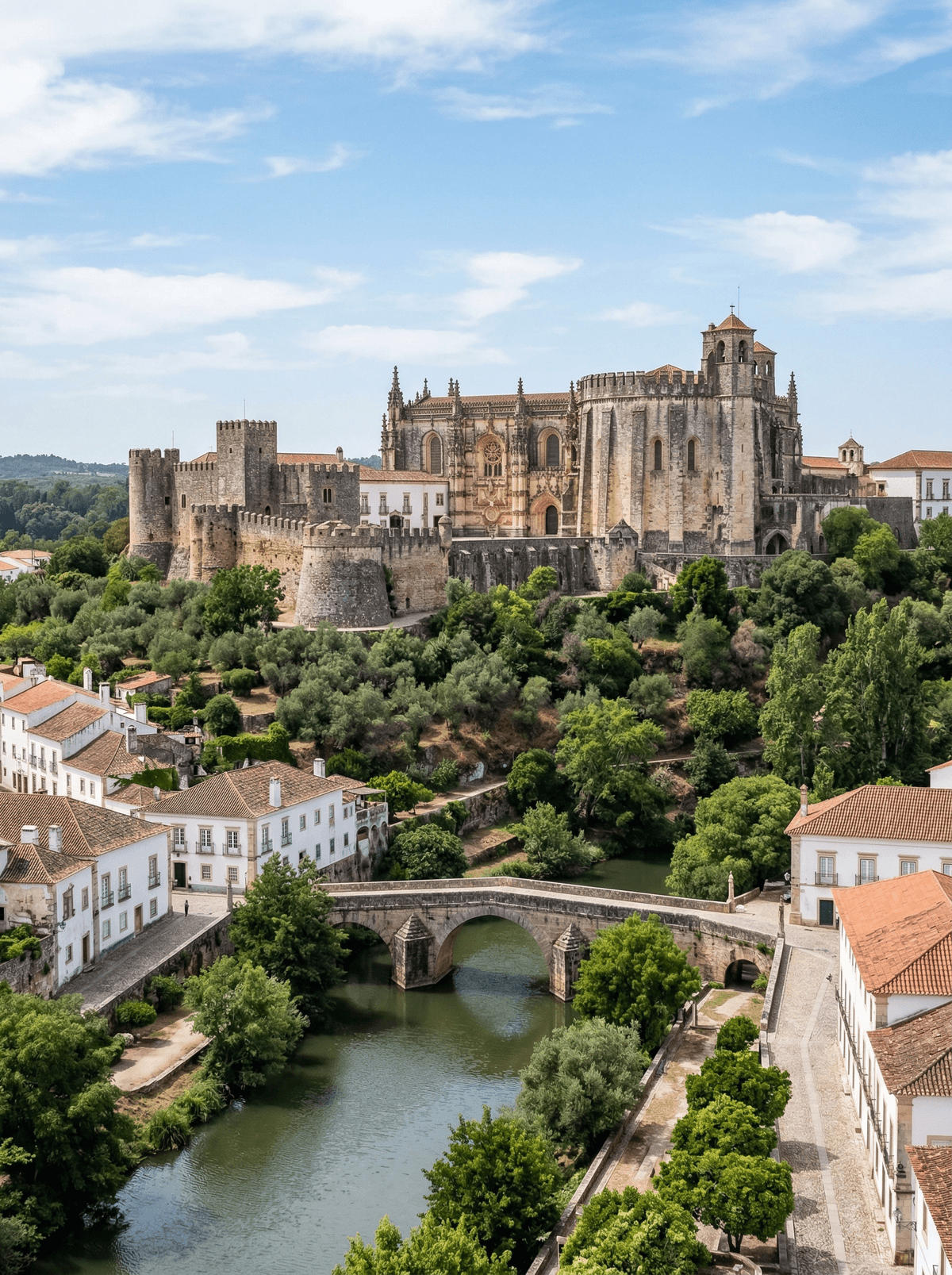
A fortress where Templar knights heard mass on horseback in an octagon built for Jerusalem.
The Charola stands at the fortress's heart — a twelfth-century octagonal rotunda where Templar knights attended mass without dismounting, its model the Holy Sepulchre itself. Inside, Romanesque arches, Byzantine echo and later Manueline additions layer so densely the stone appears to grow like coral. Outside, the Nabão slips through a town that has orbited this hill for nine centuries.
Tomar was the Templars' Portuguese headquarters from 1160, and the Convento de Cristo grew over five centuries into one of Europe's most architecturally consequential monuments — UNESCO-listed, running Romanesque through Renaissance, with the Chapter House's Manueline window the acknowledged masterpiece of the style: maritime rope, coral, seaweed and armillary spheres woven in carved stone. When the Order fell in 1312, King Dinis simply refounded its Portuguese branch as the Order of Christ, keeping Tomar its seat; Henry the Navigator later administered the convent, and the Age of Discoveries was partly planned and funded from these walls — Vasco da Gama's sails bore the Order's cross. Below, the fifteenth-century synagogue anchors one of Portugal's oldest surviving Jewish quarters, and the Festa dos Tabuleiros tradition — girls crowned with towers of bread and flowers — reaches back centuries in the town's memory.
Solo
Tomar demands time — the convent alone spans five architectural periods and repays a full day, with the synagogue, the Jewish quarter and the riverside town making one of Portugal's most concentrated cultural stops.
Couple
The fortress creates the sense of entering another world together — the Manueline window alone is worth the journey, and the riverside cafés and conventual sweets decompress the intensity.
Family
Knights, castles and secret orders are inherently compelling for children — the horseback-mass story captivates, the grounds invite exploring, and the bread-tower crowns of the Tabuleiros tradition are the strangest headgear in Portugal.
- The Templars' successors, the Order of Christ, sent their cross onto da Gama's sails.
- The Charola's octagon answers the Holy Sepulchre, sized for knights still mounted.
- The Chapter House window is the Manueline style's masterpiece, ocean carved in stone.
- Henry the Navigator ran the convent — the Discoveries were partly planned here.
Fatias de Tomar — egg-rich slices bathed in sugar syrup, a conventual invention.
Queijadas and roast kid — the town's sweet-and-savoury pairing.
Gettysburg
United States
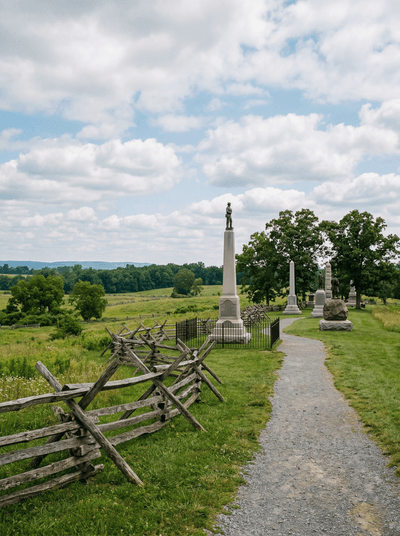
Fifty-one thousand killed, wounded or missing in three days, on fields where silence still weighs.
Troy
Turkey
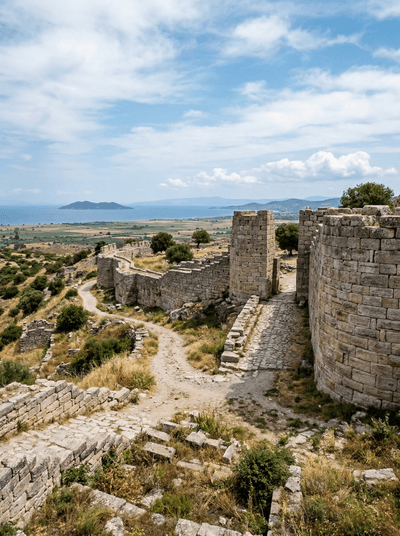
Nine cities layered on top of each other where Homer's war may have actually happened.
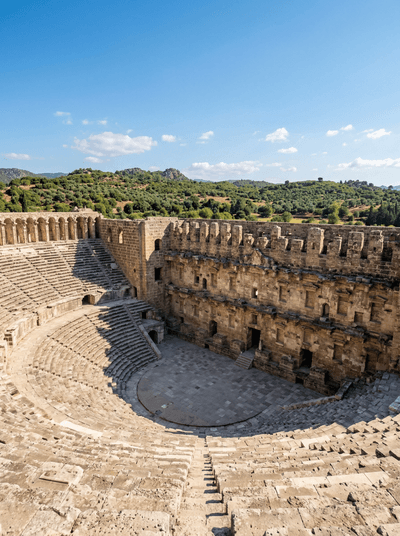
Aspendos
Turkey
A Roman theatre preserved so completely that an unamplified voice carries to the topmost row.
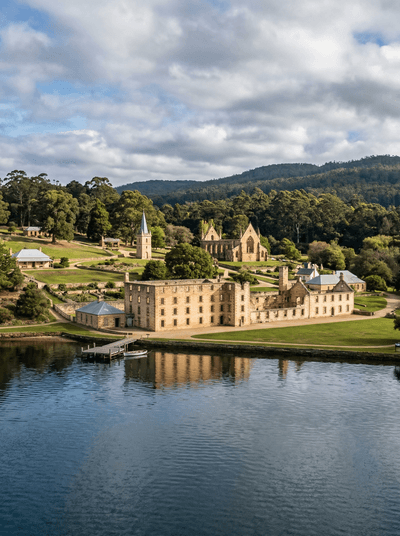
Port Arthur
Australia
Honey-coloured ruins and harbour gardens disguise the machinery of Britain's convict punishment.
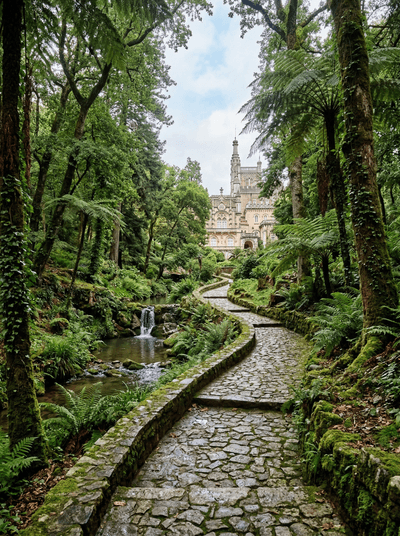
Buçaco Forest
Portugal
A walled forest of seven hundred species, its cedar Via Crucis climbing cathedral canopy.
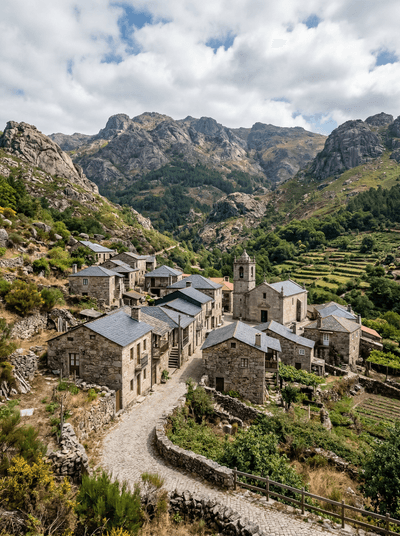
Pitões das Júnias
Portugal
A monastery abandoned to wolves and rain crumbles beside a waterfall at the road's end.
Pinhão
Portugal
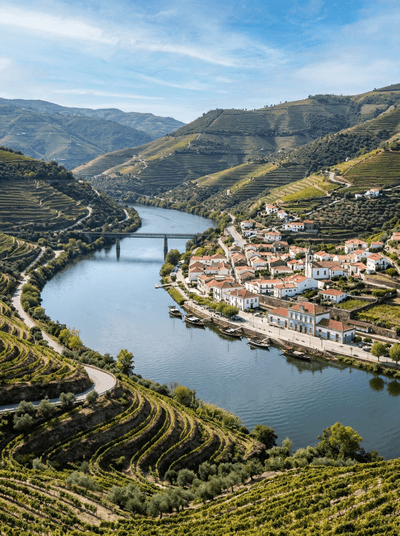
Terraced vineyards plunge to the Douro so steep the harvest travels by shoulder.
Batalha
Portugal
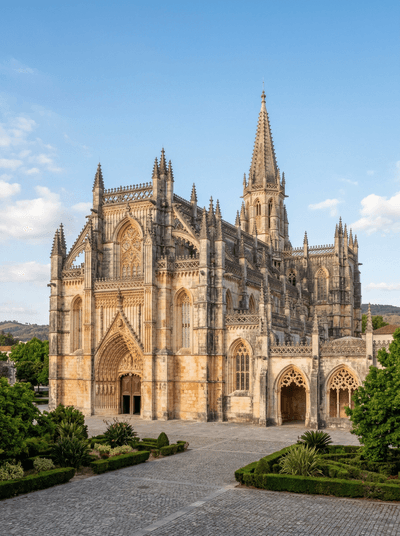
Gothic tracery framing open sky where the roof should be — unfinished for six centuries.