Indonesia
Wakatobi
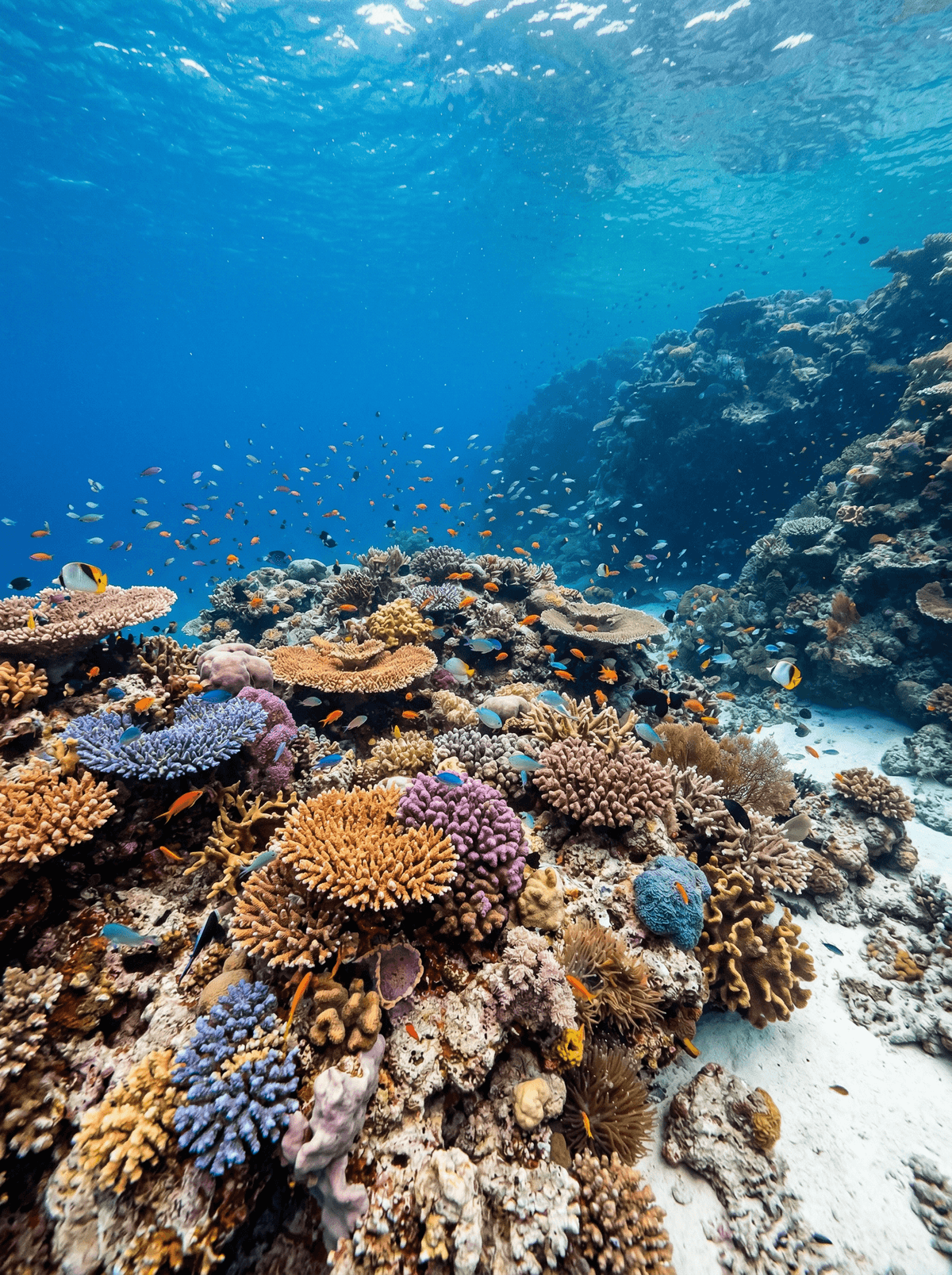
Most of the world's coral species crowd the reefs beneath Bajo stilt houses.
The reef begins under the stilt houses and does not really stop: walls, pinnacles and gardens in water clear to thirty metres. Bajo communities live over the shallows, their relationship with this sea older than any park boundary drawn around it.
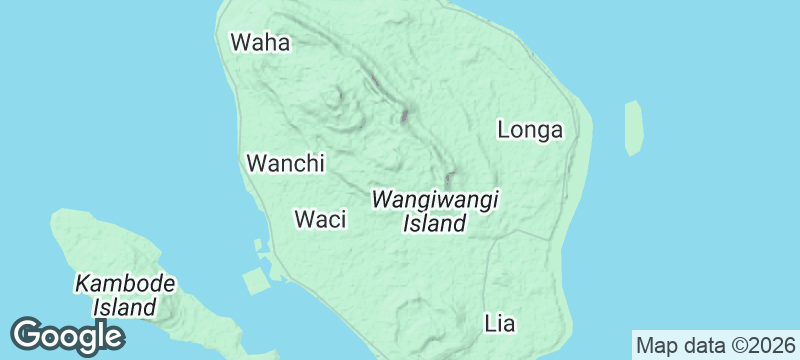
Wakatobi takes its name from its four islands, Wangi-wangi, Kaledupa, Tomia and Binongko, and its national park protects one of the richest reef systems on Earth, with around 750 coral species recorded, most of the world's known total. Bajo families live in houses raised on stilts above the shallows, and visits are arranged through hosts rather than pointed at. A specialist dive resort on Tomia and local island stays split the accommodation range, flights arrive via Wangi-wangi, and UNESCO lists the park as a Biosphere Reserve.
Solo
An island lodge connects one guest to boats and hosts without a group to assemble.
Couple
A settled reef base for two, with a village visit arranged properly through hosts.
- Around 750 coral species live here, most of the world's known total.
- Bajo homes stand on stilts above the shallows, lived in first and visited second.
- Four islands give the marine days genuine variety beyond one reef trip.
- Visibility on the walls regularly passes thirty metres.
Kasoami, the islands' steamed cassava cone, pairs with fish and sambal.
Everyday eating runs on the sea: fish and seafood across all four islands.
Janjanbureh
Gambia
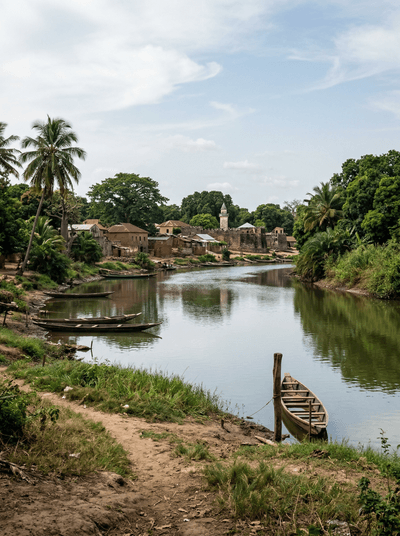
An island bought from a king in 1823 so freed slaves could build a town.
Ales Stenar
Sweden
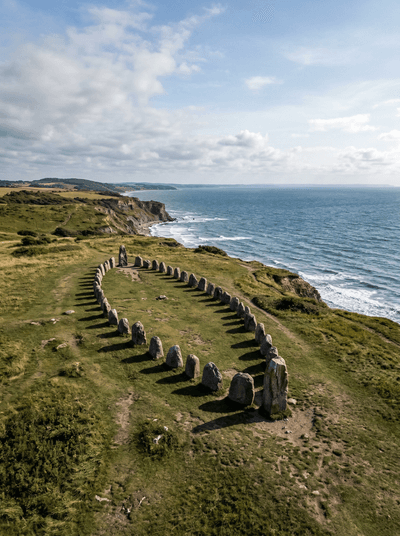
Fifty-nine megaliths tracing a vast ship outline on a windswept cliff above the Baltic.
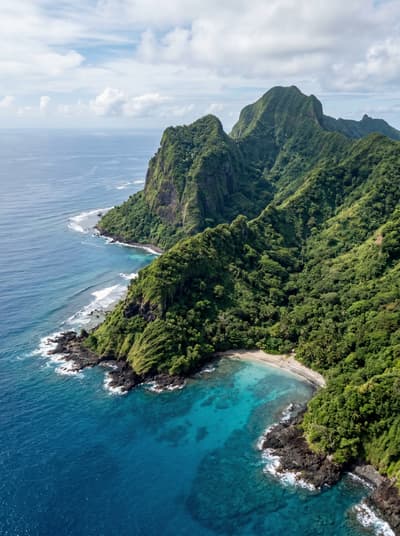
Futuna Island
Vanuatu
The language changes mid-archipelago: Futuna is Polynesia, moored inside Melanesian Vanuatu.
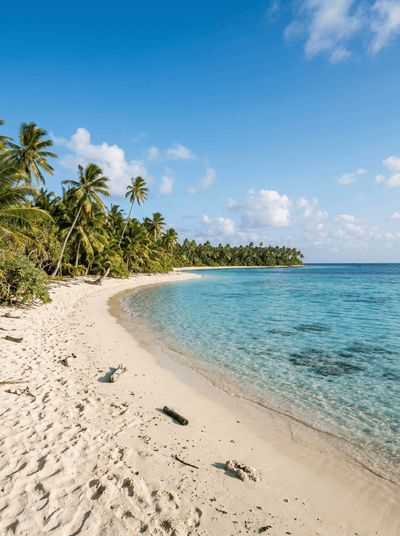
Nanumea
Tuvalu
Japanese bombs found this atoll's church in 1943; a landing craft still rusts on the reef.
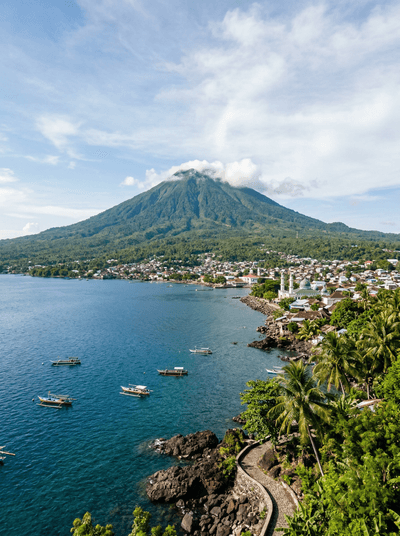
Ternate
Indonesia
The theory of evolution was posted to Darwin from this clove island's shore.
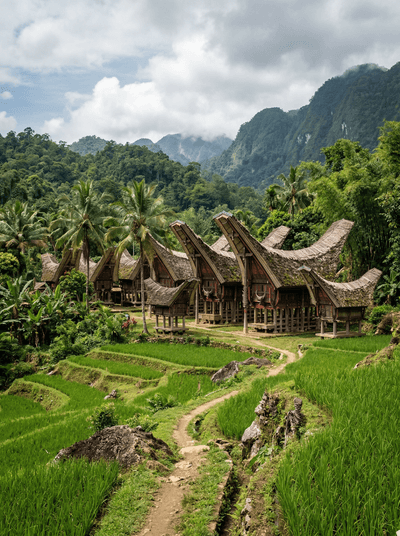
Tana Toraja
Indonesia
Cliff tombs watched by wooden effigies, in highlands where funerals set the calendar.
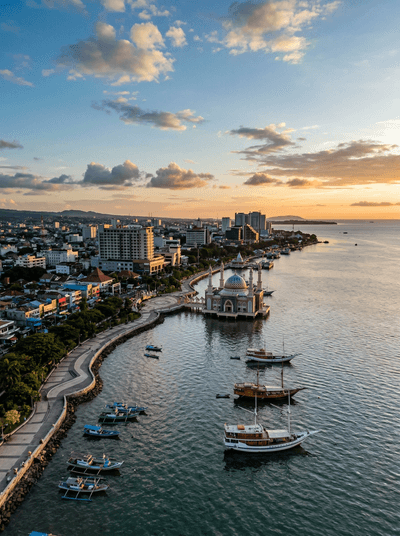
Makassar
Indonesia
Wooden phinisi still tie up at Paotere, where the fish market erupts at dawn.
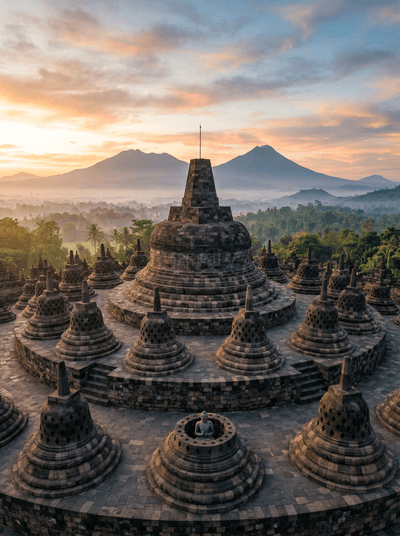
Borobudur
Indonesia
Buried under ash and jungle for centuries, the stone mandala came back.