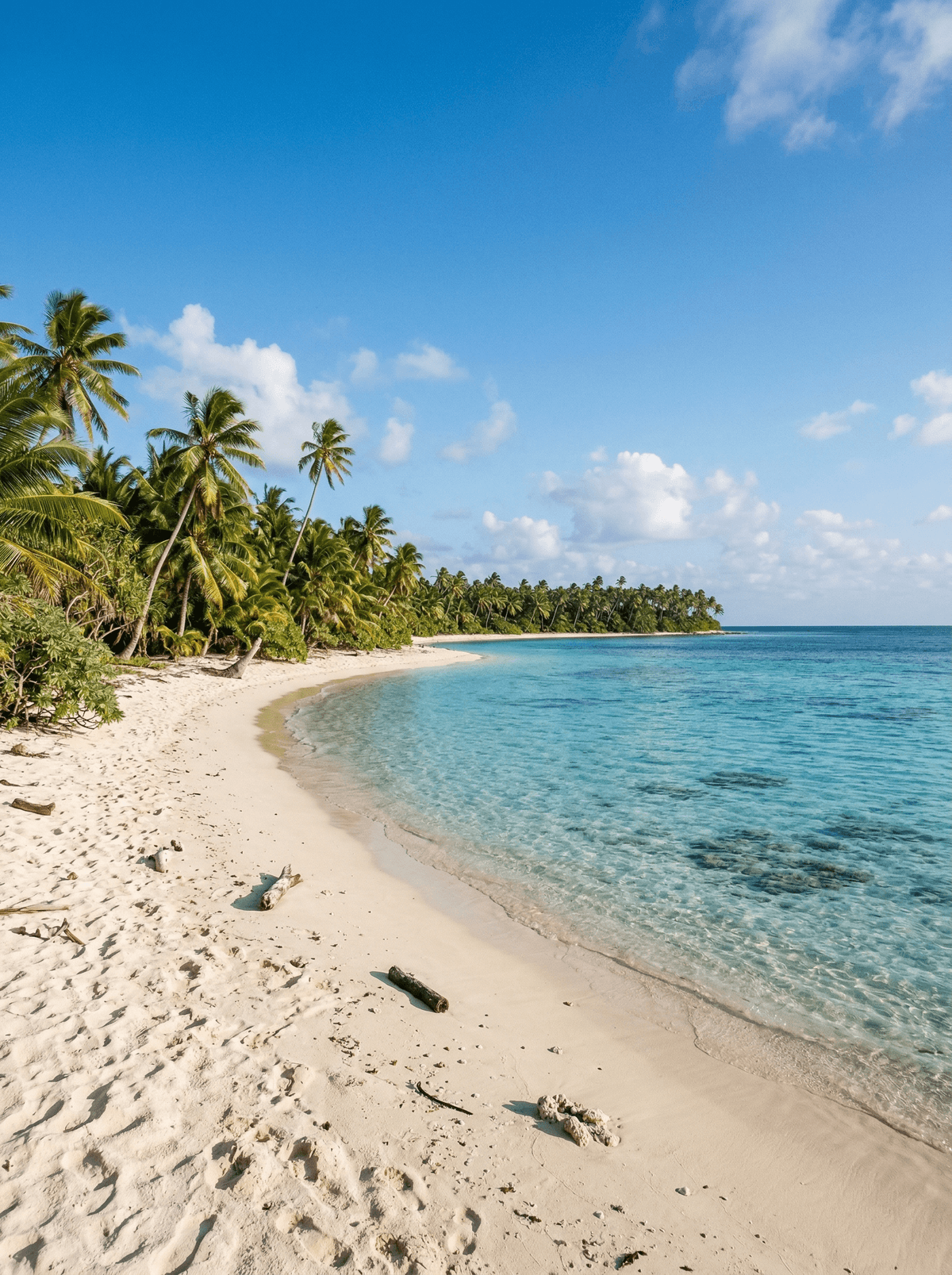
Tuvalu
Nanumea
Japanese bombs found this atoll's church in 1943; a landing craft still rusts on the reef.
The palms lean into the trade wind and the reef breaks white on every side of Tuvalu's most northern atoll. An old wartime runway is fading under the scrub, remains of World War II planes rust among the trees, and a landing craft lies wrecked on the reef near the village. Nanumeans call themselves gā Tama a Tefolaha, the Children of Tefolaha, after the founding ancestor whose island the war reached uninvited.
American forces landed on Nanumea in 1943 and made the atoll one of their three bases in Tuvalu; just days later, on 8 September, Japanese planes from Tarawa bombed the island's church, tearing open its roof. The runway they cut still crosses the northeastern side, plane remains sit in the scrub, and the landing-craft wreck on the reef can be seen from near the village. Nanumea itself is a classic atoll of five low islands around a lagoon, about twelve kilometres end to end, lying 460 kilometres northwest of Funafuti at the country's far corner. Life continues over the wreckage: pulaka pits dug to the freshwater lens are worked on Lakena islet, and newly built canoes still take to the lagoon. There is no air service; a government ship from Funafuti is the only public way in, so transport and a stay are arranged before departure.
Solo
A solo traveller with time to spare can walk the old runway, find the plane remains in the scrub, and let the ship schedule rather than a timetable decide the length of the stay.
Couple
Couples who travel slowly get a living village, wartime landmarks a short walk apart, and a lagoon at the country's northern edge with no itinerary attached.
- A wreck of a landing craft sits on the reef near the village, and remains of World War II planes are visible in the scrub beside the old American runway.
- Japanese planes from Tarawa bombed the island's church on 8 September 1943, just days after American troops landed on Nanumea.
- Nanumea is Tuvalu's most northern island, a true atoll of five islands whose people call themselves the Children of Tefolaha.
- Two government ships, not aircraft, connect Nanumea to the capital; the atoll lies 460 kilometres northwest of Funafuti at the country's northwestern extreme.
Meals are arranged, not ordered: guesthouse stays run on catering cooked in the community, with the payment going directly to the women who cook.
Expect the day's fish with coconut or breadfruit; pulaka comes from pits on Lakena islet, hollowed to the freshwater lens over generations of composting.
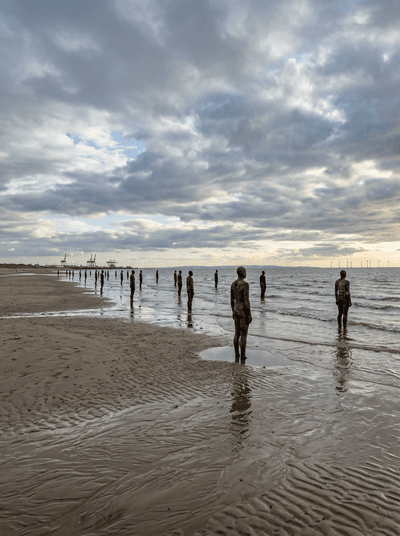
Crosby Beach
England
Iron men stand chest-deep in the tide, rusting patiently into the Irish Sea.
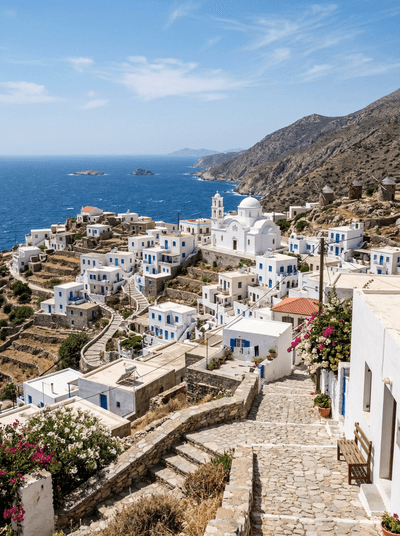
Karpathos
Greece
Mountain women in traditional dress still bake bread in wood ovens above wind-lashed Aegean cliffs.
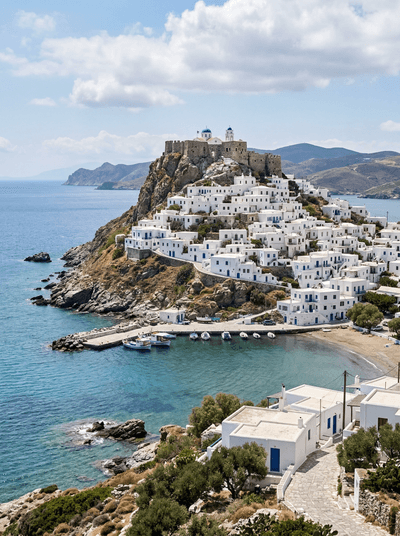
Skyros
Greece
Wild Skyrian ponies roam the southern hills of an island where Carnival masks hide ancient rites.
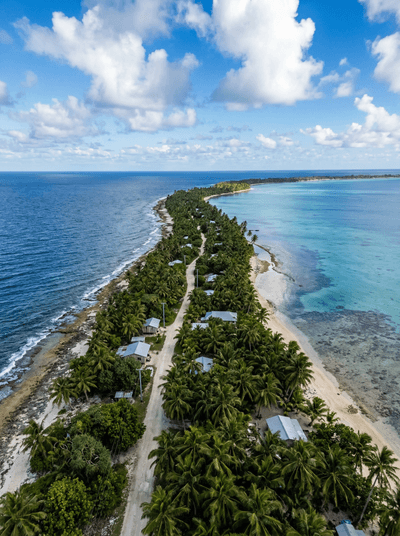
Fongafale
Tuvalu
Families scatter from the runway as a plane lands, then reclaim the tarmac for evening football.
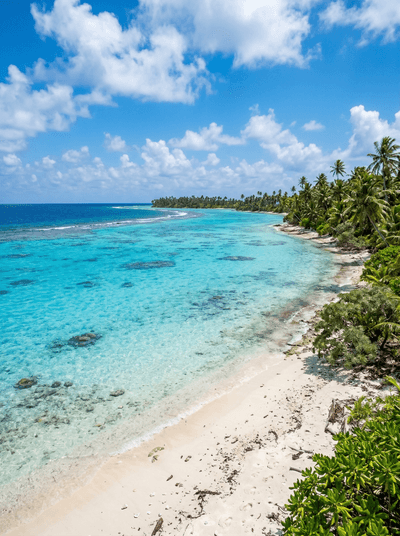
Nui
Tuvalu
A Micronesian island wrapped inside a Polynesian nation: Nui's mother tongue is Gilbertese.
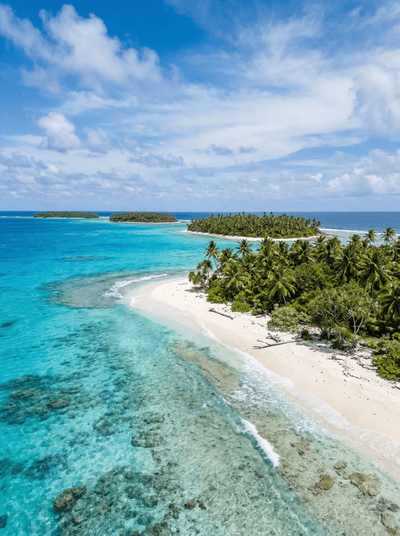
Funafuti Conservation Area
Tuvalu
Green turtles nest on six empty islets holding nearly half Funafuti's remaining native forest.
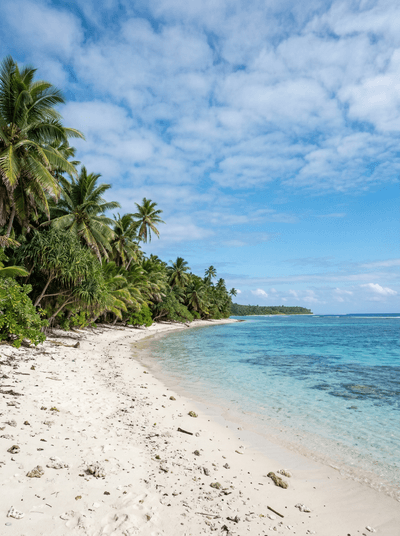
Niutao
Tuvalu
This island swallowed its lagoons: two lie landlocked inside Niutao, one joined underground to the sea.