Morocco
Lixus
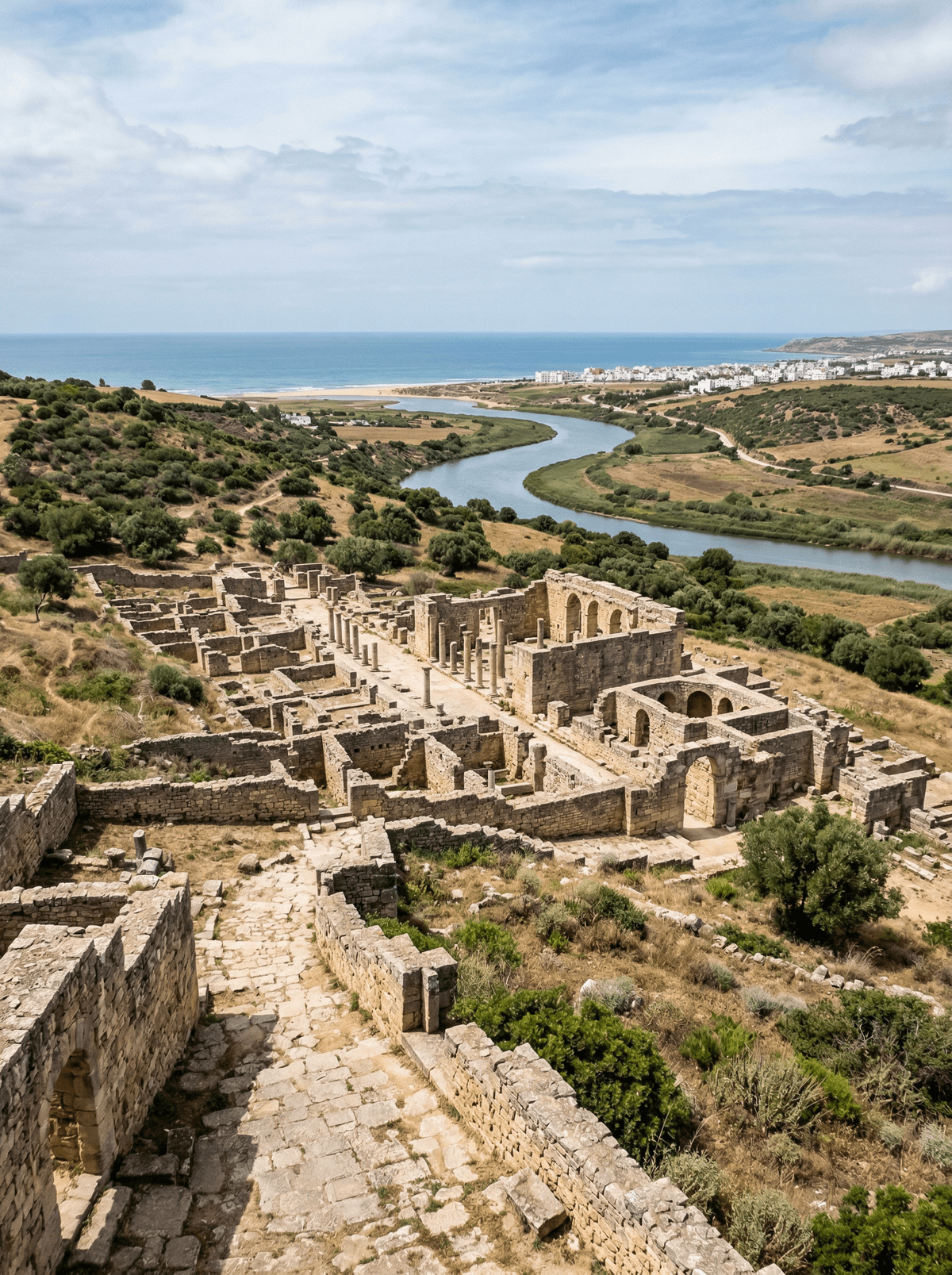
Roman garum vats cover a hillside ancient writers called the Garden of the Hesperides.
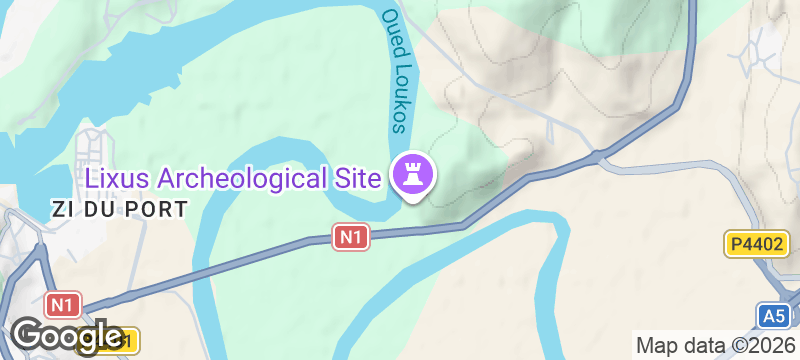
Rectangular salting vats cover the lower slope like an industrial grid, then the route climbs through bath walls and the curved seating of Lixus's spectacle building. From higher ground, the Loukkos loops through green fields towards Larache and the Atlantic mouth.
This hill was occupied from the eighth century BCE into the fourteenth century CE, passing through Phoenician, Punic, Mauretanian, Roman and Islamic phases. Its visible remains include a temple quarter, housing, baths, fortifications and one of the Mediterranean's major ancient fish-salting complexes. Ancient writers tied the landscape to the Garden of the Hesperides and Hercules' golden apples, a myth that suits the river view without becoming archaeological proof. The climb from industrial vats to acropolis makes the settlement legible, with the Loukkos estuary widening below.
Solo
Begin at the lower industrial quarter, then take the slope slowly from salting vats to acropolis. Sturdy shoes, water and time to read the occupation layers matter more than a packed itinerary.
Couple
Share the two-hour climb, pausing above the theatre for the Loukkos view, then return to Larache for grilled sardines and coffee on the old Spanish plaza. The pairing turns fragmentary ruins into a complete day of river, port and town life.
- Twenty-two centuries of occupation place Phoenician, Punic, Mauretanian, Roman and Islamic phases on one river hill.
- The lower industrial quarter preserves an unusually extensive complex of vats used for salted fish and garum production.
- Baths, temple foundations, fortifications and the theatre-amphitheatre turn the ascent into a readable cross-section of an ancient city.
- The Loukkos estuary remains part of the interpretation, from Roman fish processing to the ancient Garden of the Hesperides legend.
Charcoal-grilled sardines with bread, tomato salad and harissa at Larache's port after the archaeological climb.
Café con leche with a warm msemen or rghaif on Place de la Libération, carrying Larache's Spanish-Moroccan café rhythm.
Ameln Valley
Morocco
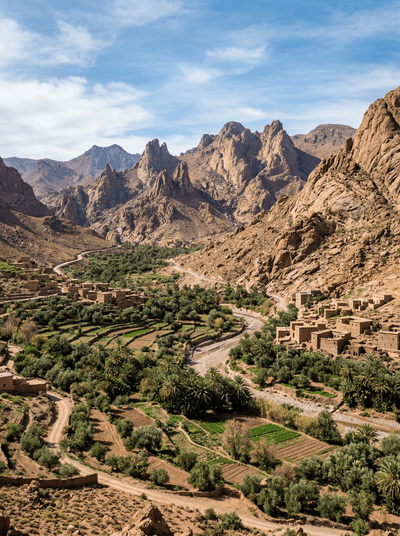
Ochre villages disappear into Jbel Lekst while almond blossom clouds the valley floor.
Draa Valley
Morocco
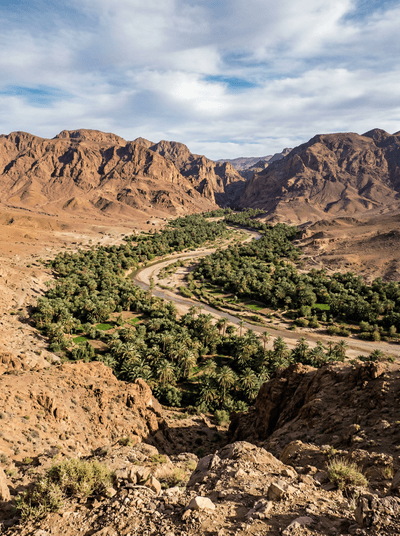
Two and a half million date palms carry a green river towards the Sahara.
N'Kob
Morocco
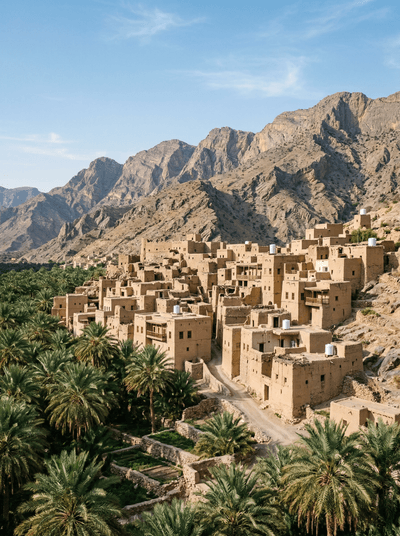
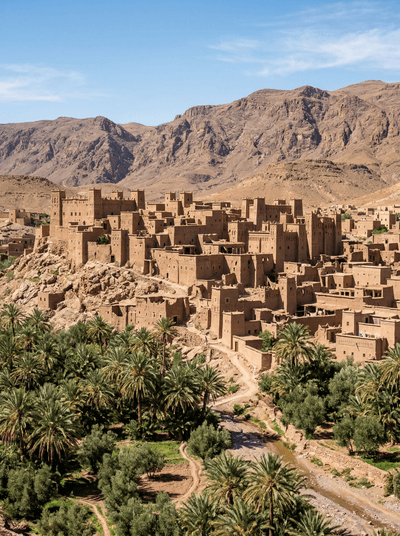
Forty-five earthen kasbahs crowd an oasis beneath the broken ridges of Jebel Saghro.
Tata Palm Groves
Morocco
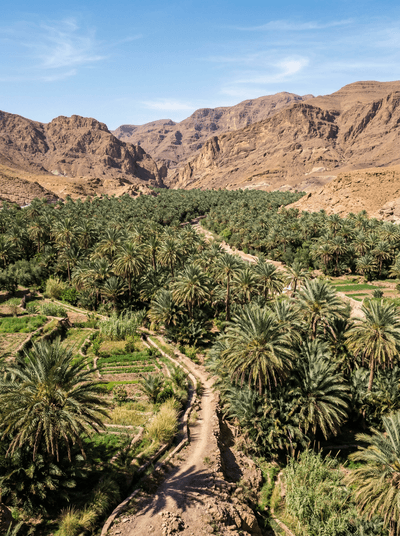
Elephants and rhinoceroses survive in stone beyond Tata's living palm shade.