Brazil
Alter do Chão
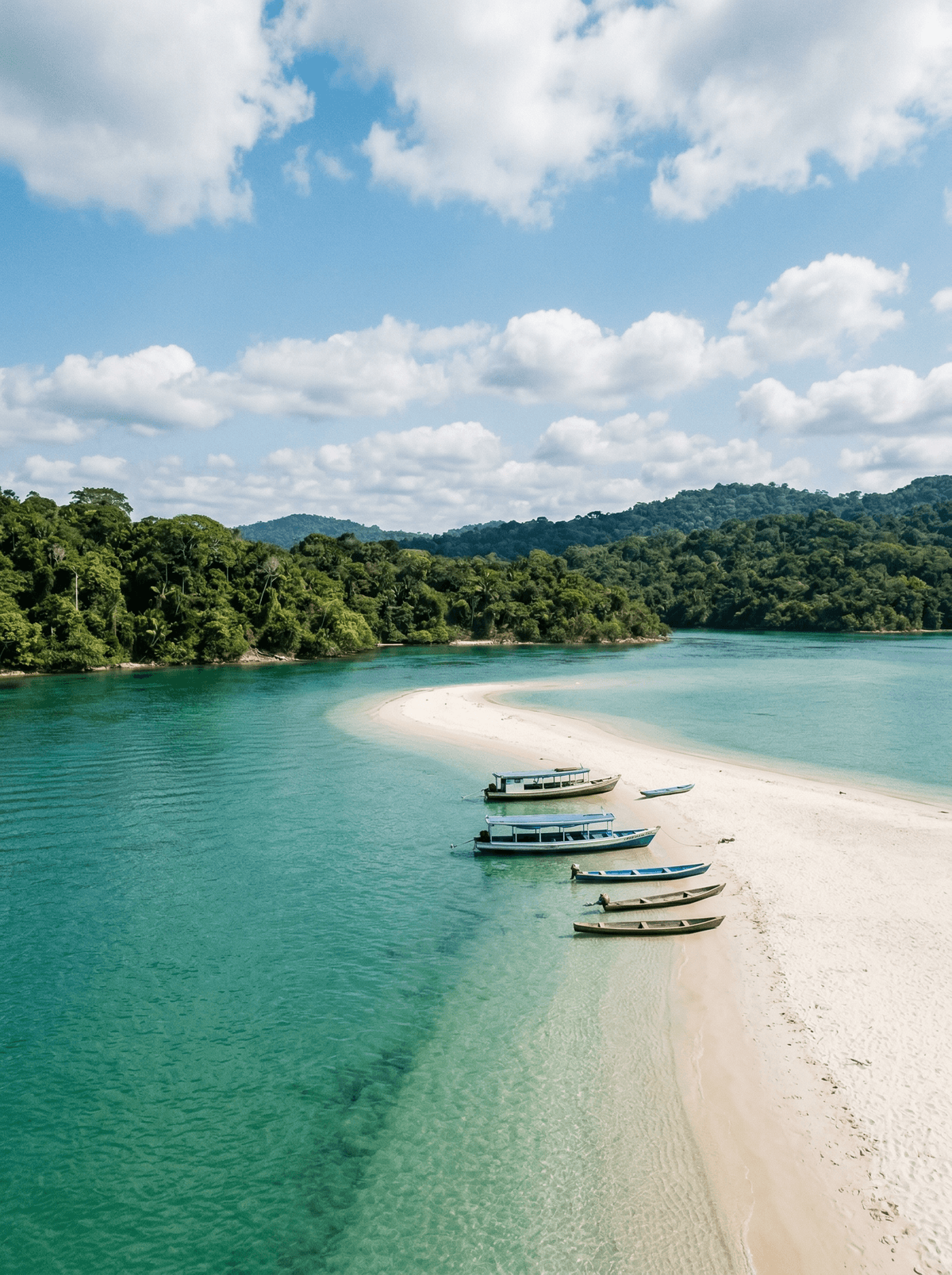
Beaches of white sand that vanish under the river from December, and come back in August.
For half the year this is a beach: a bank of white sand off the village with thatched barracas standing on it, blue Tapajós water around it and forest behind. Then the rain arrives, the river climbs from December, and by May the beaches and the islands have gone out of the landscape completely. What is left is a quiet village of caboclos, waiting for June, when the water starts to drop again.
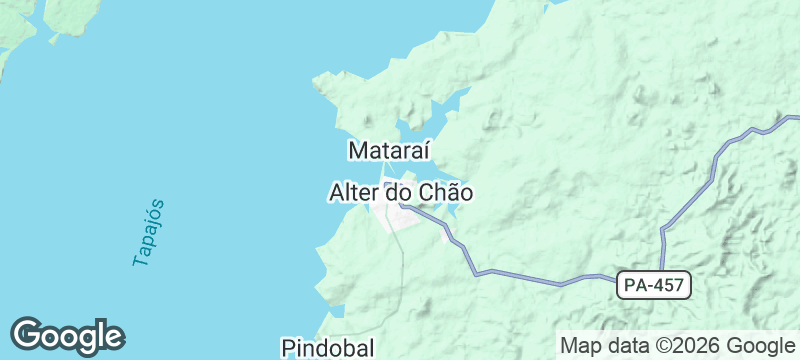
Alter do Chão is a district of Santarém, thirty-seven kilometres away in western Pará, reached on the paved PA-457 in about forty-five minutes or up the Tapajós by boat in roughly three hours. The village turned 260 in March 2018, and in 2022 Pará listed it as state cultural heritage, material and immaterial, which is why the palm thatch on the beach barracas is now the subject of a municipal working group after fires pushed some owners to swap it for fibre-cement. The Amazon summer runs August to December, and the calendar underneath it is the river's: falling from June, beaches busy from August, the water at its lowest in November. September belongs to the Çairé, which is religious in origin, goes back around three hundred years, and turns on a folklore contest between the pink boto and the tucuxi at the Çairódromo, drawing about a hundred thousand people. Outside the beach season there is the canoe route through the flooded forest and the Serra Piroca trail, and year round there are Lago Verde, Lago do Jurucuri, the Floresta Nacional do Tapajós with its river communities, and the point where the Tapajós meets the Amazon and the two waters run on side by side without mixing.
Couple
Come between August and December, when the sandbar is out of the water and the barracas are open on it. Come any other time and you get a different place altogether, quieter and cheaper, where the trip is a canoe through flooded forest and the walk up Serra Piroca.
Family
August to November is the run: sand to sit on, the river at its lowest in November, and lakes all around, Lago Verde, Lago do Jurucuri, the Praia do Jacaré. One of the neighbouring lakes is the Lago das Piranhas, worth remembering before anybody tells you this river has none.
Friends
September is the Çairé, when about a hundred thousand people come for the contest between the boto cor-de-rosa and the tucuxi at the Çairódromo, so book a long way out. Keep a day for the meeting of the Tapajós and the Amazon, where the two rivers run alongside each other without mixing.
- The Amazon summer here runs August to December: the Tapajós starts falling in June, the beach season opens in August, and the river bottoms out in November.
- From December to May the rain puts the water back up until the beaches and islands go out of the landscape altogether and the place returns to being a quiet riverside village.
- The Çairé, always in September, goes back around three hundred years and turns on a contest between folklore groups representing the pink boto and the tucuxi; about a hundred thousand people come.
- Pará listed Alter do Chão as state cultural heritage in 2022, material and immaterial, which is why even the thatch on the beach barracas needs official sign-off to change.
The fish are pirarucu, tambaqui, tucunaré and filhote, and pato no tucupi is the plate that gets singled out, with juices and sweets made from forest fruit after it.
Boats up the Canal do Jari at high water pull in at Dona Dulce's, where the kitchen cooks the vitória-régia lilies growing on the same stretch of river.
Manuel Antonio
Costa Rica
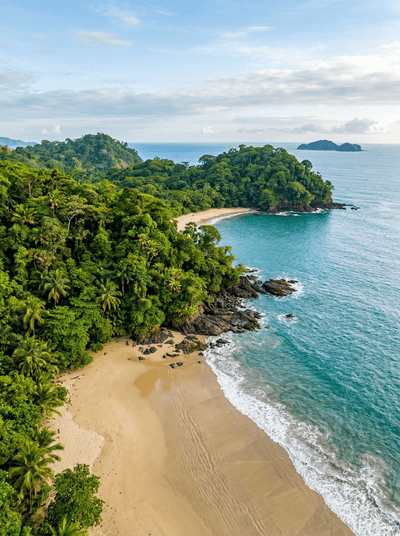
Capuchins patrol the sand beneath dozing sloths where rainforest walks into the ocean.
Vaitupu
Tuvalu
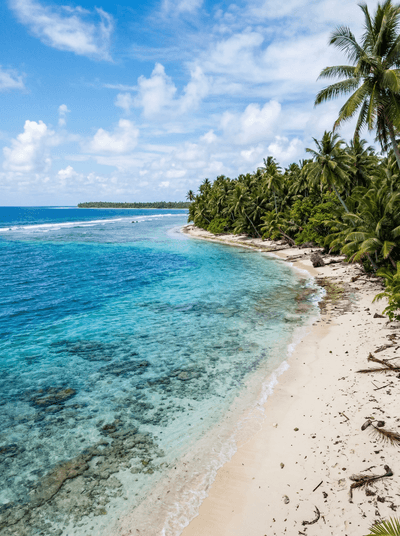
Tuvalu's largest island, where traditional sport te ano sends two woven balls flying at once.
Tortuguero
Costa Rica
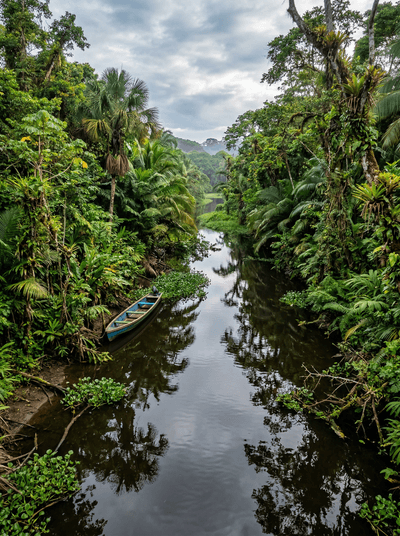
Jungle canals where green sea turtles haul onto black volcanic sand under a moonless sky.
Kadavu
Fiji
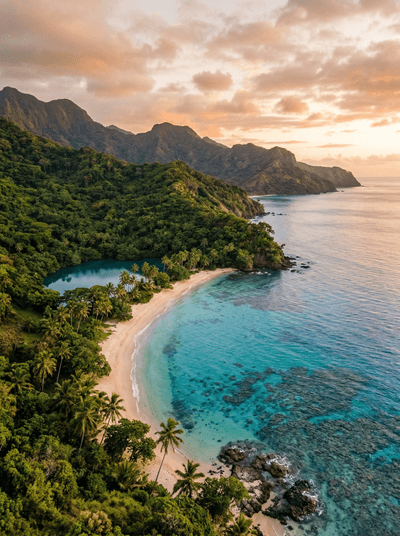
Manta rays circle the world's fourth-largest barrier reef, off villages the road barely reaches.
Praia do Rosa
Brazil
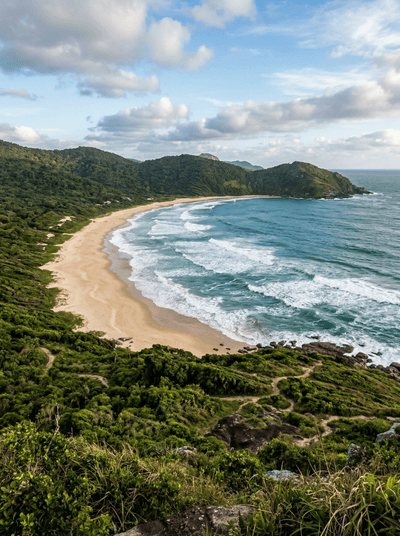
Right whales leave Antarctica to calve in this bay, and you watch from the headland.
São João del-Rei
Brazil
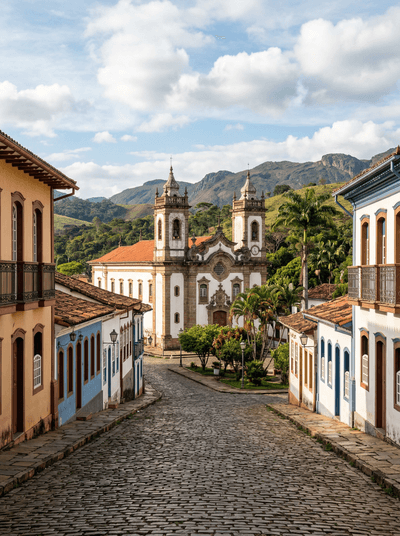
Baroque towers answering each other across a valley, ringing the sex of whoever has just died.
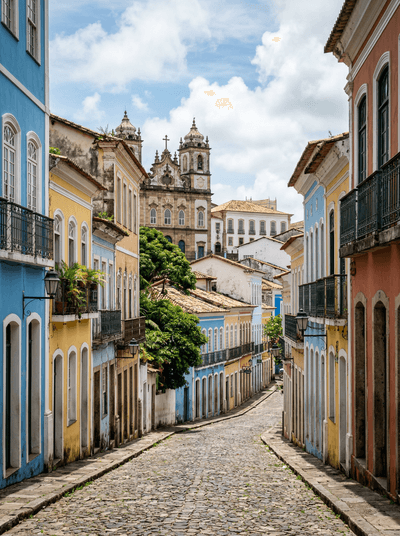
Salvador
Brazil
Drum rhythms ricocheting off colonial walls where song, dance and combat happen at once.
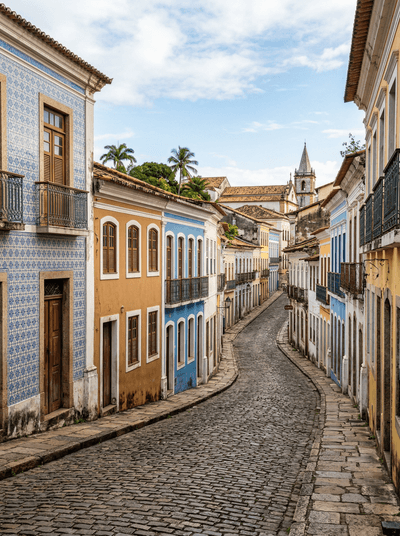
São Luís
Brazil
Hand-painted Portuguese tiles across four thousand colonial houses, cooling the walls against equatorial heat.