Brazil
Fernando de Noronha
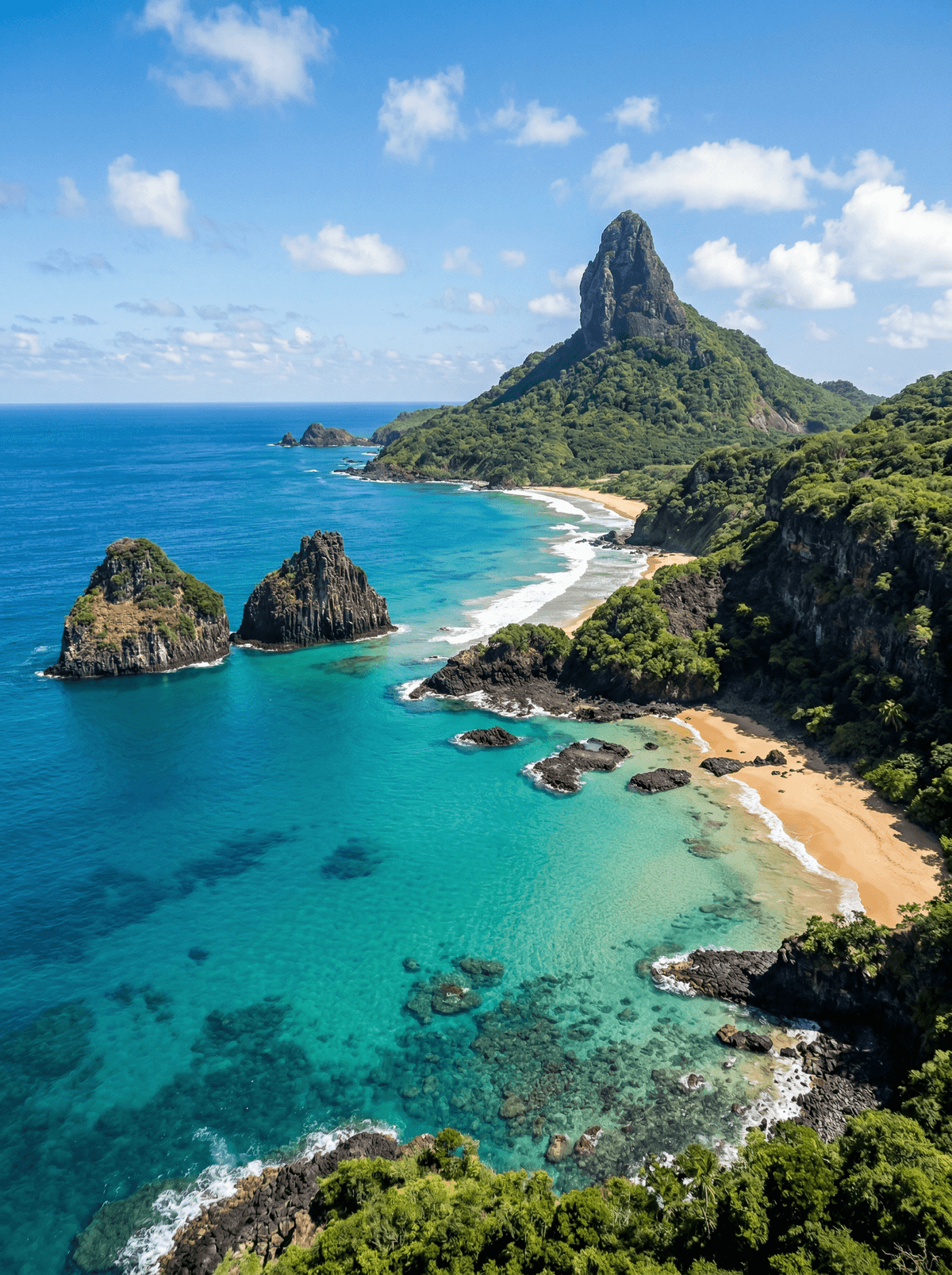
Volcanic spires rising from water so clear the seafloor glows up at you from the clifftop.
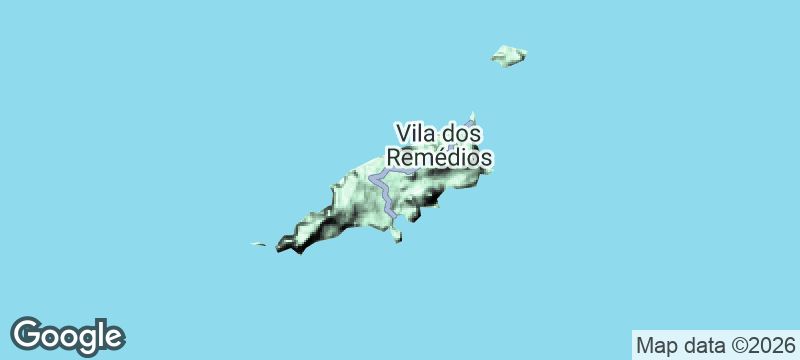
From the clifftop path the water reads like glass, and the dark shapes crossing the pale sand below resolve into turtles. Fernando de Noronha sits 545 kilometres off Recife, a scatter of volcanic rock in an emerald sea where the park itself names Sancho and Leão the finest beaches in Brazil.
Noronha is rationed by law. A ceiling agreed between ICMBio, the state of Pernambuco and Brazil's Supreme Court allows 132,000 visitors a year, and 131,503 came in 2024, up from barely 85,000 a decade earlier. Everyone who lands pays a preservation levy for each day of their stay, created by Pernambuco law in 1989, then a separate park ticket valid ten days whose revenue mostly returns to the trails and signage underfoot. The limits get granular: the tide pool at Praia da Atalaia admits a fixed number of people each day because the ecosystem cannot carry more. Out in the bay, researchers at Projeto Golfinho Rotador have divided the dolphins' day into six phases, from the dawn entry through two rest shifts to the departure.
Solo
The ten-day ticket lets you wait for conditions rather than chase them: dive on the flat days, take the dawn dolphin lookout alone, and hold the Atalaia slot for whenever it comes up.
Couple
Noronha's restaurants are the part nobody expects. Book a table at Mergulhão by the harbour and treat the ceviche and the lobster as the evening rather than an afterthought.
Family
The guided underwater trail at Baía do Sueste is the gentlest way to put children above resting turtles, and Atalaia's daily headcount means that is the slot to book before anything else.
- From the lookout above Baía dos Golfinhos, spinner dolphins can be watched entering the park at daybreak.
- A guided underwater trail in Baía do Sueste passes sea turtles at rest and feeding.
- The park ticket costs R$111 for Brazilians and R$222 for visitors from abroad, and stays valid ten days.
- Around three hundred turtle nests are laid across the archipelago each season, more than half on Praia do Leão.
Fish baked in a banana leaf is the plate the island's kitchens are judged on.
Tuna tartare cut with mango, then lobster, at Mergulhão beside the harbour.
Ischia
Italy
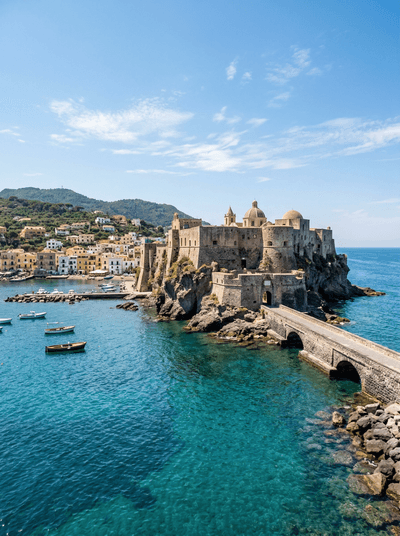
Volcanic hot springs bubbling from the seabed, thermal gardens on cliffs, fumaroles in back gardens.
Pemba Island
Tanzania
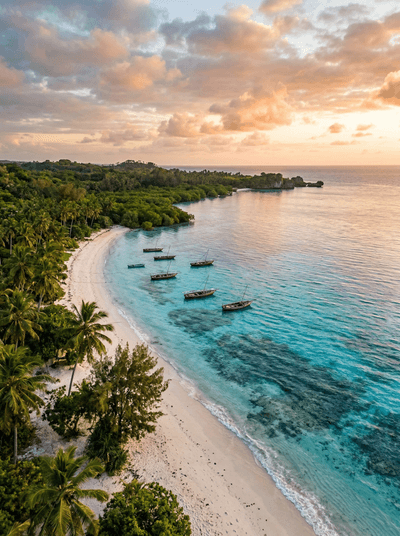
Clove hills drop to a channel 800 metres deep, and the wall dives start at shore.
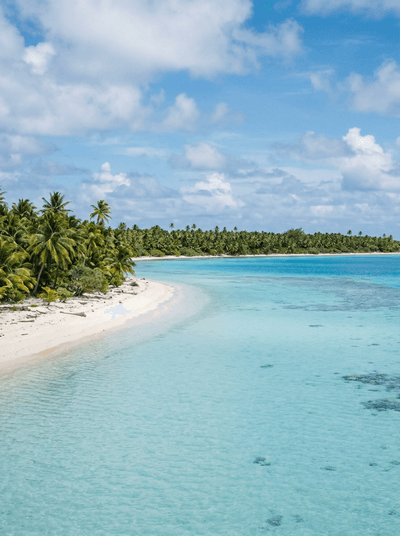
Kiritimati
Kiribati
Bonefishers wade endless turquoise flats while millions of seabirds darken the sky above.
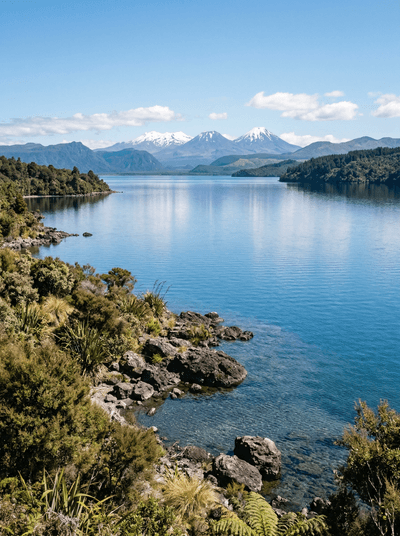
Lake Taupō
New Zealand
An inland sea filling the caldera of one of Earth's most violent eruptions.
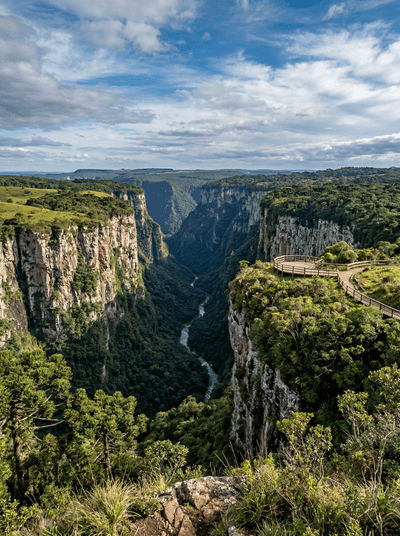
Aparados da Serra
Brazil
A five-hundred-metre waterfall drops straight off the rim into a gorge two kilometres wide.
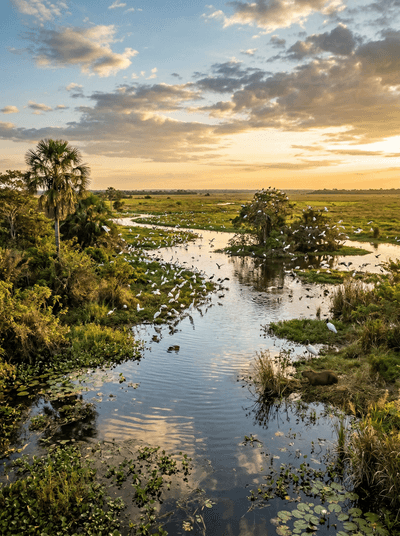
Pantanal
Brazil
When the water drops the animals come out, and the odds on a jaguar shorten.
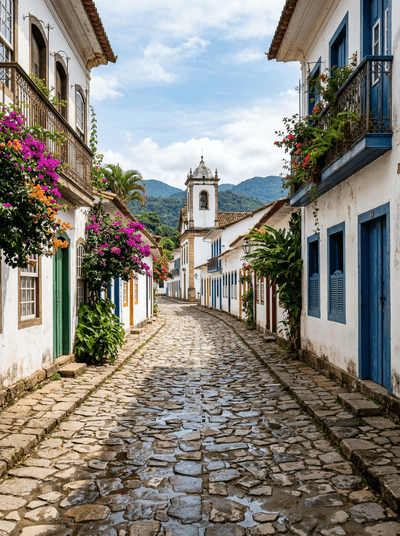
Paraty
Brazil
A colonial port the sea washes through on spring tides, with rainforest at its back.
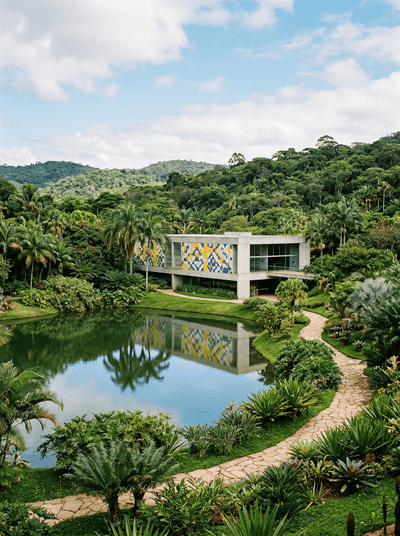
Inhotim
Brazil
A legally recognised botanical garden with twenty-four art galleries planted through it.