Morocco
Azemmour
The first recorded African in the American Southwest was born beside this muralled river medina.
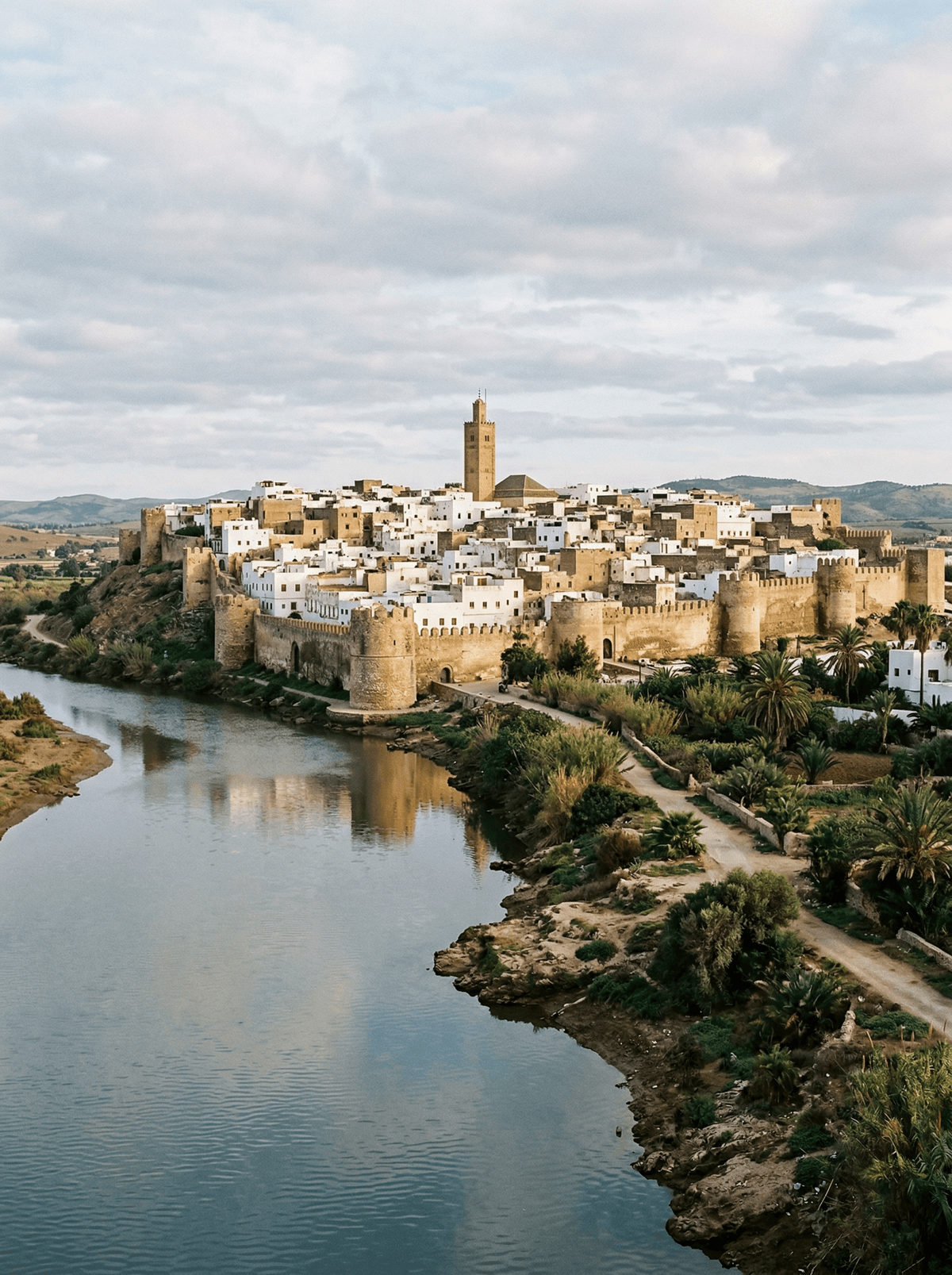
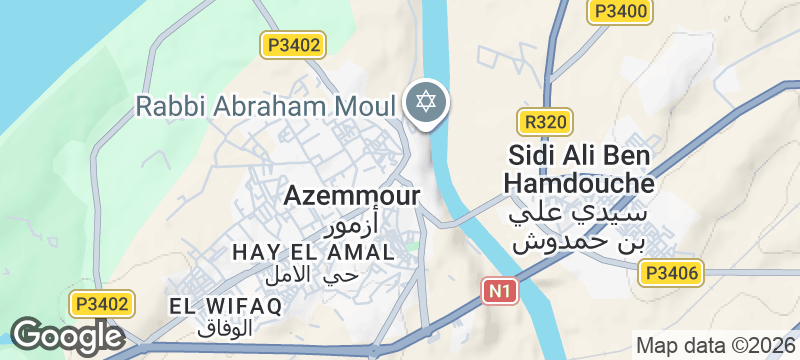
Azemmour rises abruptly from the left bank of the Oum Er-Rbia, its walled medina looking across a broad final bend before the Atlantic. Inside, domestic lanes pass painted walls, carved doors and sudden river gaps rather than a procession of ticketed monuments.
The wall line carries several histories at once: an older Moroccan town, a short Portuguese occupation after 1513, repairs and re-use after 1541, then the kasbah and mellah of the inhabited medina. Contemporary artists have added murals and small galleries without turning the quarter into an outdoor museum. Azemmour also gave the world Esteban, the enslaved Moroccan interpreter who survived the Narváez expedition and became the first recorded African to reach parts of what are now Texas and the American Southwest. Give the town a slow half-day from El Jadida, or stay overnight for the lanes after day visitors leave.
Solo
Enter through Dar El Baroud and let the wall line organise the walk: mellah lanes first, river overlooks next, then the murals threaded through residential streets. A local guide adds real value if you want Esteban's story and the defences read closely.
Couple
Stay for the last light over the Oum Er-Rbia, when painted walls and rooftop edges lose their daytime glare. A medina riad, a slow circuit through the kasbah and mellah, then tagine near Boulevard Mohammed V make Azemmour an easy one-night counterpoint to busier El Jadida.
- A nine-hectare walled medina layers old Moroccan defences, a Portuguese cutting wall and later Arabic repairs above the river.
- Dar El Baroud leads into residential lanes, the kasbah and the mellah, with chimneys and doors carrying the town's mixed history.
- Murals, galleries and private collections bring contemporary art into a quarter that still belongs primarily to its residents.
- Azamor-born Esteban links the river town to one of the earliest recorded African journeys across the North American Southwest.
Oum Er-Rbia shad cooked in a chermoula fish tagine, using the river fish named in Morocco's documented coastal tradition.
A slow-cooked chicken tagine at Bab Al Madina on Boulevard Mohammed V, close to the old town's entrance.
Seyðisfjörður
Iceland
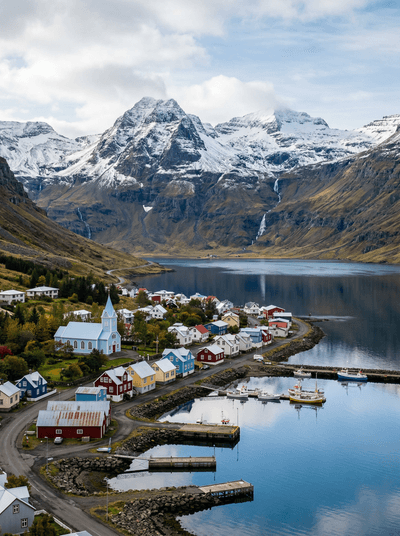
A rainbow-paved path leading to a pale blue church beneath snow-streaked fjord walls.
Goiás Velho
Brazil
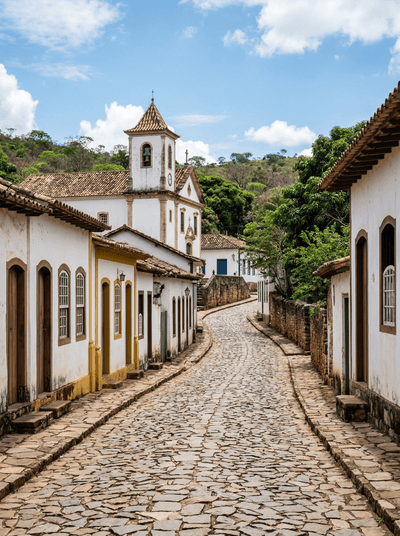
Hooded men with torches run the streets at midnight, hunting Christ through an eighteenth-century gold town.
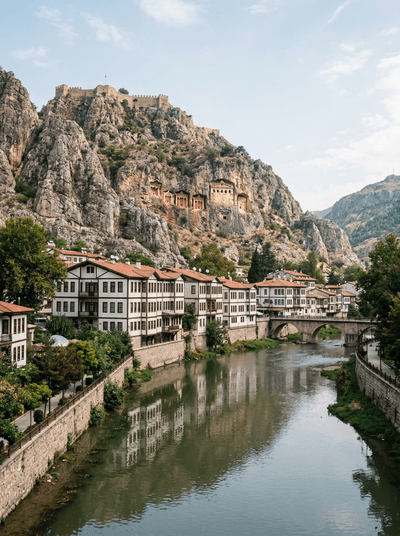
Amasya
Turkey
Ottoman mansions reflected in a narrow river gorge, Pontic rock tombs carved into the cliff above.
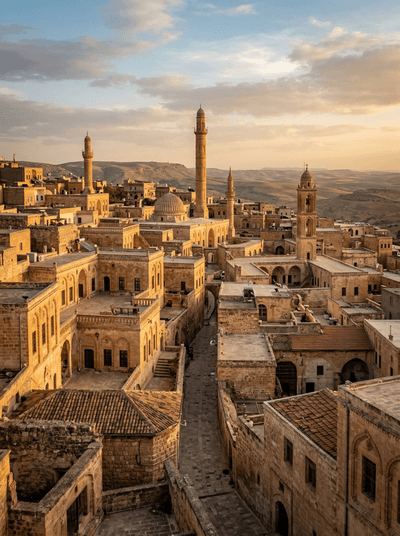
Midyat
Turkey
Syriac silversmiths hammer filigree in stone courtyards while Aramaic chants drift from the monastery.
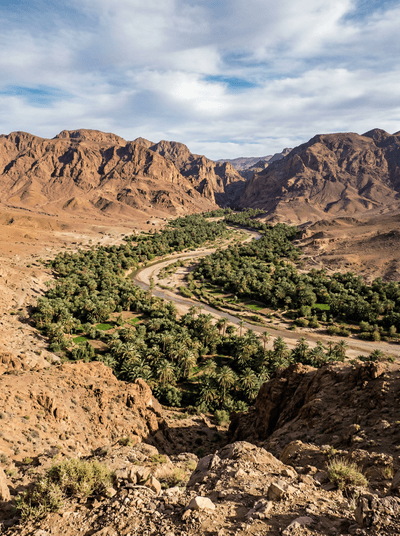
Draa Valley
Morocco
Two and a half million date palms carry a green river towards the Sahara.
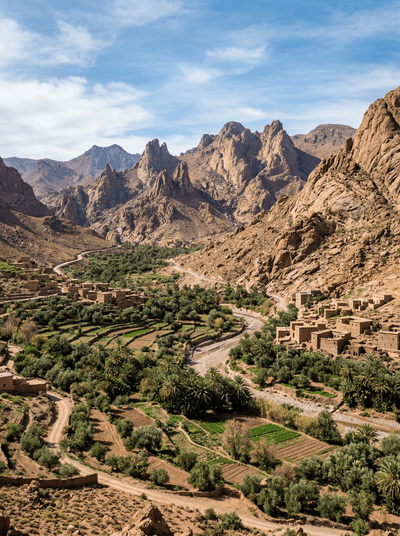
Ameln Valley
Morocco
Ochre villages disappear into Jbel Lekst while almond blossom clouds the valley floor.
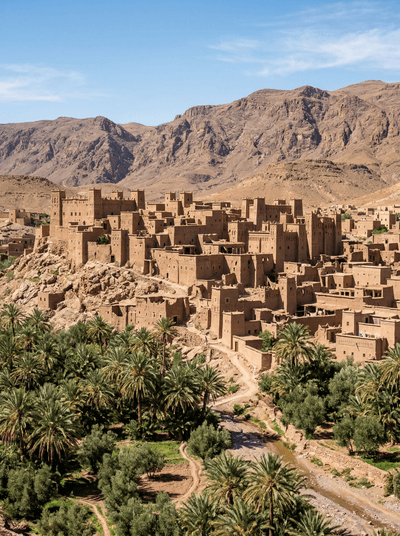
N'Kob
Morocco
Forty-five earthen kasbahs crowd an oasis beneath the broken ridges of Jebel Saghro.
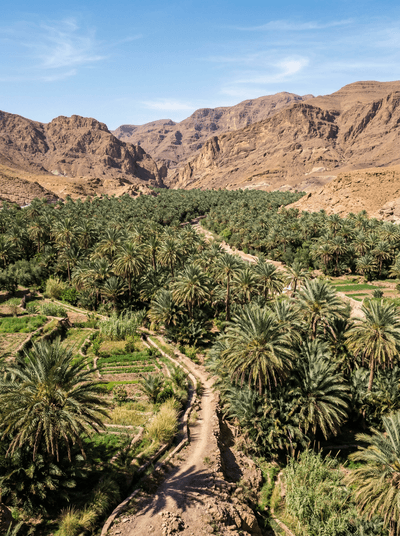
Tata Palm Groves
Morocco
Elephants and rhinoceroses survive in stone beyond Tata's living palm shade.