Brazil
Goiás Velho
Hooded men with torches run the streets at midnight, hunting Christ through an eighteenth-century gold town.
Midnight on the Thursday of Holy Week, and the door of the Museu de Arte Sacra da Boa Morte swings open. The farricocos come out fast, hooded, torches up, dressed in colours you would not expect on men playing Roman soldiers, and they go looking for Christ: first the Rosário, where a table stands for the last supper, then uphill to São Francisco de Paula standing in for the Mount of Olives. A bugle sounds at the moment they take him.
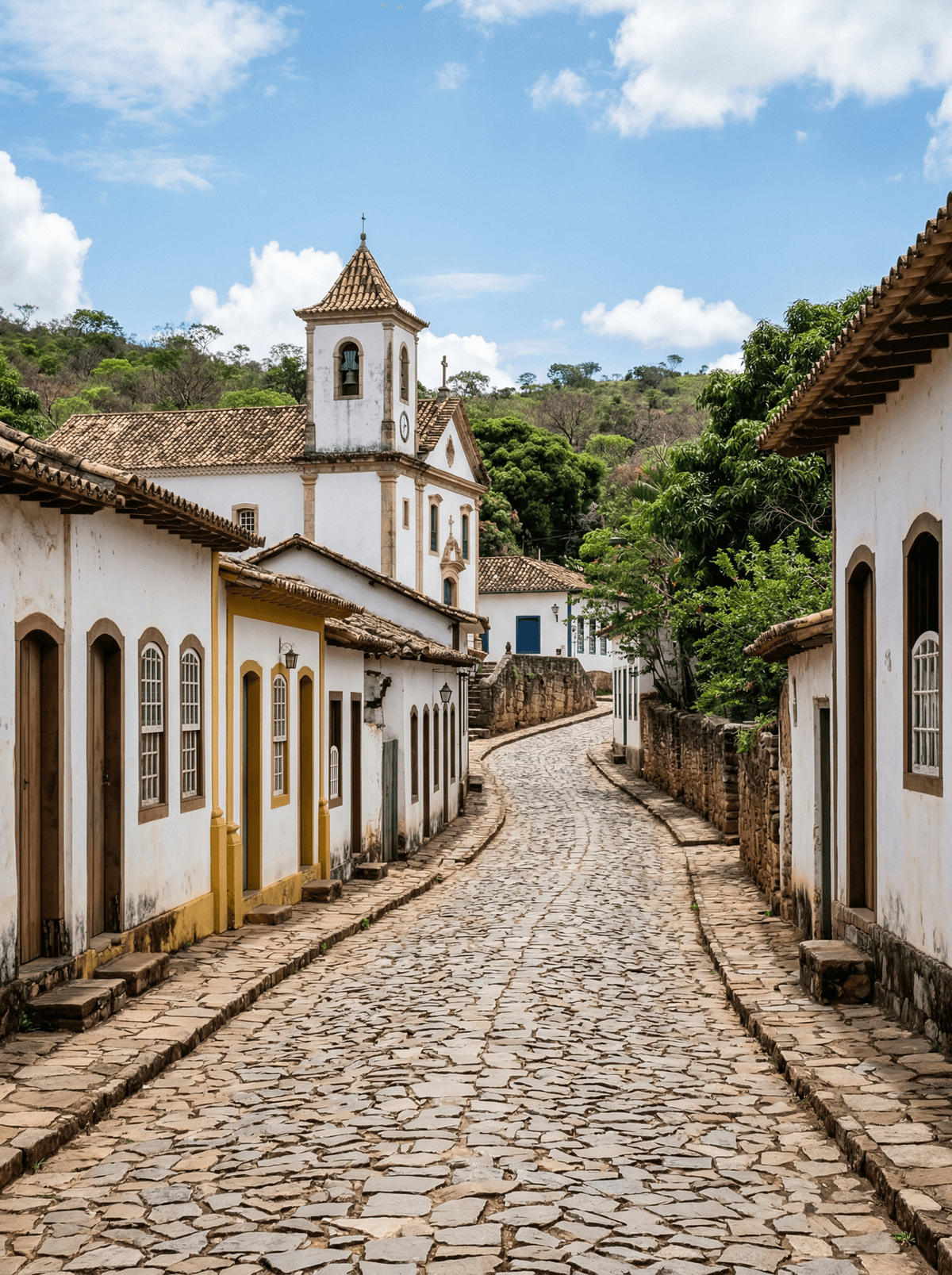
Goiás began in 1727 as the Arraial de Sant'Anna by the bandeirante Bartolomeu Bueno da Silva Filho, and it was the state capital until 1937, when the government moved out to a new city built for the purpose. The capital leaving is much of why the place still looks like this: over ninety per cent of its original baroque-colonial architecture survives, listed since the 1950s, and the historic centre went onto the UNESCO World Heritage list in 2001. The Fogaréu is the town's famous night, and its real history beats the legend it usually gets told with. It ran from about 1745 until it disappeared early in the twentieth century, and it exists today only because the Organização Vilaboense de Artes e Tradições put it back together in 1965 out of research with people who still remembered it; Goiás made it state intangible heritage by law in April 2023. The other person the town belongs to is Cora Coralina, born Ana Lins dos Guimarães Peixoto Bretas, who sold sweets out of the old house by the bridge over the Rio Vermelho and published her first book of poems at seventy-five, to praise from Carlos Drummond de Andrade.
Solo
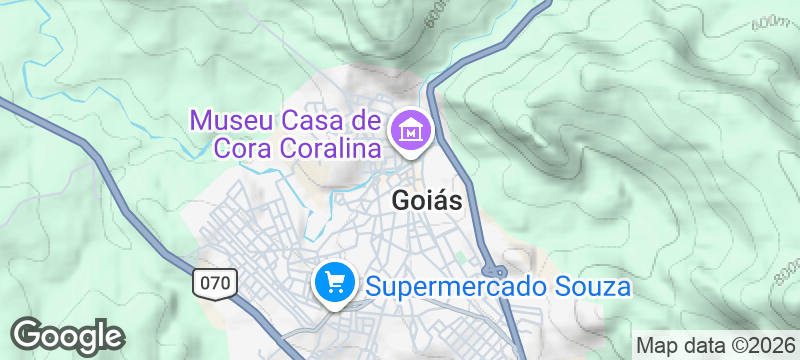
This is a town for walking with no plan, down streets that run into one another and out again, which is more or less how Cora Coralina described them. Give a morning to the Museu Casa de Cora Coralina by the bridge and the Igreja de Nossa Senhora da Abadia of 1790, painted ceiling and a museum of liturgical vestments inside, then eat the empadão at a counter.
Couple
Evenings are the point. The Rio Vermelho runs through the middle and the Serra Dourada and the Canta Galo close the valley in, so the light goes early and the churches come up lit against the hills. Stay inside the historic centre; the whole of it is walkable and nothing here wants a car after dark.
- The Procissão do Fogaréu leaves the Museu de Arte Sacra da Boa Morte at midnight on the Thursday of Holy Week, and the farricocos carrying the torches are hooded in bright colours, playing Roman soldiers in pursuit of Christ.
- The procession's history has a break in it: begun here around 1745, it died out early in the twentieth century and was rebuilt in 1965 by the Organização Vilaboense de Artes e Tradições from research with the town's own residents.
- Over ninety per cent of the municipality's original baroque-colonial architecture survives, listed since the 1950s, and UNESCO listed the historic centre in 2001.
- Cora Coralina sold sweets from the old house by the bridge and published her first book of poems at seventy-five; it is now the Museu Casa de Cora Coralina and one of the most visited places in town.
The doceiras are an institution here, boiling fruit in copper pans over a hard fire, and nobody leaves without a box of figo cristalizado, doce de leite, rosas de coco and pastelinhos.
Empadão goiano is built on guariroba palm heart and arroz com pequi on the cerrado's yellow fruit, which cooks in this town have been using since the eighteenth century.
Onomichi
Japan
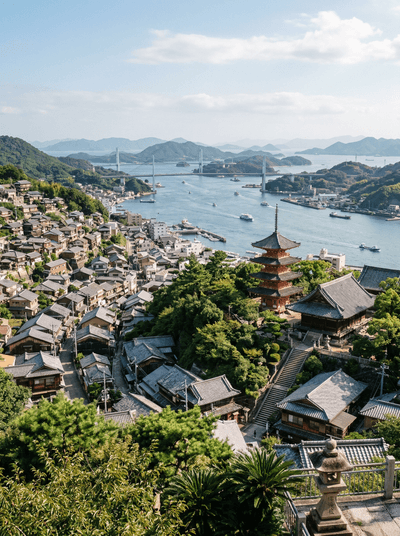
A hillside temple walk above a strait where cats watch you from every stone step.
Amasya
Turkey
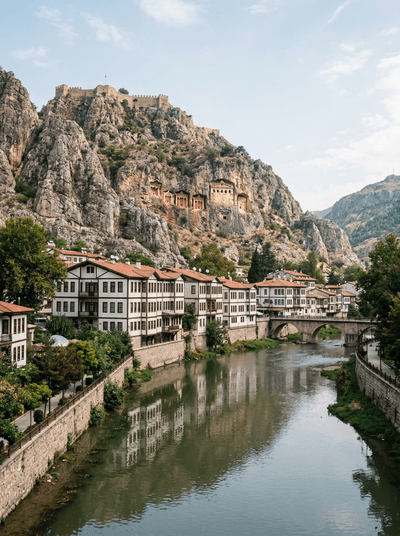
Ottoman mansions reflected in a narrow river gorge, Pontic rock tombs carved into the cliff above.
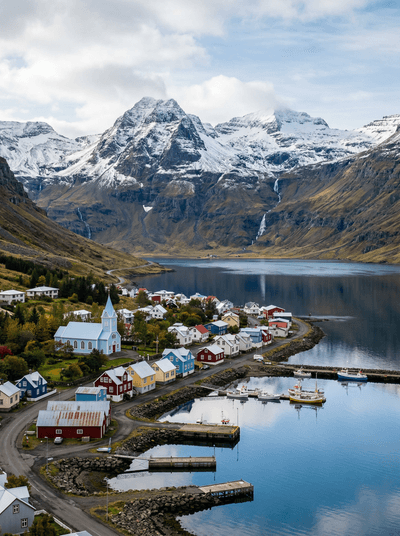
Seyðisfjörður
Iceland
A rainbow-paved path leading to a pale blue church beneath snow-streaked fjord walls.
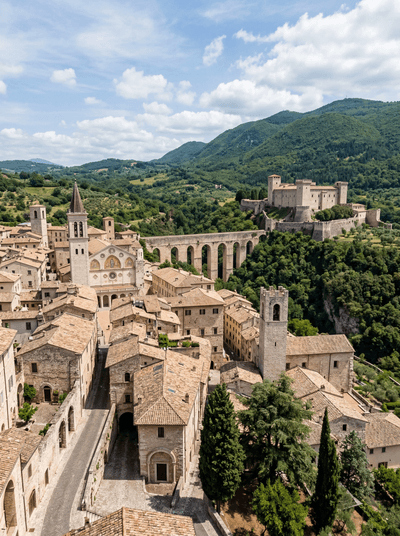
Spoleto
Italy
A medieval aqueduct leaps across a forested gorge, connecting a hilltop city to its mountain.
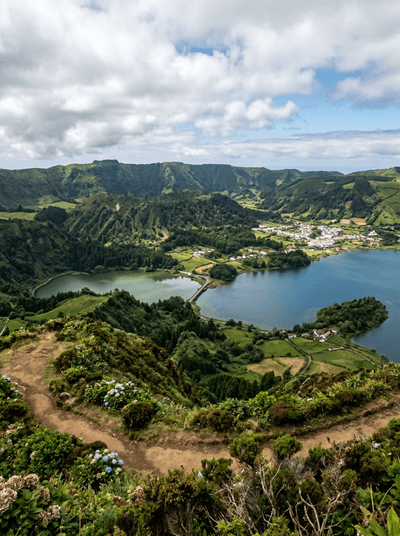
Sete Cidades
Brazil
Sandstone eroded into what look like seven separate cities, with rock paintings inside them.
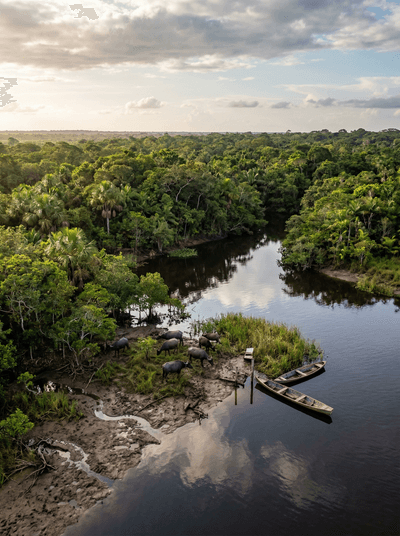
Ilha de Marajó
Brazil
The police here ride buffalo, because the flooded ground defeats anything with wheels.
Chapada do Araripe
Brazil
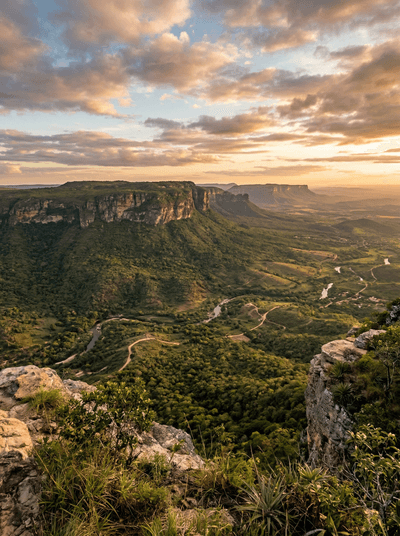
Diggers call this rock pedras de peixe, fish stones, and that is exactly what is inside.
Vale do Catimbau
Brazil
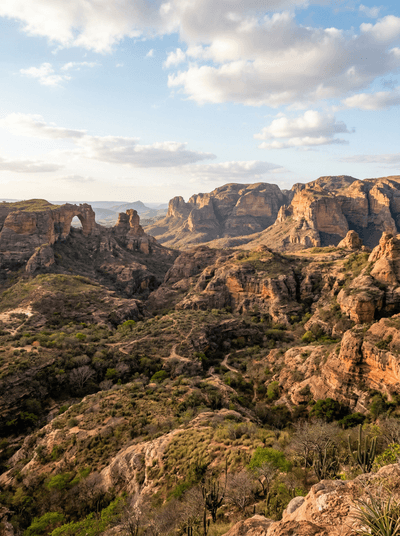
Sandstone cathedrals hiding paintings made under the overhangs some six thousand years ago.