England
Berwick-upon-Tweed
A fortified border town that changed hands between England and Scotland thirteen times.
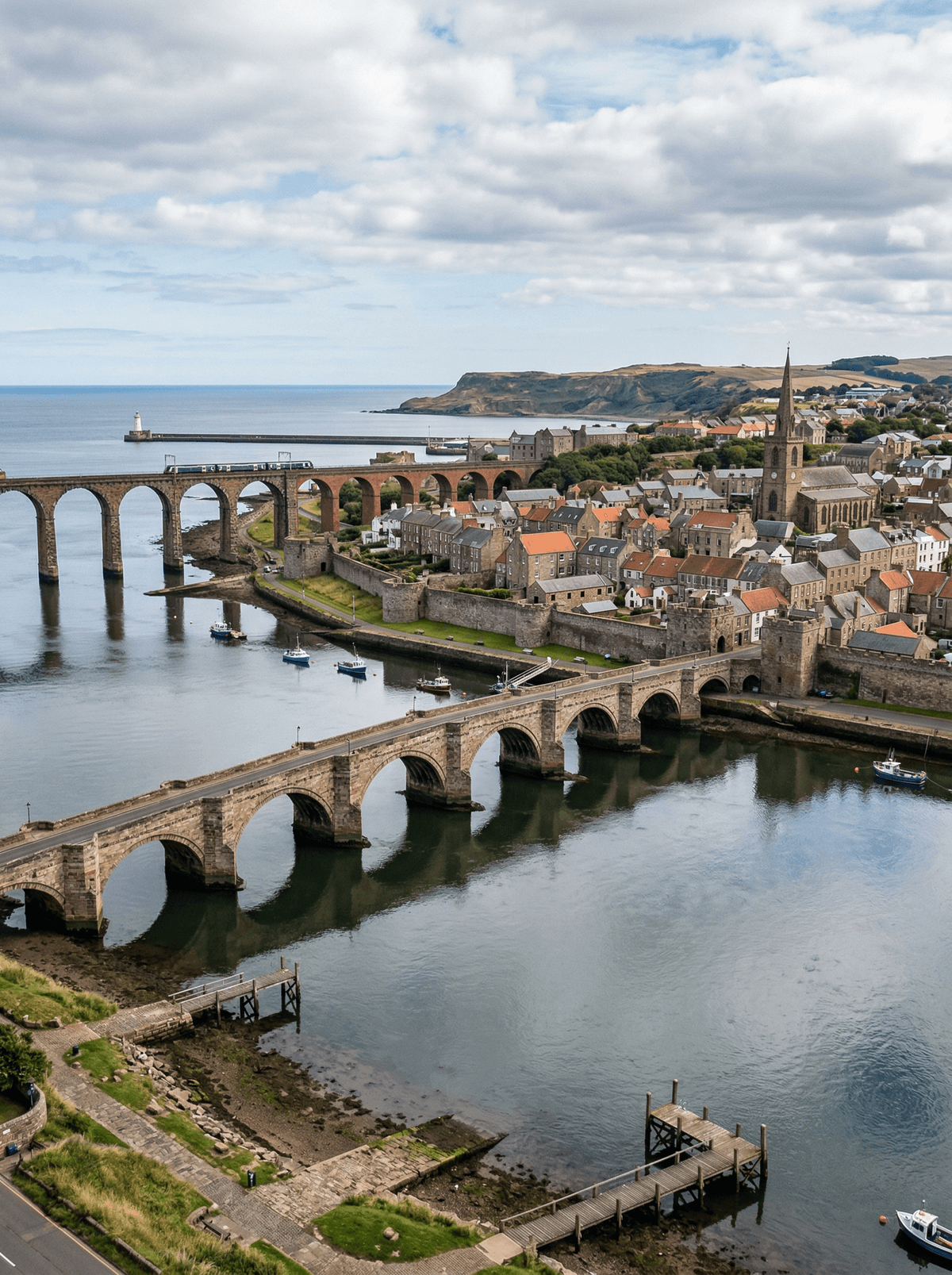
Elizabethan ramparts enclose a town that changed nationality thirteen times before England finally kept it. Berwick-upon-Tweed guards the mouth of the Tweed, a border town where English and Scottish identities blur with the pragmatism of a town that has been both.
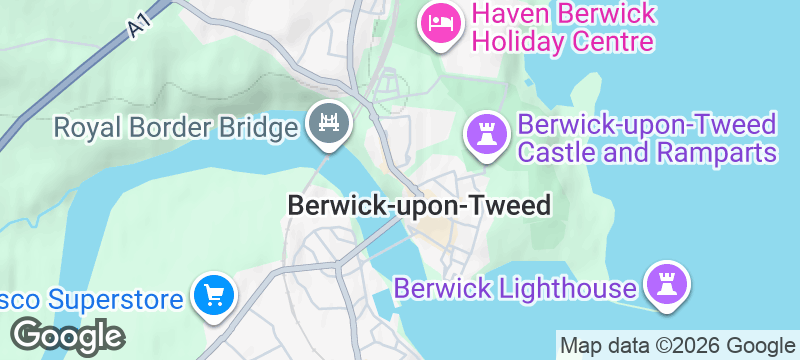
Berwick's Elizabethan walls, built between 1558 and 1569, are the most complete fortifications of their kind in Europe — engineered against artillery, their angled bastions replacing the round towers of an older age, and the full circuit is still walkable. Three bridges cross the Tweed in three different centuries' styles: the seventeenth-century Old Bridge, Robert Stephenson's 1850 Royal Border Bridge striding the valley on twenty-eight arches, and the modern road crossing. The Barracks, designed by Nicholas Hawksmoor in 1717, were Britain's first purpose-built military barracks, and L.S. Lowry painted the town obsessively in his later years — a marked trail now follows his favourite views. The town's football club even plays in the Scottish leagues, a border joke everyone here has stopped noticing, and Edinburgh is forty-five minutes up the line.
Solo
Walk the complete wall circuit alone and the town reveals itself — Tweed below, North Sea ahead, Scotland across the river. Berwick's identity puzzle rewards contemplation.
Couple
Cross the Old Bridge at dusk and look back at the silhouette — ramparts, spires and the Royal Border Bridge lit against the sky. Berwick's edges are where the beauty concentrates.
- Thirteen changes of nationality built Europe's best-preserved artillery walls.
- Three centuries of bridges cross the Tweed side by side, each telling its era.
- Lowry painted Berwick obsessively — a trail now follows his easel positions.
- Hawksmoor's Barracks garrisoned a town that never chose its country.
Kipper pâté in a micropub built into the old town walls.
Fresh crab from the harbour stalls, Scotland visible across the river.
Zacatecas
Mexico
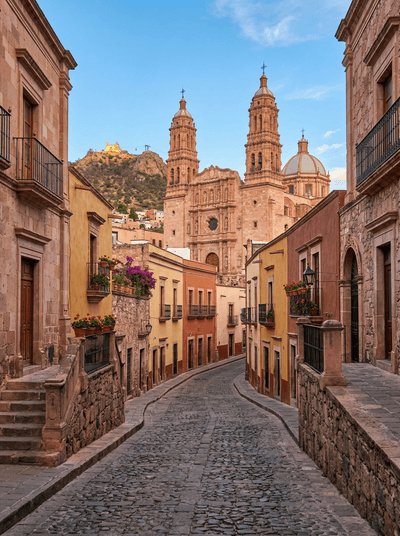
A pink-sandstone city climbs from silver mines to a cathedral carved like frozen lace.
Queenstown
Australia
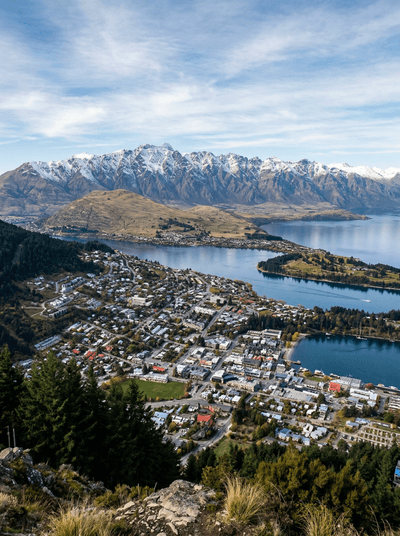
A century of smelting skinned Queenstown's hills; rainforest now creeps back at the edges.
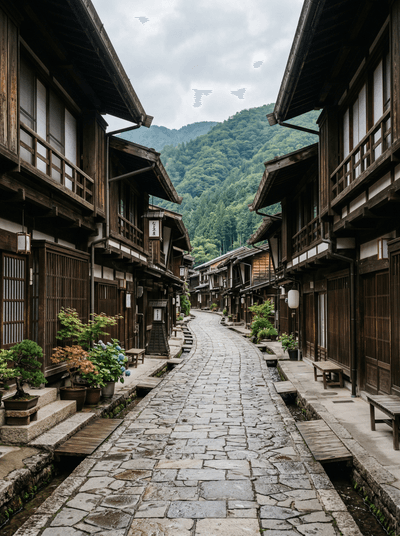
Narai-juku
Japan
A kilometre-long wooden post town where the street narrows until the Edo sky closes in.
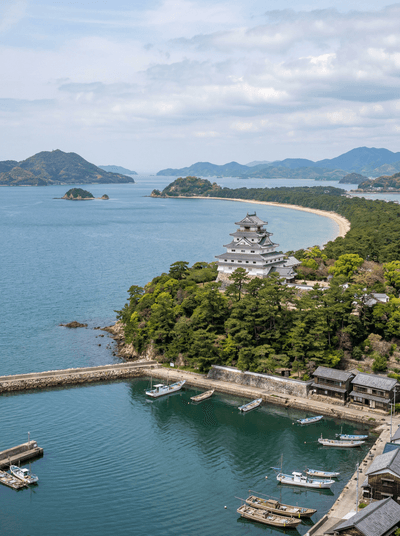
Karatsu
Japan
A pottery town where enormous lacquered floats charge through the streets each November.
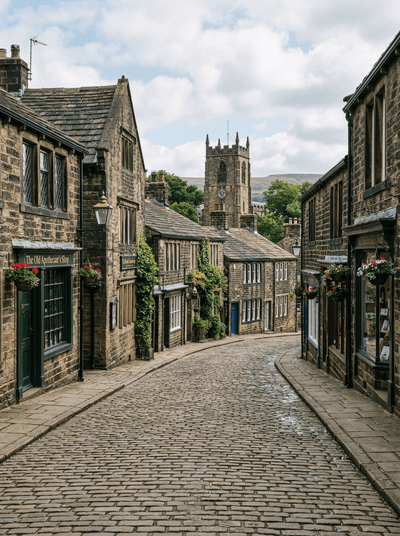
Haworth
England
Cobblestoned Brontë country where the wind still carries stories across the moor.
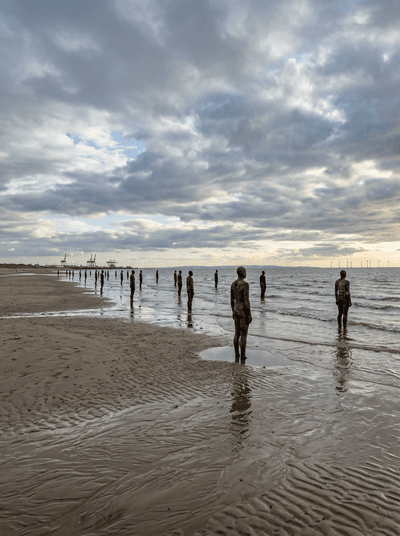
Crosby Beach
England
Iron men stand chest-deep in the tide, rusting patiently into the Irish Sea.
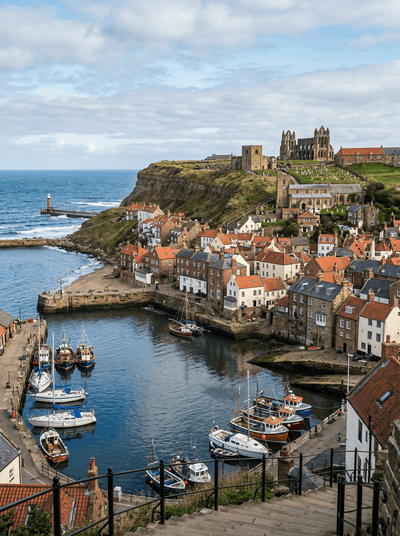
Whitby
England
Gothic abbey ruins over a harbour where Dracula came ashore and jet jewellery gleams black.
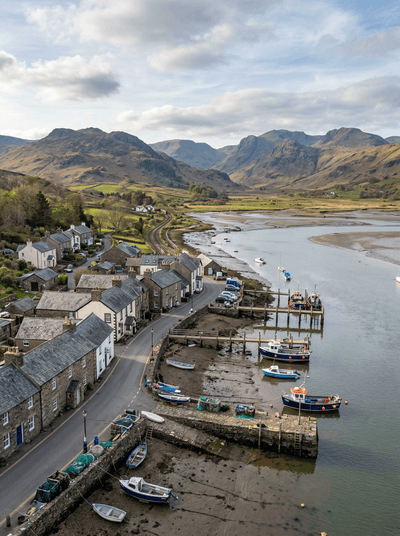
Ravenglass
England
A Roman bathhouse crumbles beside a narrow-gauge steam railway where the estuary empties to sand.