Japan
Karatsu
A pottery town where enormous lacquered floats charge through the streets each November.
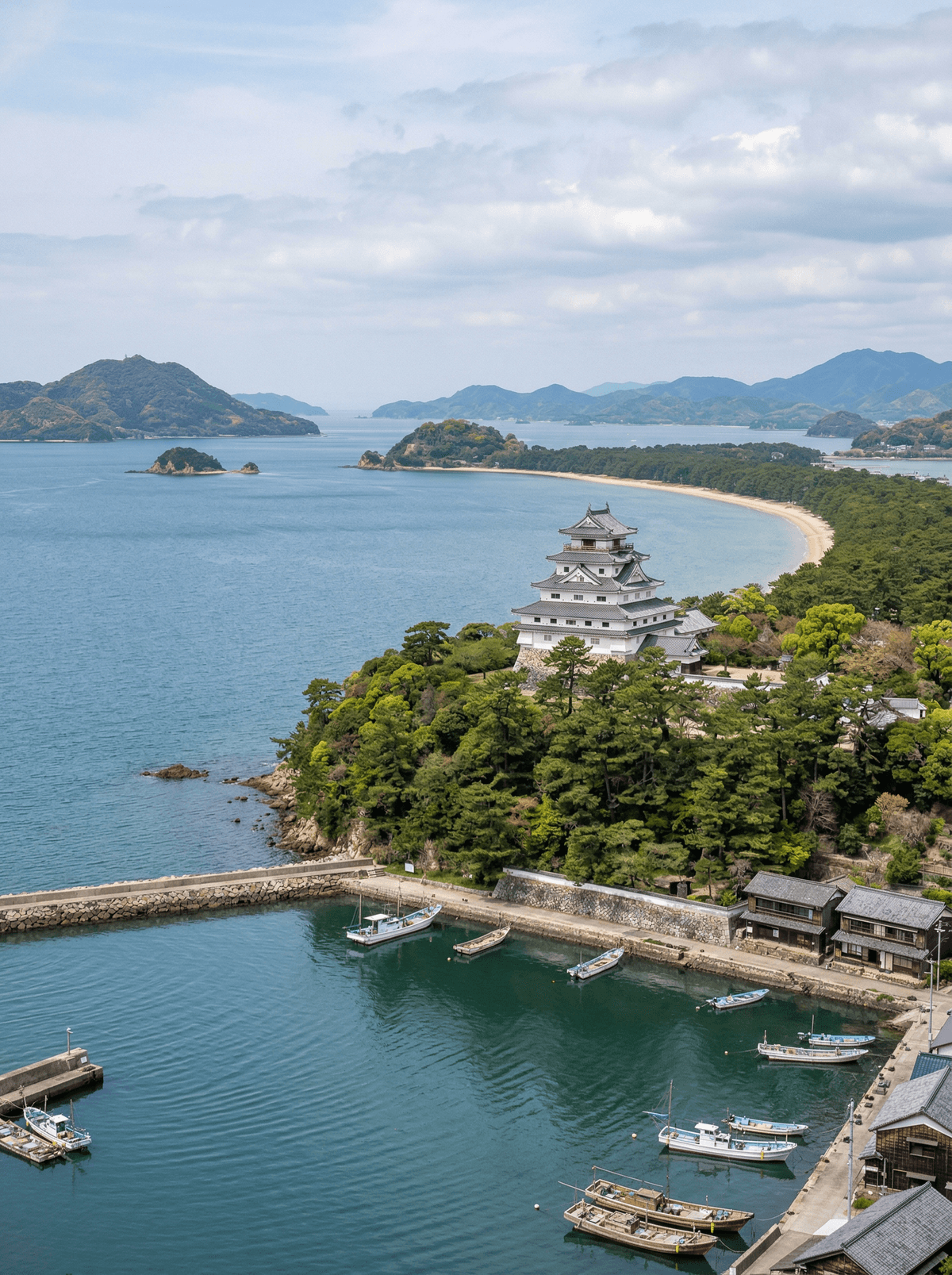
Each November, fourteen enormous lacquered floats shaped like sea bream, samurai helmets and lion heads are hauled through Karatsu's streets by teams of hundreds. The Karatsu Kunchi has thundered through this pottery town for centuries. Between festivals Karatsu moves more quietly — kiln smoke drifting from ceramic studios, and a five-kilometre pine forest curving along the beach toward Korea.
Karatsu faces the Genkai Sea from Saga Prefecture's northern shore, one of the closest Japanese cities to the Korean Peninsula and once the port for ships bound there. Karatsu-yaki, its rough, earthy pottery, grew from techniques that came across the strait four centuries ago and became a favourite of the tea masters; working kilns still fire on the hillsides and a gallery by the station shows the range. The Kunchi runs from 2 to 4 November, and for the other eleven months the fourteen floats wait in the exhibition hall beside the station. Niji no Matsubara, the Rainbow Pine Grove, is a five-kilometre stretch of about a million pines planted along the bay in the Edo period as a natural seawall and ranked among the three finest pine groves in Japan. Up the coast at Yobuko, a morning market more than a century old runs along a single street, and the squid is served so fresh it is still translucent.
Solo
Visiting working kilns, handling raw Karatsu-yaki bowls and walking the five-kilometre pine grove along the coast give a solo traveller a day of craft, coastline and quiet reflection.
Couple
Choosing pottery together at a working kiln, walking the pine-fringed beach, and eating morning-catch squid at Yobuko port weave craft and coastline into an unhurried day.
- Karatsu-yaki pottery has come out of these kilns for four centuries from techniques that crossed the strait from Korea — kilns still burn in the hillsides.
- The Kunchi festival sends fourteen enormous lacquered floats shaped as sea bream, dragons and samurai helmets through the streets from 2 to 4 November.
- The Rainbow Pine Grove — about a million pines along five kilometres of bay, planted in the Edo period as a seawall — ranks among the three finest pine groves in Japan.
- Yobuko's century-old morning market sells squid so fresh it is translucent, sliced alive at the stall.
Yobuko squid sashimi — sliced from a living squid, translucent, chewy and sweet — the dish nothing else raw can match.
Squid-stuffed steamed dumplings from Yobuko, soft and fluffy, the port's unlikely second act.
Elvas
Portugal
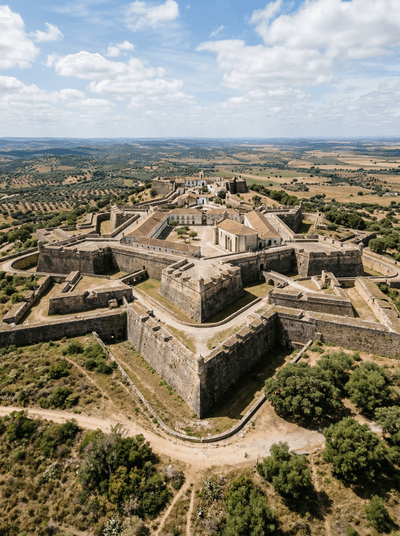
Walk the world's largest star fort at dawn, moat shadows tracing geometry across plains.
Walhalla
Australia
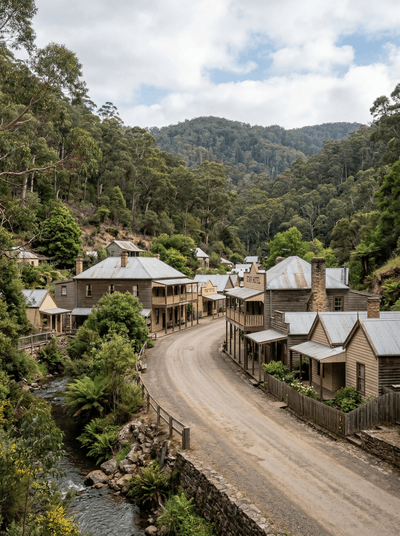
A railway snakes through fern valley to a gold town squeezed onto one narrow street.
Culross
Scotland
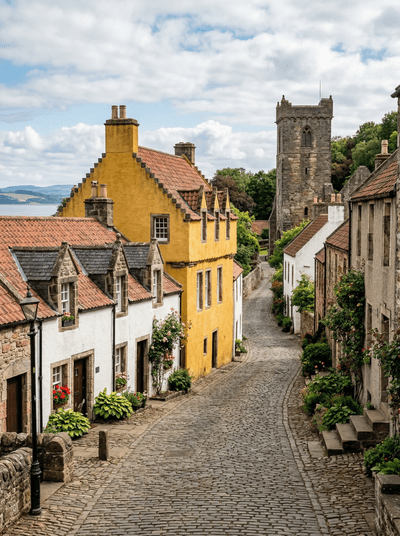
Cobblestoned lanes frozen in the 1600s, shadowed by one of Scotland's darkest witch-hunts.
Sortelha
Portugal
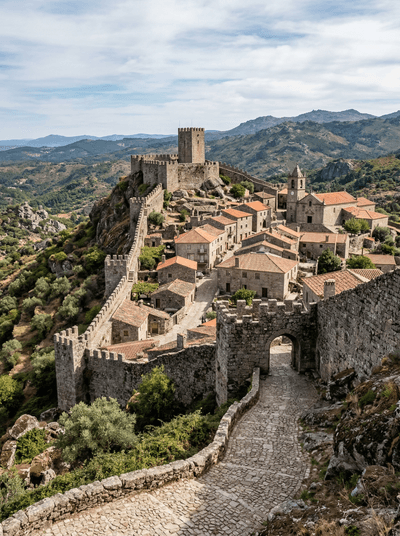
A walled medieval village where houses grow from the bedrock, granite merging with granite.
Yoshino
Japan
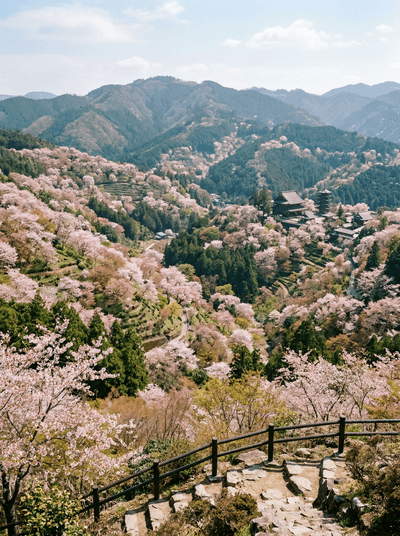
Thirty thousand cherry trees blooming up a sacred mountain in pink tidal waves.
Noto Peninsula
Japan
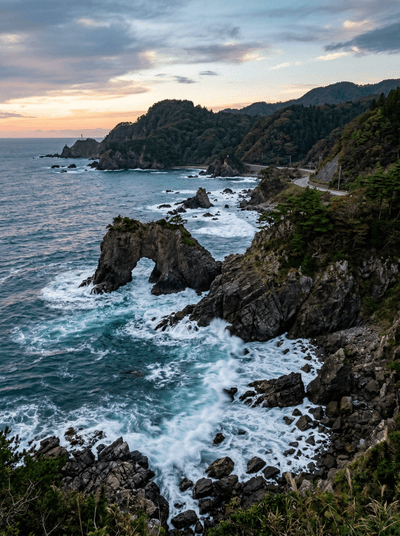
Rice terraces falling into the sea and lacquer villages on a coast an earthquake reshaped.
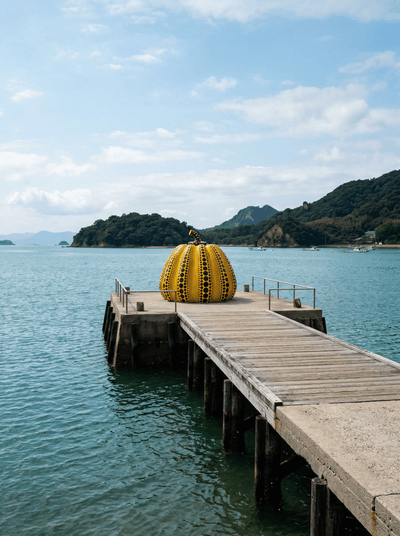
Naoshima
Japan
A fishing island where pumpkins glow yellow and museums burrow underground.
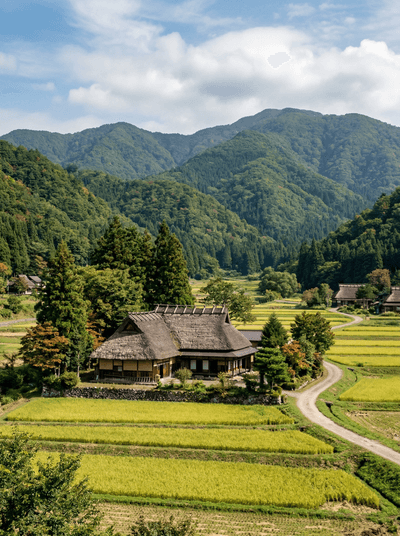
Tono
Japan
A folklore valley where kappa haunt the ponds and every farmhouse once stabled a horse.