Peru
Bosque de Pómac
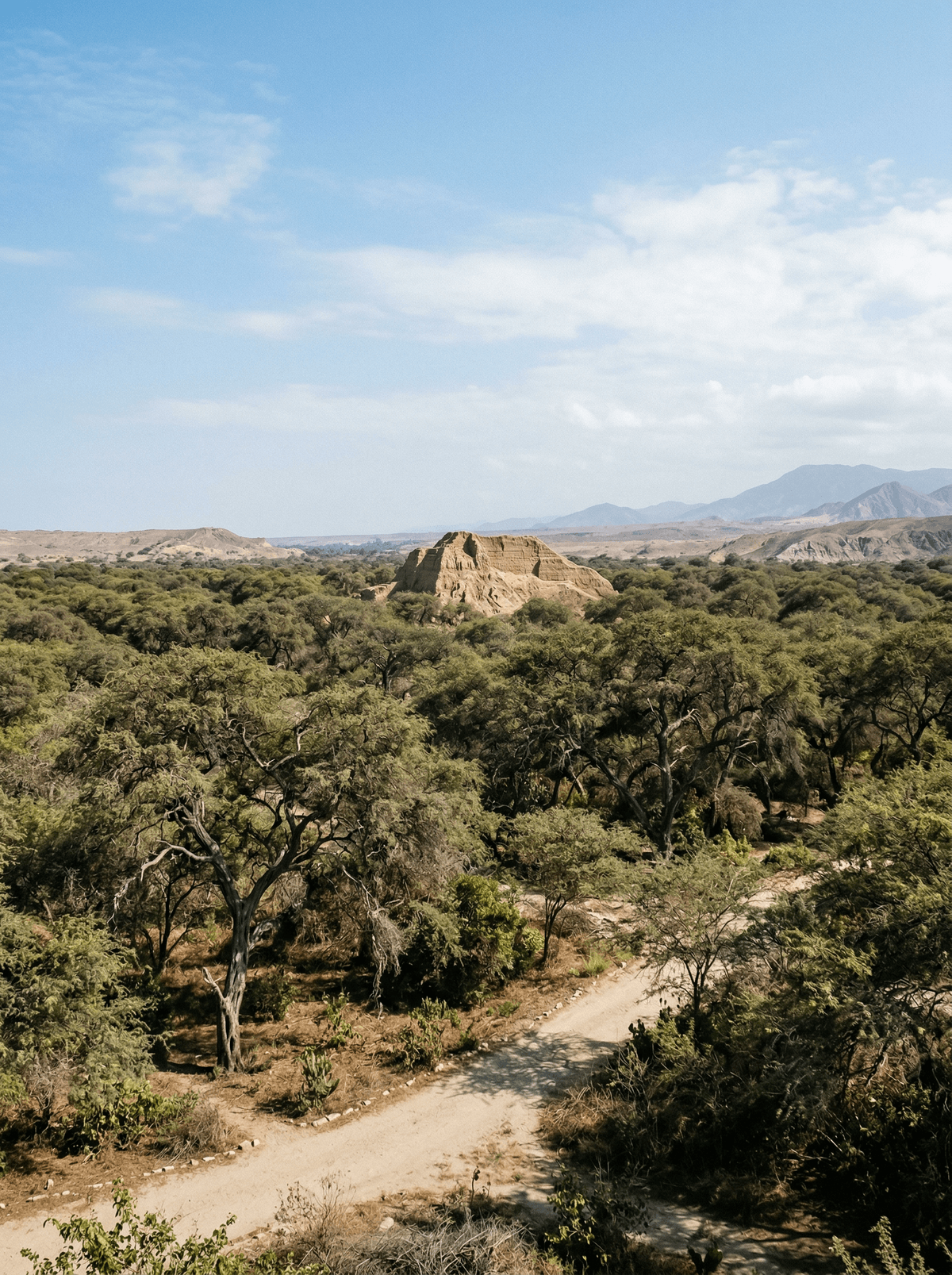
Sicán pyramids rising from a carob forest where a lord was buried in gold, face down.
Adobe pyramids rise from the shade of ancient algarrobo trees, their flanks softening into the forest floor. Light falls through the branches in warm columns and the air holds a dry sweetness — the scent the Sicán lords knew. For a site of this scale, the quiet is uncanny.
Bosque de Pómac Historic Sanctuary protects two treasures in one boundary: nearly 5,900 hectares of dry algarrobo forest — among the finest left in western South America — and the ceremonial heart of the Sicán culture, which raised its pyramids here between roughly 750 and 1375 CE. Archaeology delivered the site's signature image in 1991: the Lord of Sicán, buried face down and inverted, coated in cinnabar red, his gold mask turned toward the underworld — a funerary logic scholars still read carefully, presented at the museum with the tombs' masks and pectorals around it. The visiting is gentle and layered — designated circuits on foot or by authorised bicycle linking pyramids, viewpoints and birdlife, dry-forest endemics flitting between trees older than the monuments they shade.
Solo
Half a day wandering a designated circuit between pyramids and carob groves, at whatever rhythm the shade suggests.
Couple
The forest gives Pómac a warmth most ruins lack — shaded walks, valley heat, and an algarrobina cocktail afterwards from the forest's own syrup.
Family
Flat trails, dramatic pyramid silhouettes and a lord buried upside down in gold — young imaginations need nothing more. Water and supervision required.
Arroz con cabrito — kid goat braised with garlic and coriander over rice — Lambayeque's pride.
An algarrobina cocktail blended from the forest's own carob-pod syrup.
Aspendos
Turkey
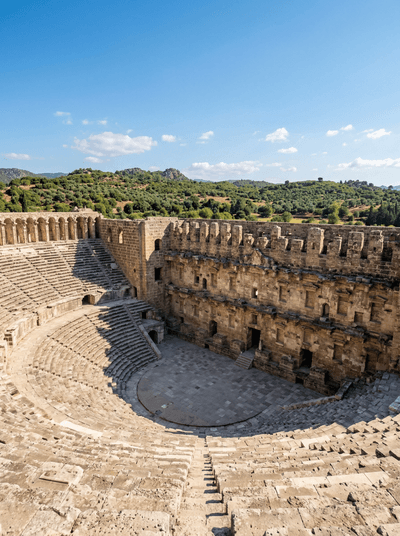
A Roman theatre preserved so completely that an unamplified voice carries to the topmost row.
Mycenae
Greece
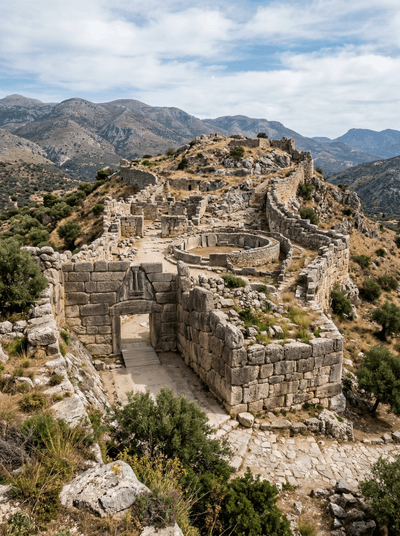
Walk through the Lion Gate into the Bronze Age citadel legend crowned as Agamemnon's.
Canterbury
England
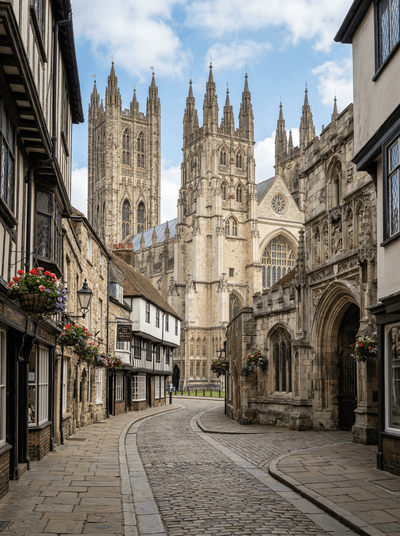
Pilgrim stones worn smooth by eight centuries of kneeling, glowing golden at dusk.
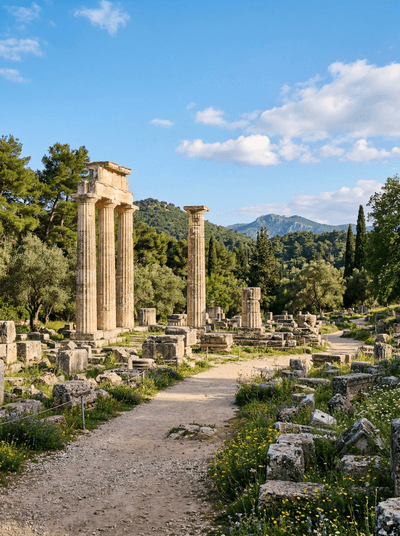
Olympia
Greece
Ancient starting blocks still mark the stadium where Olympic contests unfolded for centuries.
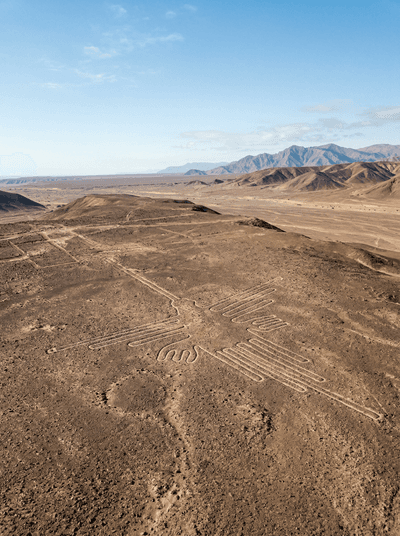
Nazca
Peru
Ancient figures etched so large across the desert they resolve only from above.
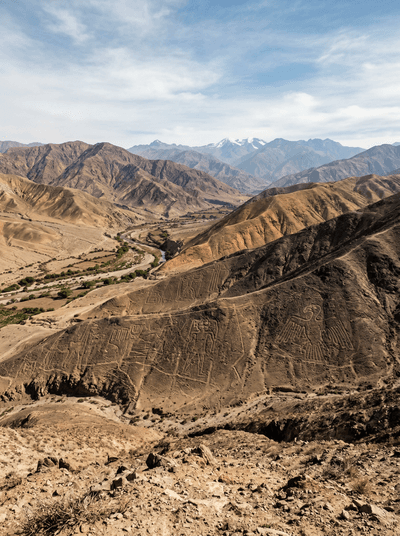
Palpa
Peru
Hillside geoglyphs with human faces, in a valley the tour planes ignore.
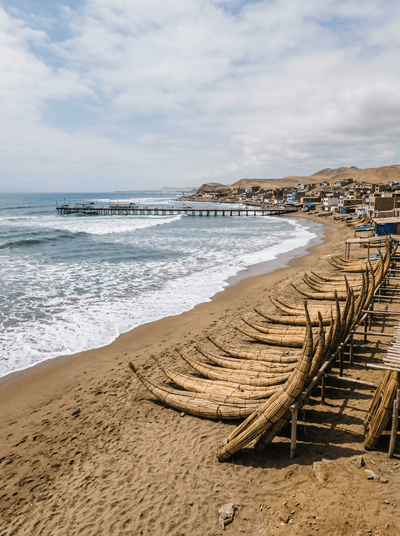
Huanchaco
Peru
Fishermen still ride reed boats through the surf, as Moche potters drew them.
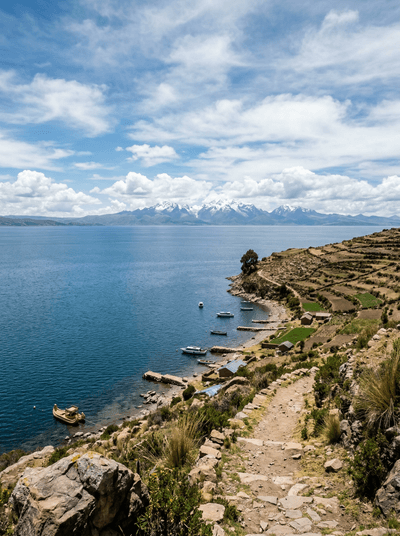
Lake Titicaca
Peru
So high the air stings, so still the sky sinks into the water.