Peru
Huanchaco
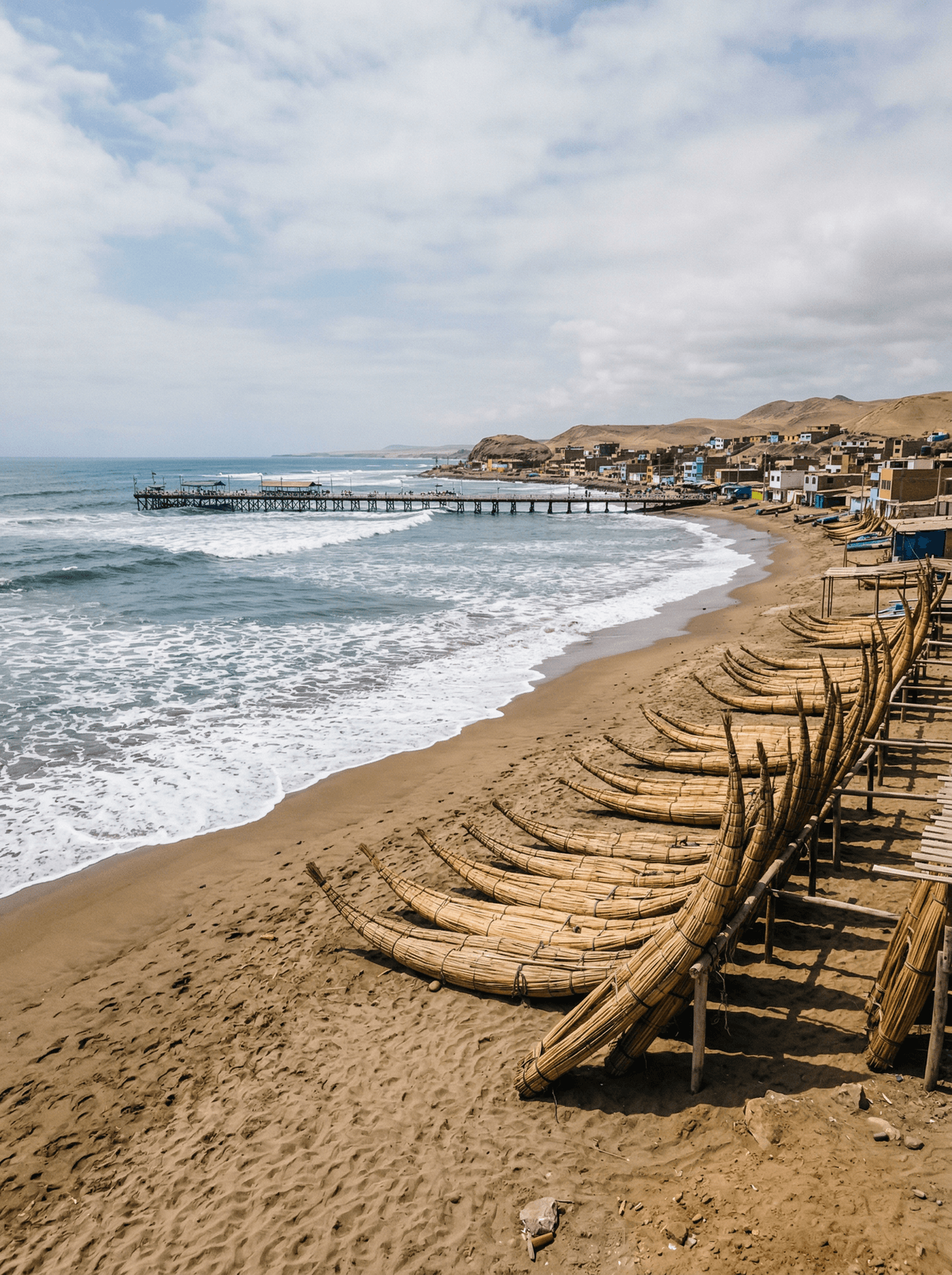
Fishermen still ride reed boats through the surf, as Moche potters drew them.
Dawn at Huanchaco begins with silhouettes: fishermen paddling narrow reed craft through Pacific surf, outlines dark against silver water, working a vessel whose form appears on Moche ceramics almost two millennia old. Afterwards the caballitos de totora dry upright in rows on the sand, and lime and salt drift from the opening ceviche stalls.
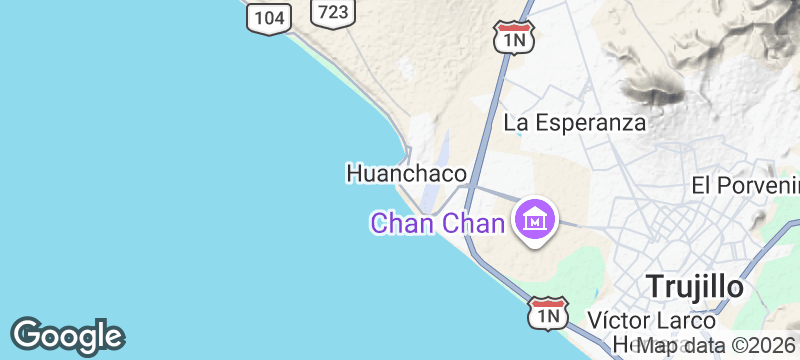
Huanchaco, on the coast outside Trujillo, keeps one of the Pacific's oldest working traditions: the caballito de totora, the reed fishing craft whose lineage the north coast's archaeology draws in fired clay. The tradition is living rather than embalmed — materials and methods have adapted across the centuries, and the boats remain working tools, watched respectfully from the shore rather than treated as props. Around them stretches an easy-going beach town: a long working shore shared by fishers and surfers, a promenade of ceviche kitchens serving the day's catch, and pre-Columbian Peru at its densest just inland — Chan Chan's adobe immensity and the painted temples of El Brujo both within a base-camp's reach.
Solo
Watch the launch at dawn, eat ceviche by mid-morning, and stand in Chan Chan by afternoon — living tradition and deep history in one solo day.
Couple
The fishing village rhythm — morning catch, afternoon ceviche, sunset behind drying reed boats — makes a low-key romantic base.
Family
Children get something real to watch: boats launched, catch landed, ceviche served in sight of the craft that caught it. Supervised water only, conditions permitting.
- Caballitos de totora still fish these waters, their form drawn in Moche clay centuries ago.
- The reed boats dry upright on the sand — Peru's most quietly iconic beach image.
- Seafront kitchens serve ceviche from whatever the morning boats landed.
- Chan Chan and El Brujo put the ancient north coast within a day's reach.
Ceviche of the day's catch, eaten while the reed boats dry beside you.
Shámbar — the Monday stew of wheat, pulses and pork — the north coast's weekly ritual.
Ras al Jinz
Oman
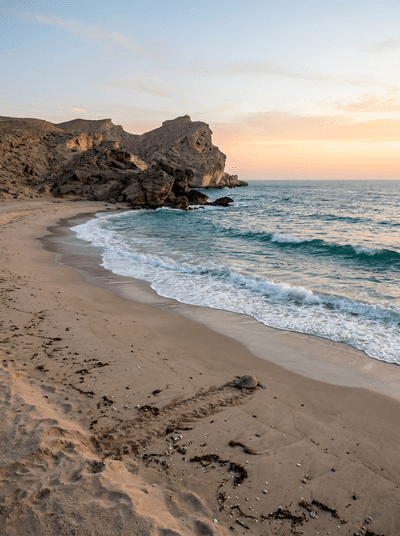
Green turtles haul ashore by night on one of the Indian Ocean's busiest nesting beaches.
Manono Island
Samoa
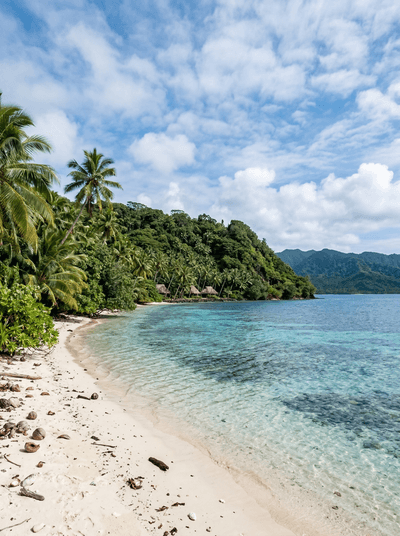
An island with no cars, no dogs, and a grave of ninety-nine stones, one wife each.
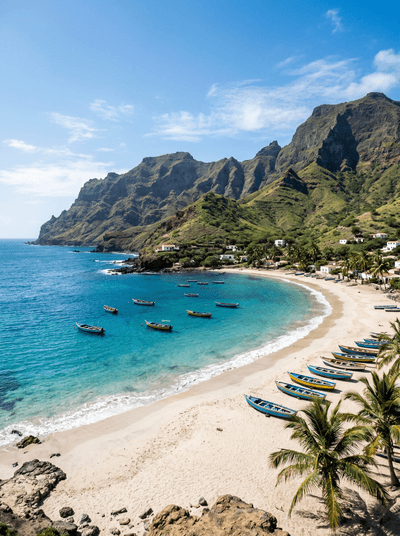
Tarrafal
Cape Verde
A palm-shaded swimming cove shares its town with the prison called the Camp of Slow Death.
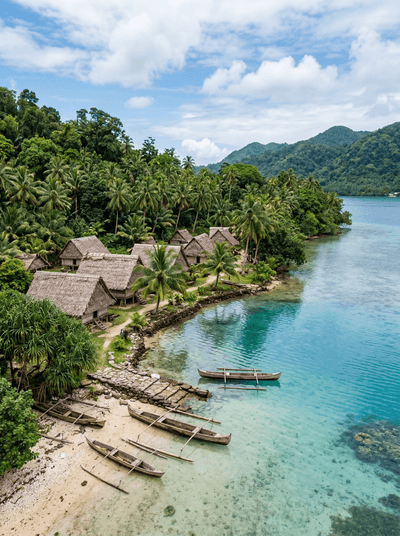
Yap
Micronesia
Stone money too heavy to move, so ownership transfers by word alone on this jungle island.
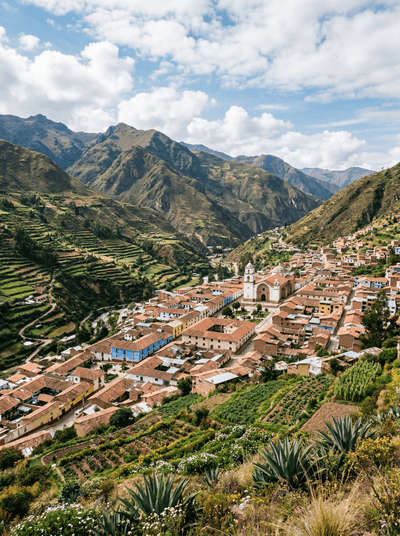
Tarma
Peru
Streets carpeted in fresh flowers for Holy Week — a town redrawn in petals.
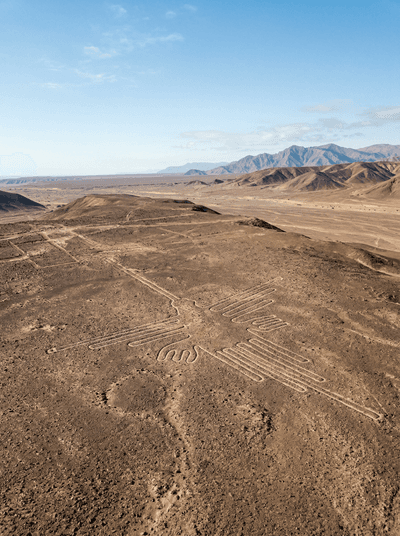
Nazca
Peru
Ancient figures etched so large across the desert they resolve only from above.
Sechín
Peru
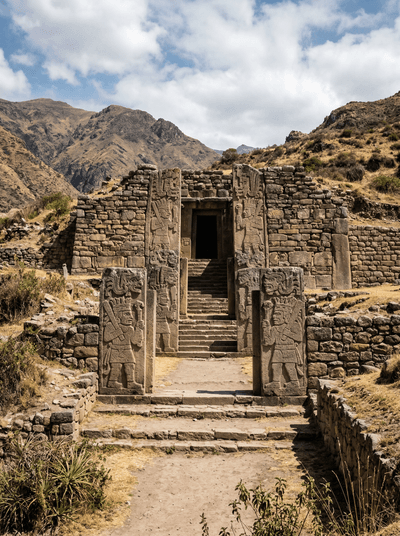
Temple walls carved with warriors and the dismembered — 3,600-year-old stone testimony.
Túcume
Peru
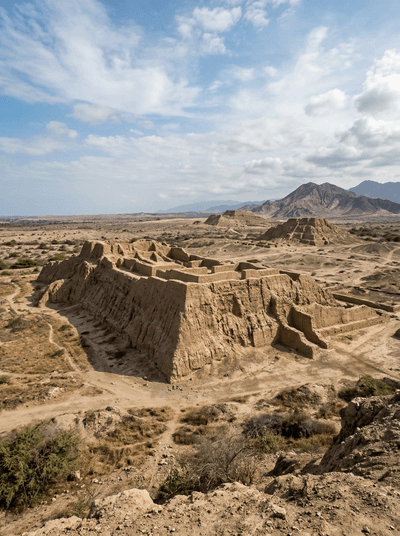
A plain of eroded adobe pyramids rising from sugar cane like a drowned civilisation.