Peru
Nazca
Ancient figures etched so large across the desert they resolve only from above.
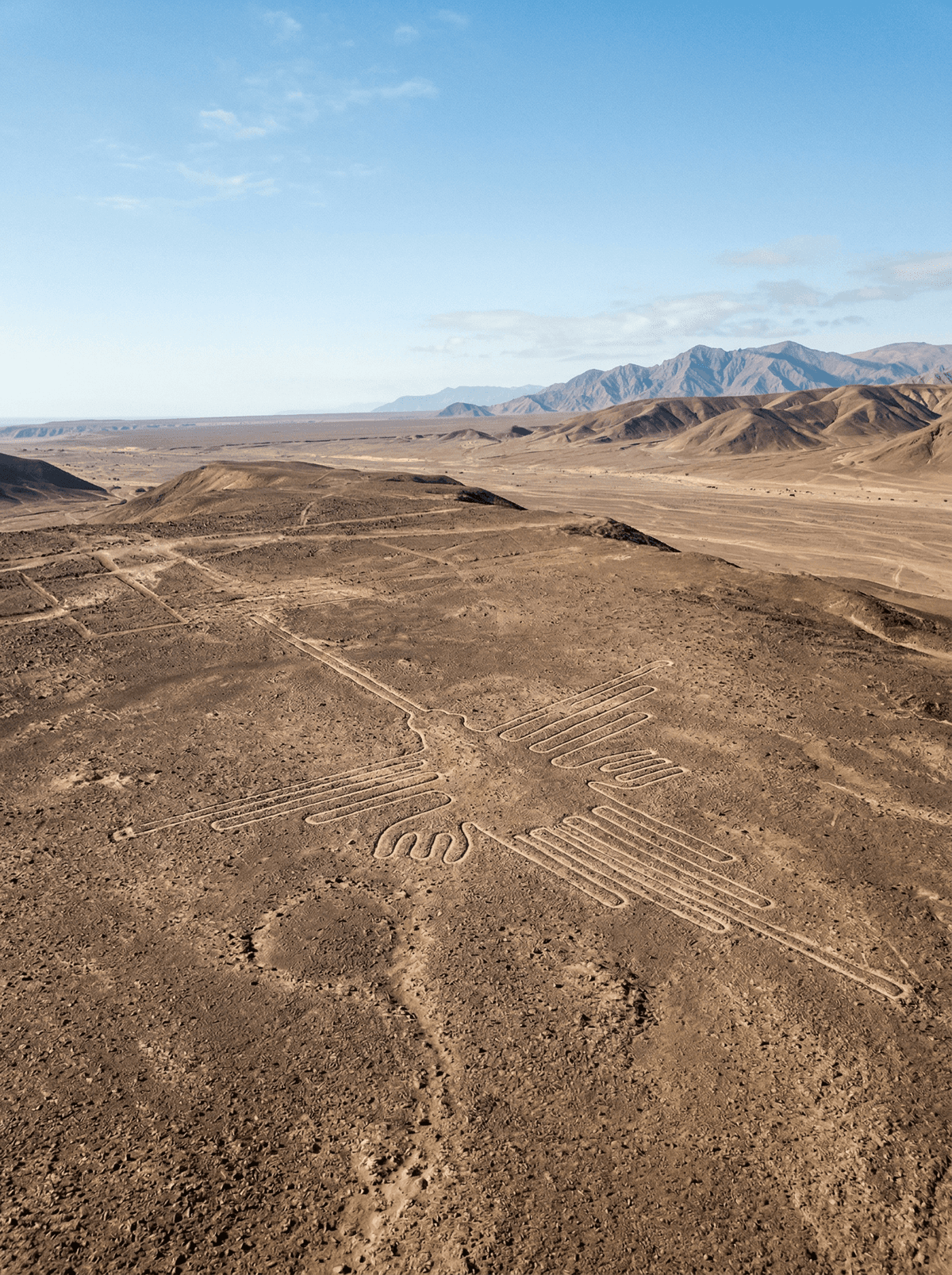
The desert floor at Nazca is a canvas the size of a city. From the ground the lines read as shallow pale scratches in rust-red pebbles; from a roadside tower, selected figures assemble; and from a banking aircraft the full drawings snap into focus — condor, spider, hummingbird at the scale of stadiums. The shock is not that they exist, but that their makers never saw them whole.
The Lines and Geoglyphs of Nasca and Palpa form a World Heritage landscape drawn across the desert between roughly 200 BCE and 700 CE, made by lifting iron-dark pebbles to expose pale ground — a technique so simple the near-rainless climate has preserved it for two millennia. Hundreds of straight lines, geometric figures and animal designs have been documented, their purpose still honestly argued over: calendar, water ritual, offerings to watching gods. The viewing hierarchy matters — observation towers give ground truth, authorised overflights give the full canvas, and the fragile surface itself is never walked. Small-aircraft flying here carries a documented safety history — the overflight decision deserves real care, and the museum and towers are substance, not consolation.
Solo
Pair an overflight with the tower and museum — the ground story of how the lines were made is half the wonder.
Couple
Seeing the hummingbird resolve beneath a banking wing is a shared gasp; follow it with a slower archaeological stop rather than racing back north.
Family
The tower and museum suit older children best — the flight itself is a family judgement call, not a default.
- Stadium-scale figures — condor, spider, hummingbird — resolve only from the air.
- Two millennia of near-zero rain preserved drawings made by moving pebbles.
- Their purpose is still argued — calendar, water cult, or offerings to sky gods.
- Observation platforms give ground truth; the protected surface itself is never walked.
Pallares — Ica's soft lima beans stewed with onion and chilli.
Tejas: manjar blanco and nuts under a sugar shell, built to survive a desert day.
Stonehenge
England
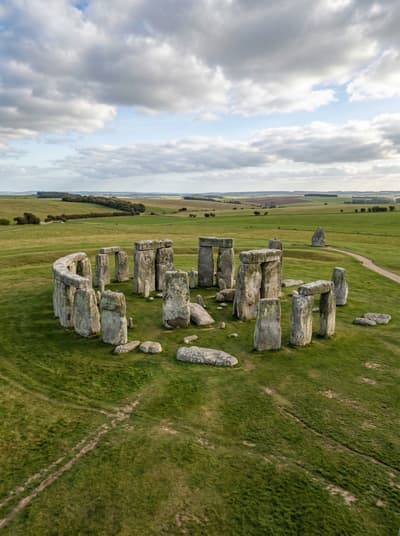
Bluestones hauled a hundred and fifty miles to stand in a circle nobody can fully explain.
Lascaux
France
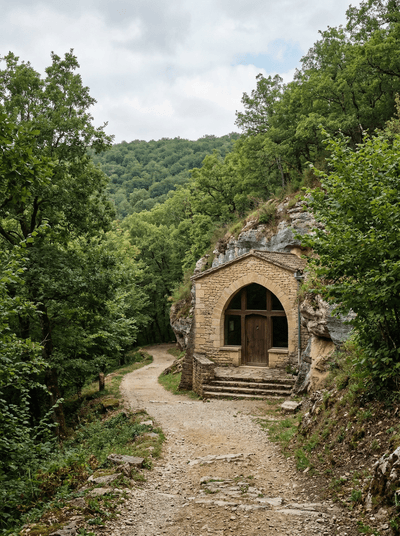
Ice-age bison replicated so precisely your brain forgets it is standing in a copy.
Makasutu Cultural Forest
Gambia
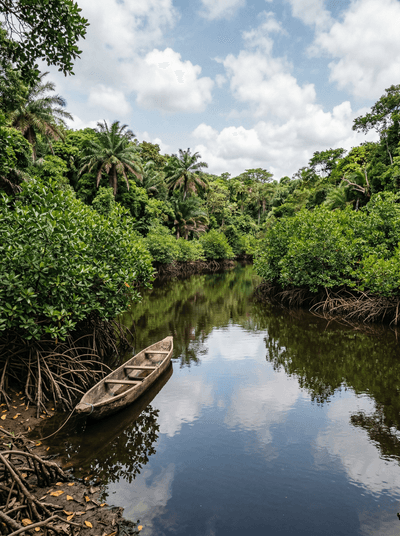
A forest named for Mecca: palm wine drips from the trunks, baboons patrol the floor.
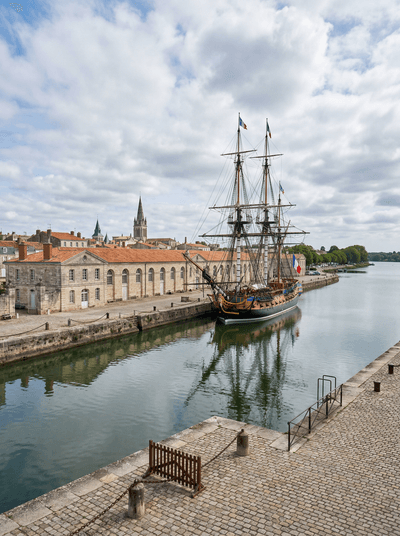
Rochefort
France
A naval town where they rebuilt an eighteenth-century frigate plank by plank in the original dock.
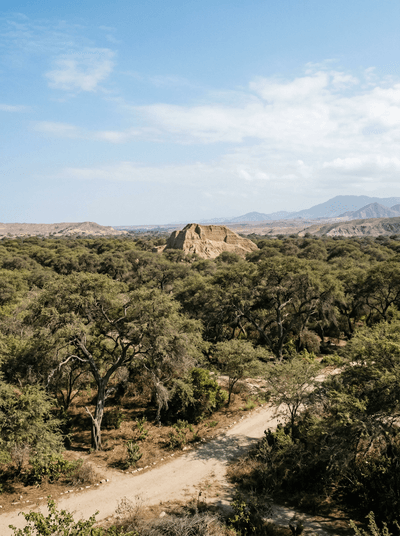
Bosque de Pómac
Peru
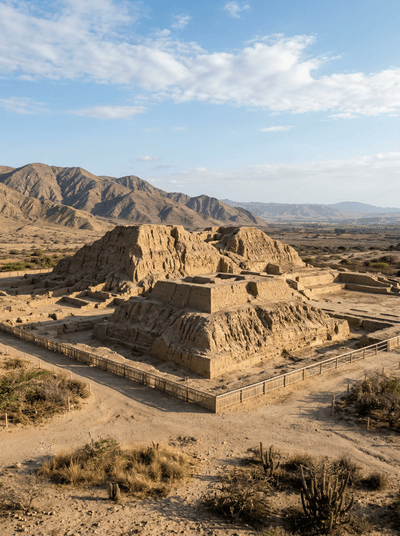
Sicán pyramids rising from a carob forest where a lord was buried in gold, face down.
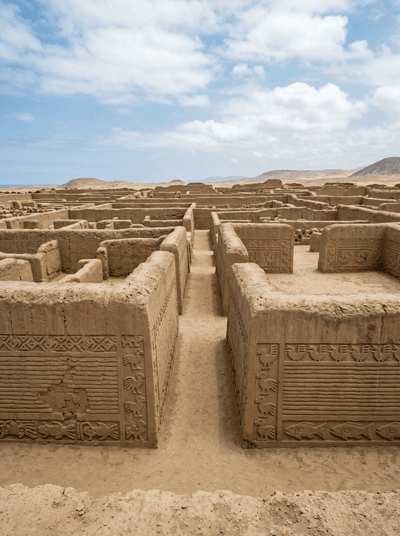
Chan Chan
Peru
The Americas' greatest earthen city — walls still carved with fish and waves after a millennium.
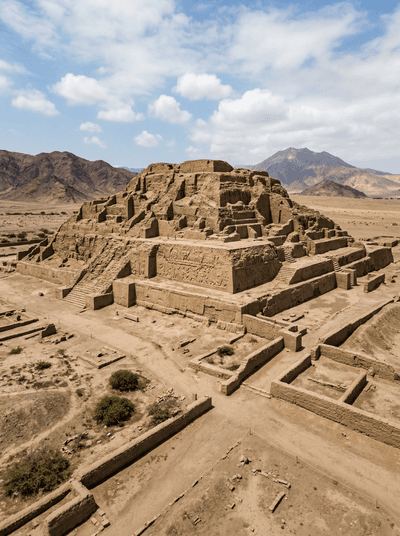
Huacas de Moche
Peru
Moche murals of spider gods and warrior priests, the paint still vivid after 1,500 years.
Sipán
Peru
An unlooted Moche royal tomb whose gold rewrote the archaeology of the Americas.