
Argentina
Bosques Petrificados de Jaramillo
Trees turned to stone in the Jurassic, lying where they fell on windswept steppe.
The petrified trunks of Jaramillo are around 150 million years old, and the largest — some 35 metres long, lying where they fell — belonged to giant araucaria ancestors that grew when this corner of Patagonia was subtropical forest. The conversion of wood to mineral is so precise that growth rings and bark texture remain legible in stone weighing tonnes, scattered across black basalt and pale gravel beneath an immense wind-scoured sky.
The Monumento Natural Bosques Petrificados de Jaramillo, protected since 1954, preserves a Jurassic forest buried by Andean volcanic ash and replaced, cell by cell, with silica over geological time. The largest specimens run to 35 metres in length and more than two metres across — trees that once stood 50 metres tall in a landscape nothing like today's semi-arid steppe. Few visitors reach it in any year: the approach is a remote road off Ruta 3 with conditions worth checking against ranger information before leaving the settlements, the station is small, and everything you need — food, water, patience — travels in with you and leaves with you. No fencing separates the circuit from the fossils; the honour system is the interpretation.
Solo
Walking the circuit alone, the trunks forcing continuous readjustment of how large a prehistoric tree could be, is one of Patagonia's most contemplative hours — genuinely alone with deep time.
Couple
The trunks need time and proximity, and the site works best as an unhurried half-day woven into a Patagonian road journey — reading the landscape rather than collecting attractions.
- Jurassic trunks lie where they toppled, buried in ash and rebuilt in silica.
- The largest stone trees run 35 metres long, their growth rings still legible.
- The constant Patagonian wind makes the trunks double as windbreaks on the open steppe.
- A small ranger station and an honour-system circuit are the only infrastructure.
Provisions packed from the Ruta 3 settlements — there is nothing at the forest itself.
Patagonian lamb and wind-chapped empanadas at a roadside parador on the way through.
Painted Desert
Australia
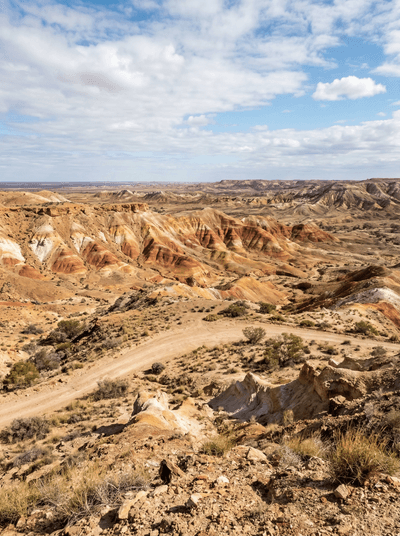
Crimson, cream and gold hills erupt from flat outback beside a remote public route.
Tarkine
Australia
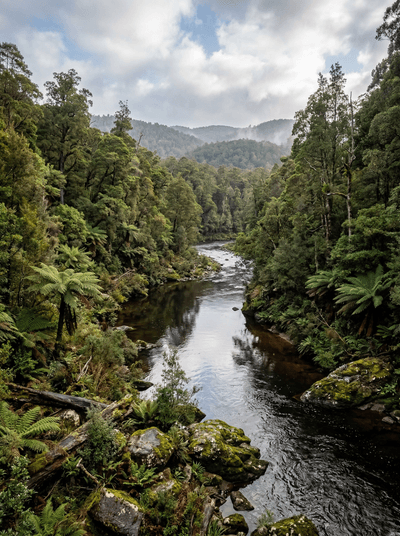
Moss swallows fallen trunks where rainforest, wild rivers and exposed coast become takayna.
Jura
Scotland
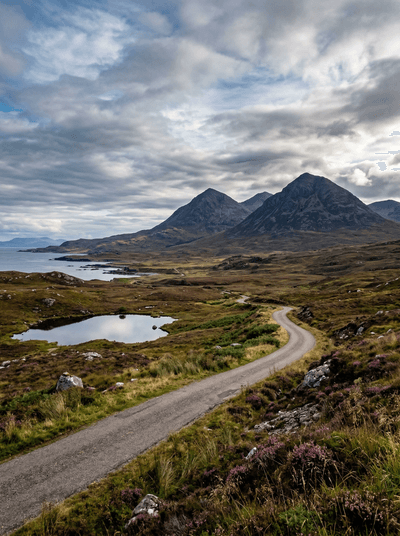
Red deer outnumber humans thirty to one on the island where Orwell wrote 1984.
Antofagasta de la Sierra
Argentina
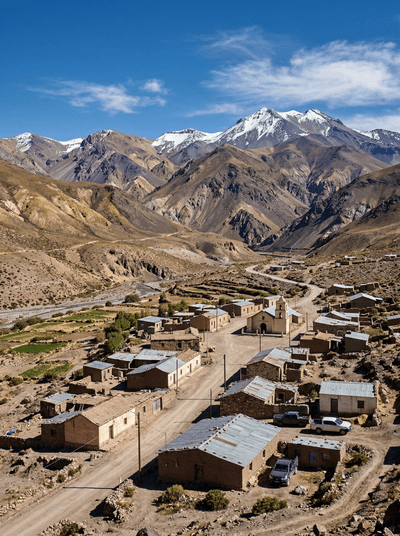
Puna silence at 3,300 metres as black lava fields meet flamingo lagoons.
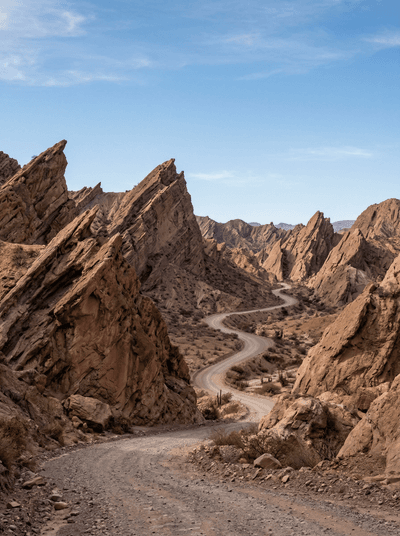
Quebrada de las Flechas
Argentina
Tilted stone slabs pierce the earth like frozen arrows, a canyon turned sideways.
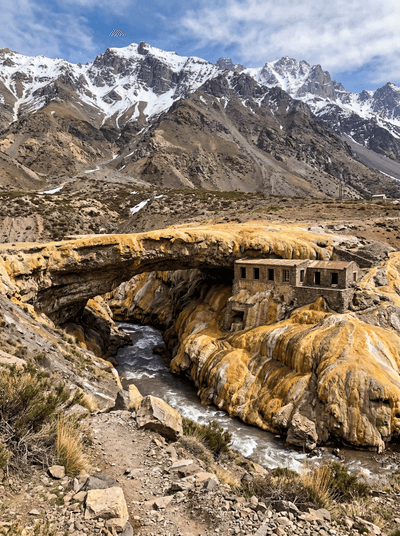
Puente del Inca
Argentina
A natural stone bridge stained sulphur-yellow, slowly absorbing the ruins of a spa hotel.
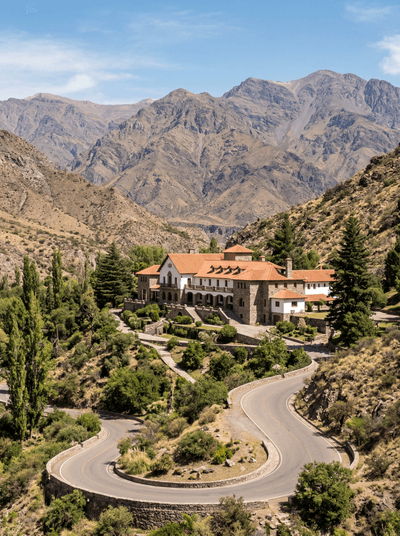
Villavicencio
Argentina
The shuttered hotel printed on every Argentine water bottle stands beyond mountain switchbacks.