Argentina
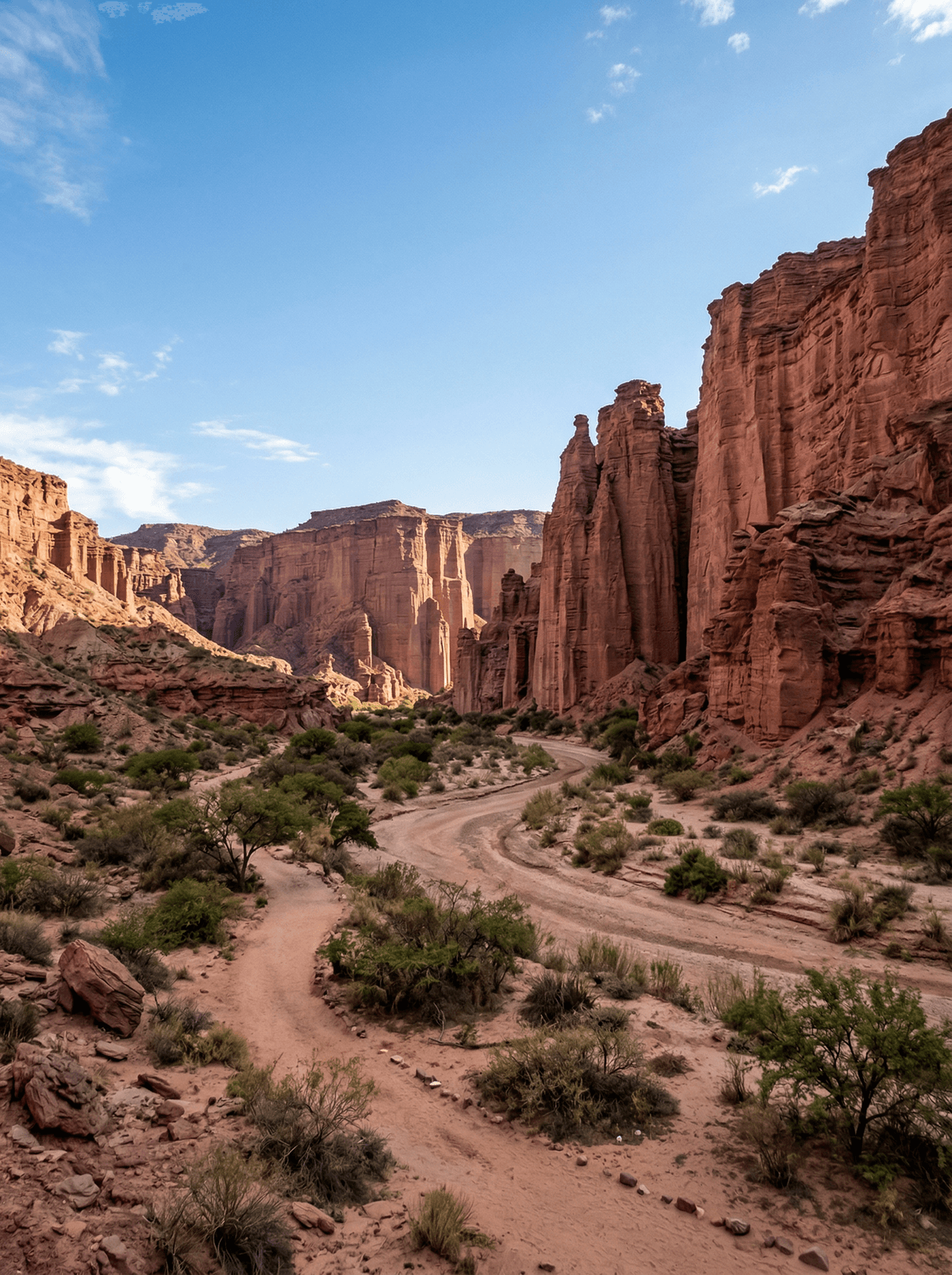
Parque Nacional Talampaya
Red sandstone canyons where condors nest above dinosaur-age trackways in the riverbed.
Talampaya's canyon walls rise well over a hundred metres in deep-red Triassic sandstone, and the defile between them funnels the wind and carries sound so cleanly that a low voice travels the slot intact. The same rock faces hold early dinosaur-line trackways, pre-Inca petroglyphs and Triassic plant fossils, exposed by a quarter of a billion years of erosion — while condors ride the canyon's thermals at eye level with the rim.
Jointly UNESCO-listed with neighbouring Ischigualasto since 2000, Talampaya protects over two hundred thousand hectares of a Triassic sequence with scarcely a rival — rock documenting life's recovery after the largest mass extinction in Earth's history. The petroglyphs, carved by the Ciénaga and Aguada cultures across some fifteen centuries, stack human time against geological time on the same walls. Entry runs on authorised circuits — by vehicle, bicycle or on foot, each format with its own rules, and no unrestricted canyon driving — and the guided reading of the rock is the point: prints, leaf fossils and rock art at different heights, a timeline that becomes legible over hours. In the Cathedral formation, wind-carved walls bounce an echo four ways round.
Solo
The canyon on foot with a guide who reads the faces — trackways here, Triassic leaves there, petroglyphs above — layers a timeline that turns legible over four hours, with condors as continuous unscripted presence.
Couple
Late afternoon is photographically extreme — walls deepening to burgundy, condors on the last thermals against an orange sky. Take the day's final circuit rather than ticking the park at noon.
Family
The dinosaur connection carries children through the canyon without reminders to pay attention, and the scale of the walls supplies the sensory proof at every turn.
- Condors nest along the rim and circle the canyon's thermal columns through the day.
- Authorised circuits move through the canyon by vehicle, bicycle or guided foot.
- The Cathedral formation bounces an echo off four wind-carved walls.
- UNESCO-listed with Ischigualasto, the park holds a near-complete Triassic record.
Cabrito al horno and empanadas riojanas in Villa Unión after the canyon circuit.
Patero wine — foot-trodden in the old way — from the bodegas of Chilecito.
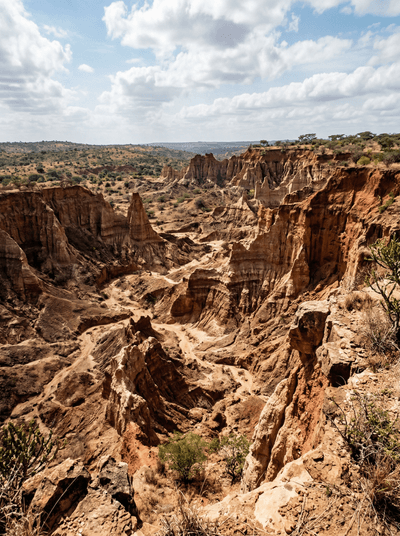
Marafa Depression
Kenya
Sandstone pillars glow blood-red at sunset in a canyon the locals call Hell's Kitchen.
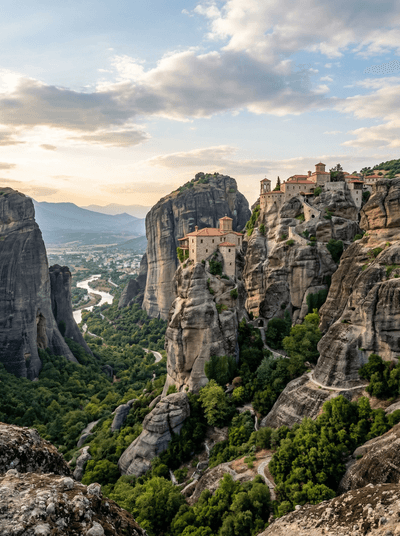
Meteora
Greece
Monasteries balanced on sandstone pillars 300 metres above the plain, reached by rope and faith.
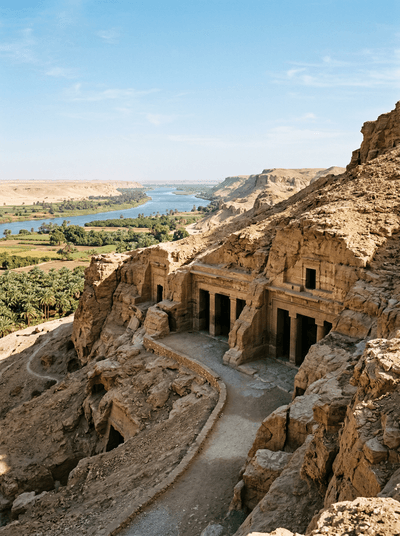
Beni Hasan
Egypt
Rock-cut tombs high on a cliff face, their four-thousand-year-old wrestlers still mid-grapple on the walls.
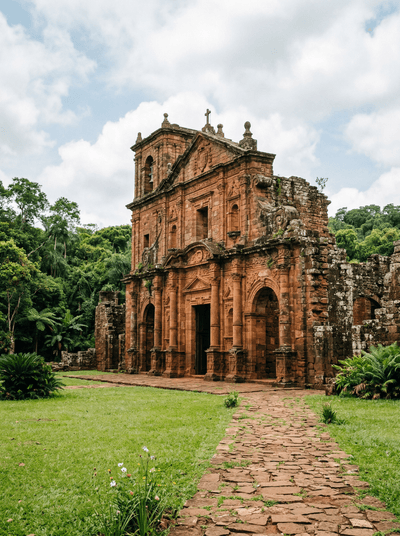
San Ignacio Miní
Argentina
Jungle-wrapped Jesuit ruins where Guaraní played baroque beneath a howler-monkey canopy.
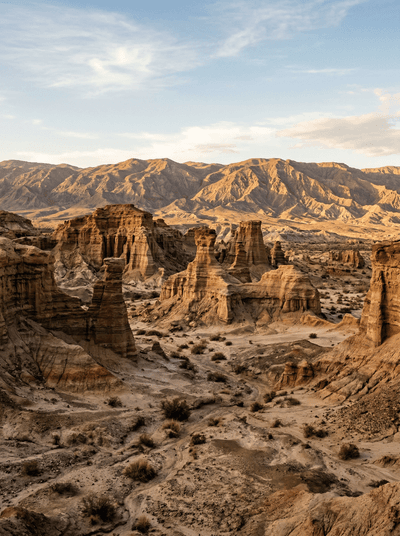
Ischigualasto
Argentina
A moonscape where the dinosaur age begins — bones in grey clay, stone spheres underfoot.

Buenos Aires
Argentina
Tango echoes through faded ballrooms where strangers dance until the city wakes.
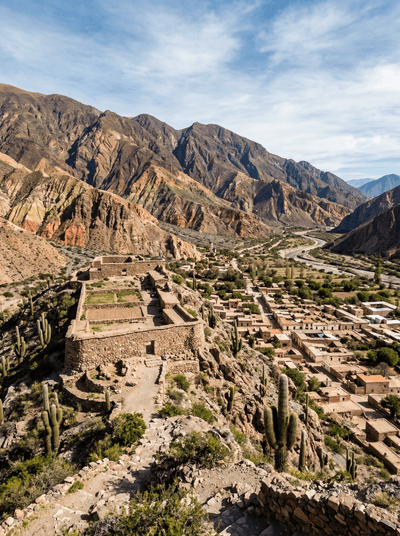
Tilcara
Argentina
A pre-Inca fortress above a rainbow canyon where carnival explodes into devil masks.