Costa Rica
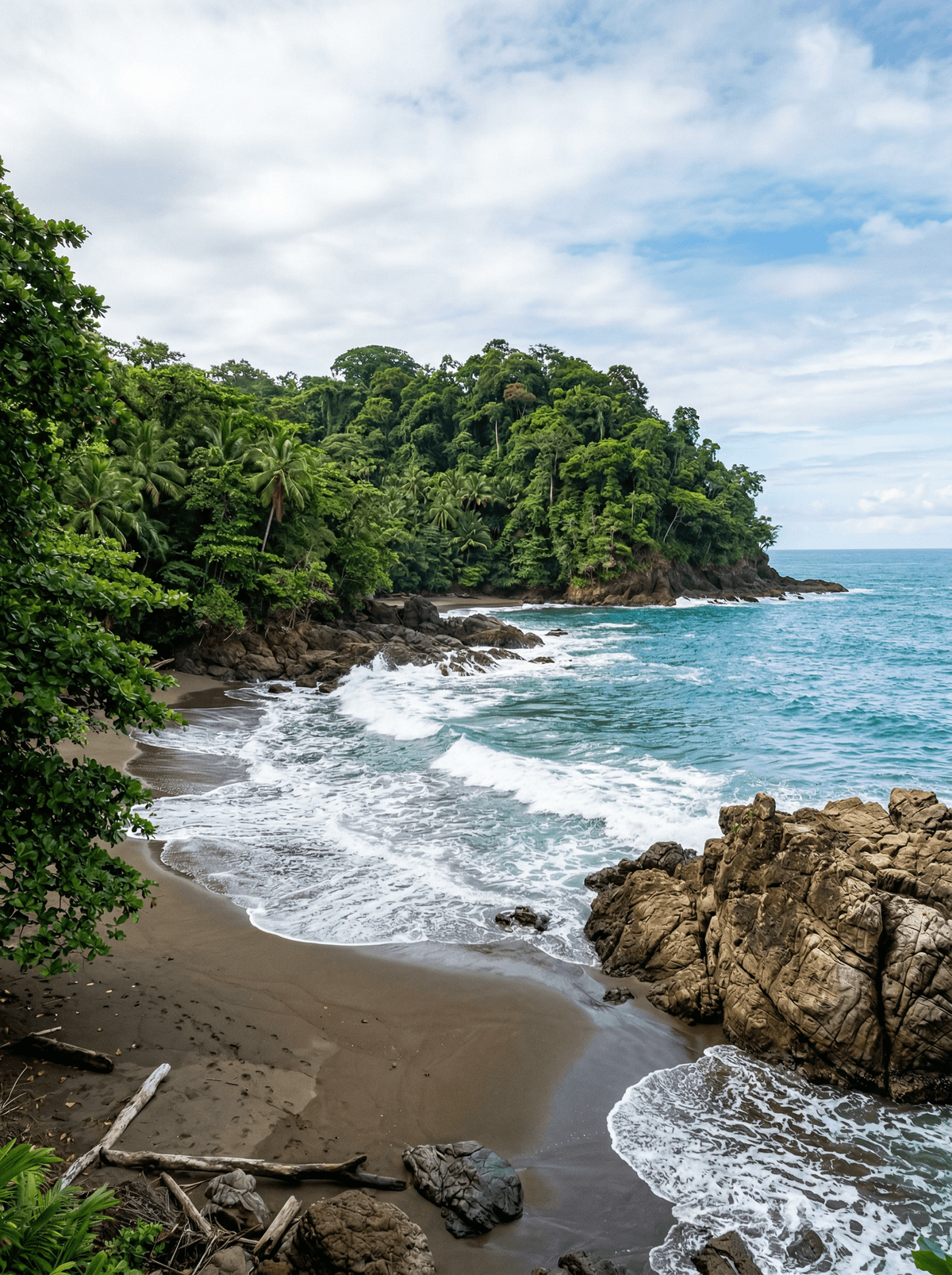
Cabo Matapalo
Strangler figs tower over the Osa's wild southern tip, where forest runs unbroken to the sea.
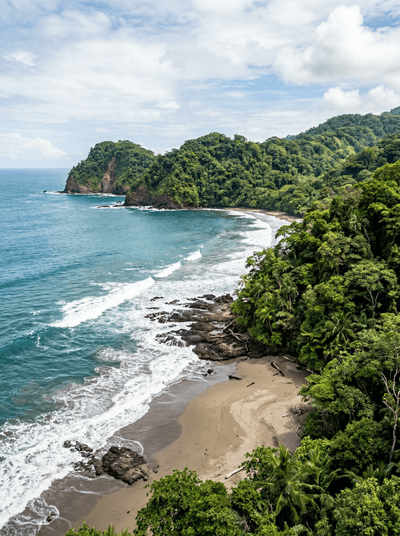
The strangler figs here are architecture, root lattices climbing out of sight while monkeys argue in the branches. From the cape's high ground the Pacific runs flat and silver one way and the Golfo Dulce curls turquoise the other. Cabo Matapalo is the Osa's full stop: forest unbroken to the waterline.
Matapalo means strangler fig, and the cape wears its name honestly — the giant figs anchor a headland where rainforest meets two waters, open Pacific to seaward and the calm Golfo Dulce behind. Trails cross a headland where all four of Costa Rica's monkey species live, endemic titi to mantled howler. A handful of eco-lodges hold private reserves running toward Corcovado, their kitchens fed by their own farms, and the nearest pavement is a memory. Surf peels off the point, and macaws commute overhead at dawn and dusk.
Solo
The Osa's southern tip concentrates its wildest ecosystems — remoteness-tolerant travellers get dense wildlife days without ceremony.
Couple
Climbing a fig together at dawn, then watching macaws cross the gulf light — days that need no embellishment.
Friends
Tree climbs, four-monkey trails and point-break surf — physical adventure in every direction you walk.
- The cape is named for its strangler figs, whose root lattices climb whole trees and outlive them.
- All four of Costa Rica's monkey species live on the headland, the endemic titi among them.
- Eco-lodge private reserves run from the beach toward Corcovado's forests.
- Two waters frame the point — open Pacific surf on one side, the calm Golfo Dulce on the other.
Farm-to-table lodge cooking — the kitchens harvest their own gardens above the Golfo Dulce.
Whatever the sea brought — pargo, corvina, pulpo — grilled simply and eaten barefoot.
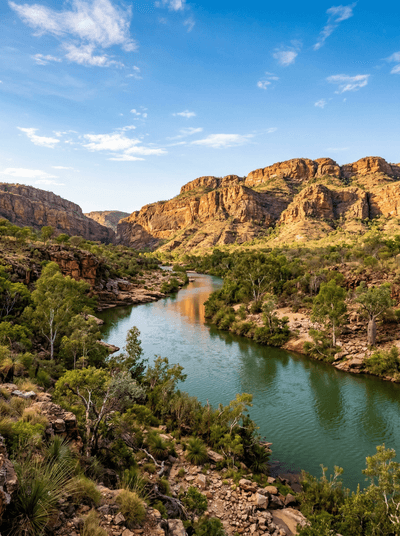
El Questro
Australia
Warm springs hide beneath palms while red gorges split a working Kimberley cattle station.
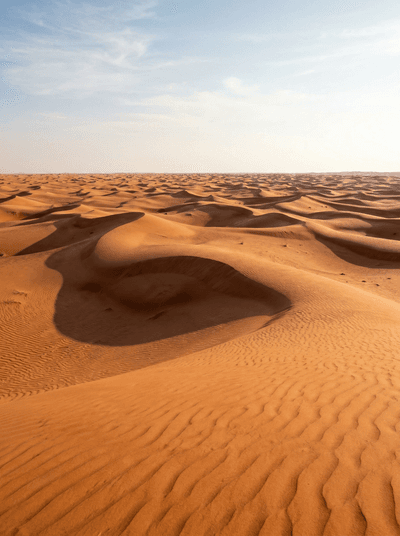
The Empty Quarter (Rub' al Khali)
United Arab Emirates
The largest sand sea on Earth: no roads, no landmarks, only dunes and planetary silence.
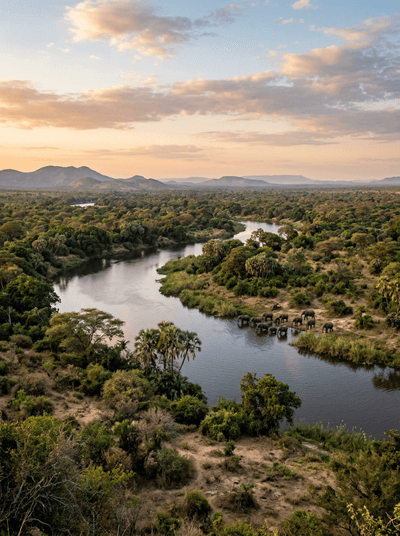
Nyerere National Park
Tanzania
Hippo pods crowd amber channels in a park twice the Serengeti's size.
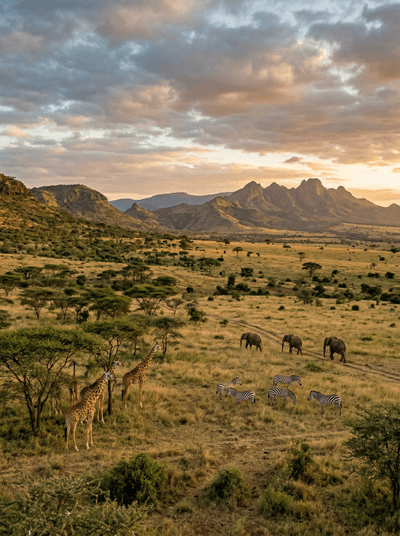
Lewa Wildlife Conservancy
Kenya
A cattle ranch turned rhino refuge that seeded Kenya's community conservancy movement.
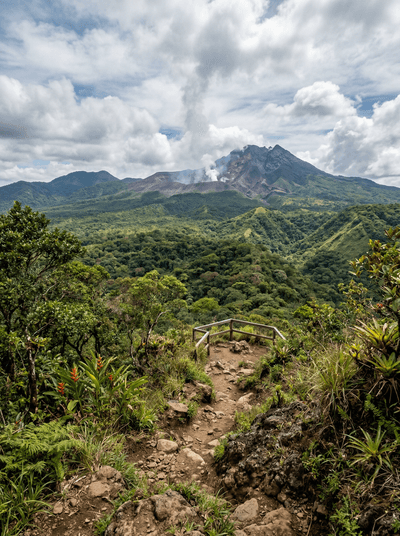
Rincón de la Vieja
Costa Rica
Volcanic mud pots belch and bubble through dry tropical forest like the earth digesting itself.
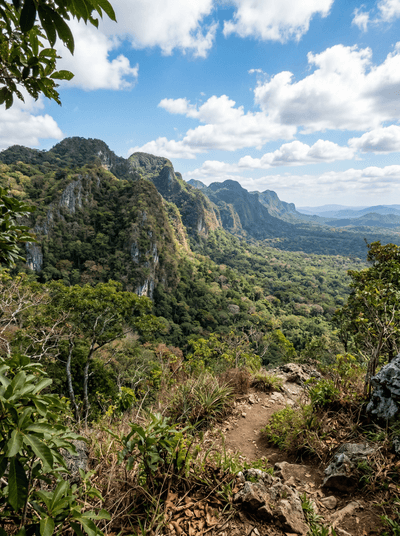
Barra Honda National Park
Costa Rica
Descend by ladder and harness beneath a hill of ancient coral to stalactites gleaming by headlamp.
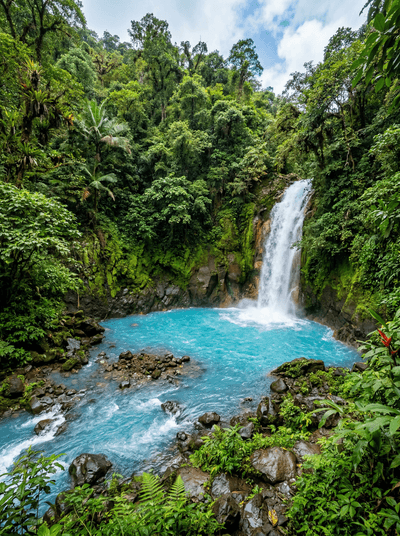
Río Celeste
Costa Rica
Two clear rivers collide and turn supernatural blue — no dye, no trick, just volcanic alchemy.
Cabo Blanco Absolute Natural Reserve
Costa Rica
Costa Rica's first reserve — sealed shut for decades, its founder murdered defending another.