
Costa Rica
Cabo Blanco Absolute Natural Reserve
Costa Rica's first reserve — sealed shut for decades, its founder murdered defending another.
The trail enters forest that had twenty-six years of total human absence to recover — and it shows. The canopy closes so completely that the light turns green-gold, and the quiet is of a kind that only grows where nothing has been disturbed for decades. This southern tip of the Nicoya Peninsula is where Costa Rica's conservation story began.
Swedish naturalist Olof Wessberg established Cabo Blanco in 1963 — the country's first protected reserve — and was later murdered on the Osa Peninsula while campaigning for what became Corcovado. The reserve stayed sealed to all visitors until 1989, and that quarter-century of absolute exclusion let forest swallow the old cattle pastures whole. Today the Sendero Sueco — the Swedish trail, named for its founder — works down through the recovered forest to a crescent of pale sand — no road in, no kiosk, no shortcut. Off the headland, brown boobies and frigatebirds wheel above the guano-white rock that gave the cape its name.
Solo
An earned beach — the trail is the price, the cove is the reward, and the walk back is where it settles in.
Couple
Wessberg's story gives the walk emotional weight, and the hidden cove at trail's end is as private as this coast gets.
- Costa Rica's first reserve, founded in 1963 by Olof Wessberg — who died defending the Osa's forests.
- Closed to everyone from 1963 to 1989 — the exclusion let the forest recover completely.
- The Sendero Sueco earns a white-sand cove with no road access and no facilities.
- Seabird colonies crowd the offshore stacks — the guano-white rock is the cape's namesake.
A casado in Cabuya, the village at the reserve gate, to end the trail day.
A pipa fría split by machete and drunk cold on the walk out.
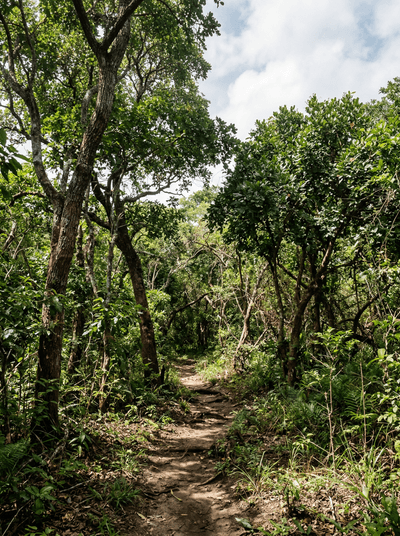
Arabuko-Sokoke Forest
Kenya
East Africa's largest coastal forest shelters the golden-rumped sengi — and nothing else does.
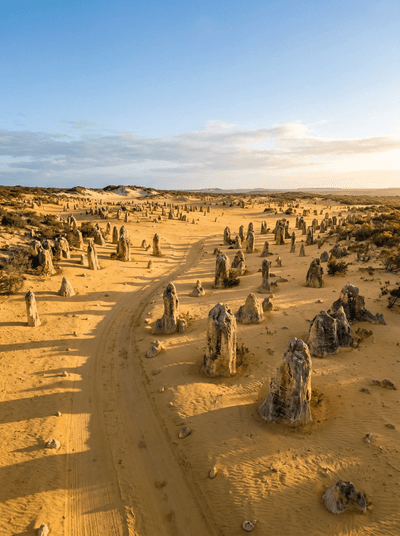
The Pinnacles
Australia
Thousands of limestone pillars cast long shadows across Nambung National Park's yellow sand.

Wistman's Wood
England
Twisted ancient oaks dripping with moss in a silence so deep it hums.
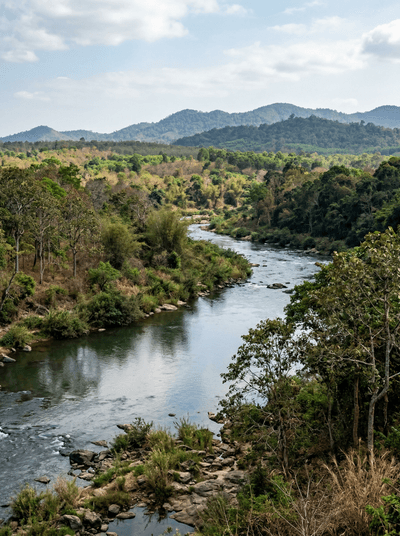
Yok Don National Park
Vietnam
Golden dry dipterocarp forest where rescued elephants roam free and forge their own paths.
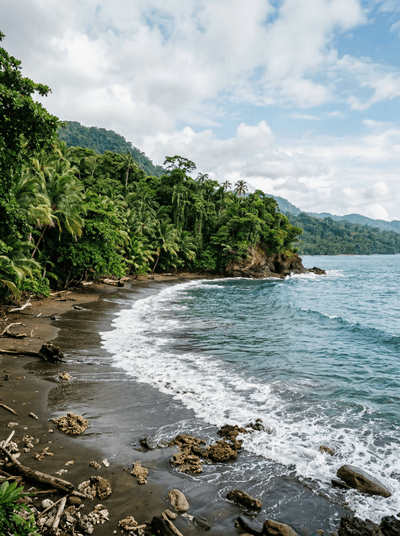
Gandoca-Manzanillo Wildlife Refuge
Costa Rica
Manatees shelter in tea-dark lagoons; the reef grows an oyster known nowhere else.
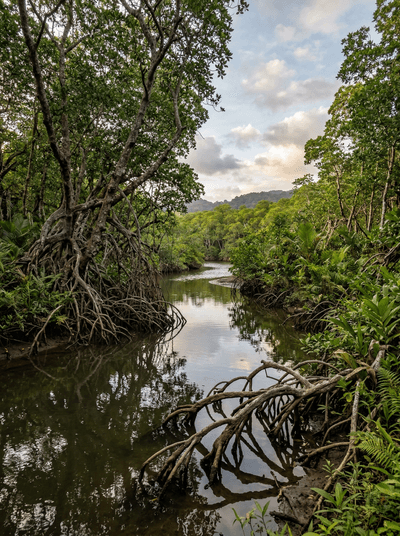
Térraba-Sierpe Wetlands
Costa Rica
Central America's largest mangrove system — root tunnels where caimans drift and spoonbills flash pink.
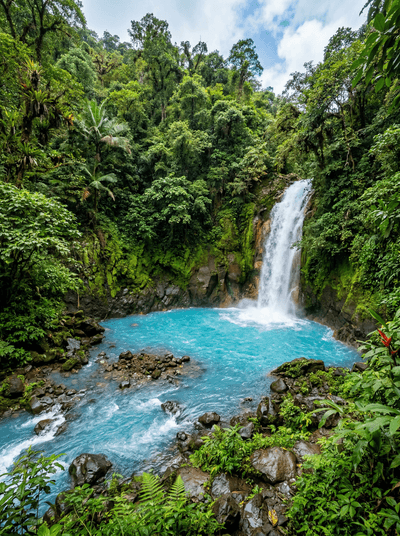
Río Celeste
Costa Rica
Two clear rivers collide and turn supernatural blue — no dye, no trick, just volcanic alchemy.
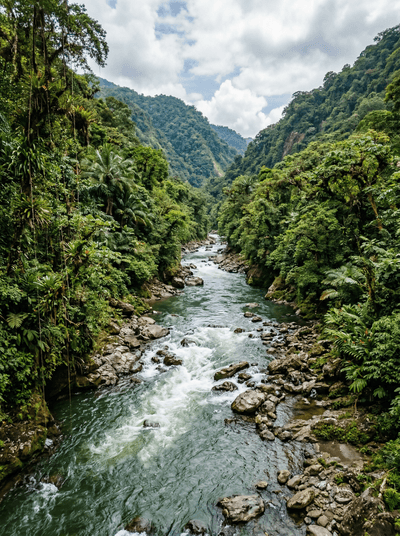
Pacuare River
Costa Rica
Class III-IV rapids through a jungle canyon where oropendola nests dangle above the current.