Costa Rica
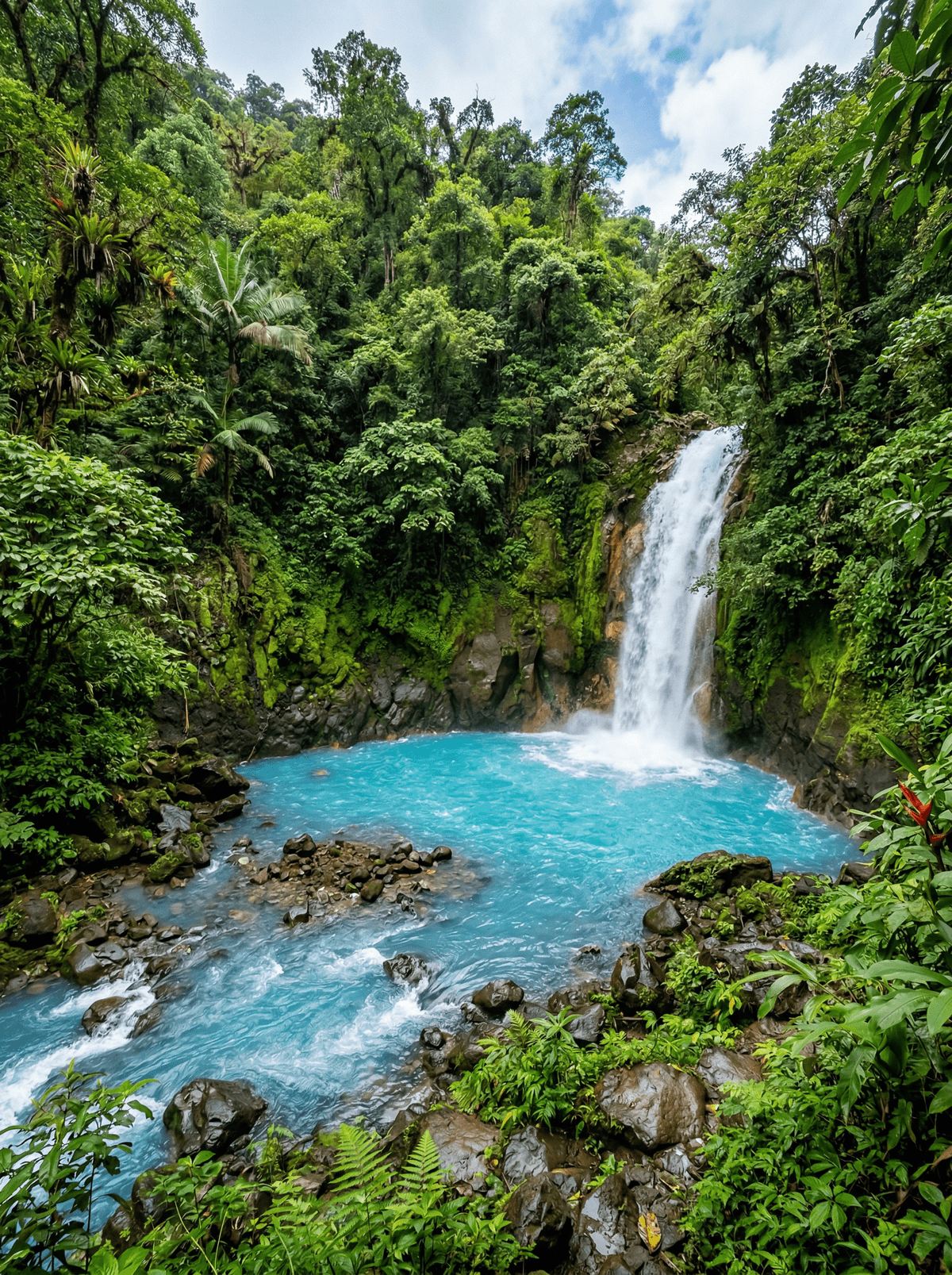
Río Celeste
Two clear rivers collide and turn supernatural blue — no dye, no trick, just volcanic alchemy.
You hear the waterfall before you see it, and nothing prepares you for the colour. The water is not blue the way a lake is blue — it is opaque, electric, almost pigmented, as if someone upstream poured paint into the current. Río Celeste is what happens when two colourless rivers meet and produce something that looks physically impossible.
The blue begins at a single point in the forest — El Teñidero, where the clear Río Buenavista meets the acidic Quebrada Agria. University of Costa Rica physicists solved the mystery in 2013: the mixing waters make suspended mineral particles clump to exactly the size that scatters sky-blue light. It is physics, not pigment — lift the water out and it runs clear. The river threads Tenorio Volcano National Park, wet forest beneath a four-coned volcano where tapirs, pumas and three-wattled bellbirds keep to the trees. A six-kilometre trail links the waterfall, the Blue Lagoon and the Teñidero itself. Swimming in the river is prohibited inside the park.
Solo
Arrive early and take the trail at your own speed — the waterfall first, then the steady walk up to the Teñidero, where the colour switches on at one exact line in the water.
Couple
Few first glimpses anywhere deliver wonder this reliably, and Bijagua's hillside eco-lodges keep the evenings quiet, cloud drifting between two volcanoes.
Family
Older children handle the six-kilometre trail well, and the reveal — grey forest stream to electric blue — beats any screen.
- The colour is born at El Teñidero, where two clear rivers mix and the chemistry turns the water sky-blue.
- University physicists proved the blue is light scattering off mineral particles — scoop the water out and it runs clear.
- One six-kilometre forest trail strings together the waterfall, the Blue Lagoon and the Teñidero.
- Tapirs, pumas and three-wattled bellbirds share the park's wet forest beneath Tenorio's cones.
Gallos in Bijagua's village sodas — warm tortillas piled with shredded chicken, beans and curtido.
Cacao grown on the Tenorio slopes, tasted as raw chocolate where it was fermented.
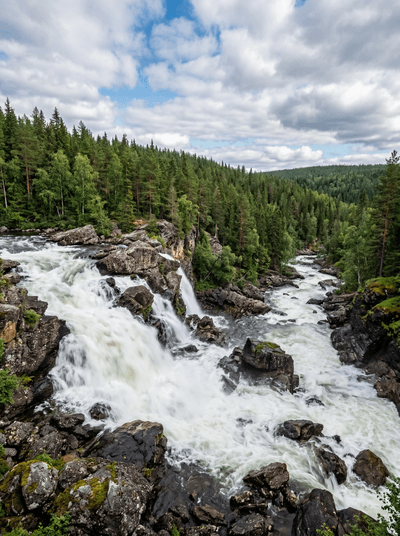
Storforsen
Sweden
Mighty rapids thundering through boreal forest on a river that still runs free.
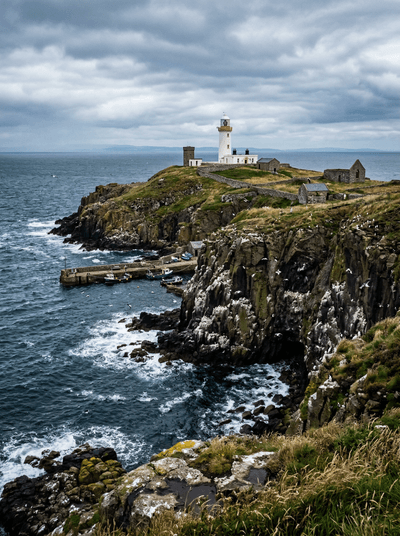
Isle of May
Scotland
Puffins waddle to their burrows inches from your boots on an island nature kept for itself.
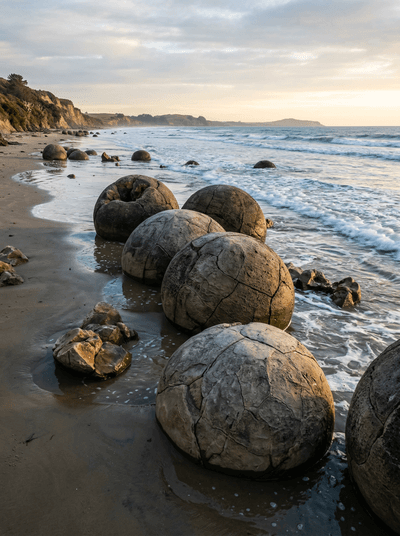
Moeraki Boulders
New Zealand
Spherical boulders the size of cars on the tide line, cracked open like ancient eggs.
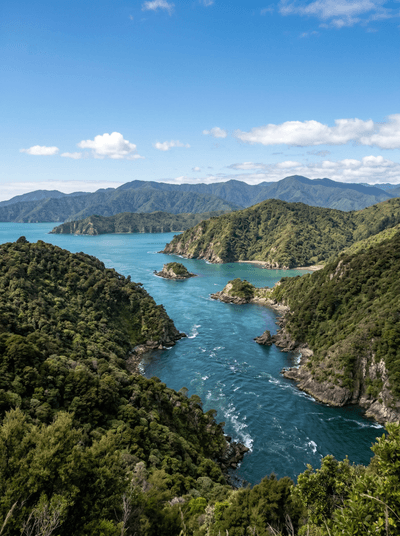
French Pass
New Zealand
A tidal race so fierce that whirlpools churn the gap on every running tide.
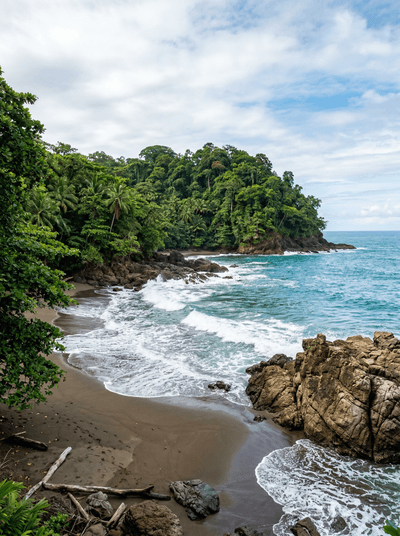
Cabo Matapalo
Costa Rica
Strangler figs tower over the Osa's wild southern tip, where forest runs unbroken to the sea.
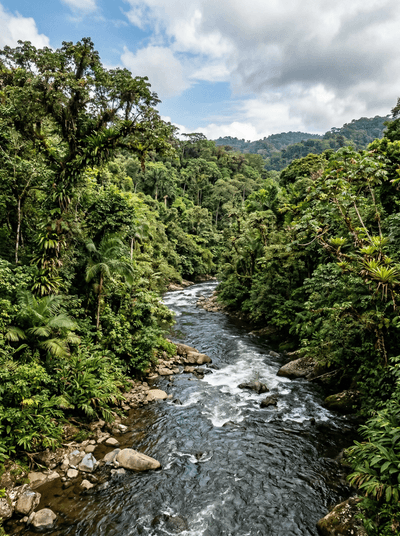
Sarapiquí
Costa Rica
Poison dart frogs glow neon on the forest floor while rapids thunder through lowland jungle.
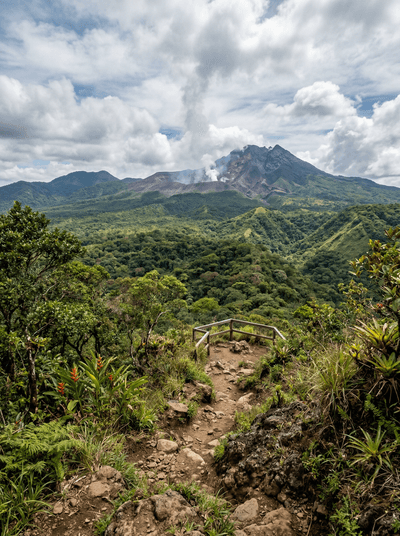
Rincón de la Vieja
Costa Rica
Volcanic mud pots belch and bubble through dry tropical forest like the earth digesting itself.
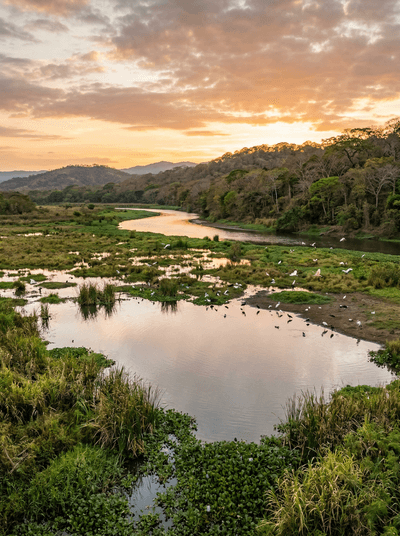
Palo Verde National Park
Costa Rica
Ten thousand hectares of marsh erupt with waterbirds while crocodiles bask below limestone hills.