Moldova
Cosăuți
Stone-carvers work beside an ice-age camp that left antler pikes grooved to drain blood.
Fresh-cut limestone whitens the workshop yards, the same pale stone this village has always carved. In the ground by the Dniester lie the camps of reindeer hunters from the coldest phase of the last glaciation, layer upon layer. The museum keeps their weapons.
Cosăuți runs on stone. Its quarries are renowned across Moldova, its carvers still work in open yards, and the riverside monastery of the Protection of the Mother of God, rebuilt after 1990 where a 1729 foundation stood until earthquakes and landslides destroyed it, is built from the village's own rock. Archaeologists know the place for something far older: a multilayer camp of ice-age reindeer hunters whose armoury ran to split-bone pikes, antler points grooved to drain blood, and a harpoon of reindeer antler with serrated edges. The village museum, grown from a 1965 school collection into 7,251 pieces housed in an 1896 schoolhouse, sets the excavated finds beside the tools of the living craft, and the Stânca-Jeloboc reserve above the village hides the La Pristol spring.
Solo
Start in the schoolhouse museum, then follow the stone through the carving yards to the quarry-built monastery and the reserve spring.
Couple
Walk the riverbank between monastery and village with the carving yards as the running theme; Soroca and its fortress are a fifteen-kilometre hop.
Friends
Pair Cosăuți with Soroca for a stone-themed day: the fortress circle in town, the carvers and the hunters' museum in the village.
- Ice-age hunters camped here in layer upon layer, leaving split-bone pikes, grooved antler points and a serrated reindeer-antler harpoon.
- The village museum holds 7,251 pieces, grown from a school collection begun in 1965 and housed in an 1896 schoolhouse.
- Cosăuți stone is renowned across Moldova, and the riverside monastery rebuilt after 1990 is built from it.
- The Stânca-Jeloboc landscape reserve rises behind the village, with the La Pristol spring hidden at its heart.
No café is documented in the village: shop Soroca's market first and picnic on the bank below the monastery.
Dinner belongs to Soroca, fifteen kilometres on, where terraces hang over the Dniester and kitchens run Moldovan.
Mu Cang Chai
Vietnam
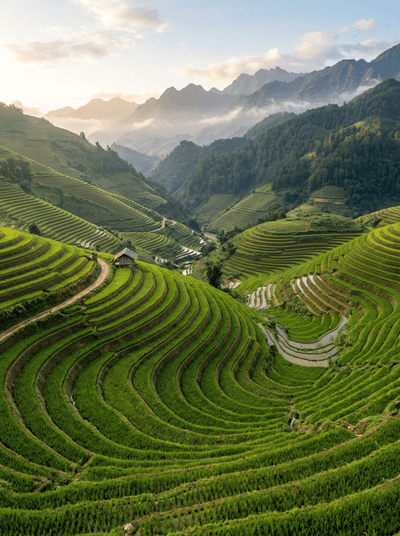
Mountains carved into thousands of mirrored rice terraces reflecting the sky.
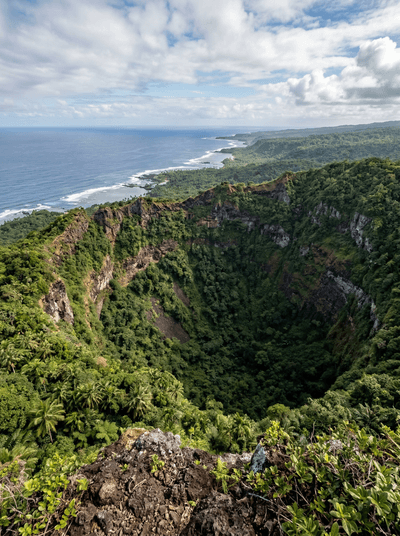
Matavanu Crater
Samoa
A hand-kept trail climbs to the crater that buried villages; its keeper logs every visitor's country.
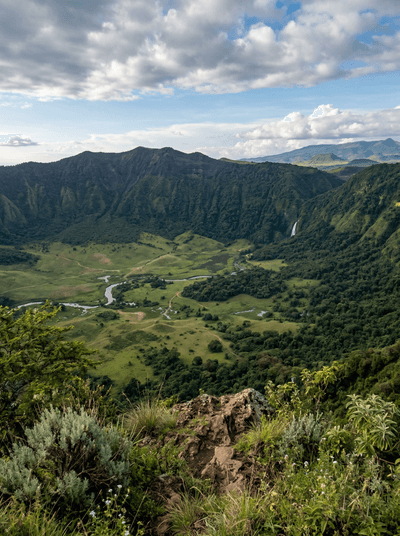
Olmoti Crater
Tanzania
A waterfall slips out of a grassy crater where cattle graze beside eland.
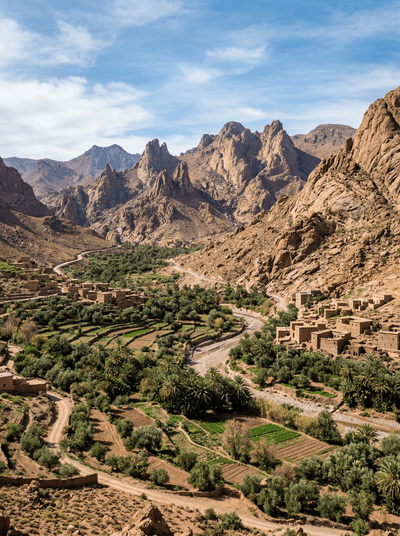
Ameln Valley
Morocco
Ochre villages disappear into Jbel Lekst while almond blossom clouds the valley floor.