Moldova
Orheiul Vechi
Candles burn in a cliff-dug monastery cell; a Golden Horde city lies buried around the bend.
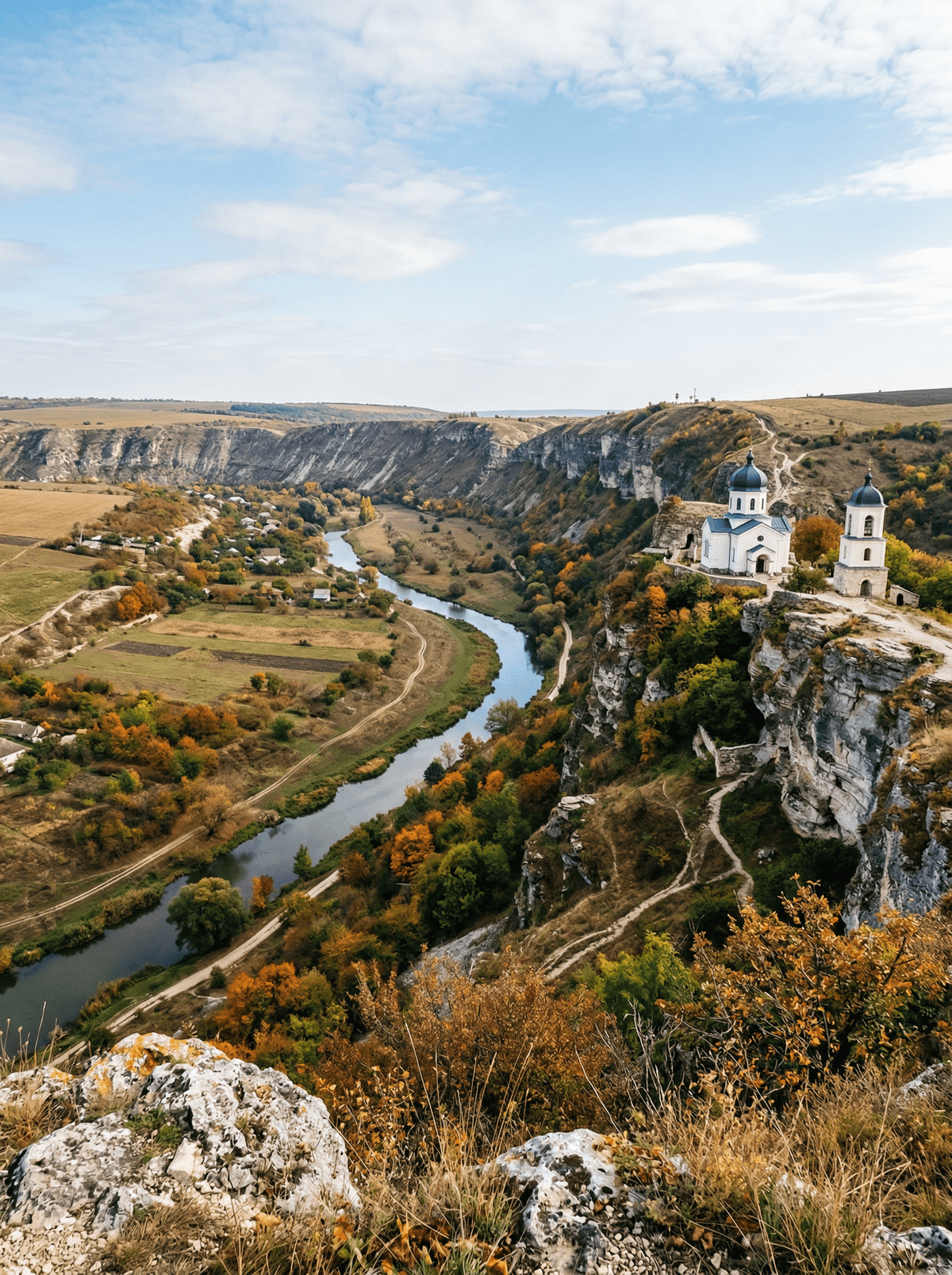
The Răut takes a slow loop beneath a wall of pale limestone, and Butuceni wakes inside it. High in the cliff, a bell hangs at the mouth of a chamber monks cut in the fifteenth century. Woodsmoke drifts up from the guesthouses towards two thousand years of ruins.
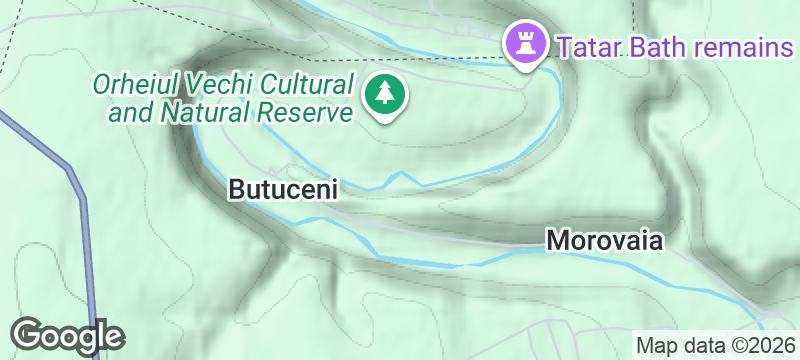
Orheiul Vechi is a buried history stacked in one river gorge. The Getae fortified this limestone promontory in the Iron Age; in the fourteenth century the Golden Horde built the town of Şehr al-Cedid here, and the ruins of its stone bath-houses still break the grass; the Moldavian town of Orhei followed before the site emptied. The cave monastery began as eleven cells dug into the river cliff in the fifteenth century, spent the Soviet decades as a museum, and returned to life when services resumed in 1998. Below it, the villages of Butuceni and Trebujeni keep guesthouses in traditional homes, and the reserve's marked walking and cycling routes link the caves, the archaeology museum and the ridge viewpoints.
Solo
Walk the ridge before the day-trippers arrive from Chişinău, then take the cave church and the archaeology museum at your own pace.
Couple
Stay overnight in Butuceni rather than day-tripping; dinner comes from the host's kitchen and the river-bend viewpoints are a short walk at dusk.
Family
Children can step into the cave chambers and poke around the bath-house ruins; keep them close on the exposed limestone edges and cave steps.
- Monks cut eleven cells into the Răut cliff in the fifteenth century, and services resumed in the cave church in 1998 after the Soviet decades as a museum.
- The same gorge holds a Getic fortress and the buried fourteenth-century Golden Horde town of Şehr al-Cedid.
- Guesthouses in Butuceni and Trebujeni leave the caves a few minutes' walk away, with meals pre-ordered from the family kitchen.
- Marked hiking and cycling routes cross the reserve, and the archaeology museum shows finds from the promontory digs.
Pre-order dinner at a Butuceni guesthouse: mămăligă thick enough to cut with a fork, sheep's brânză and a stew to bury it under.
Several village houses run cooking workshops where you fold your own plăcinte, stuffed with cheese, apple or sour cherry, and eat them warm.
Chiloé's Wooden Churches (UNESCO Circuit)
Chile
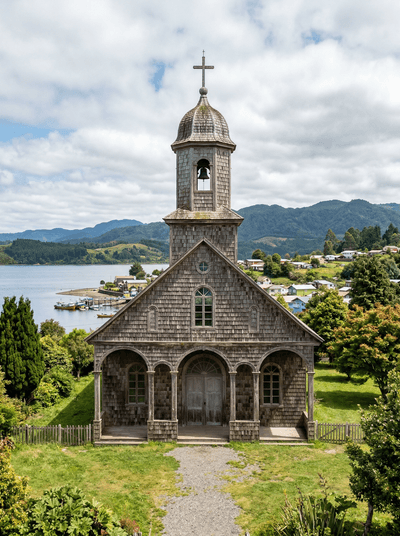
Sixteen timber churches turn Chiloé's islands into a road-and-ferry pilgrimage.
Kanchanaburi
Thailand
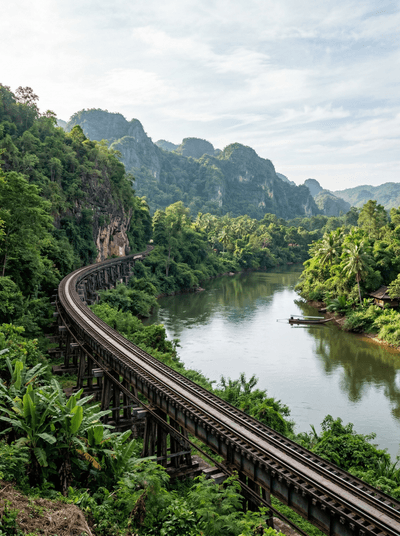
A wartime railway bridge over the River Kwai that still carries the weight of its dead.
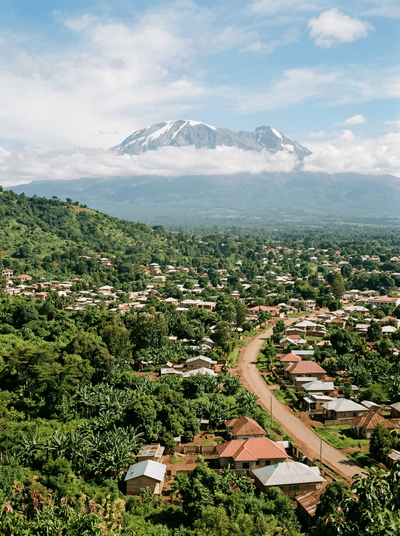
Moshi
Tanzania
Coffee ripens on Kilimanjaro's flank above a town the Chagga farmed first.
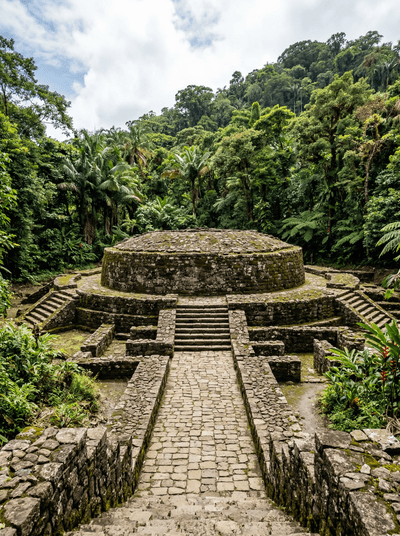
Guayabo National Monument
Costa Rica
Pre-Columbian aqueducts still carrying water through a city the jungle tried to swallow.
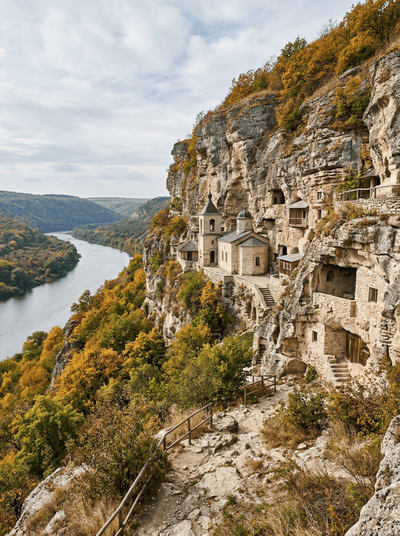
Țipova
Moldova
Hermit cells climb a Dniester cliff where legend buries Orpheus in a nook of a waterfall.
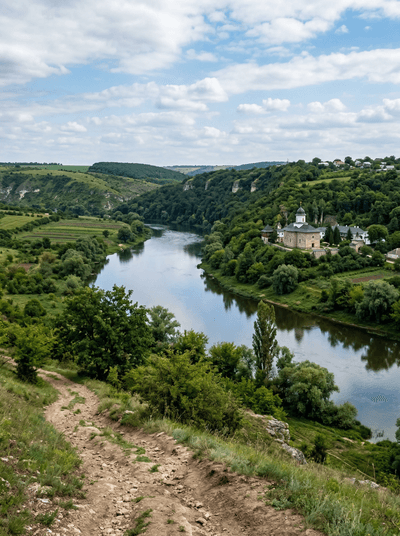
Rudi
Moldova
The Earth was measured from a stone in this orchard, on a line to the Arctic.
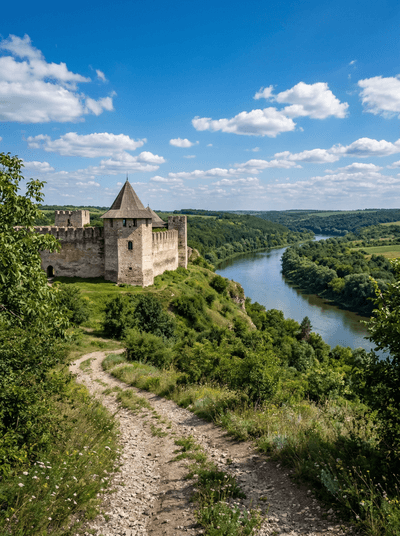
Cosăuți
Moldova
Stone-carvers work beside an ice-age camp that left antler pikes grooved to drain blood.
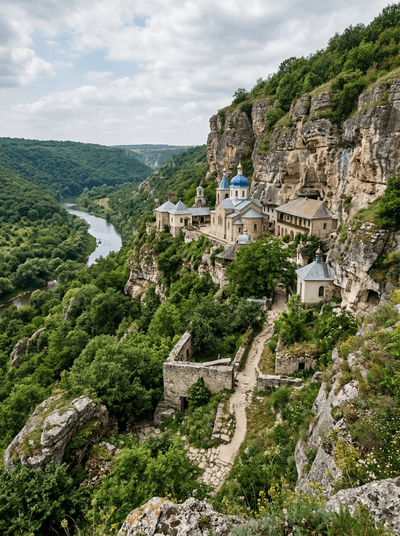
Saharna
Moldova
Waterfalls stair the gorge down to a monastery where pilgrims climb to a footprint in stone.