Peru
Cusco
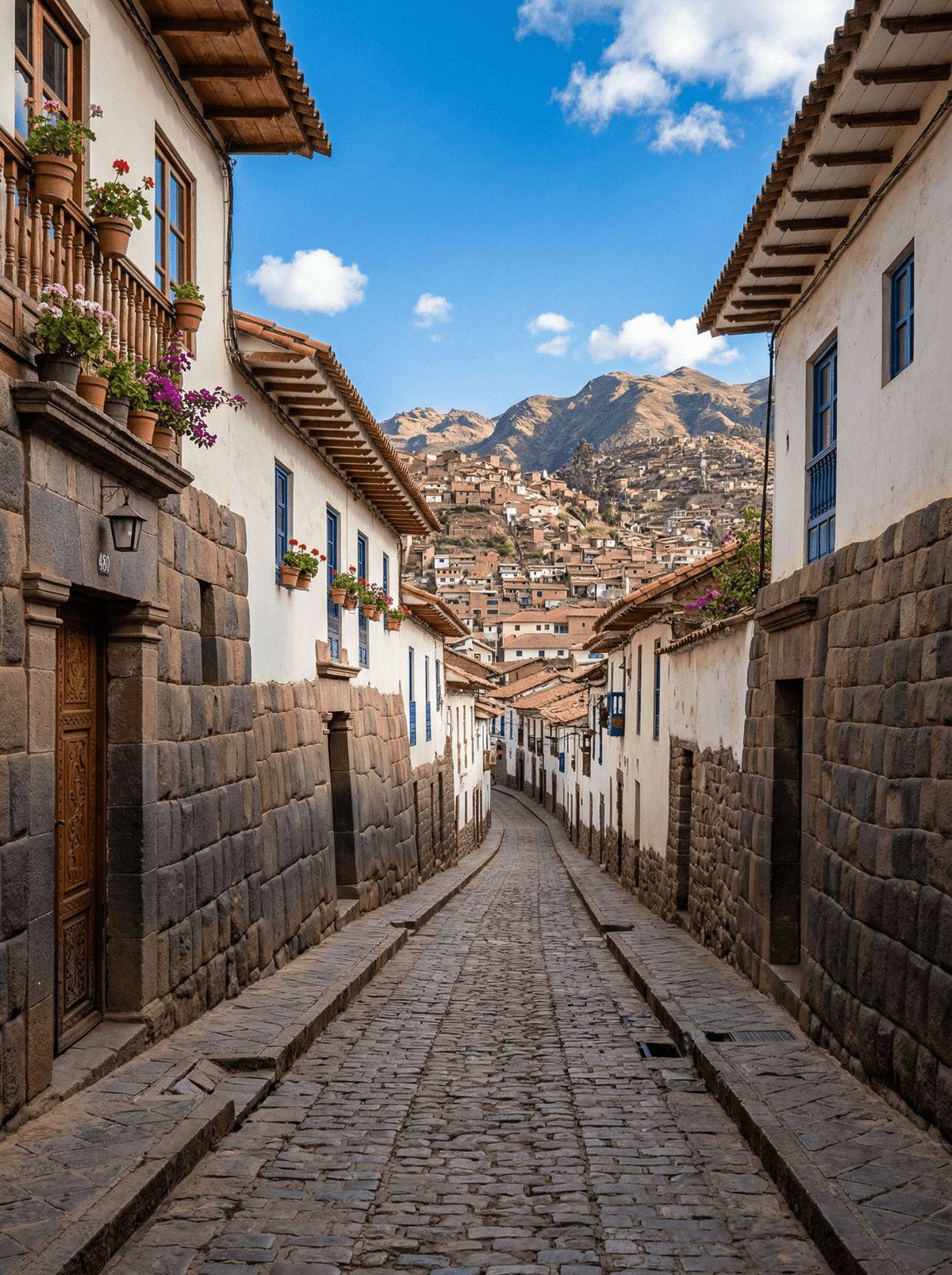
Inca walls fitted so tightly a knife blade won't slide between the stones.
Stone absorbs centuries. In Cusco you feel it in the Inca walls that line the narrow streets — granite blocks fitted with such precision that centuries of earthquakes have failed to shift them. The air at 3,400 metres carries woodsmoke and incense, and the late light turns the colonial facades above the ancient foundations golden and improbable.
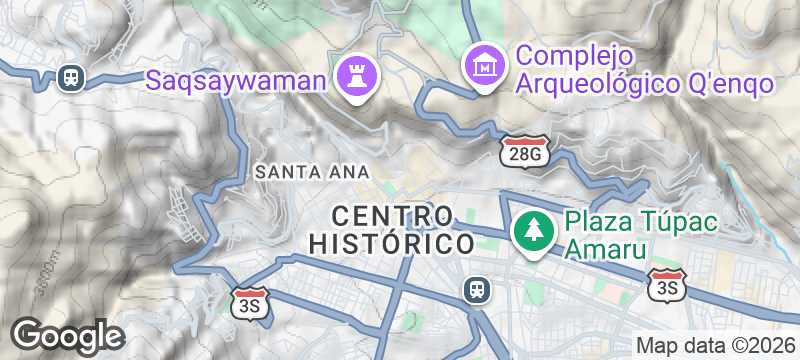
Cusco was the political and religious capital of the Inca Empire, and every layer of the city tells a different story. Spanish colonial churches sit directly on Inca temple foundations — Qorikancha, once sheathed in gold, now carries the Santo Domingo convent on its flawless curved wall. The twelve-angled stone in Hatunrumiyoq street shows masonry so exact no mortar was used or needed, and the Inca walls remain part of the living street plan rather than museum exhibits. In San Blas, artisan workshops occupy courtyards with original stonework; San Pedro market opens before dawn with coca leaves, giant-kernel corn and chicha morada. The altitude is real — give the first day to gentle streets and let the city arrive slowly.
Solo
Cusco rewards slow, unplanned wandering — duck into a chichería marked only by a red flag, sit with a clay cup of chicha de jora, and let the city reveal itself one alley at a time.
Couple
Converted colonial courtyards, candlelit cellars and dinner beside bare Inca stone — the city does romance in masonry.
Family
San Pedro market is a sensory education — purple corn, coca sweets, unfamiliar fruit — and children can try to slide a fingernail into the twelve-angled stone's joints. They cannot.
Friends
The chichería circuit crawls through courtyard bars pouring fermented corn beer from clay urns; add alpaca dinners in candlelit cellars and late pisco sours over the floodlit plaza.
- The twelve-angled stone in Hatunrumiyoq street fits its neighbours without mortar.
- Qorikancha's golden temple walls now carry a Spanish convent — the conquest in one building.
- San Pedro market opens before dawn with coca leaves, giant corn and chicha morada.
- Inca walls line the living streets rather than standing behind museum ropes.
Cuy roasted until the skin crackles, served whole in chicherías — ask before you order, then commit.
Chicha de jora poured from clay urns in courtyard bars marked by a red flag over the door.
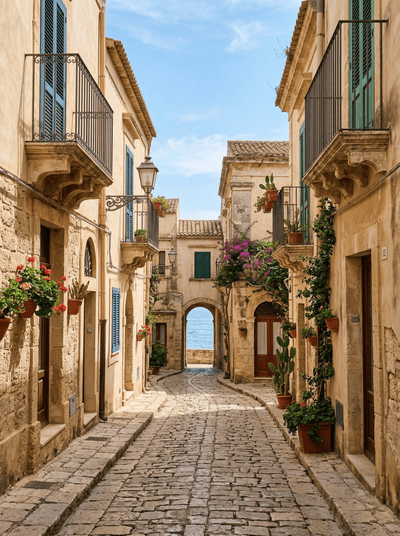
Ortigia
Italy
A Greek island heart inside a Sicilian city, Archimedes' birthplace where temples became cathedrals.
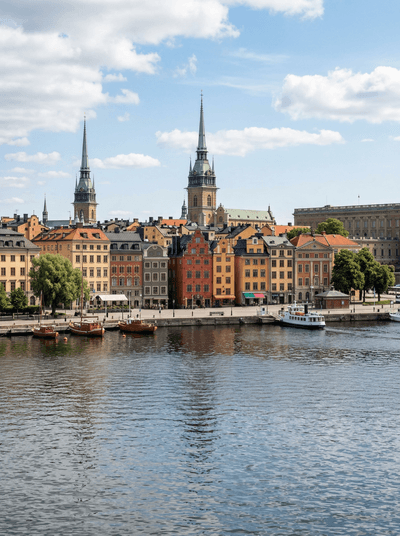
Stockholm
Sweden
Fourteen islands laced by bridges, where Baltic light paints the old town copper and gold.
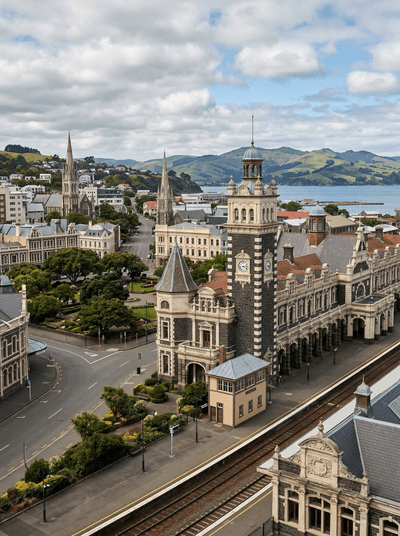
Dunedin
New Zealand
A Scottish-built city with the world's steepest street and albatrosses on the headland.
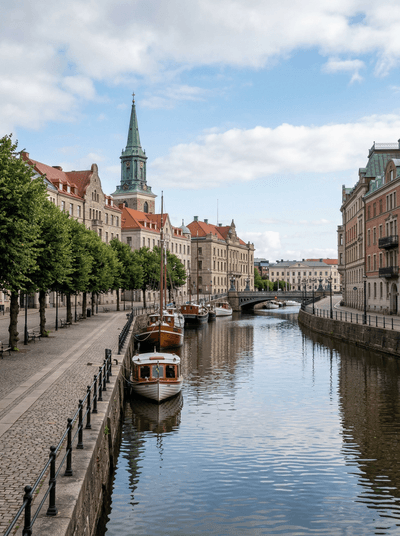
Gothenburg
Sweden
A fish market shaped like a church where the west coast's langoustine feels like sacrament.
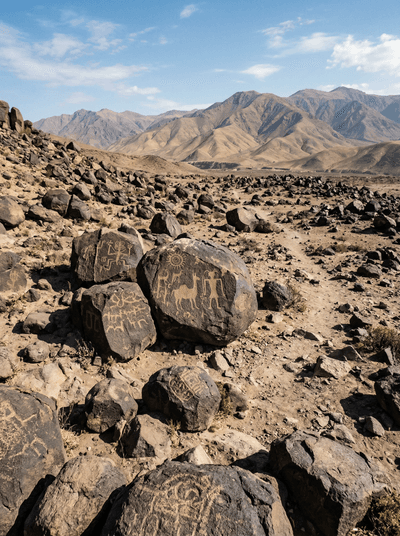
Toro Muerto
Peru
A desert of engraved boulders — thousands of petroglyphs, barely a visitor.
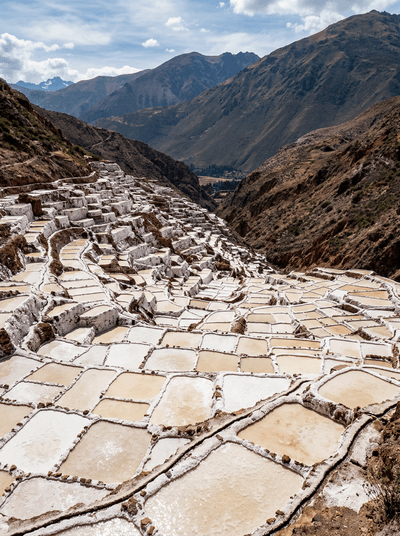
Salineras de Maras
Peru
Thousands of salt pans cascading down a mountainside, hand-harvested since before the Inca.
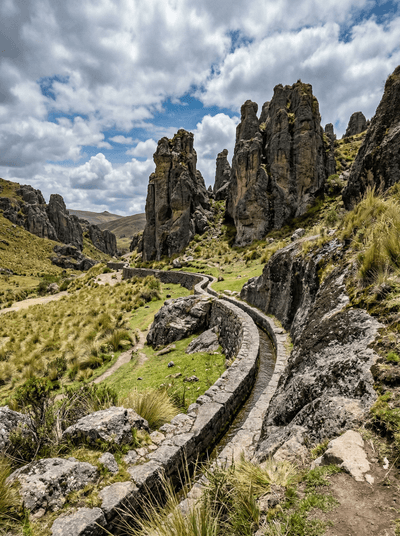
Cumbemayo
Peru
Pre-Inca aqueducts carved through living rock — still channelling water after millennia.
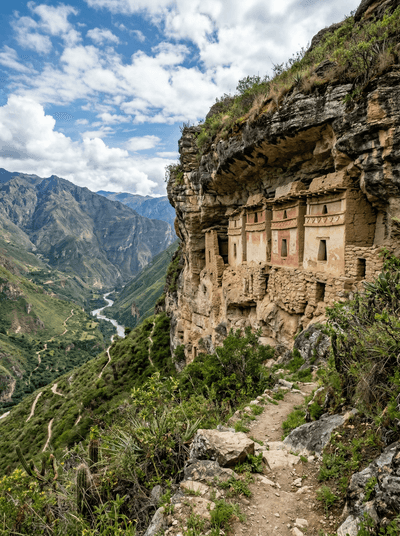
Revash
Peru
Miniature painted houses for the dead, set into a cliff above swirling cloud forest.