India
Dholavira
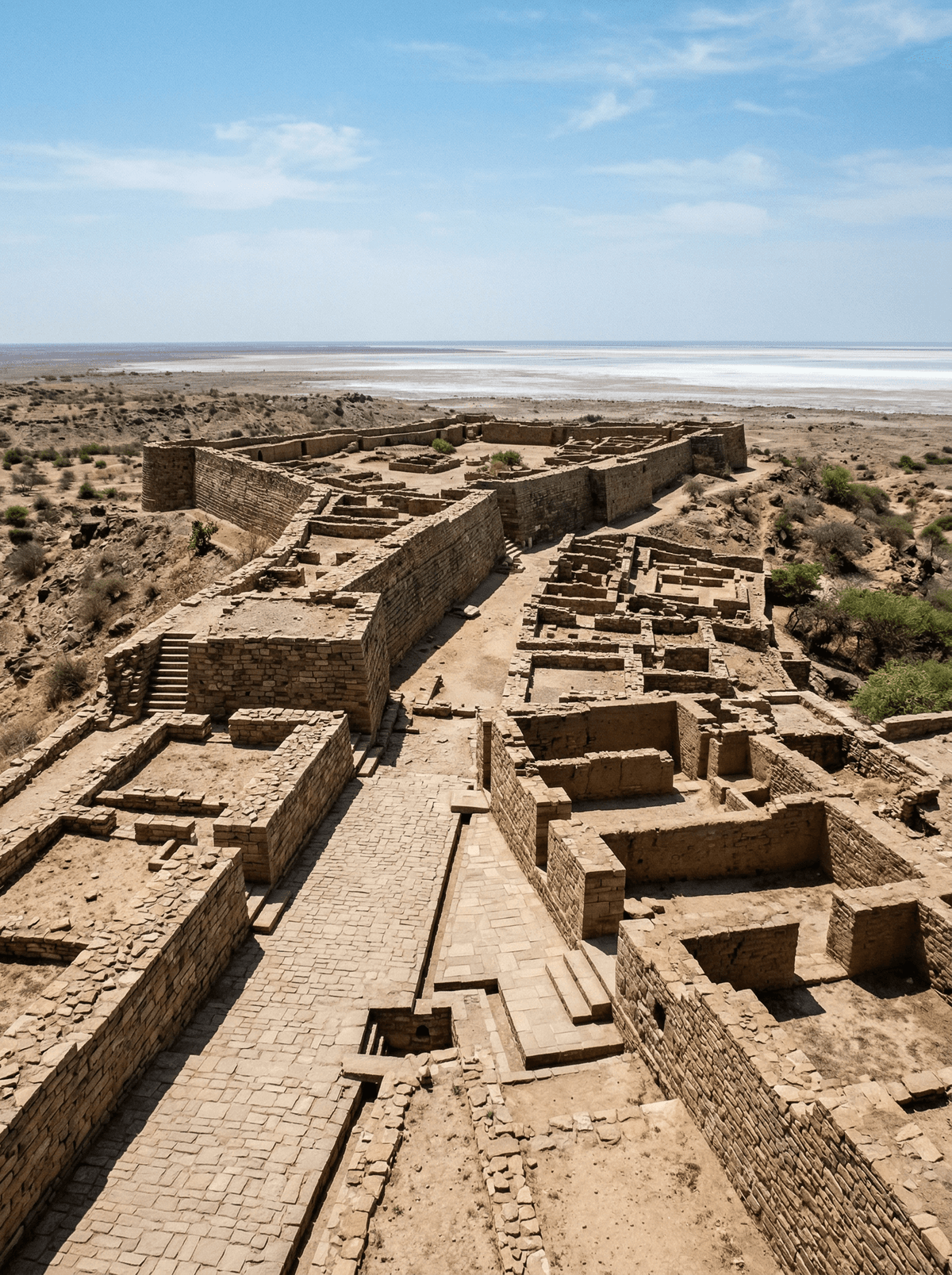
A geometry-perfect Harappan metropolis excavated from the blinding white expanse of the Great Rann salt-desert.
The signboard is five thousand years old — ten large symbols set in gypsum above a gateway, among the earliest public inscriptions anywhere and still undeciphered. The city that raised it engineered water systems good enough to beat the desert. Then it disappeared.
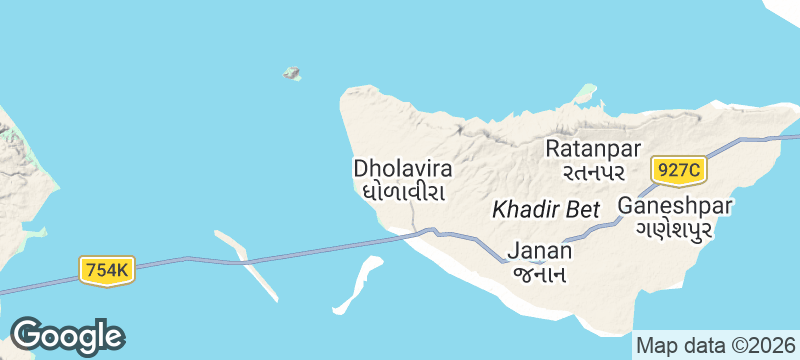
Dholavira, on Khadir Island amid the Great Rann's salt, is among the largest Harappan cities of the subcontinent, UNESCO-listed since July 2021. Excavation revealed a city in three planned divisions — citadel, middle town, lower town — served by wide streets, deep drainage, and a ring of rock-cut reservoirs that harvested every drop of monsoon rain. The famous signboard's ten gypsum symbols remain undeciphered.
Solo
Walk citadel to lower town with the site map, then stand at the signboard gate in closing light.
Friends
Drive the Rann road out together — the white crossing to Khadir Island is half the event.
- The gypsum signboard is among the world's earliest public inscriptions — and nobody can read it.
- The reservoirs still hold rainwater five thousand years after they were cut.
- Summer mirages off the salt make the ruins shimmer and float on Khadir Island.
- The trenches show a city planned to the metre — streets, drains, and a stadium-like ceremonial ground.
On Khadir Island the stays cook the Kutchi spread — bajra rotla, pulses, garlic chutney.
Fresh-churned chaas cuts the desert heat — the Rann's own air conditioning.
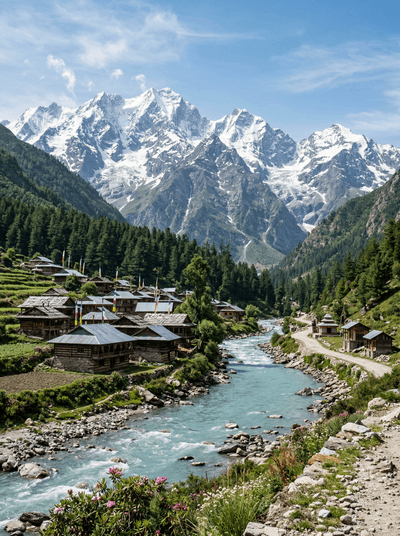
Chitkul
India
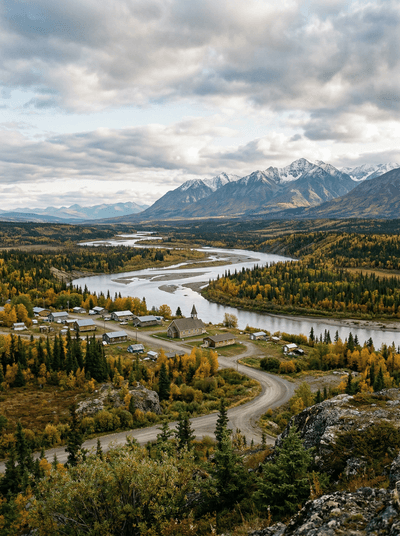
The last village before Tibet, its slate roofs weighted against winters that close the road.
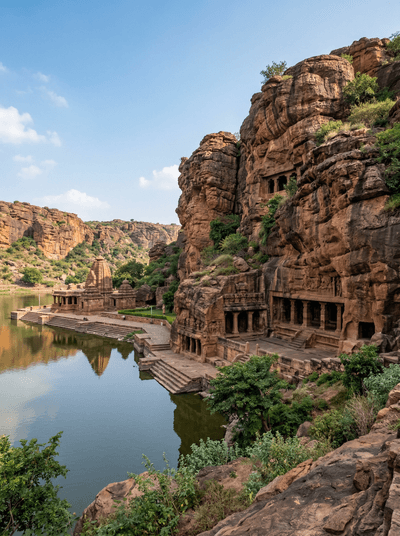
Badami
India
Rock-cut cave temples hewn directly into a blood-red sandstone ravine echoing with monkey calls.
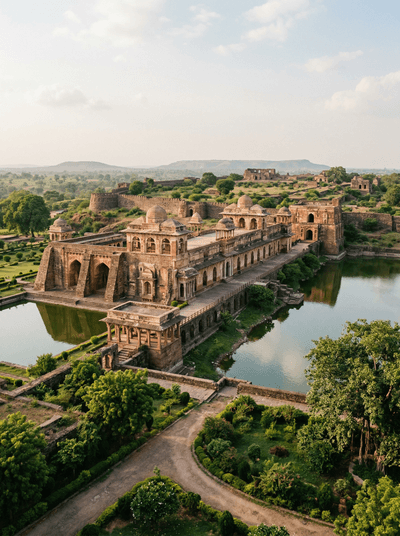
Mandu
India
Afghan palaces floating on monsoon reflection pools among ancient baobab trees far from Africa.
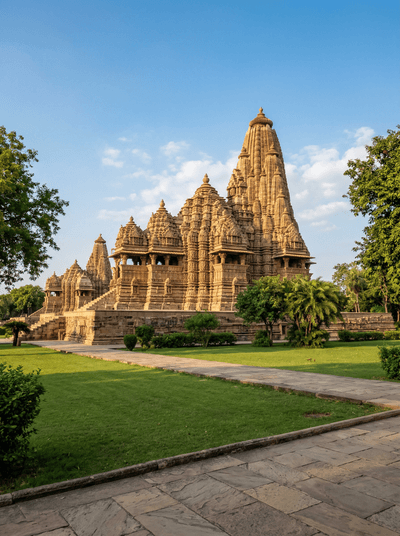
Khajuraho
India
Elaborate sandstone temples covered in explicitly acrobatic carvings rising unexpectedly from the flat central plains.