Peru
Sipán
An unlooted Moche royal tomb whose gold rewrote the archaeology of the Americas.
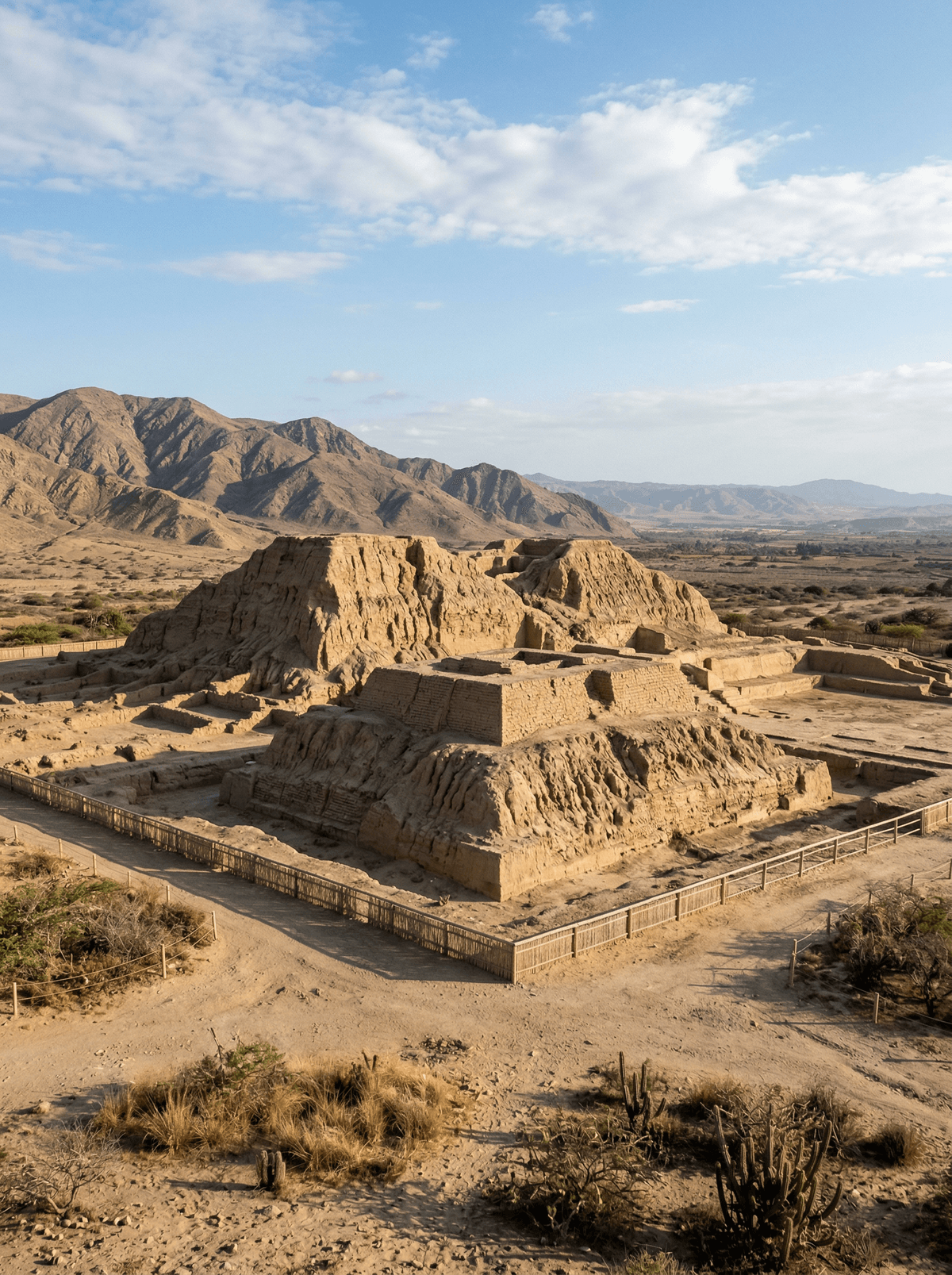
Gold catches the light first — pectorals, ear spools, a headdress of gilded copper — arranged as they were found in 1987, in a burial often ranked among the richest unlooted tombs the Americas have yielded. The museum descends like the excavation did, layer by layer, toward the Lord of Sipán himself.
The Lord of Sipán was a Moche ruler buried around 250 CE at Huaca Rajada, and Walter Alva's 1987 excavation of his intact tomb became a landmark of world archaeology — a royal burial complete with the regalia of rank and the members of his household interred around him, a context modern display treats with the care human remains demand. Successive lords were buried in the same platform across two centuries, chamber beneath chamber. The visit splits productively in two: Huaca Rajada itself, where the excavation story sits in the landscape that produced it, and the Royal Tombs of Sipán Museum in Lambayeque — built as an architectural echo of the pyramid — where the conserved originals descend floor by floor in one of South America's great museum sequences.
Solo
The goldwork rewards slow, case-by-case attention — take the time each vitrine deserves, then read the excavation story that made it possible.
Couple
Descending the replica pyramid together toward the burial level is proper drama, and the detective tale behind it is archaeology's finest.
Family
An unlooted tomb, painstakingly recovered, grips older children when told as archaeology rather than treasure. Check photography rules at the door.
- Walter Alva's 1987 excavation found the tomb intact — a landmark of world archaeology.
- The burial is often ranked among the richest unlooted tombs found in the Americas.
- Successive lords lie chamber beneath chamber in the same adobe platform.
- The Royal Tombs Museum descends floor by floor like the excavation itself.
Arroz con pato in Lambayeque — duck dissolving into beer-dark coriander rice.
Tortilla de raya — the humble ray omelette that punches far above its weight.
Ephesus
Turkey
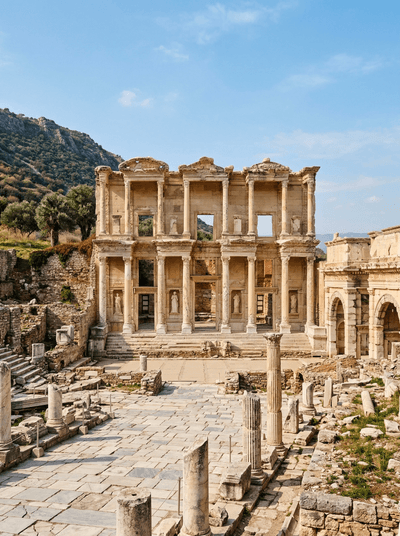
Marble streets still grooved by Roman chariot wheels lead to a library that held 12,000 scrolls.
Agrigento
Italy
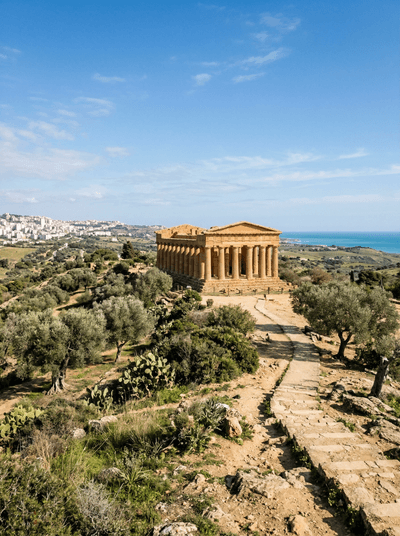
Greek temples lit gold at night along a ridge, almond blossoms carpeting the valley below.
Paestum
Italy
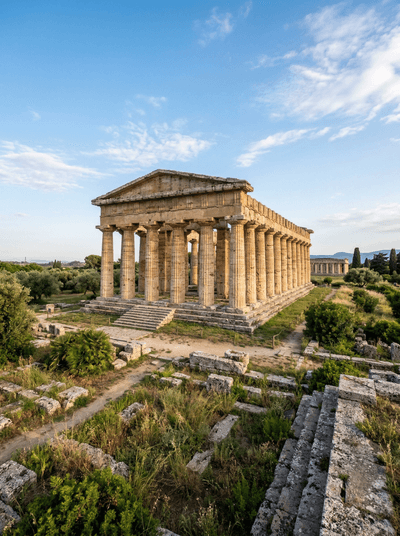
Three Greek temples older than the Parthenon, still standing in an open Cilento field.
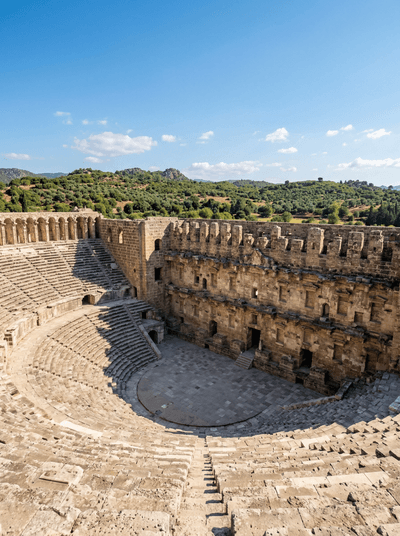
Aspendos
Turkey
A Roman theatre preserved so completely that an unamplified voice carries to the topmost row.
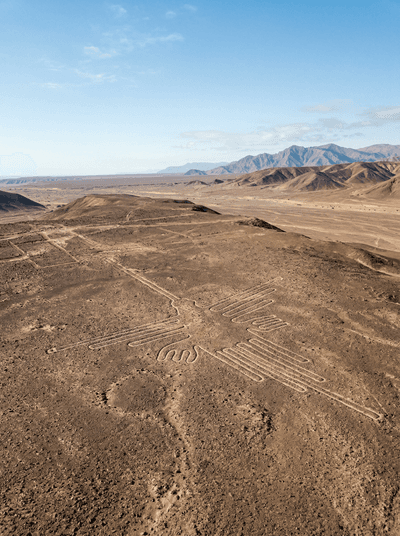
Nazca
Peru
Ancient figures etched so large across the desert they resolve only from above.
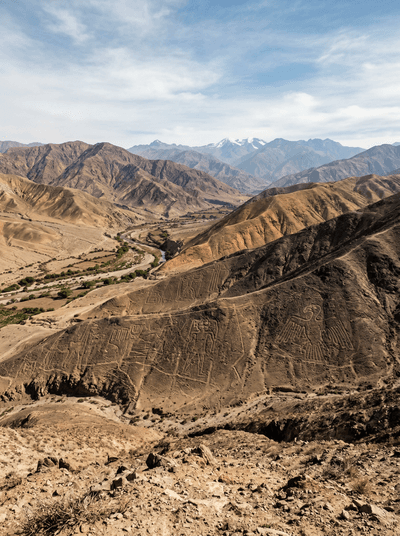
Palpa
Peru
Hillside geoglyphs with human faces, in a valley the tour planes ignore.
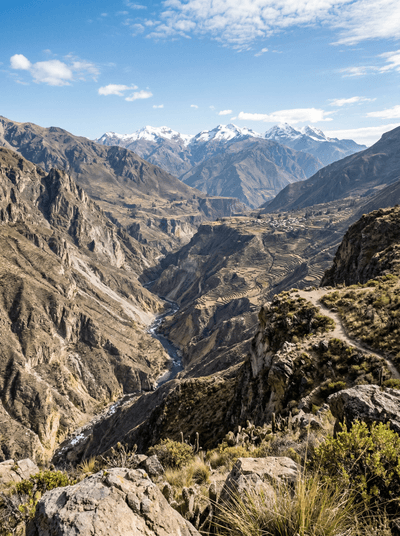
Colca Canyon
Peru
Condors riding dawn thermals out of a chasm that dwarfs the Grand Canyon.
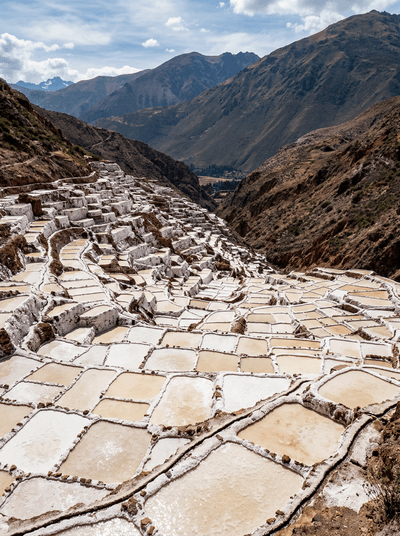
Salineras de Maras
Peru
Thousands of salt pans cascading down a mountainside, hand-harvested since before the Inca.