Japan
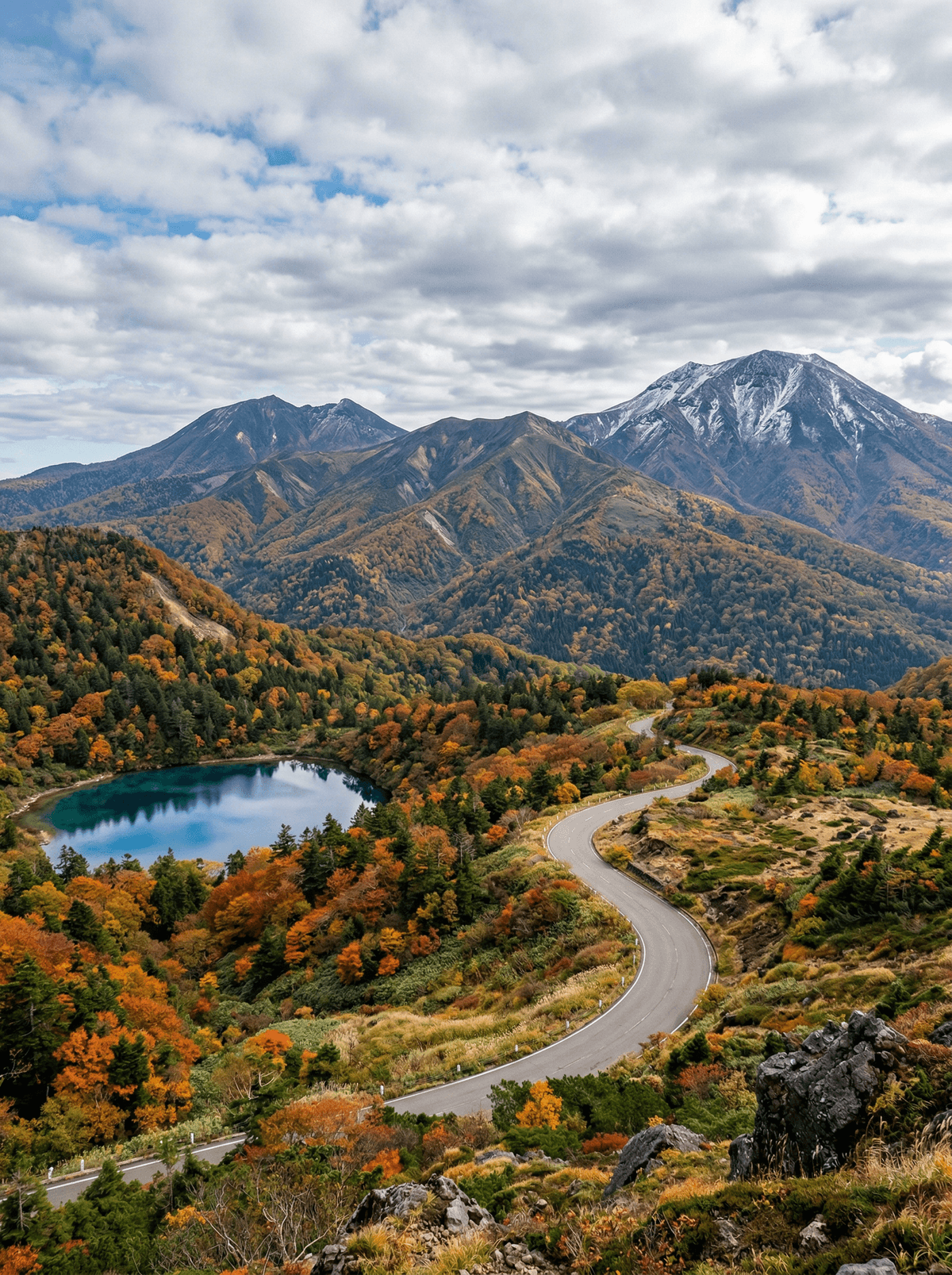
Hachimantai
A volcanic plateau where the spring thaw opens a sapphire eye called the Dragon's Eye.
In late spring the snow begins to melt on the summit plateau and something peculiar appears: a ring of sapphire water around a white disc of ice, the whole formation staring upward like a giant eye. Locals call it the Dragon's Eye, and it holds its shape only briefly each year before the thaw erases it — nobody can promise you the day.
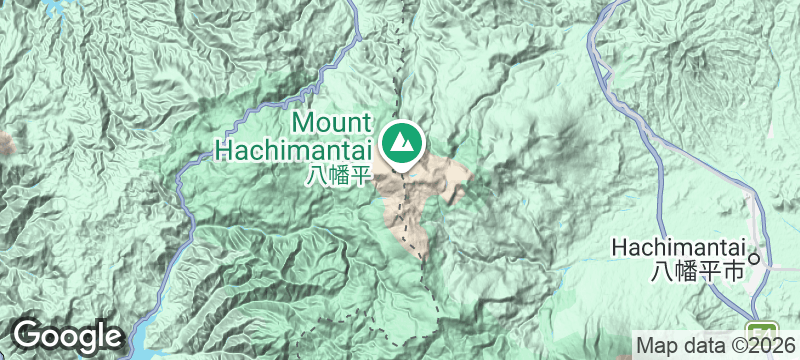
Hachimantai is a broad volcanic upland on the border of Iwate and Akita, the southern half of Towada-Hachimantai National Park and about as far from Japan's cities as the main island gets. The Aspite Line, the mountain road across the plateau, reopens each April between walls of snow, and from it a marked loop crosses the summit marshes past ponds and wetland to Kagami-numa, the pond that becomes the Dragon's Eye. Below the plateau lie some of the country's best rustic hot springs: Tamagawa, the most acidic water in Japan; Goshogake, beside a steaming valley of mud pots; Matsukawa, a remote cluster of inns beside Japan's first geothermal power plant; and springs in use since the eighteenth century. In winter the same slopes take deep Tōhoku powder.
Solo
The summit loop in spring — timing the Dragon's Eye, photographing the snow-wall corridors — rewards the careful planning solo travellers thrive on, and a remote onsen inn closes the day.
Couple
The Aspite Line drive through snow walls, the plateau at sunset, and hot-spring inns tucked into the volcanic foothills give Hachimantai a dramatic intimacy few mountain places match.
Friends
Deep winter powder and steaming valley onsen at Goshogake or Matsukawa make Hachimantai a serious ski-and-soak trip for a motivated group.
- The Dragon's Eye at Kagami-numa — a ring of meltwater around a disc of ice — appears at the summit for a brief window each spring.
- The Aspite Line reopens in April between walls of snow, and a marked loop crosses the summit marshes and ponds.
- Some of Japan's best rustic hot springs lie below the plateau — Tamagawa, the most acidic water in the country, and Goshogake beside a valley of steaming mud.
- Matsukawa Onsen is a remote cluster of inns beside Japan's first geothermal power plant, with hidden springs in use for nearly three hundred years.
Kiritanpo nabe — pounded rice on cedar skewers, stewed with Hinai chicken and mountain vegetables — the Akita-side winter warmer.
Mountain vegetables and wild mushrooms at the onsen-inn dinner table, whatever the season sends down from the plateau.
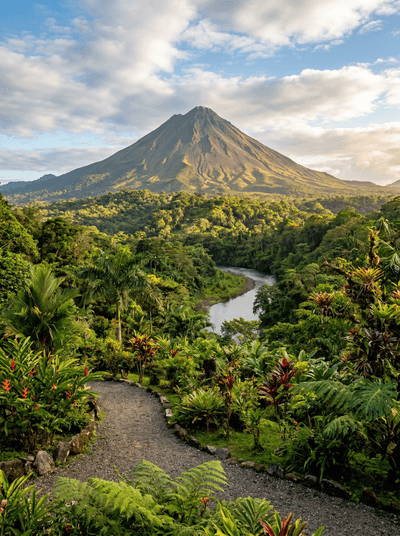
Arenal & La Fortuna
Costa Rica
Hot springs steaming through jungle beneath a volcano's perfect cone at dusk.
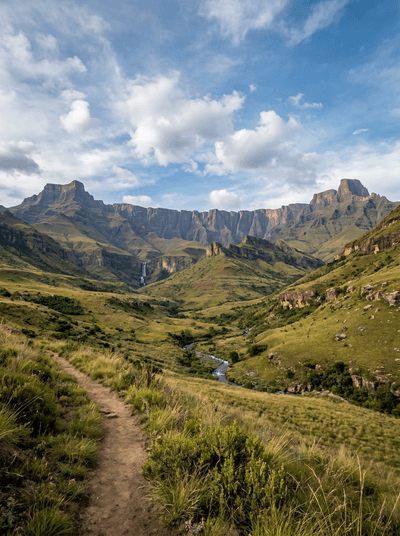
Drakensberg
South Africa
Basalt walls rise above sandstone caves painted across thousands of years.
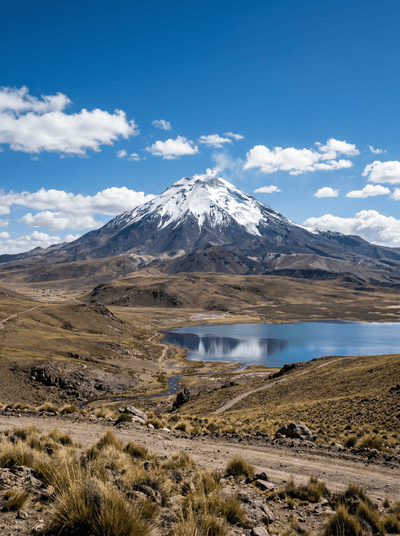
Parque Nacional Volcán Isluga
Chile
Volcanic horizons and high wetlands surround living Aymara settlements in the altiplano.
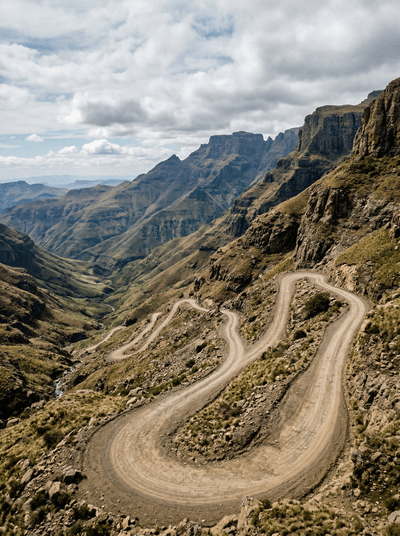
Sani Pass
South Africa
A switchback road climbs from green foothills to a high border above the clouds.
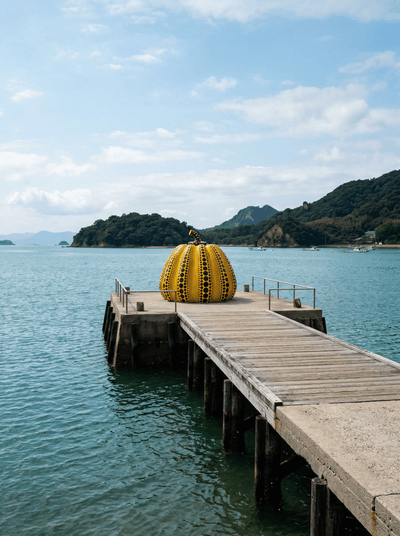
Naoshima
Japan
A fishing island where pumpkins glow yellow and museums burrow underground.
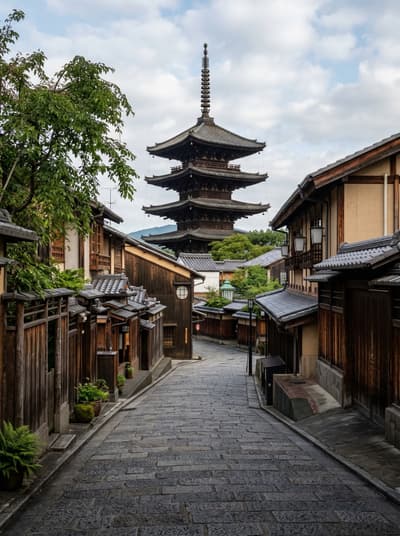
Kyoto
Japan
Lantern-lit alleys where geiko vanish around corners and incense trails from every doorway.
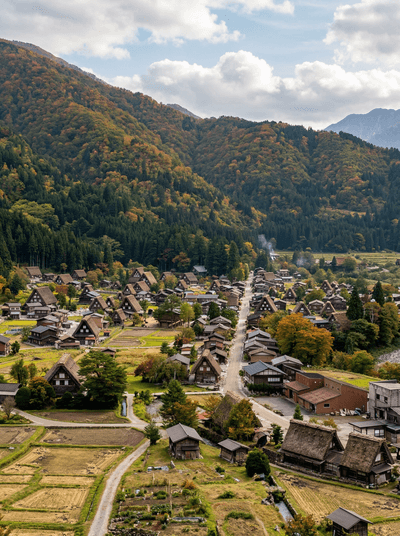
Shirakawa-go
Japan
Thatched roofs steep as praying hands, built for snow that buries the ground floor.
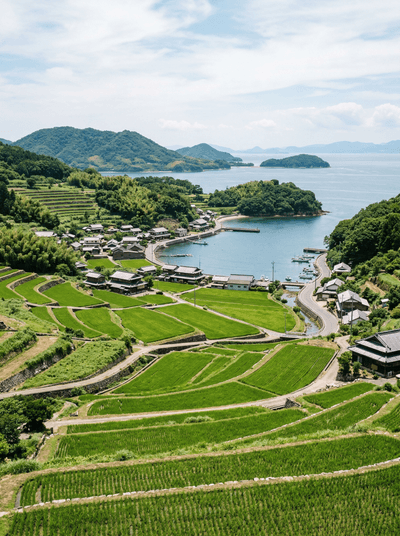
Teshima
Japan
A single raindrop museum on a terraced island where art and rice paddies merge.