Indonesia
Halmahera
Wallace's standardwing dances at dawn on the island that shaped his theory.
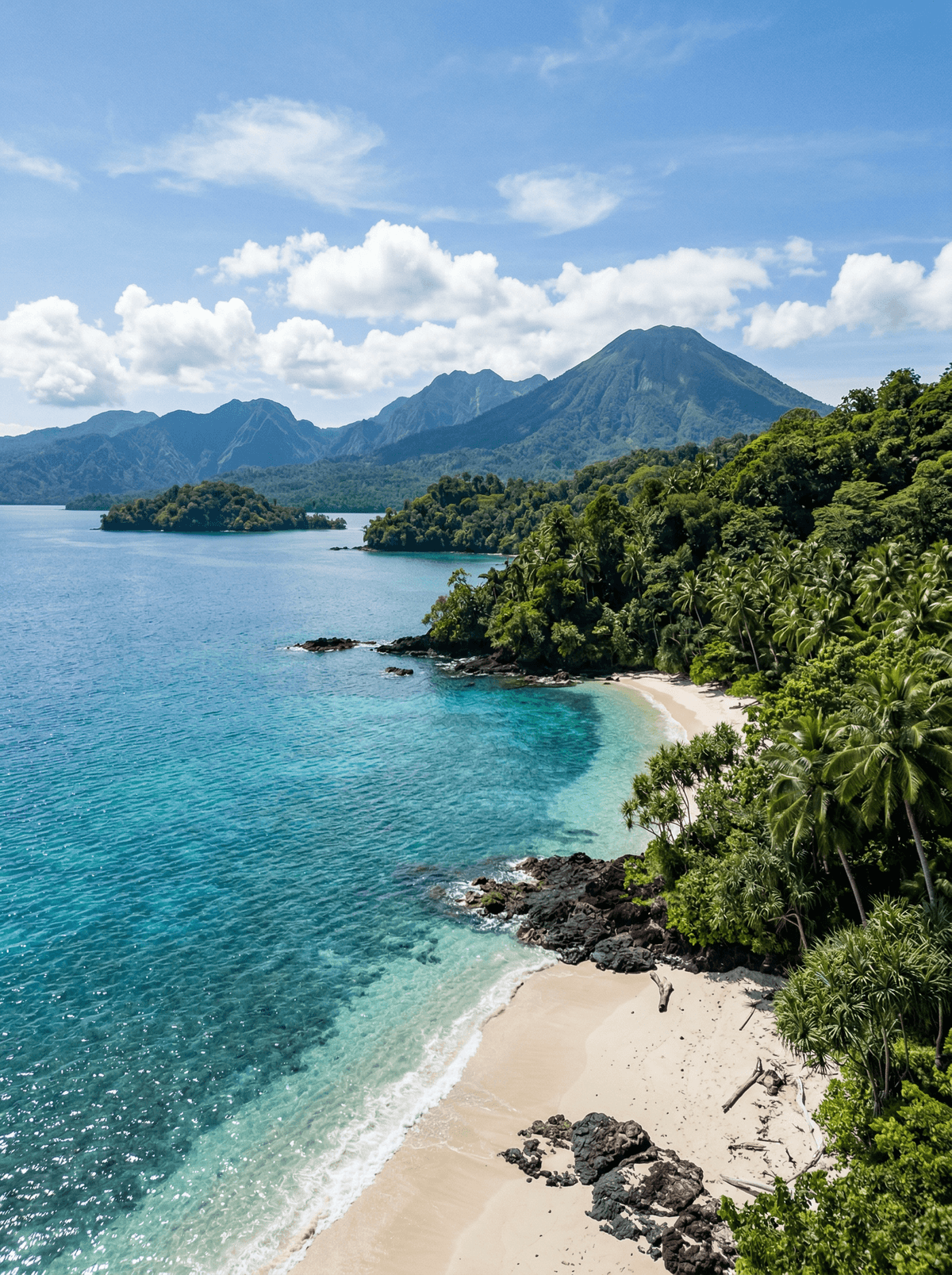
Halmahera spreads in four great peninsulas of forest and volcano, too big for a vague circuit. Pick one working base and the island opens: reefs off the south, clove country in the west, and in the forest, the bird of paradise that bears Wallace's name.
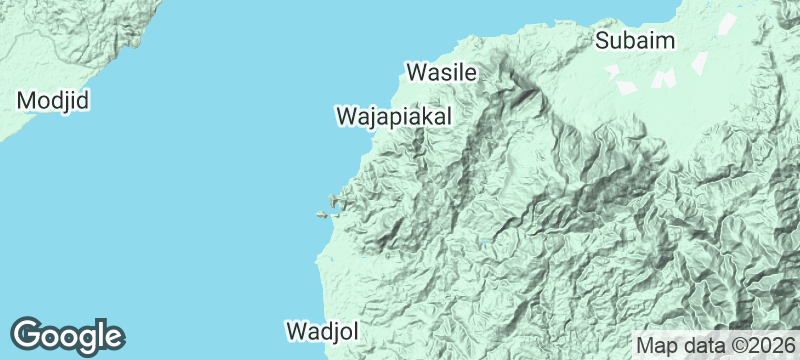
Halmahera spreads across North Maluku in four mountainous peninsulas, holding some of eastern Indonesia's most extensive lowland rainforest and the bird that helped shape a theory: Wallace's standardwing, the bird of paradise found only here and on Bacan, displaying at dawn in the canopy. Clove country climbs the western slopes where the sultanates of Ternate and Tidore once held sway, and reefs ring the south, where an operating resort makes the practical base for marine days. The island rewards one committed base and a named local guide for the forest mornings, and it repays the long approach in kind.
Solo
One operating resort gives an individual transfers, boats and a plan that holds.
Friends
Companions share the long approach, then split reef days and forest mornings.
- Wallace's standardwing displays at dawn in forest found only here and on Bacan.
- Four peninsulas hold some of eastern Indonesia's largest lowland rainforest.
- A South Halmahera base runs published stays and marine excursions.
- The island rewards one committed base over a scattered circuit.
Gohu ikan, North Maluku's lime-cured raw tuna, is the region's plate to find.
The South Halmahera resort runs full board, meals and drinking water inside the package.
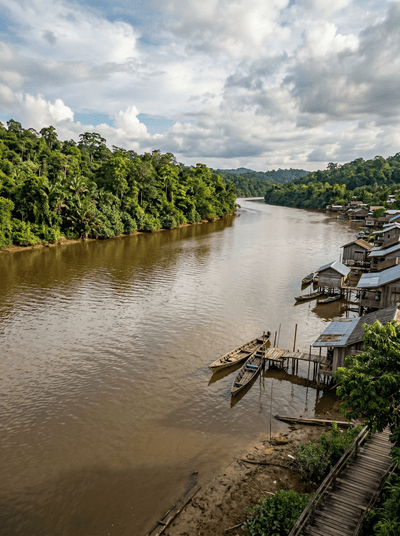
Mahakam River
Indonesia
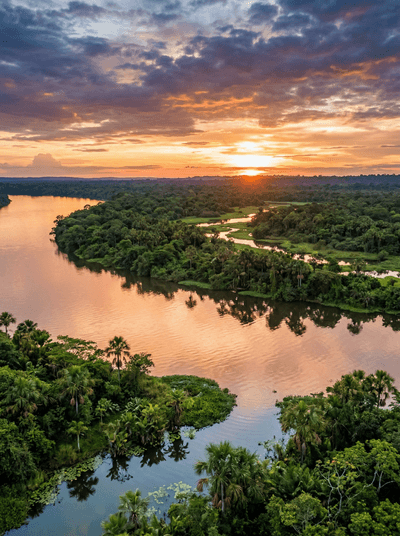
The river is the road: Borneo's barges, ferries and stilt houses all face the Mahakam.
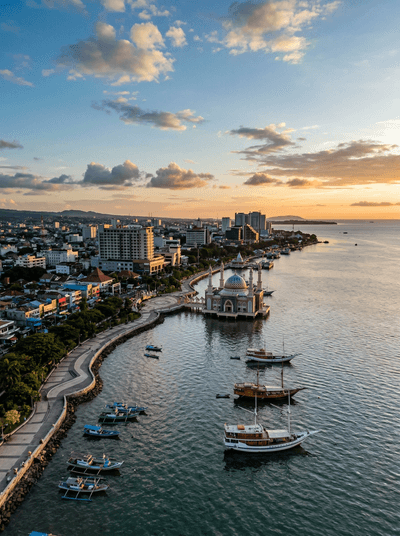
Makassar
Indonesia
Wooden phinisi still tie up at Paotere, where the fish market erupts at dawn.
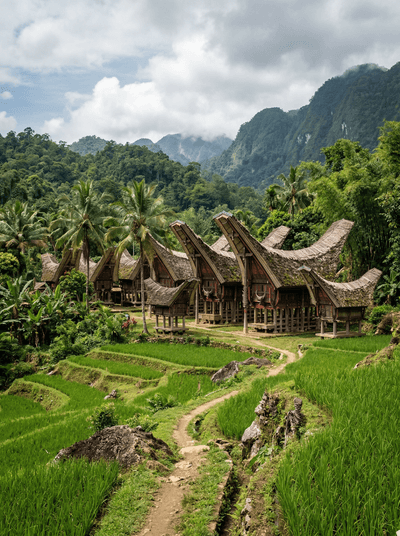
Tana Toraja
Indonesia
Cliff tombs watched by wooden effigies, in highlands where funerals set the calendar.
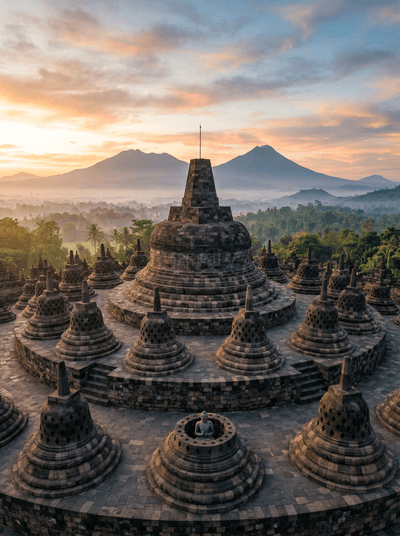
Borobudur
Indonesia
Buried under ash and jungle for centuries, the stone mandala came back.