Brazil
Ilha Grande
Ruins of a maximum-security prison dissolving into Atlantic Forest on a World Heritage island.
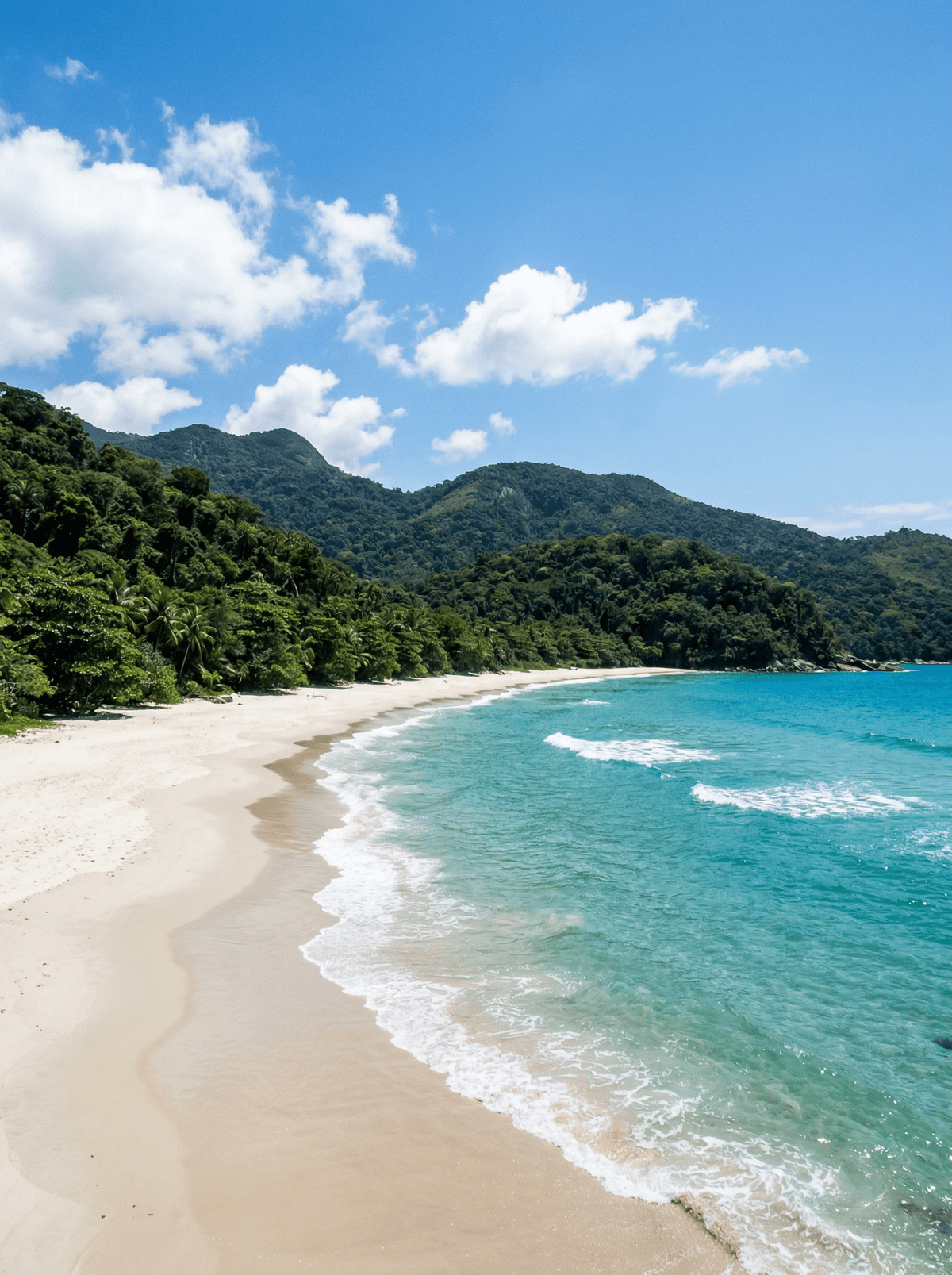
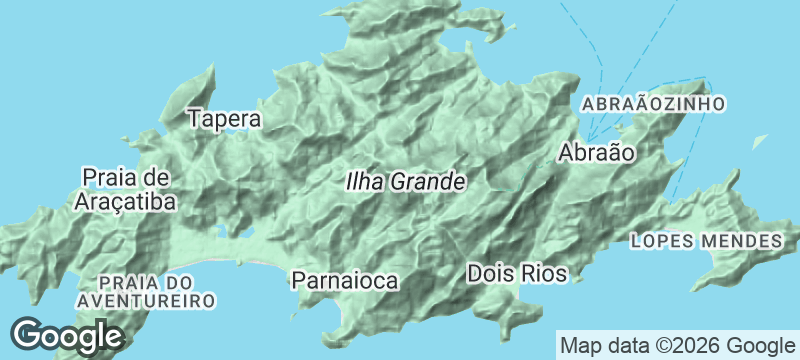
The boat from Angra dos Reis takes forty minutes and lands you in front of a village of pousadas and kitchens, with a mountain of Atlantic Forest standing behind it and running away to the far side of the island. Most of what is out there is state park, and it is crossed on foot. On the ocean side, at Vila Dois Rios, the forest is working its way over the wreck of a maximum-security prison.
Ilha Grande is Rio de Janeiro state's largest island, and roughly four fifths of it has been a state park since a decree of 26 June 1971, now 12,082 hectares of it. People were sent here long before they came for the beaches: the Colônia Correcional de Dois Rios confined an unwanted population through the early republican decades, agricultural colonies followed under the Estado Novo, and the Instituto Penal Cândido Mendes, a maximum-security jail, was built and then pulled down, closing a hundred years of prisons that ran from 1894 to 1994. UERJ keeps what survived, a museum in the old guard house and bakery. The island joined the World Heritage list with Paraty in 2019, and it already held a state heritage listing from 1987, UNESCO recognition as part of the Atlantic Forest biosphere reserve in 1991, and an Important Bird Area designation from BirdLife International. Lopes Mendes, open ocean 7.8 kilometres' walk away, has been voted one of the ten best beaches anywhere.
Solo
The trail network is the reason to come alone: over 80 kilometres of it, with Abraão as the base to walk back to. For the whole island there is the Volta da Ilha Grande, five to seven days, graded medium for the sheer number of climbs and descents, and one leg done by boat because the reserve it crosses is closed to walkers.
Couple
Walk the path to Lopes Mendes early and come back by water in the afternoon, which turns a four-hour hike into a half day with an ocean beach in the middle of it. Evenings are Abraão's: the pousadas, the kitchens, and seafood landed inside the same municipality.
Family
The Cachoeira da Feiticeira is the walk for children, 1.8 kilometres from the village through closed and open forest to a fifteen-metre fall, moderate but short. The park runs Tuesday to Sunday, eight until five, so the day builds around the boat times at either end.
Friends
Cross to Vila Dois Rios as a group. There is an ocean beach, the remains of the jail, and the museum in its bakery and guard house, and the story it tells finishes with the state demolishing the building. Keep the following day for the water, because the beaches are strung around a coast that takes a week to walk.
- The state park is the second largest island park in Brazil, covering about 80 per cent of Ilha Grande with more than 80 kilometres of trails inside it.
- Abraão to Lopes Mendes is 7.8 kilometres of moderate path and takes up to four hours, with Palmas, Mangues and Pouso to stop at along the way.
- The Volta da Ilha Grande is a 76 kilometre circuit of five to seven days, and one leg crosses a restricted reserve, so that stretch is done by boat.
- At Vila Dois Rios the guard house and bakery of the old maximum-security jail hold a UERJ museum covering a century of prisons on the island.
Fish, prawns and scallops are all produced in the municipality itself, so the vieiras on the plate came out of the same water the boat crossed to get you here.
Peixe com banana is the caiçara dish to ask for, and Lua e Mar on Rua da Praia in Vila do Abraão serves it beside camarão with arroz e pirão and a caiçara prawn risotto.
Rock Islands Southern Lagoon
Palau
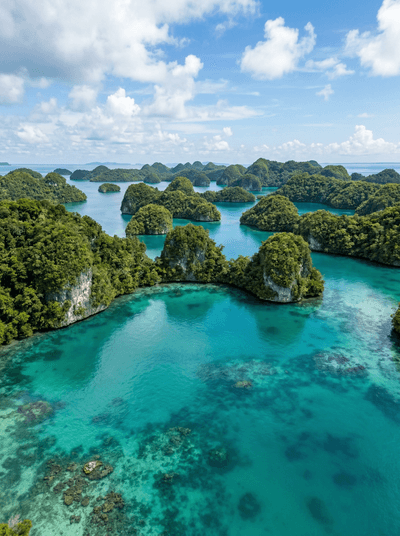
Hundreds of mushroom-shaped limestone islands floating on water so clear the shadows have shadows.
Attabad Lake
Pakistan
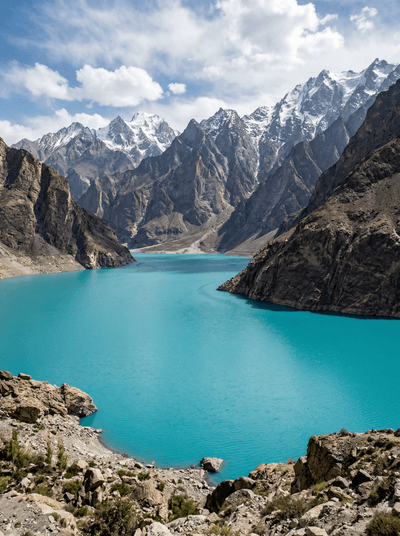
Turquoise water fills a valley that was dry land until a 2010 landslide dammed the river.
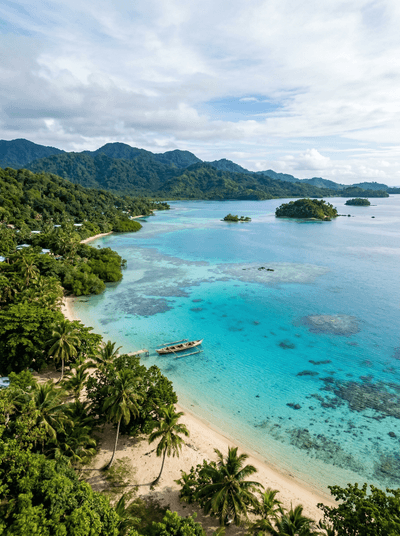
Ghizo Island
Solomon Islands
A 140-metre Japanese transport lies just seven metres down, a tank still in her holds.
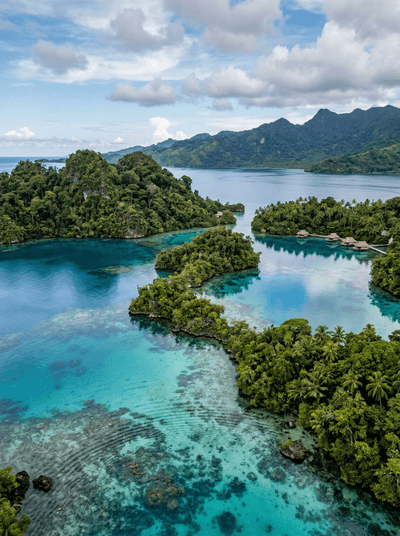
Marovo Lagoon
Solomon Islands
Two barrier reefs enclose a lagoon holding its own islands, villages and generations of woodcarvers.
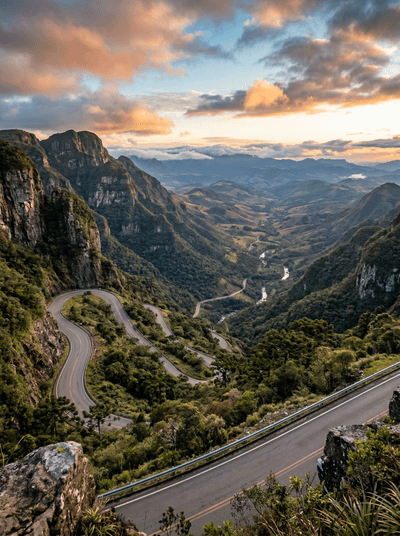
Urubici
Brazil
Frost-coated araucaria forests and canyon rims at the frozen heart of subtropical Brazil.
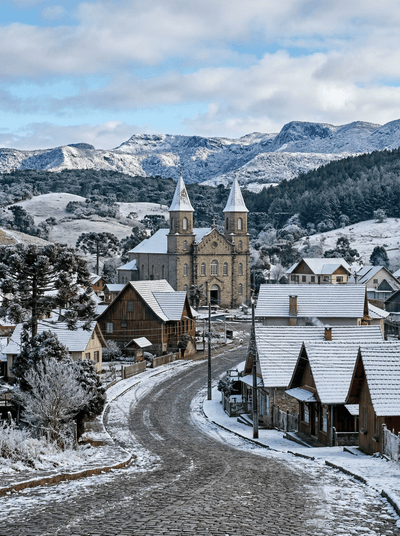
São Joaquim
Brazil
Apple orchards under frost in a highland town where Brazil forgets it's supposed to be tropical.
Cristalino Private Reserve
Brazil
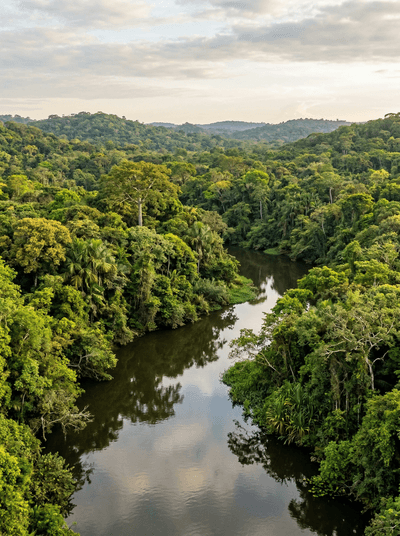
Climb 250 steps before five and watch the flying rivers lift off the canopy below you.
São José dos Ausentes
Brazil
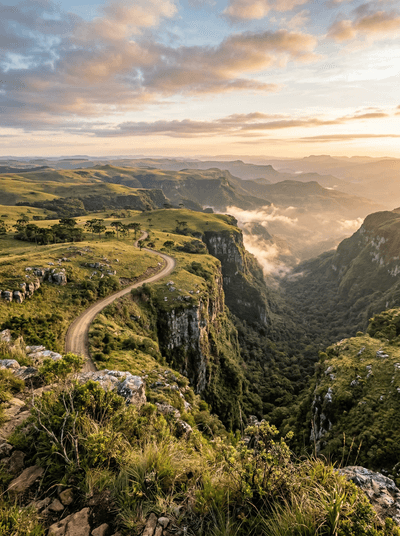
The state's biggest fazenda went to auction twice because its owners never turned up.