Solomon Islands
Marovo Lagoon
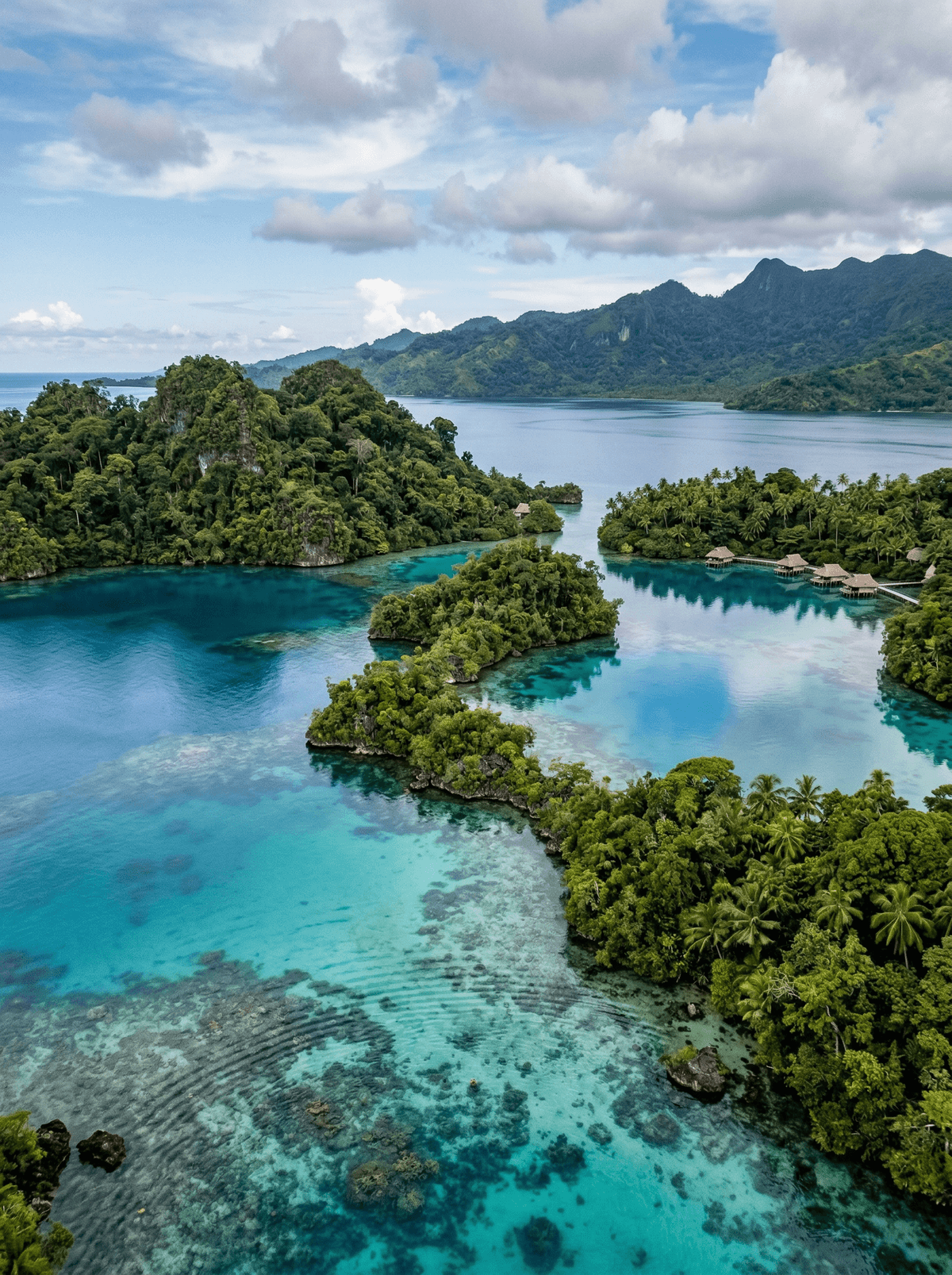
Two barrier reefs enclose a lagoon holding its own islands, villages and generations of woodcarvers.
A paddle dips into pale water and Marovo opens in layers: mangrove shade, bright reef, then a village landing where carving chips curl from dark timber. This immense double-barrier lagoon rewards slow movement, with every channel revealing another island edge.
Marovo and neighbouring Tetepare form a mixed site on Solomon Islands’ UNESCO Tentative List for their reefs, forests and cultural landscape. Family-run lodges use boats for transfers, snorkelling and village visits, arranged before arrival with the hosts, who set the route through waters held under customary ownership. The pleasure is in a day that can move from reef to carving workshop without ever feeling hurried.
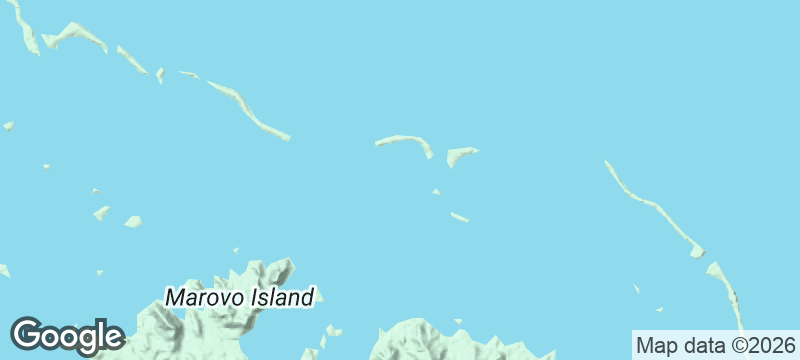
Solo
A lodge inside the lagoon means you are never organising your own boat, which is the hard part of travelling here alone.
Couple
The lodges are small and family-run, so the evenings are quiet and the lagoon goes properly dark.
Family
Inside the reefs the water stays calm and shallow at the edges, and there is always something being carved in the villages, which holds children longer than a beach does.
Friends
Splitting a boat for the day is what puts the far end of the lagoon within reach, and there is enough water here for a group to spread out and meet nobody.
- Two barrier reefs enclose the lagoon, one of very few double-barrier systems anywhere.
- Ebony and rosewood carving is the defining craft, and finished pieces are still paddled between islands and sold from the canoe.
- Family-run lodges sit inside the lagoon itself, so the water is at the door rather than an hour's boat ride away.
- Days are set by boat transfers, weather and community permission, so the lodge or an inbound operator plans them with you.
At Marovo Sea Lodge, meals pair garden produce with seafood gathered by the surrounding communities.
Fish landed that morning, cooked simply, with fruit and greens from the lodge's own garden.
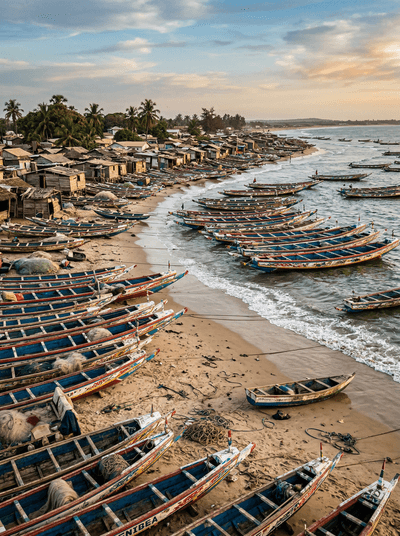
Tanji Fishing Village
Gambia
The beach erupts each afternoon: pirogues through surf, silver bonga by the basket, woodsmoke everywhere.
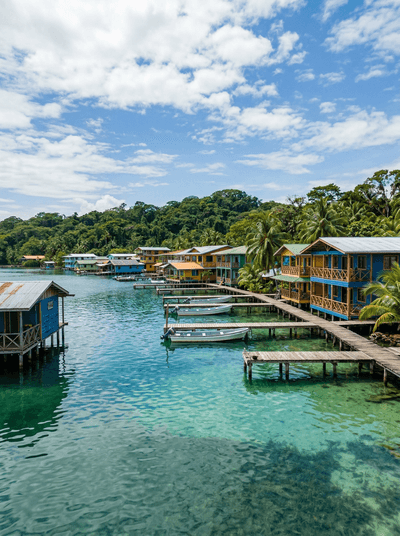
Bocas del Toro
Panama
Over-water bungalows on a Caribbean archipelago where sloths drift through mangrove canopies.
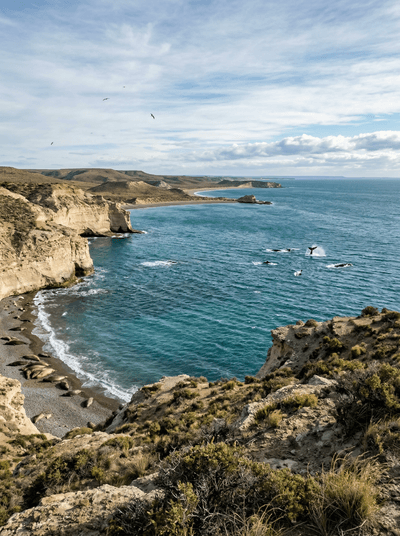
Península Valdés
Argentina
Right whales breach in sheltered gulfs where orcas hunt sea lions in the surf.
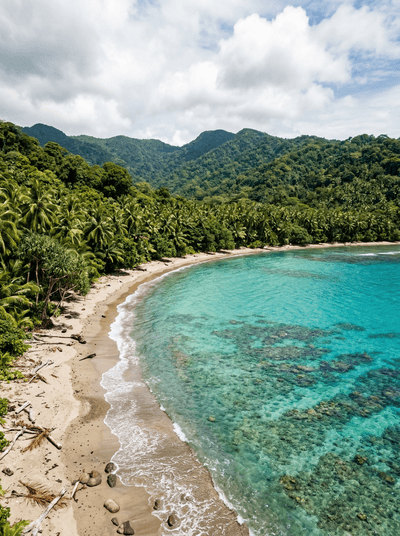
Nendo
Solomon Islands
Money made from red feathers came from here, and the memory of it has not gone.
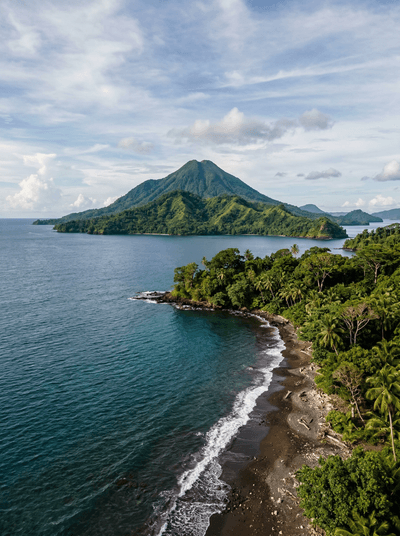
Savo Island
Solomon Islands
Megapodes bury their eggs in black sand that an active volcano keeps warm from below.
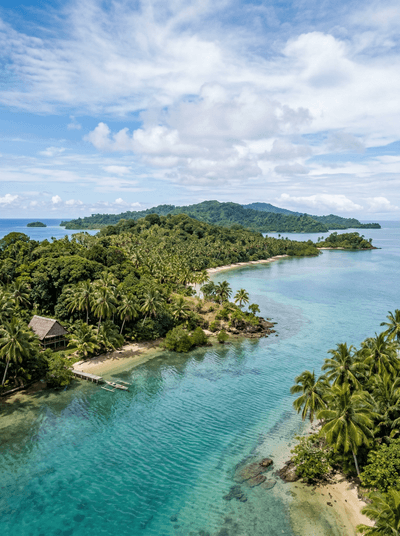
Taro Island
Solomon Islands
A provincial capital on an island low enough that the plan is to move it.