Costa Rica
Irazú Volcano
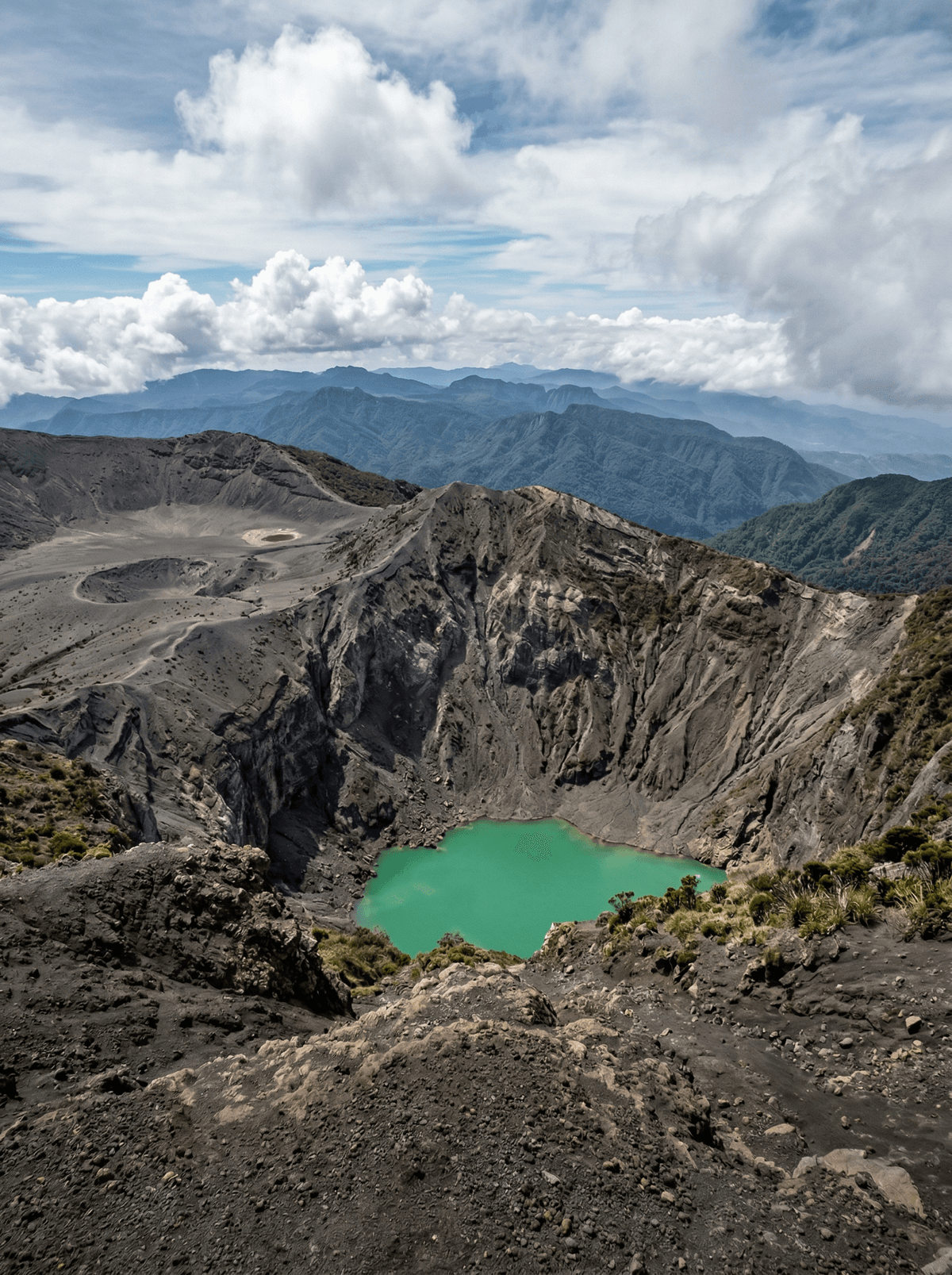
From Irazú's 3,432-metre rim, two oceans glint on opposite horizons at once.
The air thins as the road climbs past potato fields and onion rows into grey volcanic scree. At the top, 3,432 metres up, the main crater drops away in sheer walls — and when the sky allows it, the Pacific and the Caribbean glint on their opposite horizons at once.
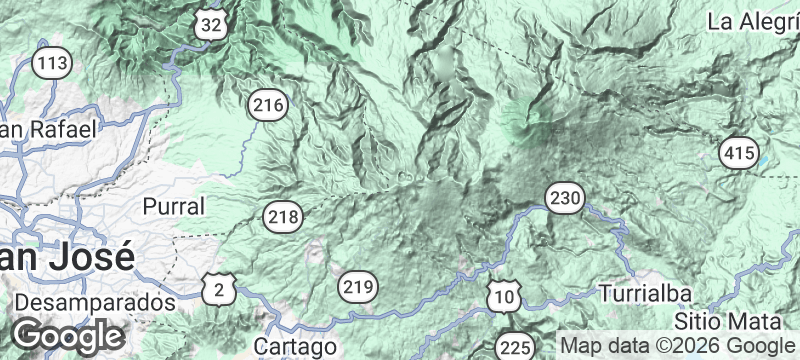
Irazú is Costa Rica's tallest volcano — five distinct craters, a mean temperature of five to nine degrees, and a name drawn from words for quake and thunder. The summit is reachable by paved road: farm country almost to the gate, then bare volcanic scree within minutes, a transition that feels borrowed from another continent. It is an active mountain with a long eruptive history — in 1963 it opened a two-year eruption that dusted San José in ash — and fog owns the rim more often than not, so come early; on the clearest days a telescope reaches Lake Nicaragua. Below sits Cartago, the old capital, and the road home is lined with strawberry stalls.
Couple
A cinematic day loop — crater rim at dawn, the old capital and its basilica below, strawberry stalls on the way home.
Family
The paved road does the climbing, so every age reaches the rim — and the moon-grey crater country mesmerises children.
- Costa Rica's tallest volcano at 3,432 metres, with five distinct craters at the summit.
- On clear days the rim shows both oceans at once — and, with a telescope, Lake Nicaragua.
- A paved road reaches the crater sector, and the Prusia sector adds sixteen kilometres of high forest trails.
- Summit fog is the norm and mornings are kindest — pack for five to nine degrees, not the tropics.
Strawberries and cream from the roadside farm stalls on the mountain road.
A chorreada off the comal in Cartago — sweet corn pancake with sour cream, old-capital style.
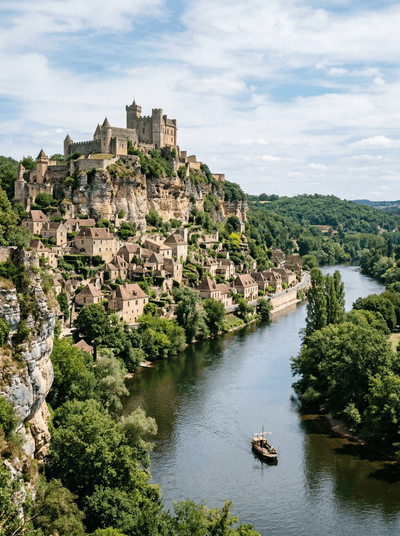
Beynac-et-Cazenac
France
A fortress village gripping a cliff high above the Dordogne's green coil.
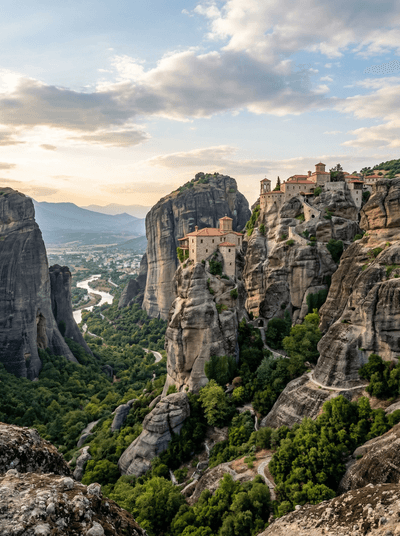
Meteora
Greece
Monasteries balanced on sandstone pillars 300 metres above the plain, reached by rope and faith.
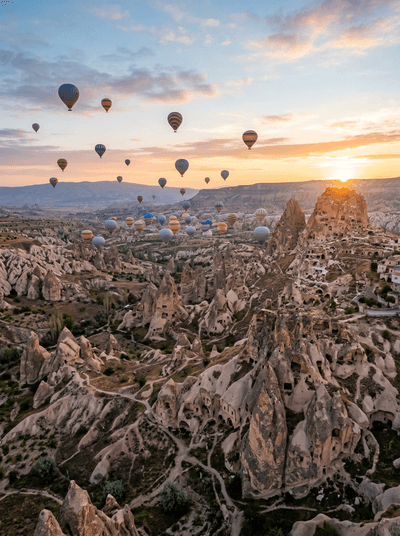
Cappadocia
Turkey
More than a hundred balloons rise at dawn through a forest of stone pillars.
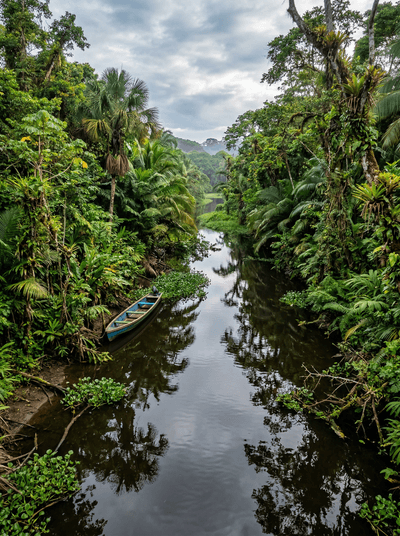
Tortuguero
Costa Rica
Jungle canals where green sea turtles haul onto black volcanic sand under a moonless sky.
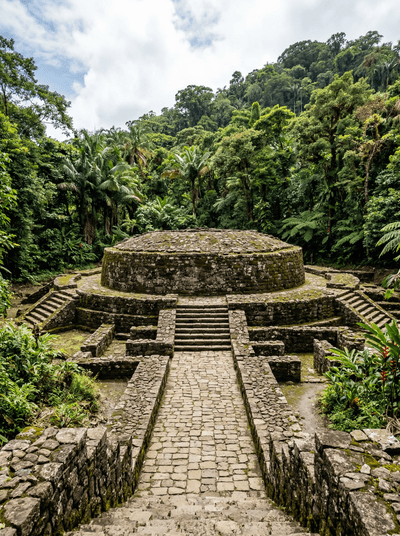
Guayabo National Monument
Costa Rica
Pre-Columbian aqueducts still carrying water through a city the jungle tried to swallow.
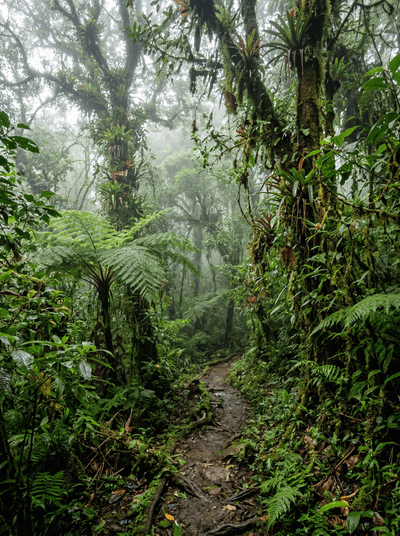
Monteverde Cloud Forest Reserve
Costa Rica
Mist so thick it beads on your eyelashes, orchids breathing in the canopy above.
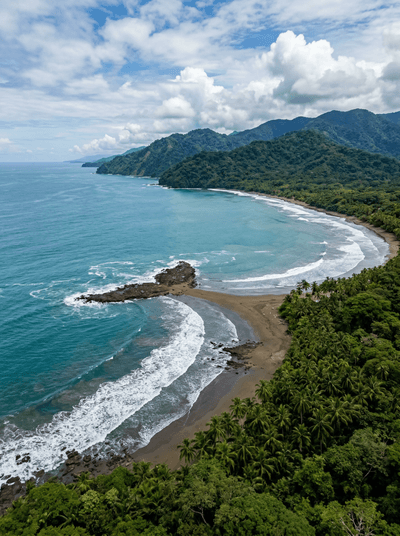
Uvita & Marino Ballena
Costa Rica
A sandbar shaped like a whale's tail emerges where real humpbacks come to breed.