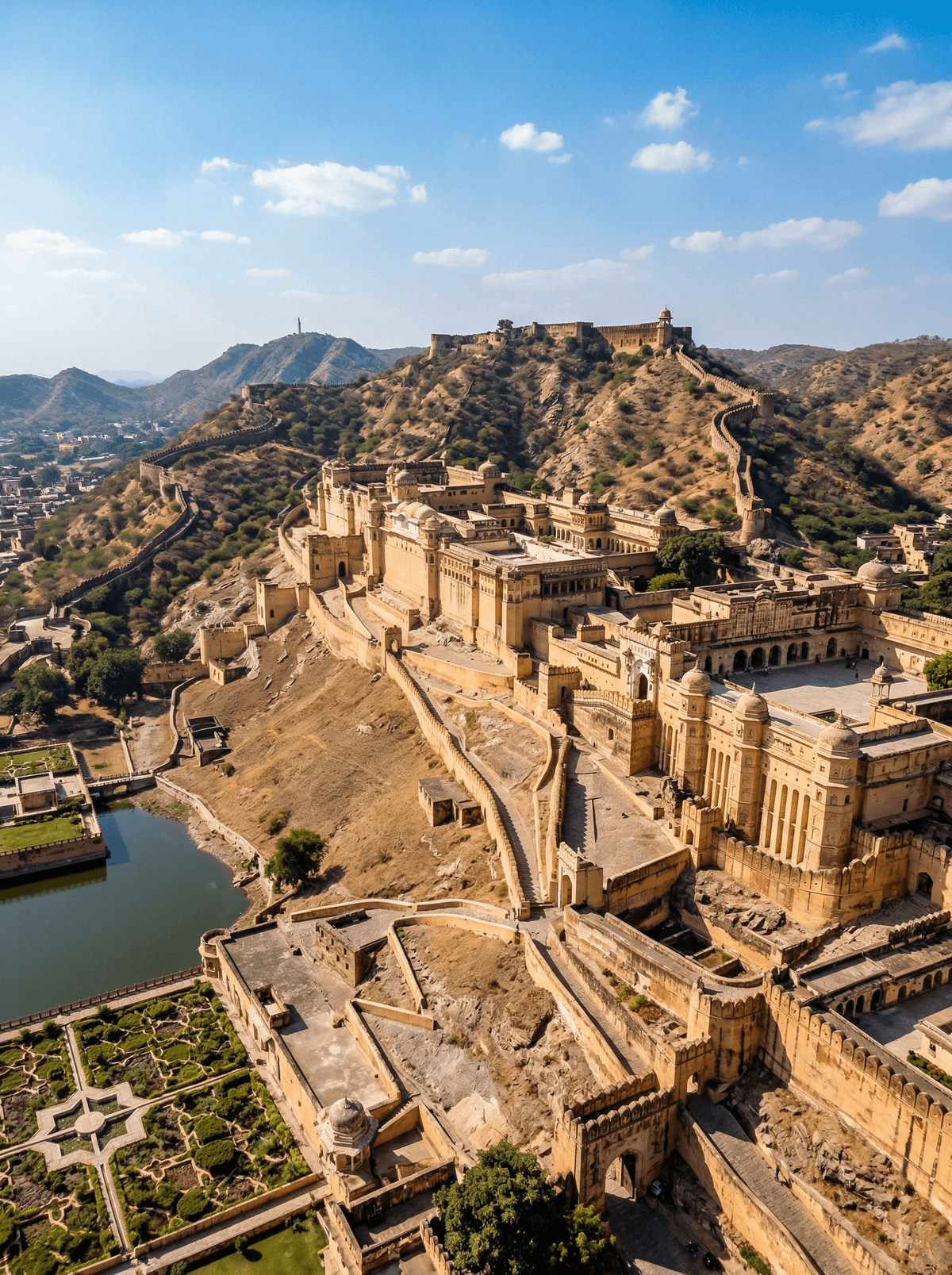
India
Jaipur
A city dyed terracotta pink where carved palace windows let women watch processions unseen.
The walls are pink. Not metaphorically — the old city was painted terracotta pink in 1876 to welcome the Prince of Wales, and the law requires it to stay that way. Behind the painted walls, Hawa Mahal's 953 windows were built so royal women could watch the street without being seen.
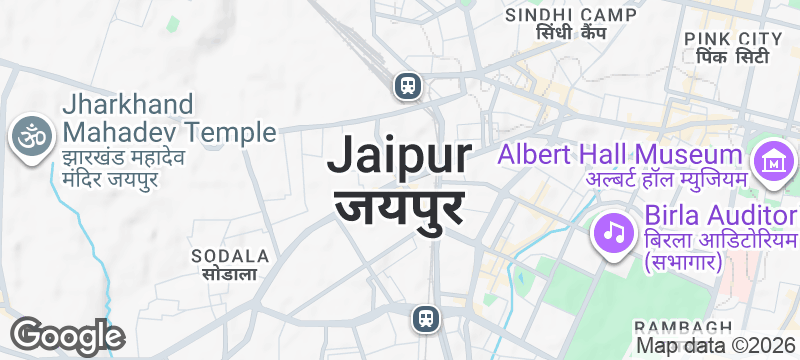
Jaipur was founded in 1727 by Sawai Jai Singh II as one of India's first planned cities — grid streets, wide boulevards, colour-coded quarters. The Hawa Mahal of 1799 raises its five-storey screen of 953 latticed windows for air and for watching, and the Jantar Mantar observatory keeps nineteen astronomical instruments built between 1728 and 1734, the world's largest stone sundial among them. The City Palace still houses the royal family in one wing while the rest opens to visitors.
Solo
Walk the pink grid early — Hawa Mahal from the cafe opposite at sunrise, bazaars as they open.
Couple
Take the City Palace and Jantar Mantar slow, then argue over block prints in the evening bazaar.
Friends
Divide the forts by day — Amber, Nahargarh, Jaigarh — and reunite over laal maas.
Family
Jantar Mantar is a playground of giant instruments — let the children tell the time to two seconds.
- Hawa Mahal is a facade built for watching — 953 windows and nobody watching back.
- Jantar Mantar's giant sundial reads the time to an accuracy of about two seconds.
- The bazaars still block-print with carved wooden stamps and natural dyes, as under the Mughals.
- The pink is law, renewed since 1876 — a whole city keeping a promise of hospitality.
Pyaaz kachori at Rawat Mishtan Bhandar — flaky, spiced, best eaten standing at the counter.
Laal maas — mutton fired with mathania chillies — is Rajasthan's boldest dish.
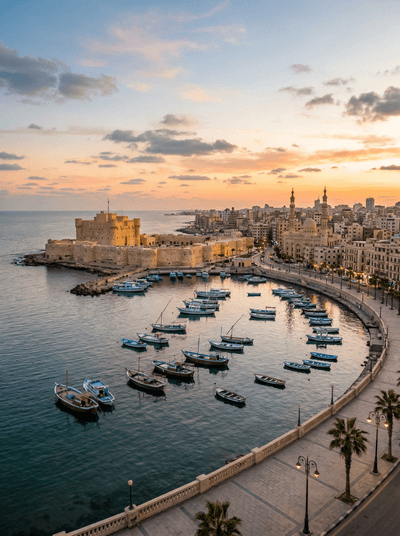
Alexandria
Egypt
Salt-weathered Mediterranean balconies above a seafront where Cleopatra's palace lies submerged offshore.
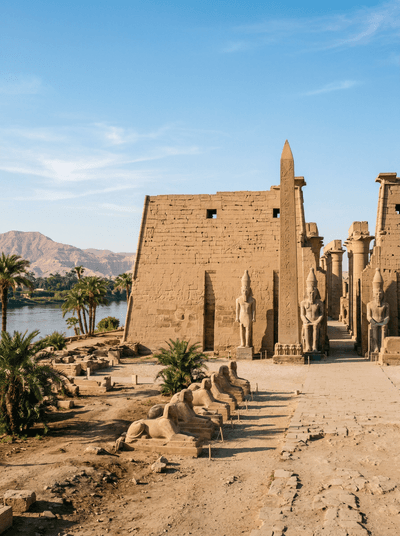
Luxor
Egypt
Dawn light flooding Karnak's hypostyle hall through columns carved before Rome existed.
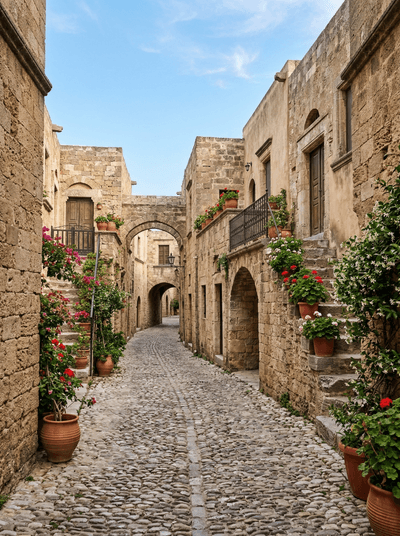
Rhodes Old Town
Greece
Medieval stone streets sealed inside fortress walls where Knights of St John once marshalled for crusade.
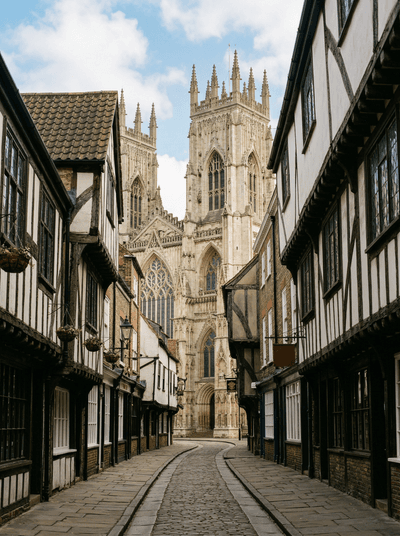
York
England
Viking streets and medieval snickelways where every alley hides a different century.
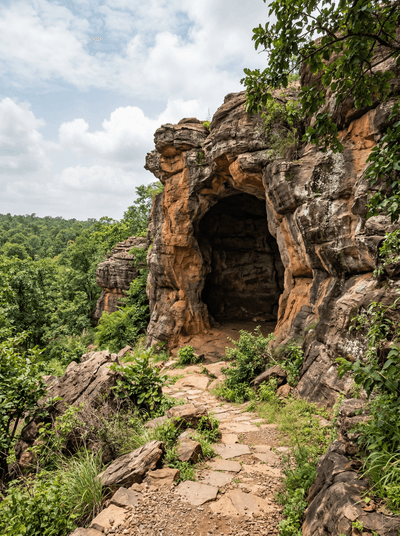
Bhimbetka
India
Prehistoric hunting scenes painted in blood-red ochre across sandstone shelters buried in thick teak forest.
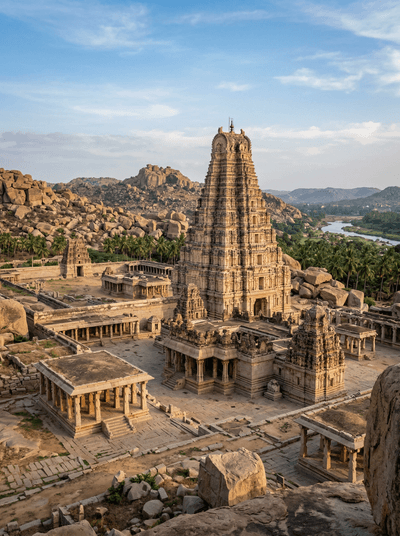
Hampi
India
A ruined empire scattered across a landscape of balancing granite boulders and banana plantations.
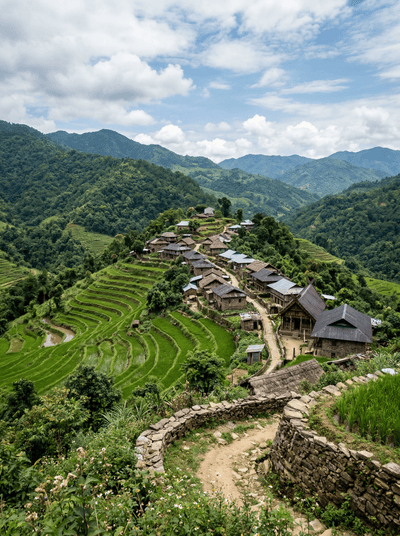
Khonoma
India
A warrior village clinging to terraced slopes that traded headhunting for deep forest conservation.
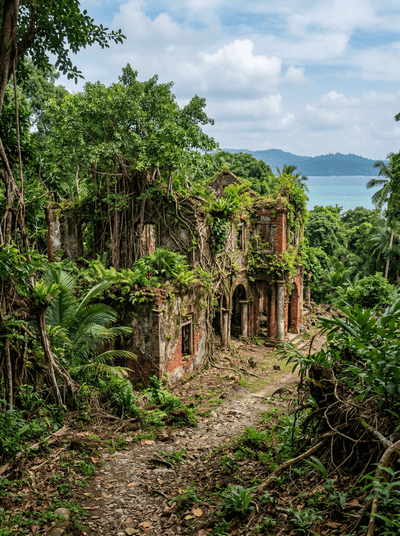
Netaji Subhas Chandra Bose Island (Ross Island)
India
A British colonial headquarters slowly being digested by ficus roots in the Andaman Sea.