Egypt
Alexandria
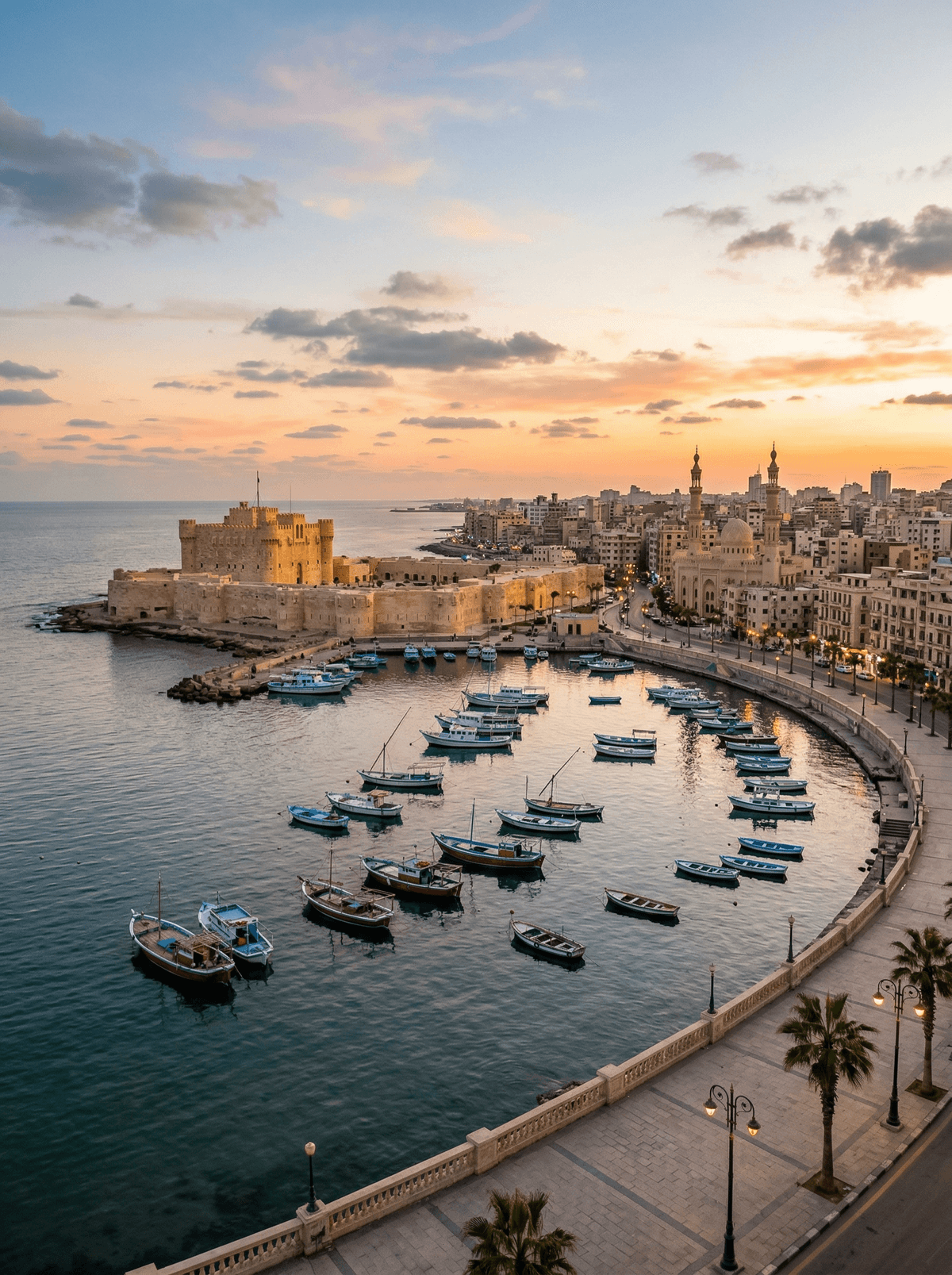
Salt-weathered Mediterranean balconies above a seafront where Cleopatra's palace lies submerged offshore.
Salt wind whips along the Corniche, rattling the shutters of faded Art Deco balconies above a seafront that has seen Greek philosophers, Roman emperors and British officers. Below the surface, Cleopatra's royal quarter lies submerged in the harbour's green water. Alexandria smells of sea spray, fried fish and old books.
Alexander the Great founded the city in 331 BCE, and for nearly a thousand years it was Egypt's capital — home of the ancient world's greatest library and the Pharos Lighthouse. The Bibliotheca Alexandrina, opened in 2002 near its predecessor's site, answers with millions of volumes, exhibitions and a planetarium. The Catacombs of Kom el-Shoqafa blend Egyptian, Greek and Roman funerary art three storeys underground, and the Roman theatre at Kom el-Dikka anchors the classical layer beneath the modern streets.
Couple
Book a Corniche-facing room, walk the seafront at dusk, and split the evening between Anfushi fish and a Greek-era patisserie.
- Underwater archaeologists have mapped Cleopatra's royal quarter six metres below the Eastern Harbour.
- A Bibliotheca ticket folds in guided tours, the Culturama screens and the exhibition halls.
- Stanley's Art Deco facades date from the 1930s, when Alexandria held the largest Greek community outside Greece.
- The western harbour's fish auction runs from six in the morning, bids called over crates of the night's catch.
Kebda Eskandarani — beef liver seared with cumin, garlic, cardamom and chilli — is the city's own sandwich, eaten off carts.
At the Corniche's fish restaurants, calamari and grilled shrimp arrive with sea spray salting the tables.
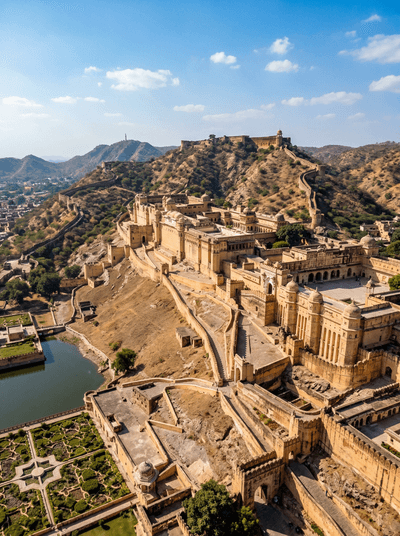
Jaipur
India
A city dyed terracotta pink where carved palace windows let women watch processions unseen.
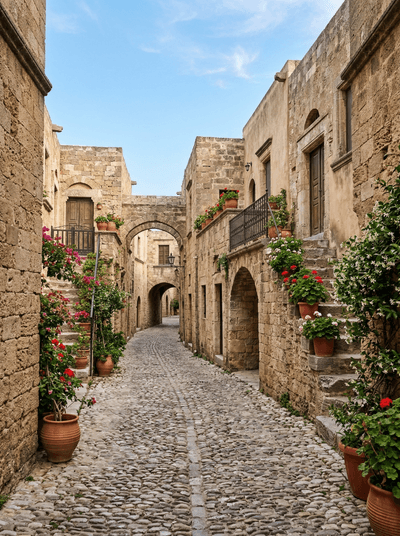
Rhodes Old Town
Greece
Medieval stone streets sealed inside fortress walls where Knights of St John once marshalled for crusade.
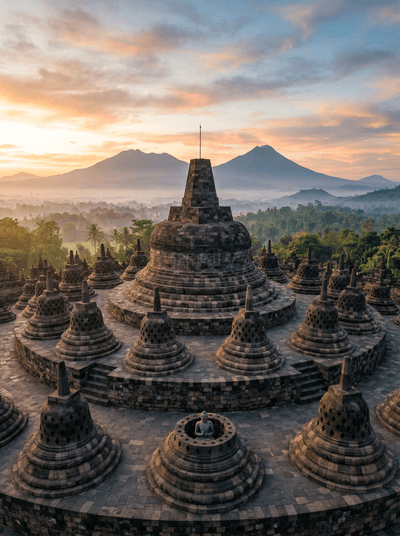
Borobudur
Indonesia
Buried under ash and jungle for centuries, the stone mandala came back.
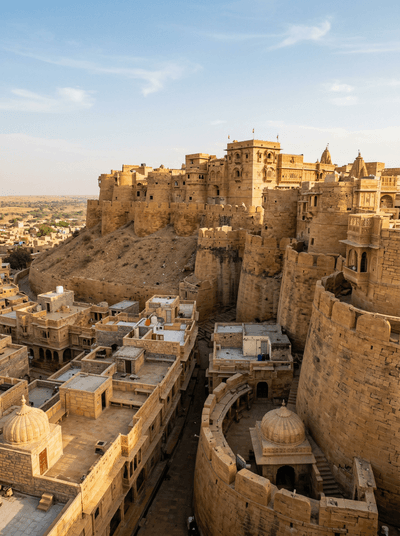
Jaisalmer
India
A living fortress carved entirely from golden sandstone rising like a mirage from the Thar.