India
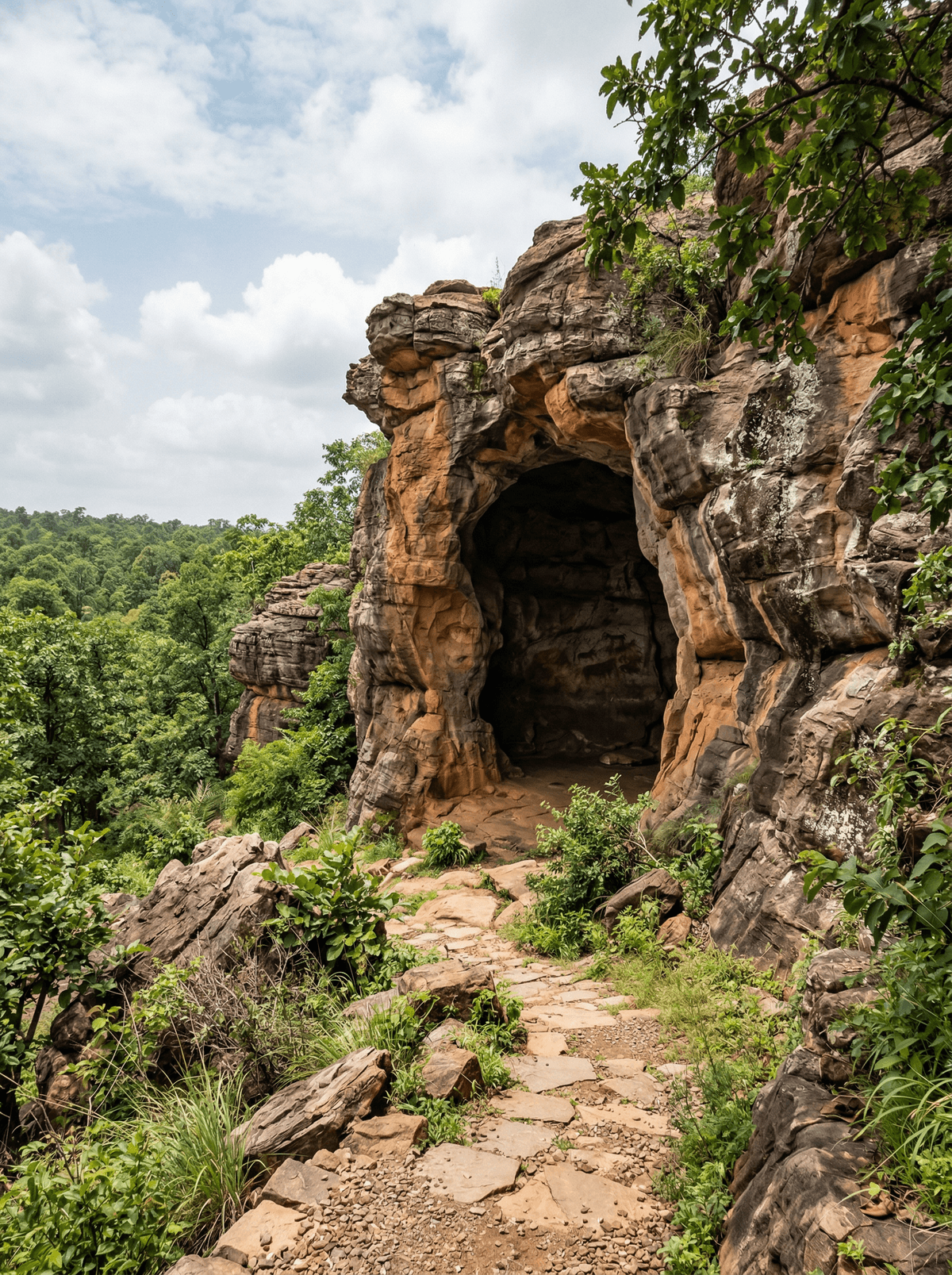
Bhimbetka
Prehistoric hunting scenes painted in blood-red ochre across sandstone shelters buried in thick teak forest.
The handprint is thousands of years old. Pressed onto the shelter ceiling in red ochre, it belongs to someone who stood at this same sandstone overhang and decided to leave a mark. Bhimbetka's paintings are not just old — they span the whole arc of human settlement in one site.
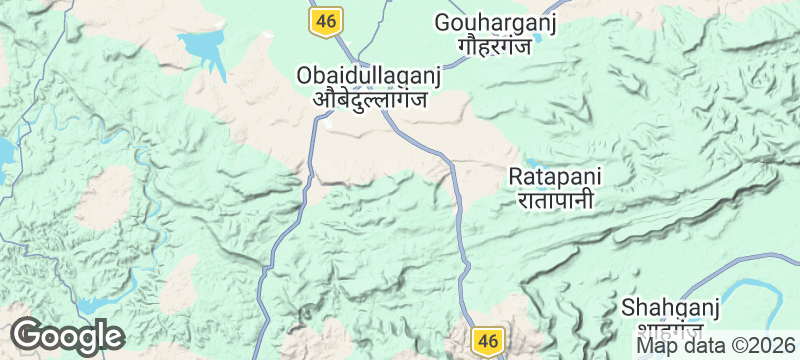
The Bhimbetka rock shelters run along a sandstone ridge in the Ratapani forest, 45 kilometres from Bhopal. More than 750 shelters have been documented, hundreds of them painted, and the site carries UNESCO listing for the depth of its record. Occupation evidence reaches back tens of thousands of years, while the paintings themselves run from the Mesolithic onward — hunting scenes to medieval horsemen. It is an unbroken visual archive in ochre and white.
Solo
Arrive at opening, take the numbered shelter loop slowly, and find the handprints without the crowd.
Couple
Walk the painted ridge together, then Bhopal's old city for the evening.
Family
Children can match the painted animals to the langurs and peacocks watching from the sal trees.
Friends
Pair the shelters with Bhojpur and Sanchi for a full prehistoric-to-Buddhist day loop.
- The painted record runs Mesolithic hunts to medieval riders, over occupation reaching back tens of millennia.
- Over 750 shelters cluster along one forested ridge, hundreds still vivid.
- Stone tools lie in the ground beneath the paintings that depict their use.
- Langurs and peacocks move through the sal forest — the same animals on the rock walls.
On the Bhopal road, poha-jalebi is the ritual breakfast — Anand Namkeen and Vyanjan among the famous counters.
Bhutta ki kees — grated corn simmered in milk and spice — is the Malwa snack worth the stop.
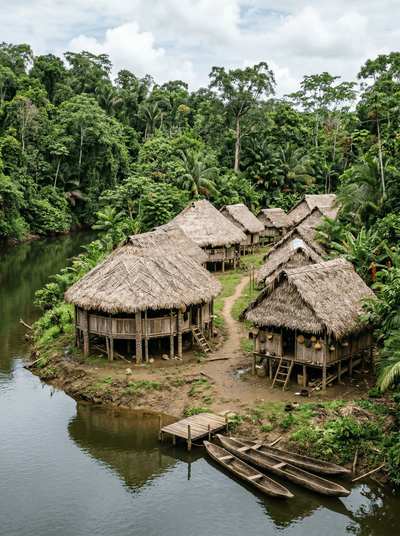
Emberá Communities of the Chagres
Panama
Upriver by dugout canoe to a village where tattoos are drawn from a rainforest fruit.
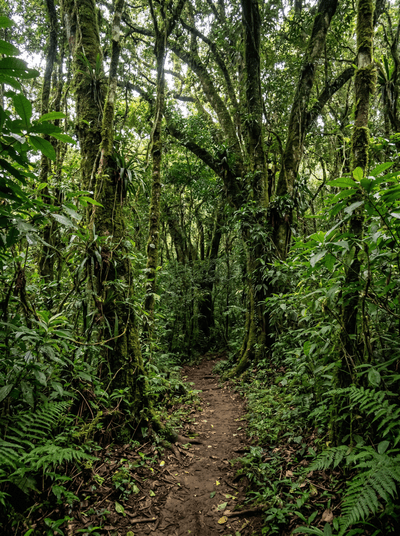
Kakamega Forest
Kenya
Primates crash through the canopy of Kenya's last rainforest, dense with 350 butterfly species.
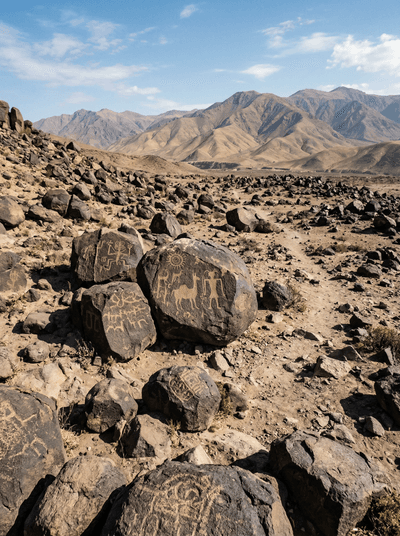
Toro Muerto
Peru
A desert of engraved boulders — thousands of petroglyphs, barely a visitor.
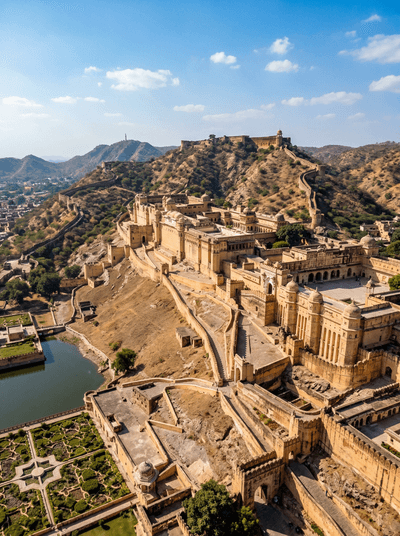
Jaipur
India
A city dyed terracotta pink where carved palace windows let women watch processions unseen.
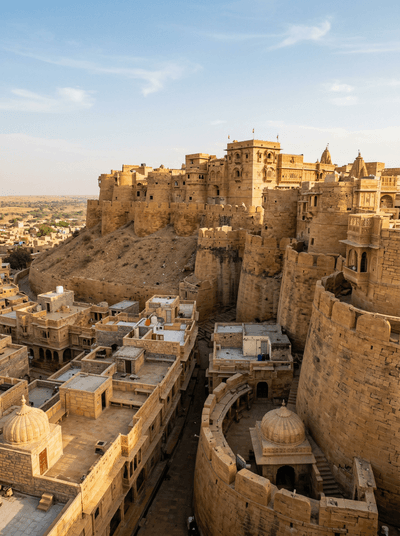
Jaisalmer
India
A living fortress carved entirely from golden sandstone rising like a mirage from the Thar.
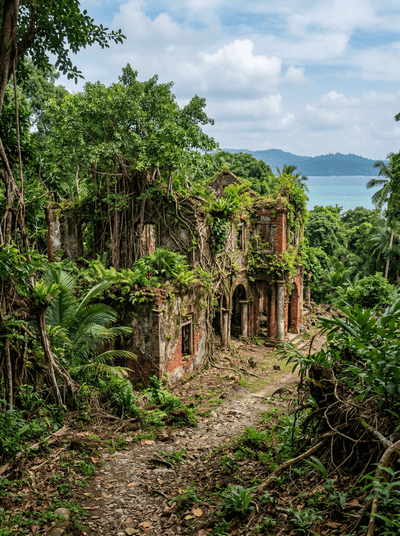
Netaji Subhas Chandra Bose Island (Ross Island)
India
A British colonial headquarters slowly being digested by ficus roots in the Andaman Sea.
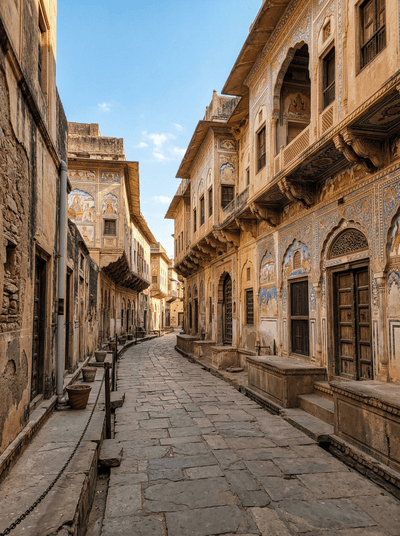
Mandawa
India
Gramophones and steam trains painted on mansion walls, a desert town turned open-air gallery.