Pakistan
Khewra Salt Mine
Amber tunnels inside a salt mine so vast it contains its own mosque and railway.
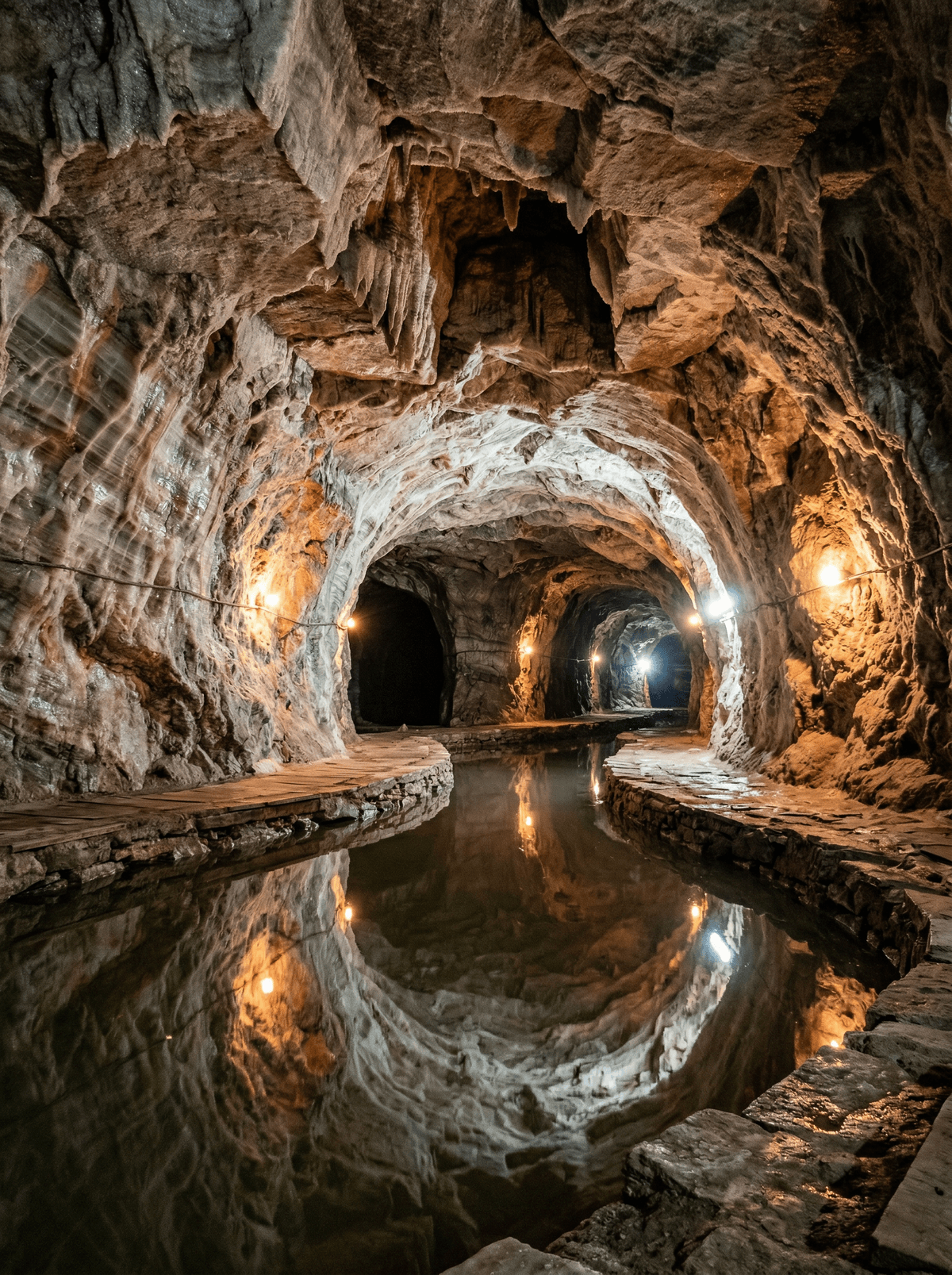
The tunnel walls glow amber and pink, lit from within by salt so pure it is translucent. Deep inside the mine, a mosque built from salt bricks stands beside a brine pool that reflects the chamber ceiling like a dark mirror. The air tastes faintly mineral, and an electric railway rattles past, ferrying visitors deeper into the mountain.
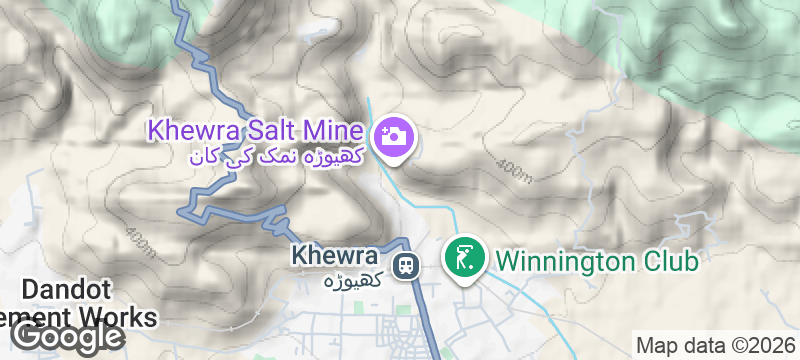
Khewra Salt Mine in Jhelum district is commonly ranked the world's second-largest salt mine and is certainly Pakistan's oldest — legend says Alexander's cavalry horses discovered the deposits in 326 BCE by licking the rocks, and systematic mining has run from the Mughal era through the British tunnels of 1872 to today. Nineteen levels of workings descend into the Salt Range, holding reserves measured in the hundreds of millions of tonnes, and the mine still ships around 350,000 tonnes of pink salt a year. Inside, miners have built a mosque, assembly halls and landmark replicas entirely from glowing salt brick, the interior holds a constant 18°C in every season, and the colonial-era electric railway carries visitors through illuminated chambers where salt crystals hang from carved ceilings.
Family
Children ride the underground railway, touch translucent salt walls, and explore carved chambers that feel more like a film set than a working mine.
Couple
Amber-lit chambers and reflective brine pools make an unexpectedly atmospheric underground world — nothing like a typical day trip from Islamabad.
Friends
Nineteen levels of illuminated tunnels, a mosque carved from salt, and a colonial-era railway through chambers that glow pink and gold.
- Pink salt blocks glow amber and rose under electric light, and the interior holds 18°C whatever the season outside.
- The miniature train carries visitors deep into the hillside to chambers with a mosque built of salt brick.
- The salt was laid down when an ancient sea evaporated 600 million years ago — red, pink and white layers map its slow retreat.
- The mine still works: around 350,000 tonnes of Himalayan pink salt leave Khewra every year.
Jhelum's kulchas — crisp and flaky, served with chickpea curry.
Mithai and fresh cake from the bakery by the mine gate, eaten with tea before the descent.
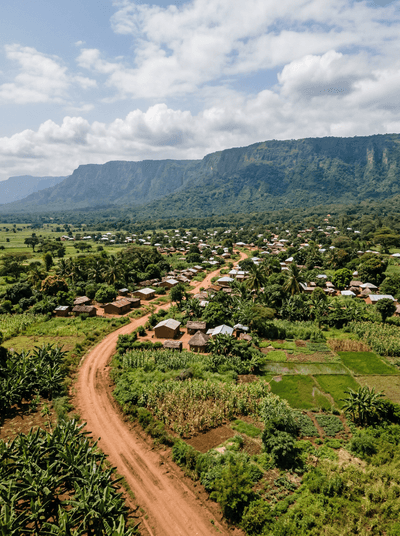
Mto wa Mbu
Tanzania
Thirty banana varieties grow around one village, and only two make the beer.
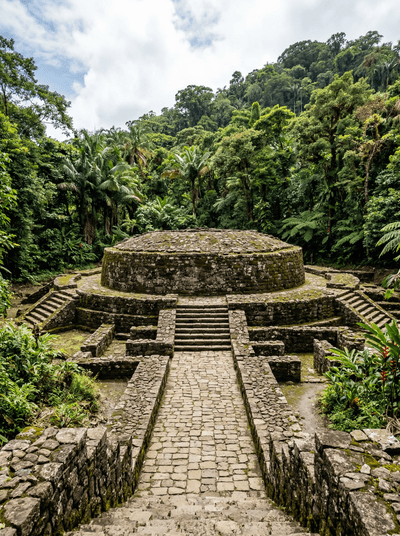
Guayabo National Monument
Costa Rica
Pre-Columbian aqueducts still carrying water through a city the jungle tried to swallow.
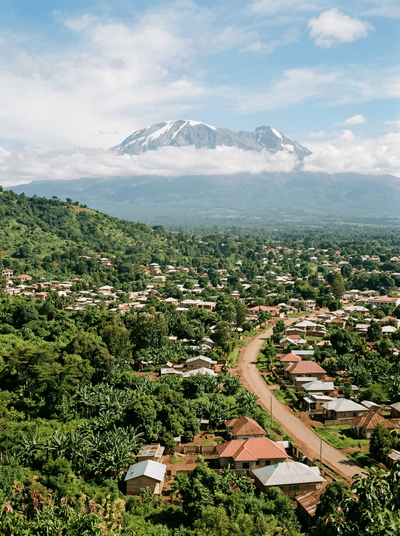
Moshi
Tanzania
Coffee ripens on Kilimanjaro's flank above a town the Chagga farmed first.
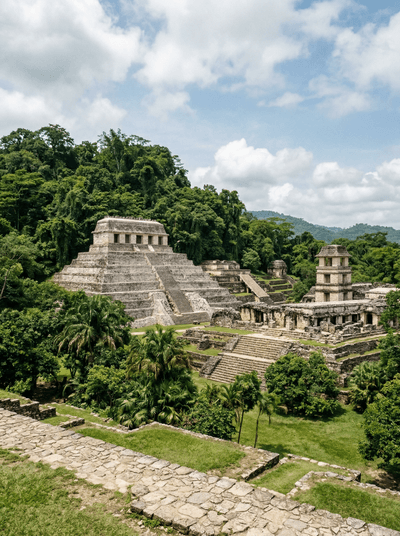
Palenque
Mexico
A dynasty's whole memory stands carved in temples the forest still shades.