Japan
Kunisaki Peninsula
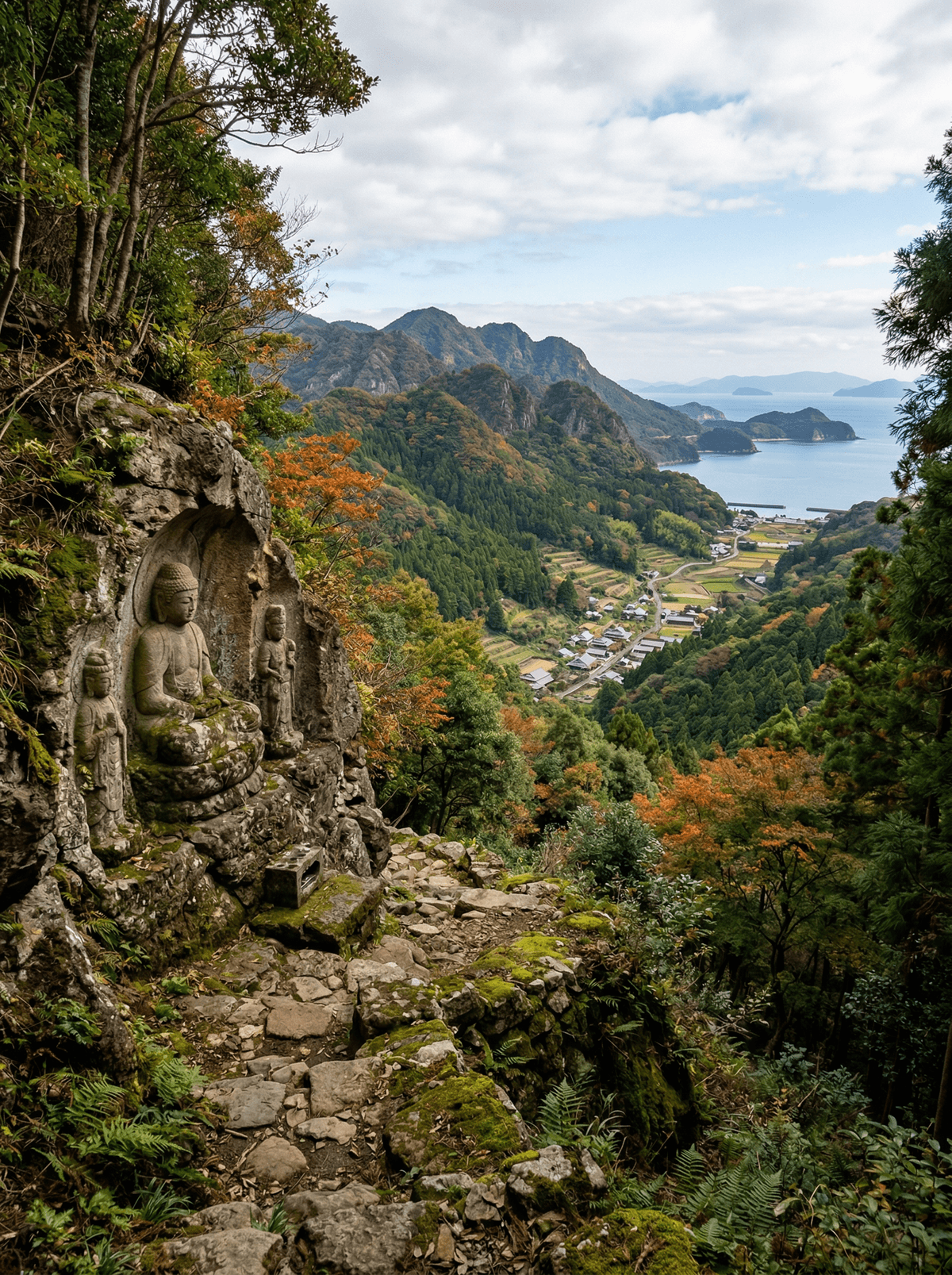
Stone Buddhas staring out of cliff faces on a volcanic peninsula that grew its own Buddhism.
The Buddhas watch from the cliffs. Carved into the rock a thousand years ago, stone figures gaze out from the forests of the Kunisaki Peninsula in Japan's Ōita Prefecture, their features softened by rain and moss but their presence undiminished. The temple paths between them run through valleys that radiate from a single central mountain, and the villages along them are small and scattered.
Kunisaki grew its own Buddhism. The Rokugō Manzan culture fused Buddhist, Shintō and mountain worship around the peninsula's temples and Usa Shrine, the head of Japan's thousands of Hachiman shrines, and its defining mark is stone: cliff-carved magaibutsu at Kumano, the caves at Rakanji holding more than 3,700 stone figures including five hundred disciples of the Buddha, and Fukiji's main hall, a National Treasure that is the oldest wooden building in Kyūshū. The valleys fan out from Mount Futago, forested and sparsely farmed, and the peninsula's oak woods grow the shiitake that earned the region the UN's agricultural-heritage designation.
Solo
Walking between cliff-face Buddhas through forest silence, one temple valley to the next — the Kunisaki paths make one of Japan's most contemplative walks.
- Stone Buddhas carved into cliff faces a thousand years ago stare out from forests along temple paths that run valley to valley.
- Rokugō Manzan, the peninsula's own fusion of Buddhism, Shintō and mountain worship, left temples in every valley and caves holding thousands of stone figures.
- Kunisaki's oak-log shiitake earned the peninsula recognition as a Globally Important Agricultural Heritage System.
- The valleys radiate from one central mountain through forest and sparse farmland, with running water never far away.
Kunisaki dried shiitake, grown on oak logs in the peninsula's damp woods, swollen back to life in a dashi that tastes of the forest.
Dangojiru, Ōita's miso soup of flat hand-torn dumplings and root vegetables, in a valley farmhouse restaurant.
Noto Peninsula
Japan
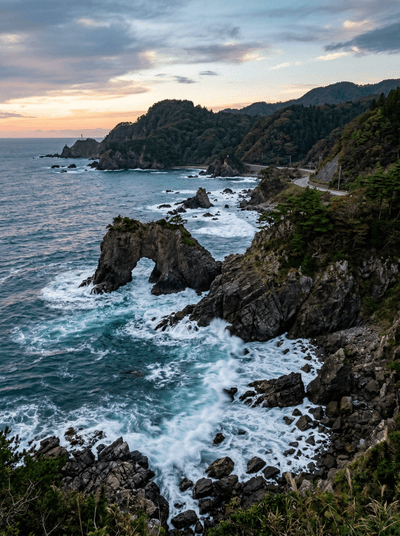
Rice terraces falling into the sea and lacquer villages on a coast an earthquake reshaped.
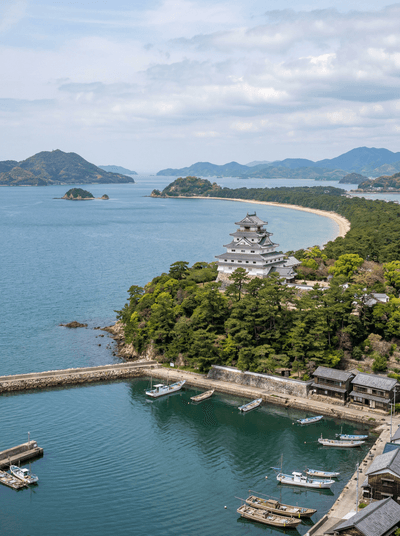
Karatsu
Japan
A pottery town where enormous lacquered floats charge through the streets each November.
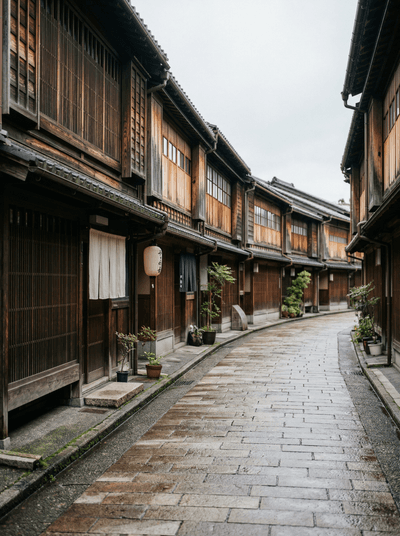
Kanazawa
Japan
Samurai and geisha districts untouched by war where gold leaf gilds everything, even ice cream.
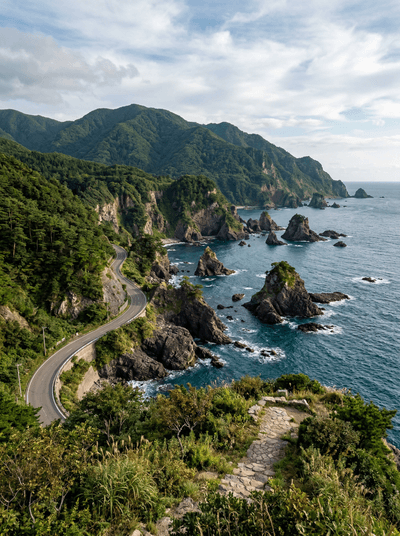
Sado Island
Japan
An exile island where gold miners, taiko drummers and crested ibis coexist in the fog.