Samoa
Manono Island
An island with no cars, no dogs, and a grave of ninety-nine stones, one wife each.
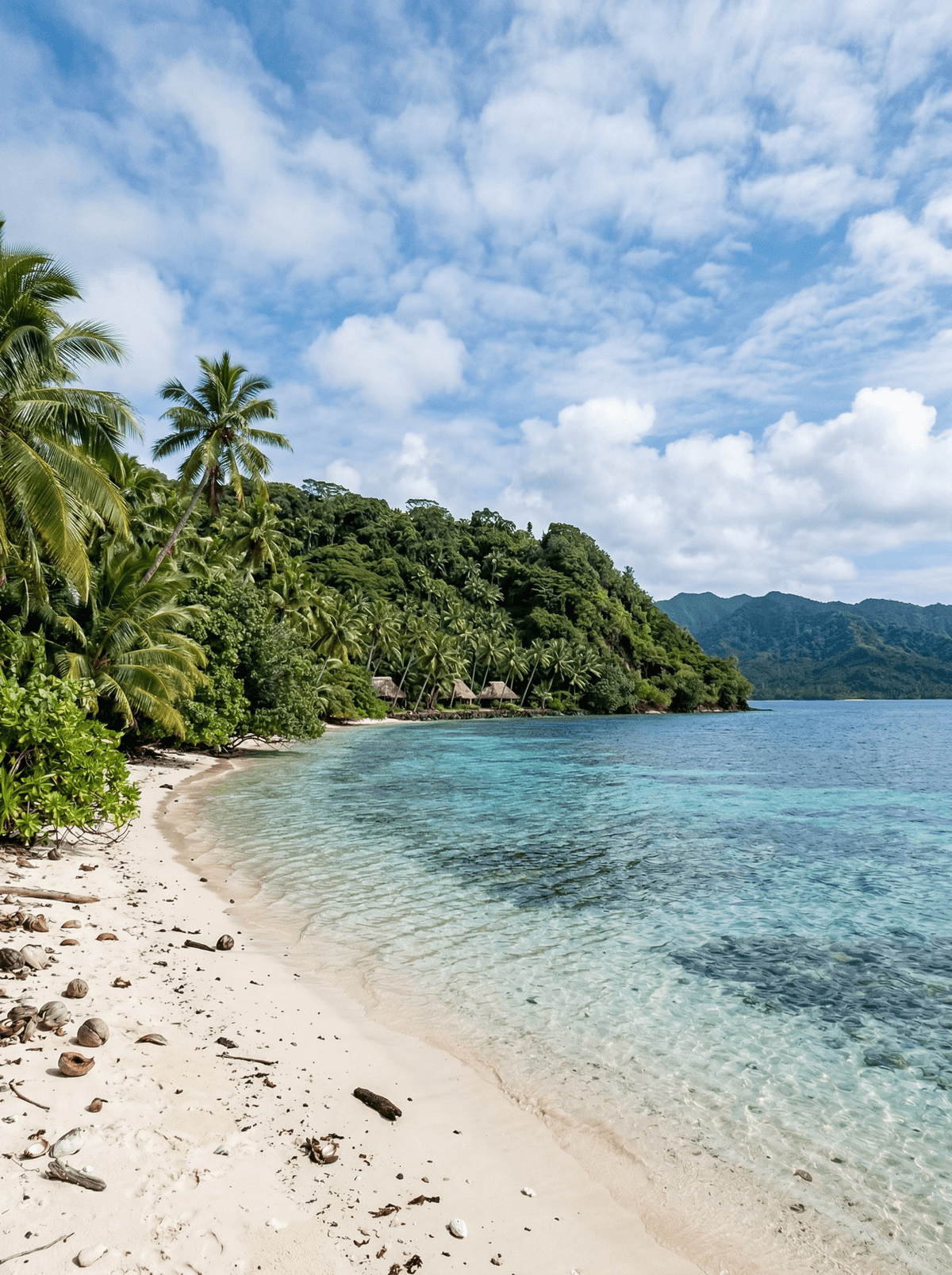
Nothing on Manono moves faster than walking pace: the island allows no cars and no dogs, and a footpath strings its four villages together in a couple of hours. Boats cross the four-kilometre lagoon from Manono-uta when they are ready rather than when a timetable says. Above the path, a twelve-pointed star of earth and stone waits on the island's one summit.
The star mound on 110-metre Mt Tulimanuiva is one of around three hundred recorded across Samoa, raised some nine hundred to a thousand years ago; scholars still argue whether such mounds served pigeon catching, ritual or the stars themselves. At Lepuiai on the south-west shore lies the Grave of 99 Stones, one stone for each wife of the high chief Vaovasa, the missing hundredth standing for the wife he failed to bring home from Upolu. Between the two, the coastal path threads fale stays, a swim at Apai Beach and villages where fa'a Samoa sets the terms: greet people, ask before entering village sites, and note that on Sundays walking is limited to church. It is Samoa at its most traditional, twenty minutes by boat from the main island.
Solo
The loop path makes the island legible in an afternoon on foot, with villages, lagoon and the star-mound climb self-arranged at your own pace. Company is never far, and neither is quiet.
Couple
Circle the island slowly, swim at Apai Beach and let the missing hundredth stone at Lepuiai do the storytelling. An overnight fale stay keeps the lagoon in earshot all night.
Family
Two hours of flat, car-free path suits confident young walkers, with a beach stop partway and boats short enough for small attention spans. Keep children close in the villages and save the summit climb for older legs.
Friends
Walk the coast together, then take the 1.5 to 2 hour return climb to the star mound and argue about what it was for; nobody knows. The no-timetable boats reward groups who leave slack in the day.
- Manono allows no cars and no dogs, and a coastal footpath circles its four villages in about two hours.
- A twelve-pointed star mound of earth and stone crowns 110-metre Mt Tulimanuiva, raised around nine hundred to a thousand years ago.
- The Grave of 99 Stones at Lepuiai carries one stone for each wife of the high chief Vaovasa.
- Boats cross the four-kilometre lagoon from Manono-uta without a fixed timetable, a crossing of about twenty minutes.
Island fale stays come with meals from the host family's kitchen, and the lagoon supplies the fish.
Time an overnight stay for the earth oven: umu-baked taro and palusami emerge wrapped in the smell of hot stones.
Las Baulas Marine Park
Costa Rica
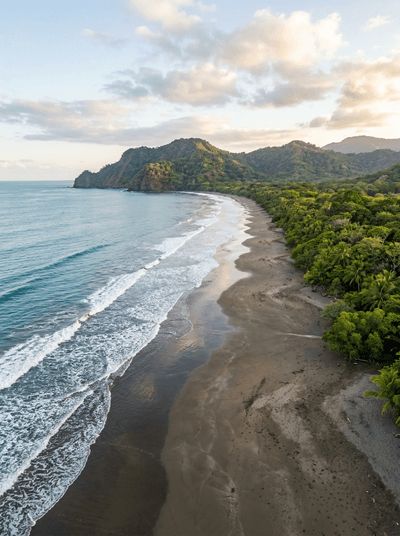
A turtle without a hard shell hauls ashore in darkness, her lineage 100 million years old.
Cahuita
Costa Rica
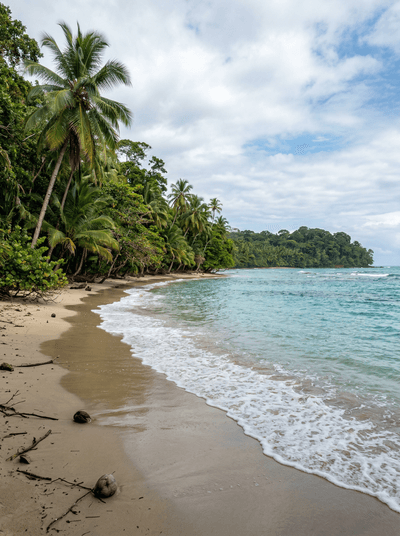
Sloths dangle above a coral reef where Afro-Caribbean drums carry across coconut-fringed black sand.
Ras al Jinz
Oman
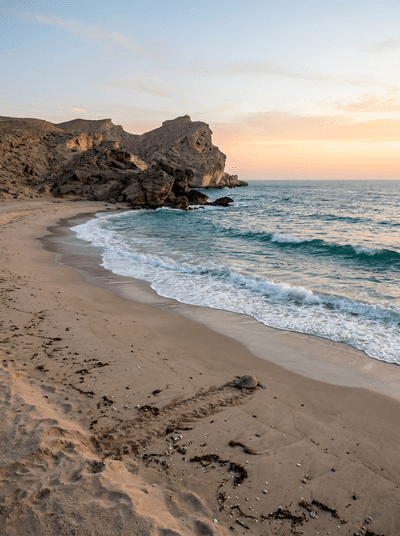
Green turtles haul ashore by night on one of the Indian Ocean's busiest nesting beaches.
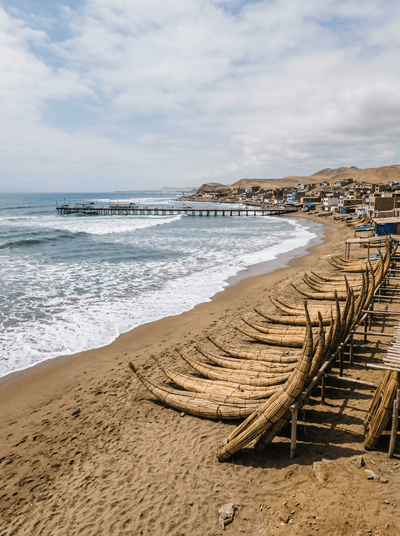
Huanchaco
Peru
Fishermen still ride reed boats through the surf, as Moche potters drew them.
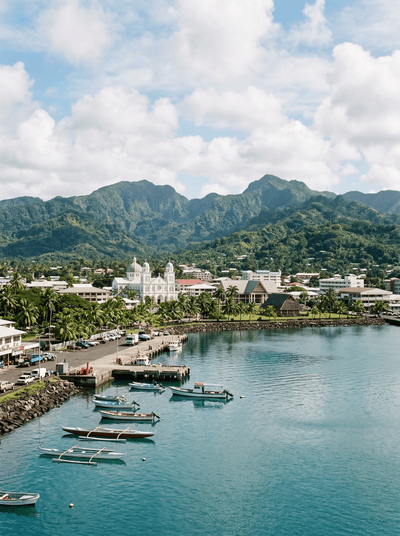
Apia
Samoa
Samoa's capital wakes to a police band marching the waterfront for the flag-raising.
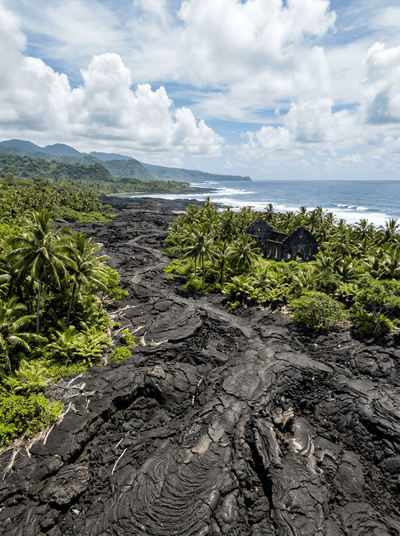
Saleaula Lava Fields
Samoa
The lava filled a church to its windows yet parted around a single grave.
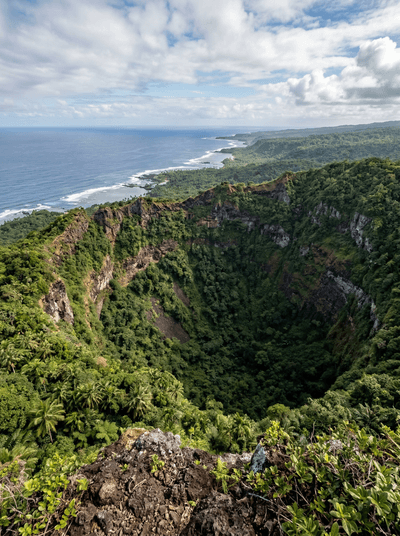
Matavanu Crater
Samoa
A hand-kept trail climbs to the crater that buried villages; its keeper logs every visitor's country.