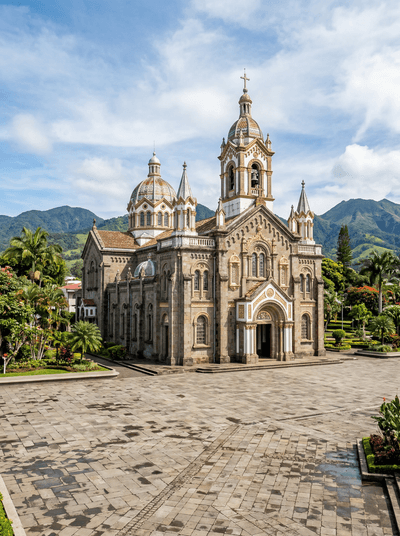
Costa Rica
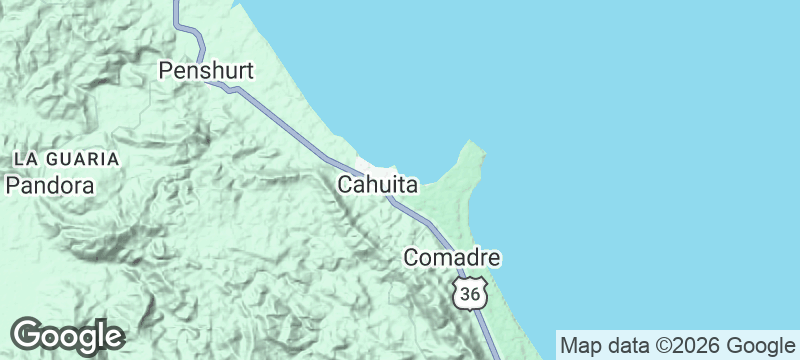
Cahuita
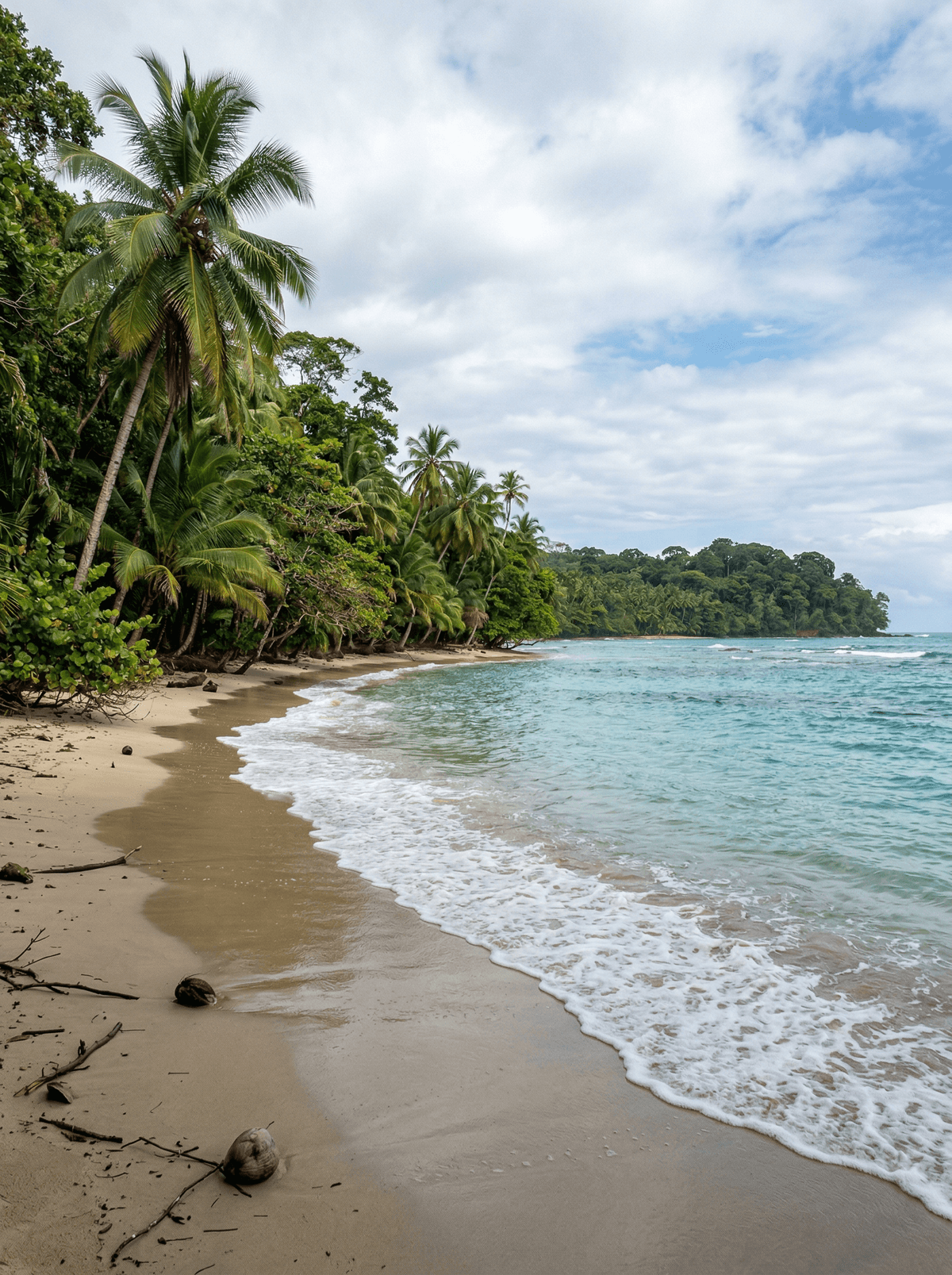
Sloths dangle above a coral reef where Afro-Caribbean drums carry across coconut-fringed black sand.
Bass notes carry from somewhere behind the palms — a rhythm that has rolled along this coast for generations. The sand is dark volcanic grey, the water a milky jade, and the almond trees over the trail are exactly where sloths like to hang. Cahuita moves to tide and temperature, not the clock.
Cahuita National Park protects the most preserved coral reef on Costa Rica's Caribbean coast — elkhorn, staghorn and brain coral in water warm enough to snorkel without a wetsuit, visited through the park's local guiding arrangements, which is part of how it stays that way. The flat coastal trail rounds the point through littoral forest where sloths, coatis and eyelash vipers keep to the trees and black-hawks patrol the shore. The town is the cultural heart of Afro-Caribbean Limón — coconut-milk cooking, Creole English, pan bon in the bakeries — and the park itself is run jointly by community and government, down to the lifeguard posts. Rice and beans simmered in coconut milk here bears no resemblance to the Pacific version.
Solo
The laid-back pace and open community make Cahuita about the easiest place in Costa Rica to slow down alone — the town is compact enough that you become a regular within days.
Couple
Caribbean colour, reef water and evenings of coconut-milk cooking while drums carry from the village — romance without the resort feel.
Family
The shoreline trail is flat, shaded and built for small legs, with sloths and coatis living low in the trailside forest on the way to the point.
- The most preserved coral reef on Costa Rica's Caribbean coast lies just off the point — elkhorn, staghorn, brain and fire coral among the species.
- A flat, universal-access trail follows the shoreline through forest where sloths and coatis live low.
- Cahuita runs on shared management — community and government together, down to the lifeguards.
- Afro-Costa Rican and Chinese kitchens built Limón's cuisine: coconut rice and beans, patties and pan bon.
Rice and beans simmered soft in coconut milk — the coast's signature, nothing like the Pacific version.
Pan bon — Limón's dark, spiced Caribbean loaf, baked sweet and cut thick.
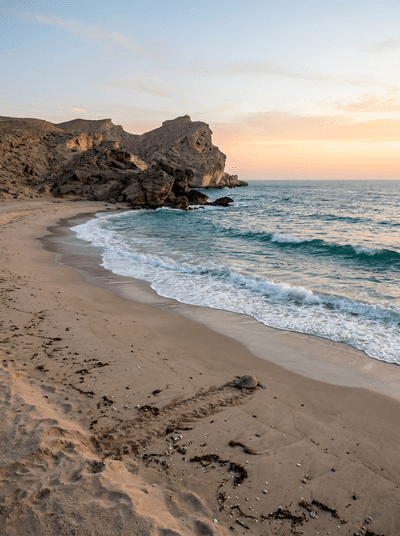
Ras al Jinz
Oman
Green turtles haul ashore by night on one of the Indian Ocean's busiest nesting beaches.
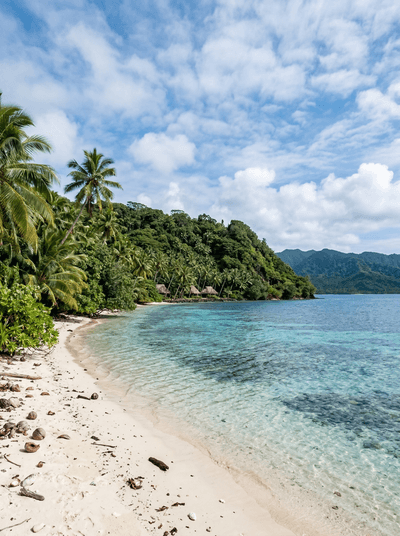
Manono Island
Samoa
An island with no cars, no dogs, and a grave of ninety-nine stones, one wife each.
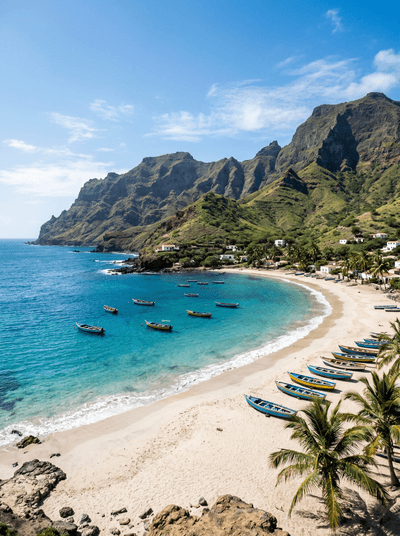
Tarrafal
Cape Verde
A palm-shaded swimming cove shares its town with the prison called the Camp of Slow Death.
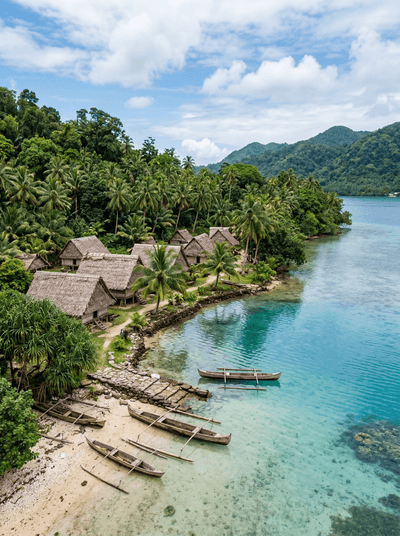
Yap
Micronesia
Stone money too heavy to move, so ownership transfers by word alone on this jungle island.