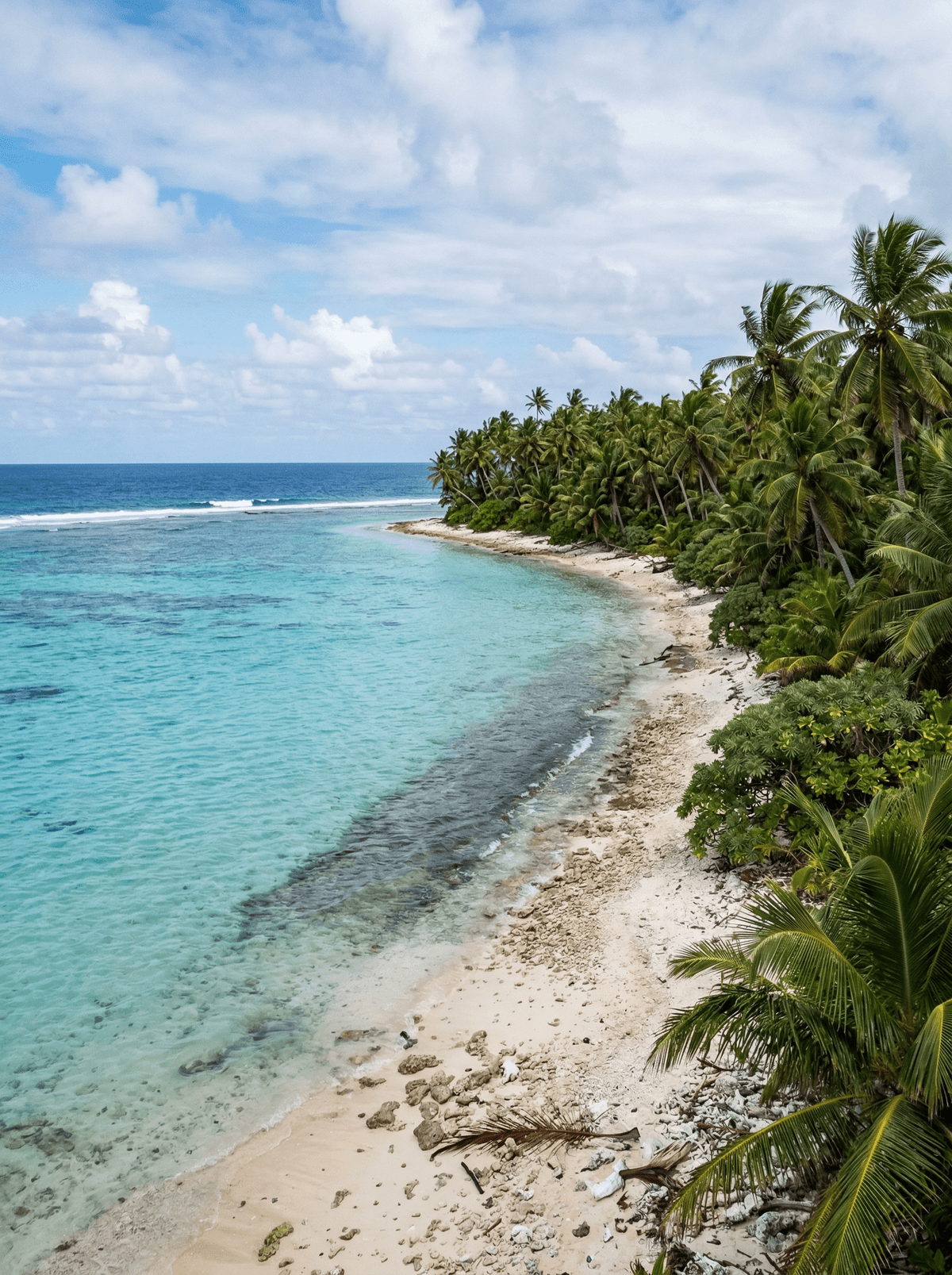
Tuvalu
Nanumanga
Fire-blackened walls in a cave forty metres underwater prove someone lived here before the sea rose.
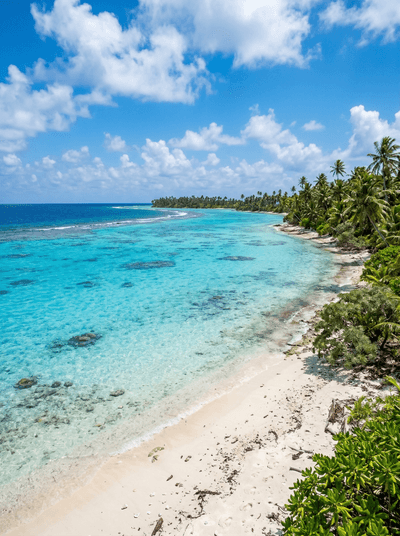
The reef breaks white against Nanumanga's outer edge, and somewhere beneath that churning water lies a cave that rewrites what we thought we knew about Pacific settlement. The island itself sits low and green against the horizon — no harbour, no jetty, just a reef passage that locals read by instinct and visitors approach with a prayer. The air smells of salt, drying copra, and earth ovens slow-cooking taro wrapped in leaves.
Nanumanga is a reef island in northern Tuvalu where, in 1986, divers exploring an underwater cave discovered fire-blackened walls and charred coral fragments — evidence of human fire use dating back more than eight thousand years, from a period when the cave was above sea level. The find challenged existing theories about the timing and routes of Pacific migration, and the cave remains one of the most significant archaeological sites in the central Pacific. Fewer than 500 people live on the island today, sustaining themselves through fishing, coconut harvesting, and the cultivation of pulaka (swamp taro) in hand-dug pit gardens — a technique unique to the low-lying atolls of this region. Reaching Nanumanga from Funafuti requires the inter-island government vessel, which runs on a schedule that respects neither timetables nor tourist expectations. Those who arrive find a community where visitors are a genuine rarity, and hospitality is offered not as a service but as a reflex.

Solo
Nanumanga rewards the solo traveller willing to accept uncertainty in exchange for authenticity. The journey itself is part of the experience — irregular transport, no fixed accommodation, and a community that will take you in precisely because you made the effort to arrive.
Couple
For couples drawn to places with deep history and minimal infrastructure, Nanumanga offers something vanishingly rare: an inhabited Pacific island where the archaeological significance rivals the natural setting, and neither has been packaged for consumption.
- The drowned cave sits off the reef edge — divers who know where to look can peer into a chamber where fire-blackened walls and charred coral fragments from ancient hearths still mark the floor.
- Reaching Nanumanga from Funafuti requires the inter-island government vessel — transport runs on a schedule that respects neither timetables nor tourist itineraries.
- The island still farms pulaka in hand-dug pit gardens — taro grown in coral soil enriched over generations, a technique found only on the low-lying atolls of the central Pacific.
- Fewer than 500 people live on the island — visitors are a genuine rarity, and the community's hospitality reflects a place where a stranger's arrival is still considered an event.
Pulaka — swamp taro grown in hand-dug pits — slow-baked with coconut cream in earth ovens.
Octopus pulled from the reef at low tide, simmered in coconut milk over a fire pit.
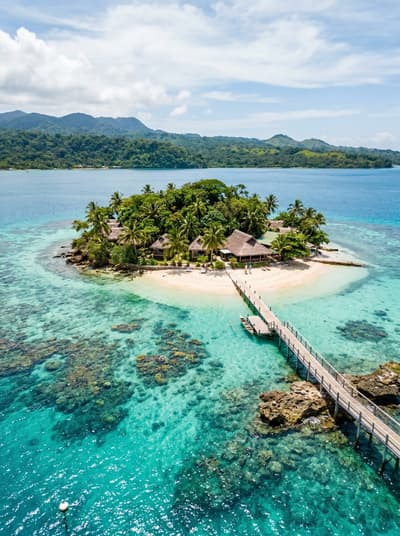
Hideaway Island
Vanuatu
Post a waterproof postcard from the world's only underwater post office, then snorkel its coral reef.
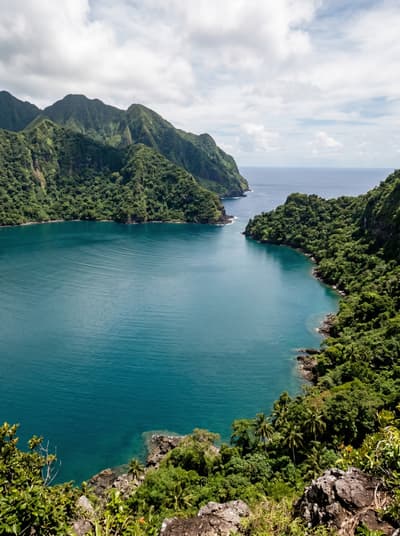
Ureparapara
Vanuatu
Sail into the flooded crater of a horseshoe-shaped volcanic island where fewer than 500 people remain.
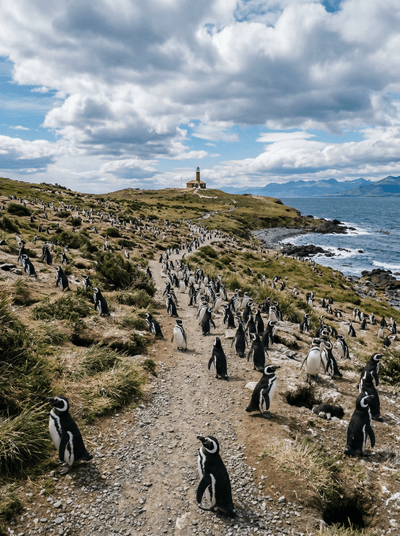
Isla Magdalena
Chile
Magellanic penguins in their tens of thousands, nesting so close you walk through their colony.
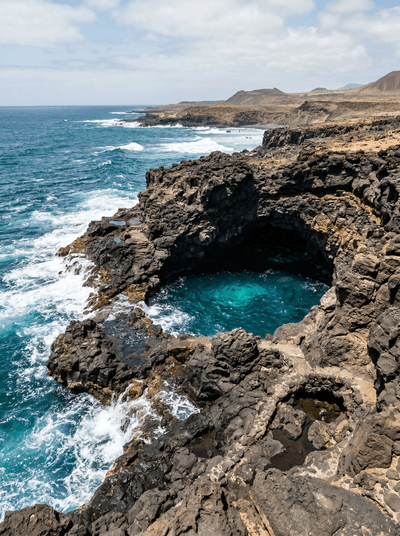
Buracona
Cape Verde
At midday, sunlight plunges through volcanic rock and ignites an underwater cave into electric blue.
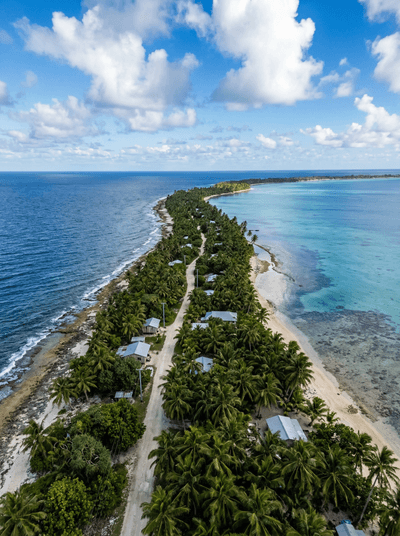
Fongafale
Tuvalu
Families scatter from the runway as a plane lands, then reclaim the tarmac for evening football.
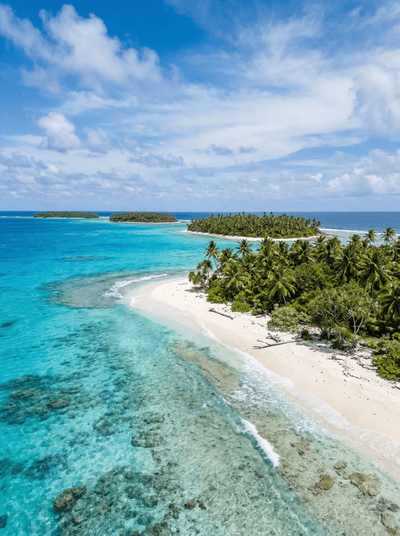
Funafuti Conservation Area
Tuvalu
Green turtles nest on islets so untouched that your footprints may be the only human ones.
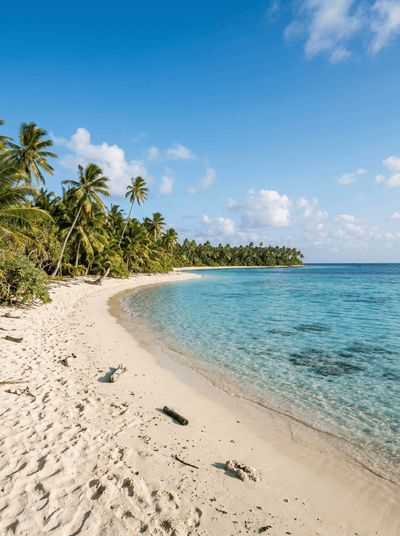
Nanumea
Tuvalu
A bomber crash-landed off the beach in 1943 — the reef has been swallowing it since.
Nui
Tuvalu
A Micronesian community rooted in a Polynesian nation, their mother tongue drawn from a different ocean.