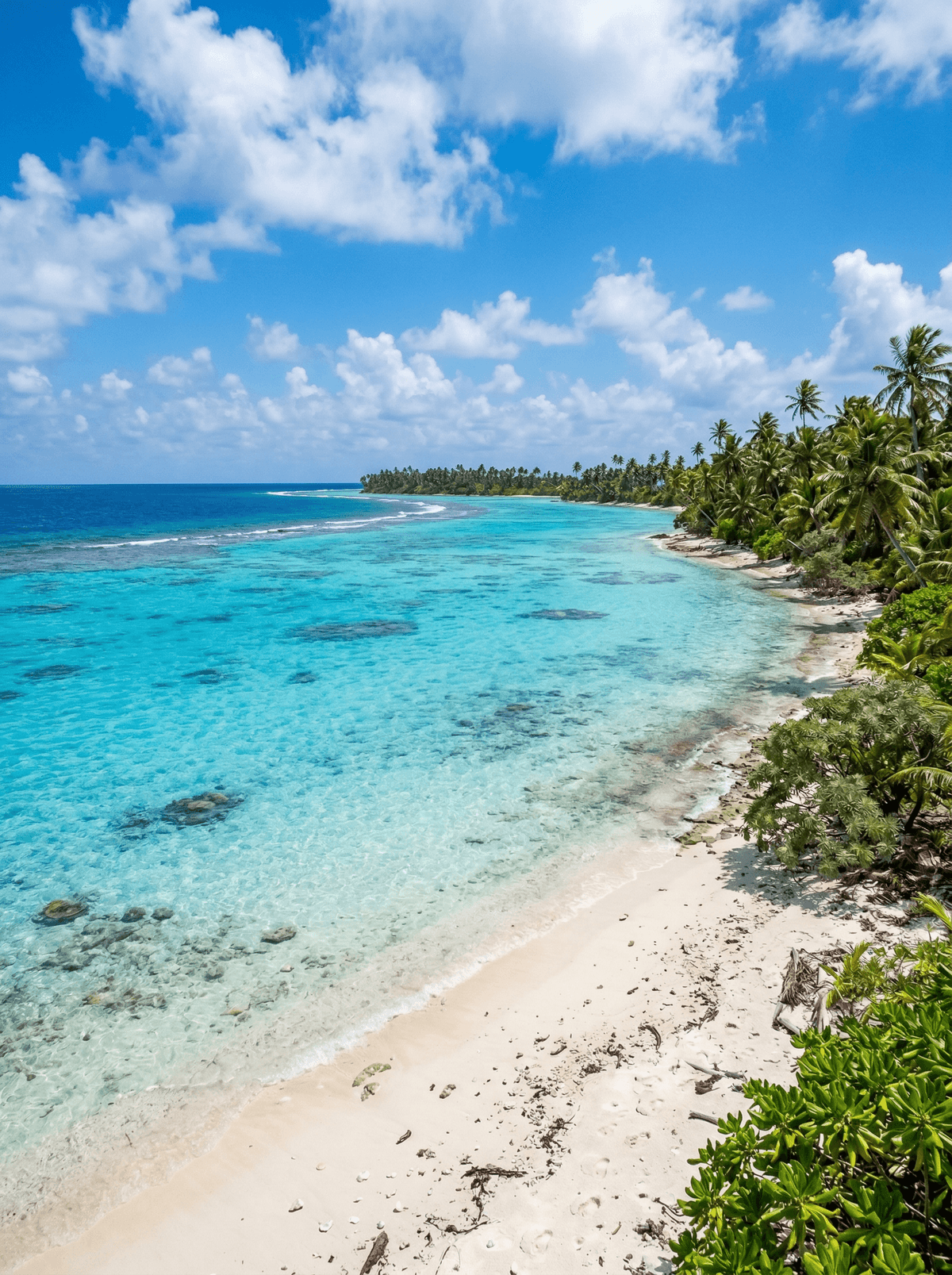
Tuvalu
Nui
A Micronesian island wrapped inside a Polynesian nation: Nui's mother tongue is Gilbertese.
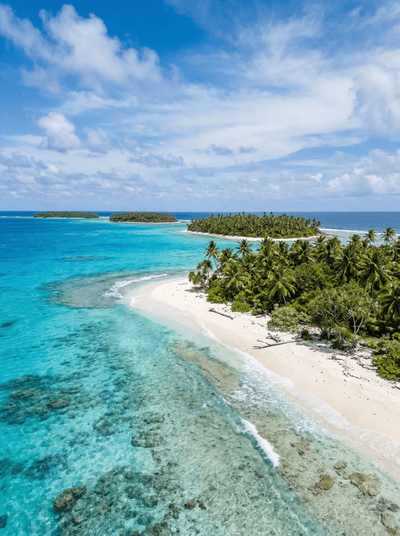
The language changes before the landscape does. From the sea Nui shows the same low coral rim and leaning palms as its neighbours, but the voices that greet the boat move between Tuvaluan and the island's own Gilbertese. Nui's people trace their roots to Kiribati: a different people, a different language family, inside the same small nation.
Nui is the one community in Tuvalu whose mother tongue is not Polynesian: its people have their roots in Kiribati, and Gilbertese is the language of home. They are naturally bilingual, switching to Tuvaluan for the other islands, so the atoll stays distinct without being cut off. Daily life keeps its own handmade rhythm: seven in ten Nui households still cut toddy from the coconut palms, and nearly eight in ten produce handicrafts, among the highest shares recorded anywhere in Tuvalu. Only the interisland ship reaches Nui, sailing the outer-island cycle of roughly two to three weeks, so a stay here runs on the island's calendar rather than yours.

Solo
For a solo traveller who collects languages, Nui is a field trip: greetings shift between Gilbertese and Tuvaluan inside a single conversation, and patience with the ship schedule is the price of admission.
Couple
Couples get an outer atoll where the difference lives in language and custom: the same turquoise shallows as the rest of Tuvalu, but another tongue over dinner and a Kiribati thread running through the island's story.
- The people of Nui speak Gilbertese as their mother tongue, the only community in Tuvalu whose first language is Micronesian rather than Polynesian.
- Nui islanders are naturally bilingual, keeping their own Kiribati-rooted language alongside Tuvaluan.
- Household life stays hands-on: 70 per cent of Nui households cut coconut toddy and 79 per cent make handicrafts, among the highest rates recorded in the country.
- The government ship calls from Funafuti roughly every two to three weeks, which makes any visit an unhurried one by design.
Fresh coconut toddy is the everyday drink: seven out of ten Nui households still cut it from the palm, so ask your hosts for a cup.
The fish here is open-water: nearly three-quarters of Nui households buy the pelagic catch when the boats come in, and it lands on the table the same day.
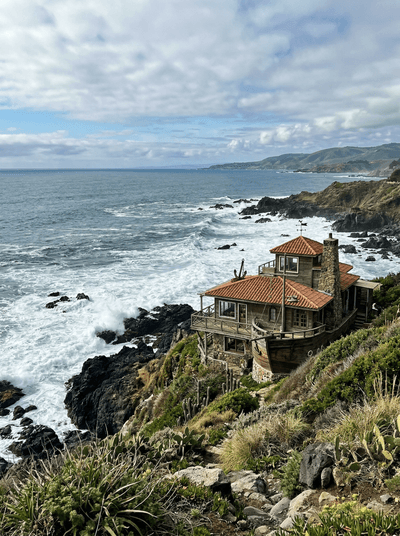
Isla Negra
Chile
Neruda's house of collections faces a Pacific coast of black rock and white water.
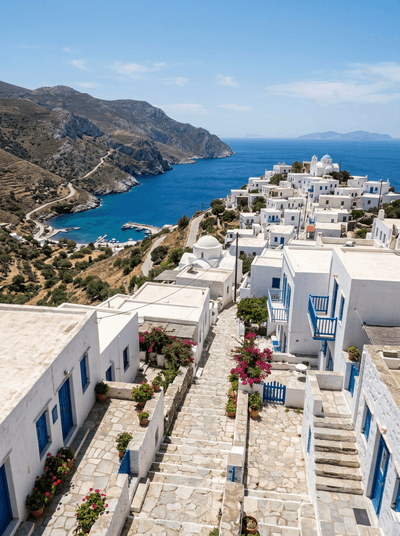
Amorgos
Greece
A whitewashed monastery clings to a 300-metre cliff face above crashing Aegean surf.
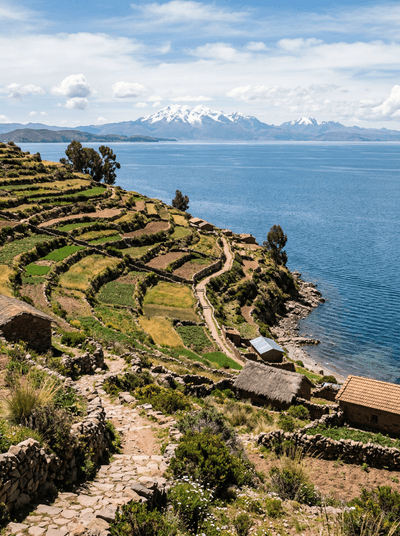
Taquile Island
Peru
An island where the men knit, and the knitting is UNESCO-listed art.
Teshima
Japan
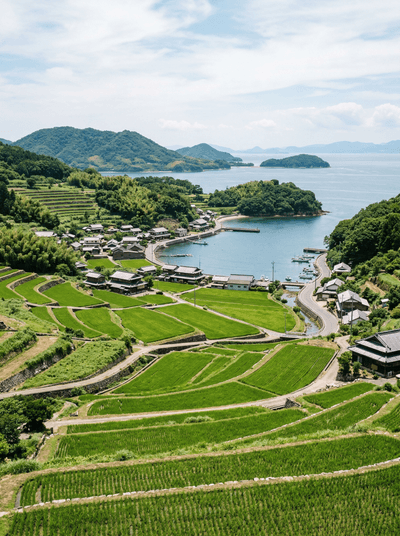
A single raindrop museum on a terraced island where art and rice paddies merge.
Fongafale
Tuvalu
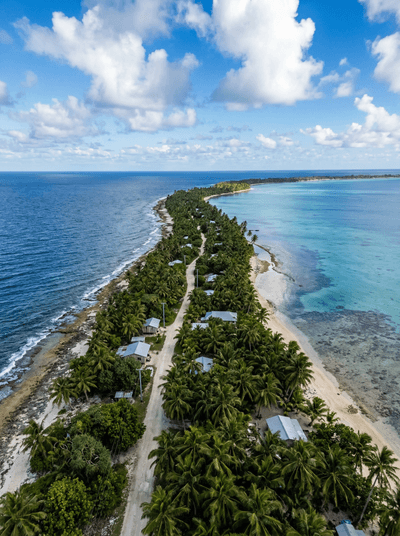
Families scatter from the runway as a plane lands, then reclaim the tarmac for evening football.
Niutao
Tuvalu
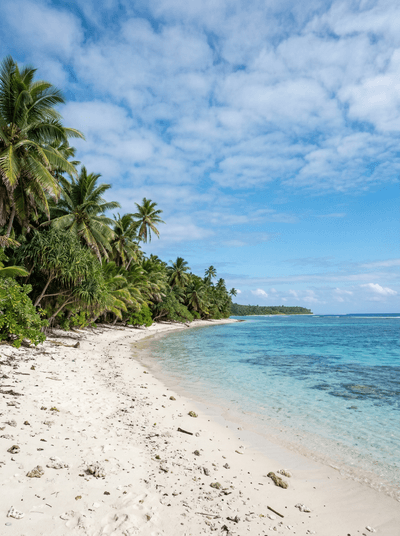
This island swallowed its lagoons: two lie landlocked inside Niutao, one joined underground to the sea.
Nanumea
Tuvalu
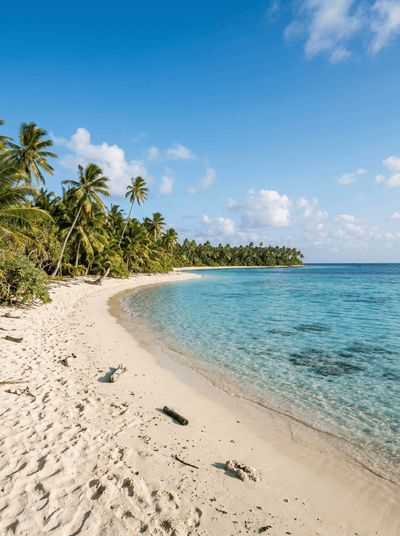
Japanese bombs found this atoll's church in 1943; a landing craft still rusts on the reef.
Funafuti Conservation Area
Tuvalu
Green turtles nest on six empty islets holding nearly half Funafuti's remaining native forest.