Kiribati
Nikumaroro
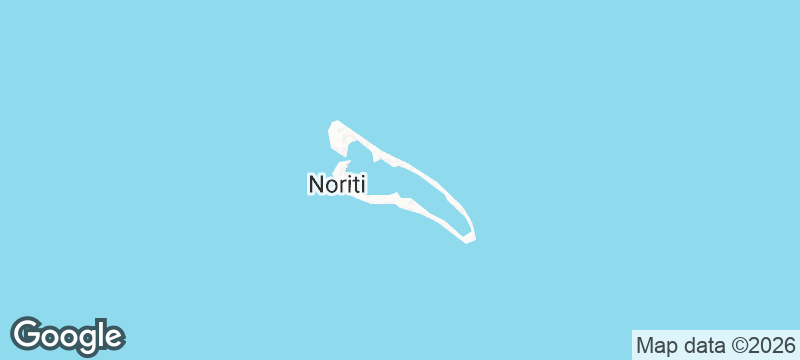
An uninhabited atoll, a lost skeleton, and the unproven theory that Amelia Earhart died here.
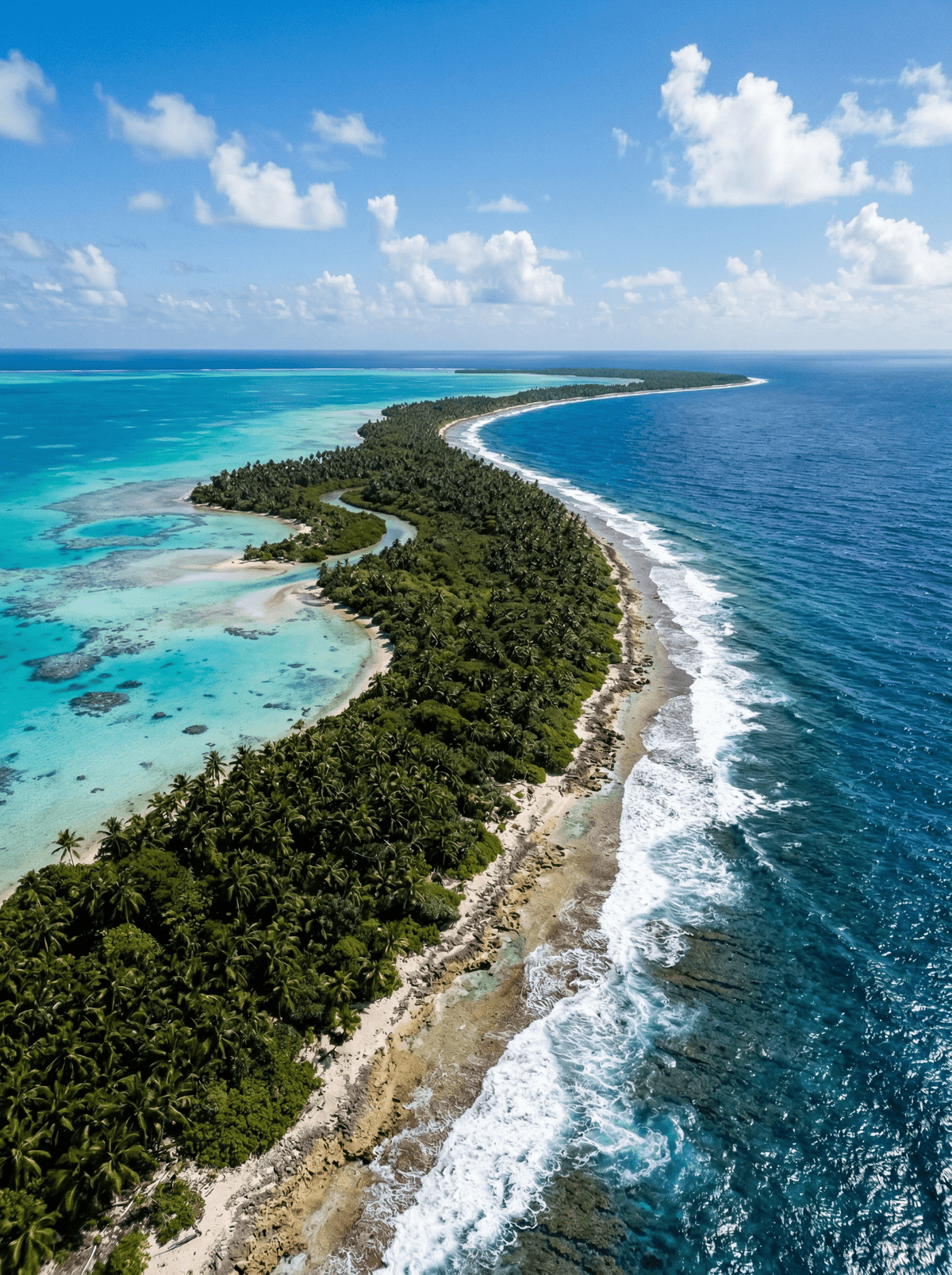
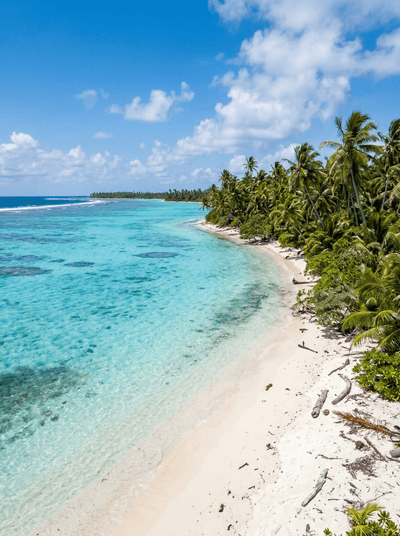
Surf breaks white over the reef where a steamship has rusted since 1929, and behind the beach the scrub forest has swallowed a whole colonial village. Nikumaroro looks like any uninhabited Pacific atoll until you learn the question it carries: whether the world's most famous missing aviator ended her flight on this exact reef in 1937.
The theory runs like this: out of fuel short of Howland Island, Amelia Earhart and Fred Noonan put their Electra down on Nikumaroro's dry reef flat and radioed for help until the tide took the aircraft. It is a hypothesis, not a finding; decades of expeditions by the TIGHAR research group have recovered aircraft aluminium and period artefacts without conclusive proof. The atoll's strangest chapter is documentary fact, though: in 1940, settlers clearing bush found a skull, and the administrator Gerald Gallagher excavated twelve more bones and shipped them to Fiji, where they were measured, argued over and then lost. Modern re-analyses of the seven surviving measurements still disagree, ranging from a European male to Earhart herself. The certain history is worth the voyage alone: a British colonial village founded here in late 1938 was abandoned in 1963 after years of drought and thin supply, its ruins now shared between hermit crabs, coconut crabs and seabirds, with the Norwich City's wreck still on the reef where she grounded. Landing requires a PIPA visitor permit and genuine expedition logistics; the mystery does not make the crossing shorter.
Solo
This is a voyage for the reader of expedition reports: reach it by charter or research passage with the permit arranged, walk the village ruins and the reef flat with the debate in your head, and decide for yourself what the evidence carries.
- Decades of TIGHAR expeditions support the hypothesis that Earhart and Noonan landed on Nikumaroro's reef in 1937, though no conclusive wreckage or identification has ever proved it.
- A skull and twelve further bones found by settlers in 1940 were measured in Fiji and then lost; modern re-analyses of the surviving measurements still disagree about whose they were.
- The atoll's certain history is vivid on its own: a colonial village founded in late 1938 and abandoned in 1963, its ruins standing beside the 1929 wreck of the SS Norwich City.
- Nikumaroro lies inside the World Heritage waters of the Phoenix group, and any landing runs on a PIPA visitor permit with expedition transport.
Everything you eat sails in with you: Nikumaroro has been uninhabited since 1963, and the expedition galley is the only kitchen there is.
Coconut crabs grow to full size here with nobody to hunt them; count them at dusk while the boat's cook works through the stores you brought.
Kadavu
Fiji
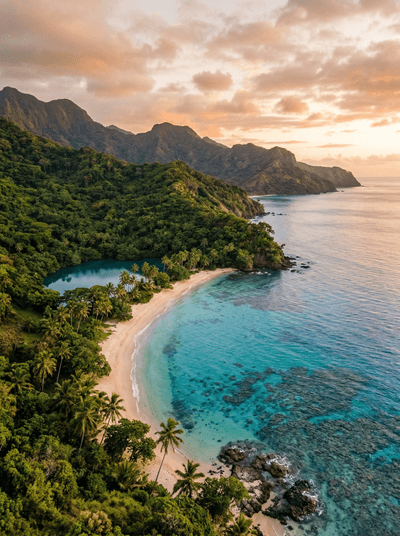
Manta rays circle the world's fourth-largest barrier reef, off villages the road barely reaches.
Monuriki
Fiji
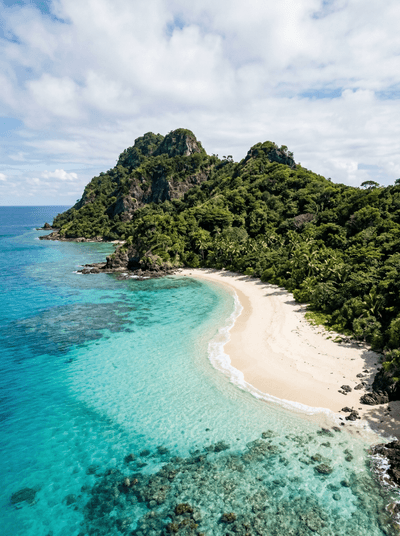
The island from Cast Away truly belongs to crested iguanas brought back from the brink.
Waya Island
Fiji
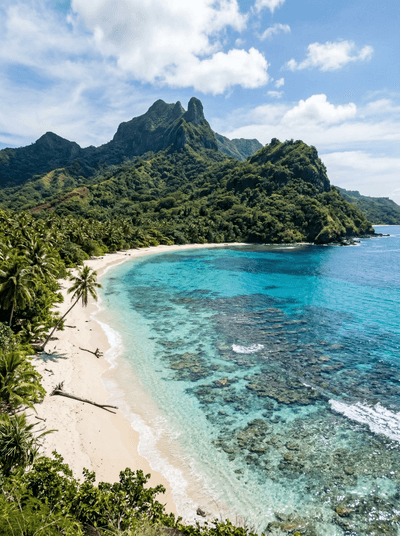
Volcanic daggers erupt from reef shallows: ridgeline at sunrise, coral drop-off by noon.

Akdamar Island
Turkey
A tenth-century Armenian church carved with biblical scenes floats alone on an island in Lake Van.
Betio
Kiribati
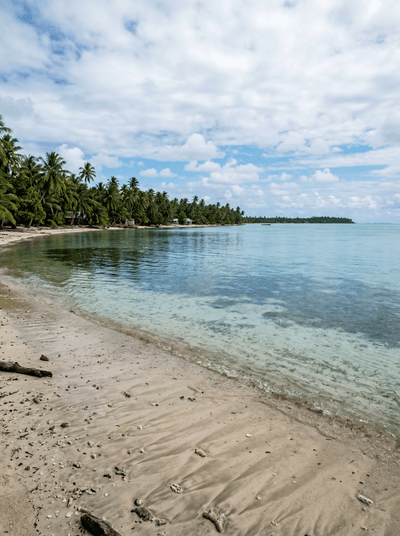
Rusting Japanese guns still point seaward from beaches where a thousand Marines fell in three days.
North Tarawa
Kiribati
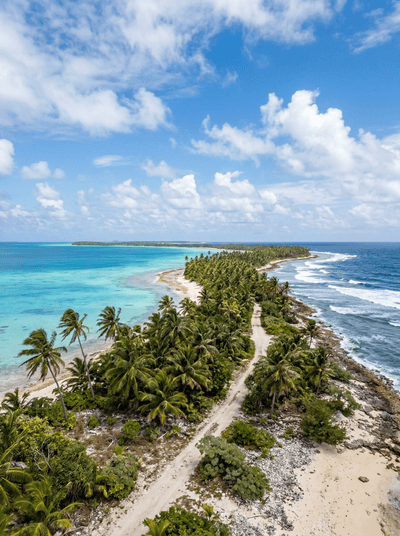
Wade turquoise shallows between villages at low tide; at high water the road becomes a boat.
Kiritimati
Kiribati
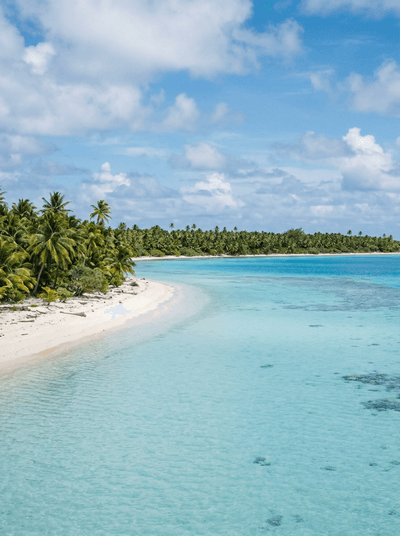
Bonefishers wade endless turquoise flats while millions of seabirds darken the sky above.
Abaiang
Kiribati
At high tide the sea surrounds Tebunginako's church; the village choir times services around it.