Oman
Nizwa
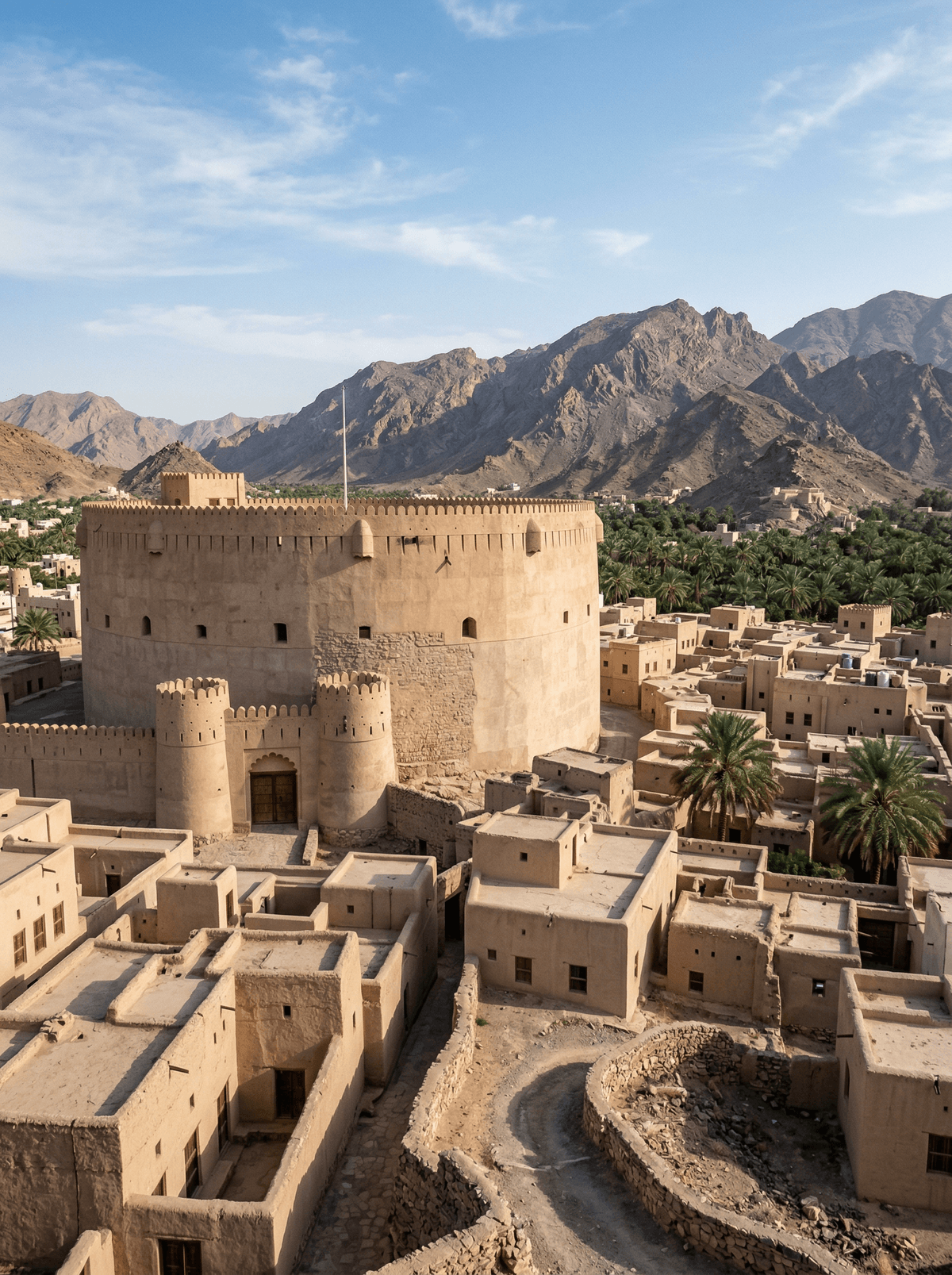
On Friday mornings goats and cattle circle the ring beneath a tower built for cannon fire.
Nizwa wakes in layers: coffee steam in the souq, traders arranging silver and dates, then the fort's drum-like tower catching the sun. On Friday morning, the livestock auction adds voices and movement before the heat gathers.
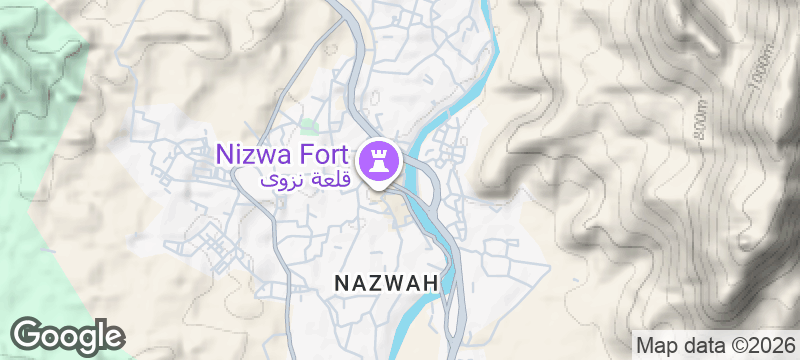
Nizwa was the capital of Oman's interior, and its fort still anchors the town: a round tower, the largest of its kind on the Arabian Peninsula, built thick enough to take cannon fire. The souq below keeps silver, khanjars, pottery and dates in working lanes rather than souvenir rows, and on Friday mornings the livestock ring fills with goats, cattle and rapid-fire bidding. Halwa is stirred for hours in demonstration kettles inside the fort. The auction is a Friday event, and traders are asked before they are photographed.
Couple
The fort's shaded galleries and the neighbouring souq make an unhurried shared circuit through Nizwa's history and present-day trade.
Solo
Arrive early on a Friday for the livestock auction, observing photography etiquette before continuing independently through the old quarter.
Family
Children can trace the fort's defensive design before the family browses pottery and dates in the compact market lanes.
- The fort's round tower is the largest of its kind on the Arabian Peninsula, built to absorb cannon fire.
- The souq beside it keeps silver, pottery, dates and khanjars within a few working lanes.
- On Friday mornings the livestock auction fills the ring with goats, cattle and fast bidding before the heat arrives.
- Halwa is made in demonstration kettles at the fort, stirred for hours over the fire.
Halwa straight from the fort's demonstration kettles, with Omani coffee beside it.
Shuwa or qabuli rice at one of the old-quarter restaurants between the fort and the souq.
Portobelo
Panama
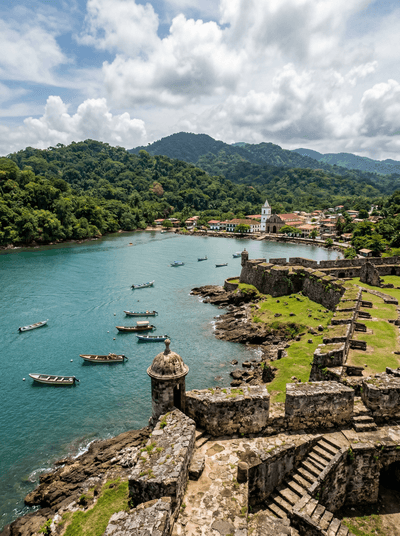
Rusting cannons guard the harbour where Spanish galleons loaded Potosí's silver for Spain.
Orkney
Scotland
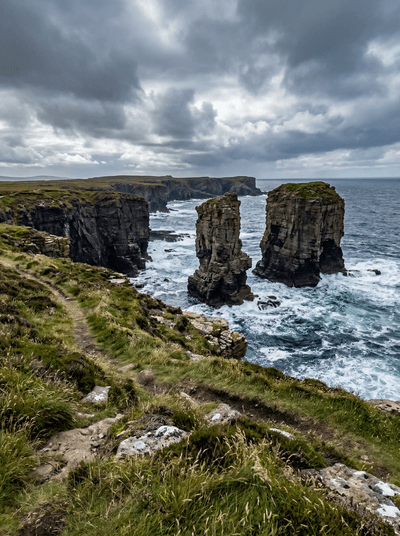
Neolithic villages older than the pyramids emerge from windswept farmland beside a Viking cathedral.
Rosetta
Egypt
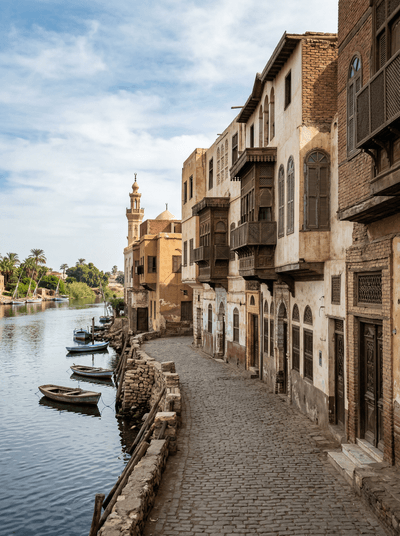
Ottoman mansions with mashrabiya screens leaning over lanes where the key to hieroglyphs was found.
Saqqara
Egypt
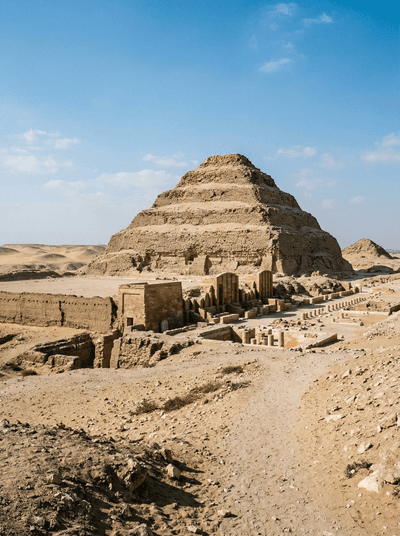
The world's first monumental stone building, still standing on a desert plateau littered with unopened tombs.