Egypt
Nubian Villages
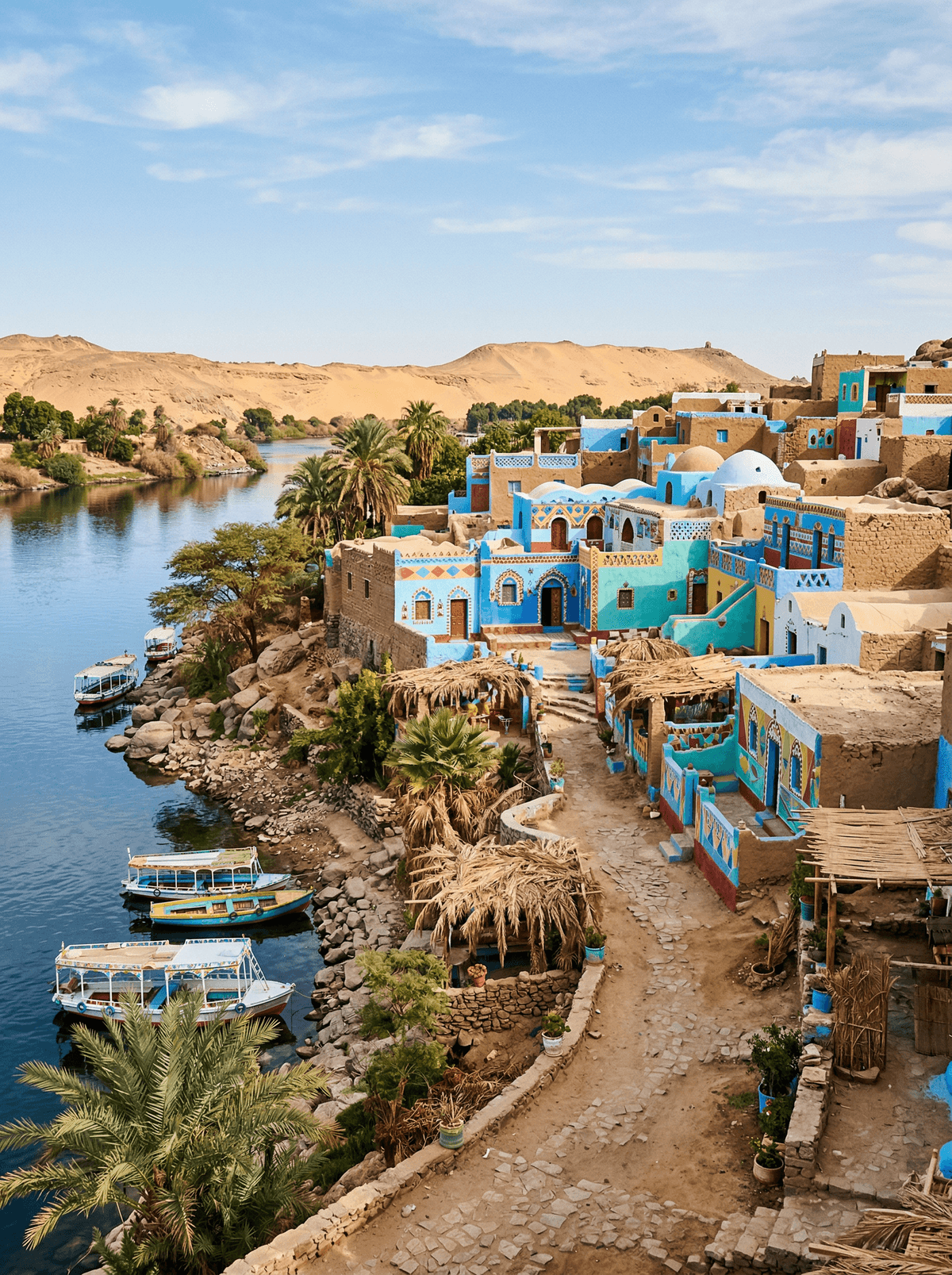
Houses painted impossible blue and yellow, a language older than Arabic spoken on every corner.
The houses hit you first — electric blue, canary yellow, tangerine — each doorway painted with crocodiles, palms or geometric blessings. Children call greetings in Nubian, a language spoken here since before Arabic arrived and rarely written down. A grandmother waves you onto her rooftop, where the Nile stretches silver below.
The Nubian villages near Aswan are the living heart of a culture older than pharaonic Egypt. Communities like Gharb Soheil, Siou and Koti keep their language, traditions and painted mud-brick architecture distinct from the rest of the country — and they carry a harder history: displaced twice in the twentieth century, first by the Aswan Low Dam and then by the High Dam that drowned old Nubia under Lake Nasser. What survives is defiantly bright.
Couple
Cross at golden hour, take a rooftop dinner in a family home, and learn three words of Nobiin before the boat back.
- Every house is painted by its owner — no two facades match, from pharaonic motifs to pilgrimage records.
- Guesthouse kitchens serve karkadeh and slow-cooked peanut-sauce dishes in rooms tiled by hand.
- The motorboat crossing from Aswan takes five minutes and runs on demand.
- Gharb Soheil's market runs on village time — crafts, spices and karkadeh by the glass.
A pre-arranged village meal brings fatta, molokhia and the river's fish to the table.
Home kitchens do the classics — peanut and tomato stew over rice, karkadeh cold in painted glasses.
Palenque
Mexico
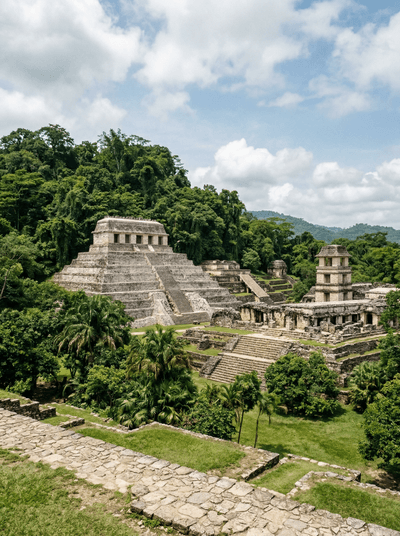
A dynasty's whole memory stands carved in temples the forest still shades.
Iquitos
Peru
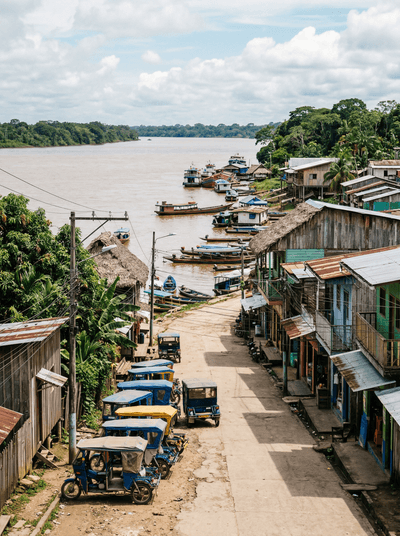
Half a million people in the Amazon with no road to the outside world.
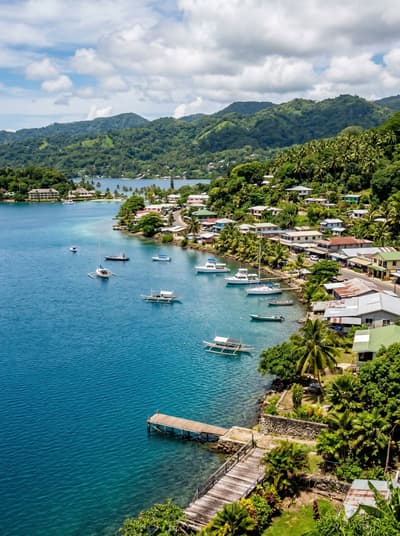
Port Vila
Vanuatu
A capital where France and Britain ruled at once, and kava quiets the harbour at dusk.
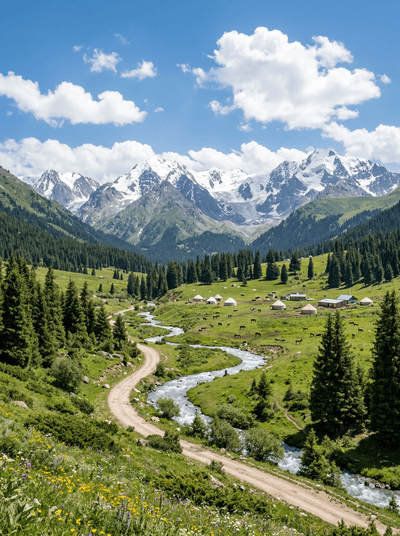
Karakol
Kyrgyzstan
A dragon-carved mosque built without a single nail, an Orthodox cathedral raised in wood.
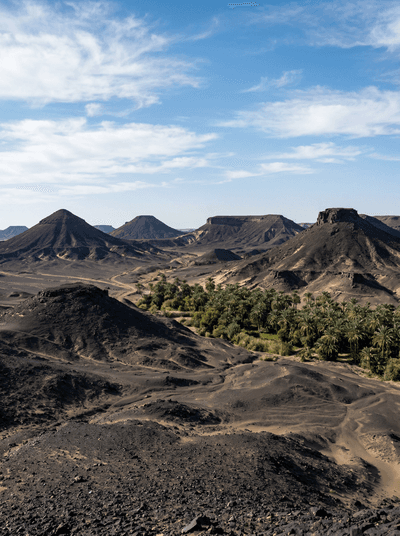
Bahariya Oasis
Egypt
Hot springs steaming in palm groves where golden mummies were unearthed beneath a donkey path.
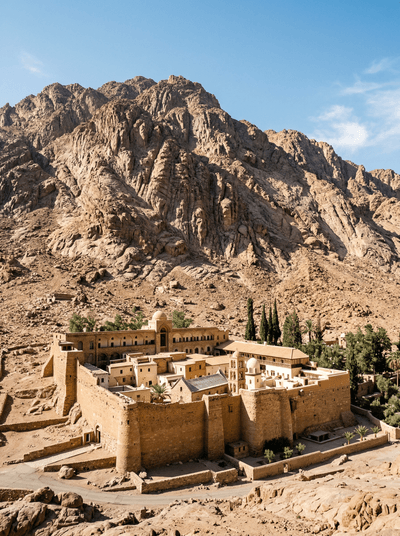
St. Catherine
Egypt
Granite peaks where Moses may have stood, a burning bush still growing behind monastery walls.
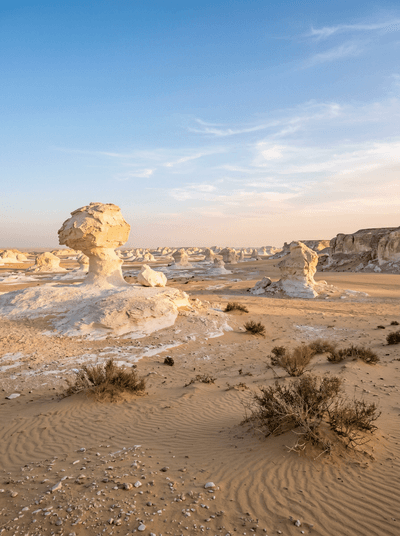
Farafra Oasis
Egypt
Egypt's tiniest oasis, where one man painted every wall and built a desert museum from mud.
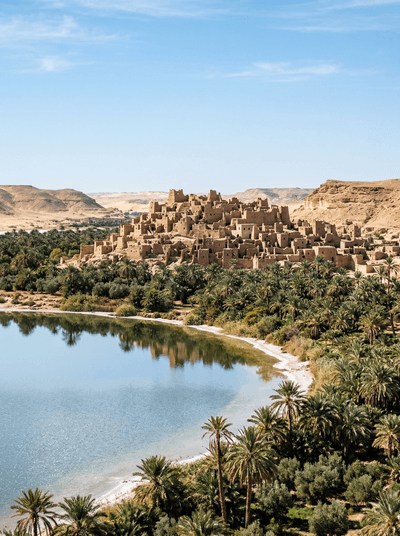
Siwa Oasis
Egypt
Salt lakes shimmering where the Great Sand Sea begins and Alexander once sought the Oracle.