Tanzania
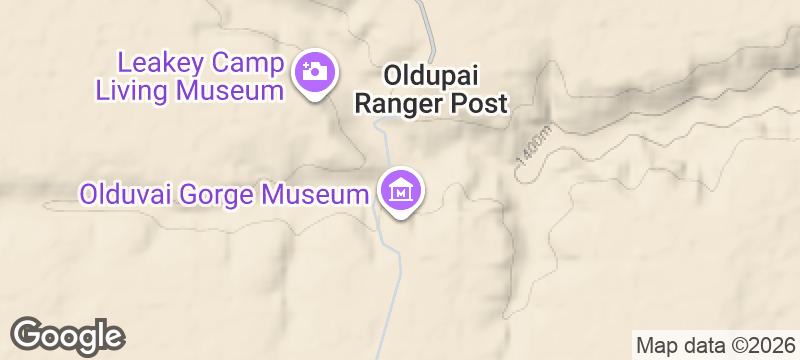
Olduvai Gorge
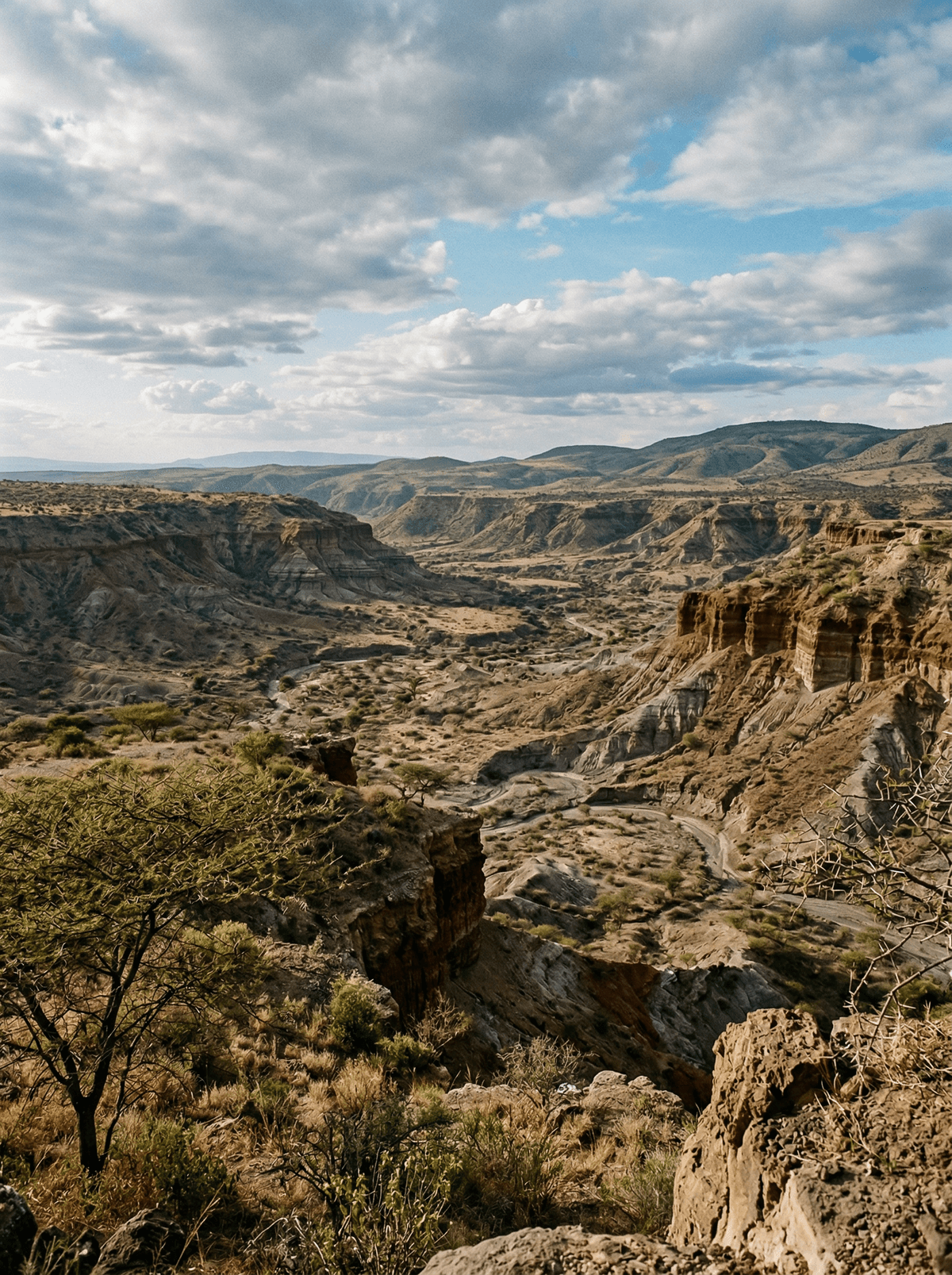
The skull that rewrote human origins came out of this scorched grey gorge.
The gorge opens grey and sun-scorched, kilometres of strata stepping down to the plain, and in 1959 a skull found here rewrote the human story. The museum on the rim holds the argument; the rock holds the evidence.
Olduvai, properly Oldupai after the wild sisal along its rim, is one of Earth's defining palaeoanthropological sites: the Leakeys' finds from 1959 onward reset the study of human origins. The conservation authority's modern museum and viewing platform are the public experience, guided heritage routes connecting the geology, fossils and stone-tool sequences while excavation areas stay controlled. It sits between Ngorongoro and the Serengeti, pairs with Laetoli down the South Route, and works year-round as a museum-and-viewpoint visit.
Solo
Solo archaeology travellers can use the museum and official guide route rather than seek independent access to excavations.
Couple
A pair can connect fossils, tools and exposed geology through the visitor centre and authorised viewpoints.
Family
Olduvai suits families with children interested in deep time who can engage with evidence beyond replica photographs.
- The Leakey discoveries here rewrote human evolutionary science from 1959 on.
- The modern rim museum turns the strata into a readable story.
- Guided routes connect geology, fossils and stone-tool sequences.
- Laetoli's footprint site pairs down the same South Route.
The gorge runs on safari-circuit picnics; the lodges pack the lunch.
Gibb's Farm in Karatu roasts its own estate coffee, the stop that bookends the day.
Sechín
Peru
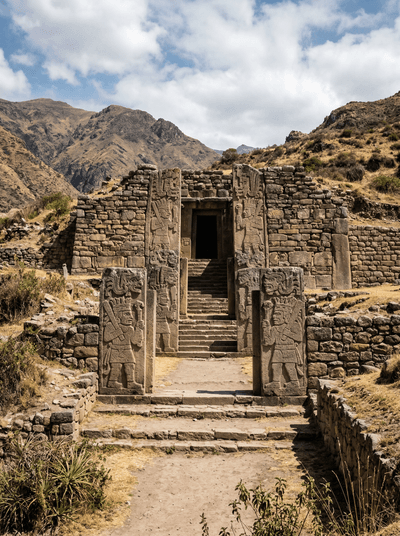
Temple walls carved with warriors and the dismembered — 3,600-year-old stone testimony.
Taxila
Pakistan
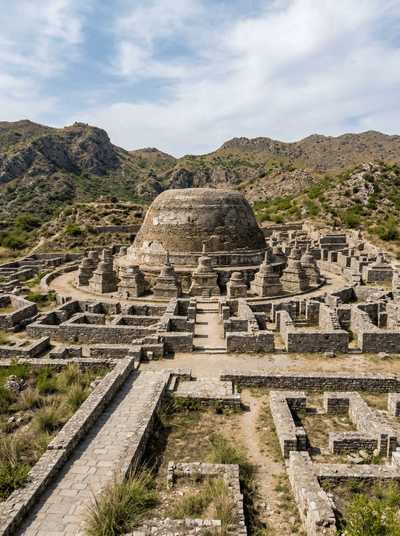
Three cities layered across a thousand years — Gandhara's monks carved Buddhas with Greek faces here.
El Tajín
Mexico
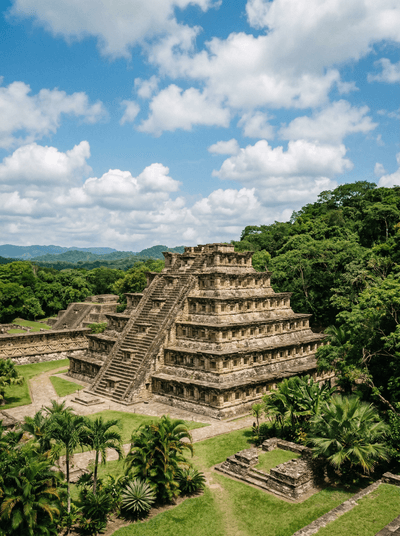
Niches, ball courts and carved reliefs spread across an ancient Gulf Coast capital.