Peru
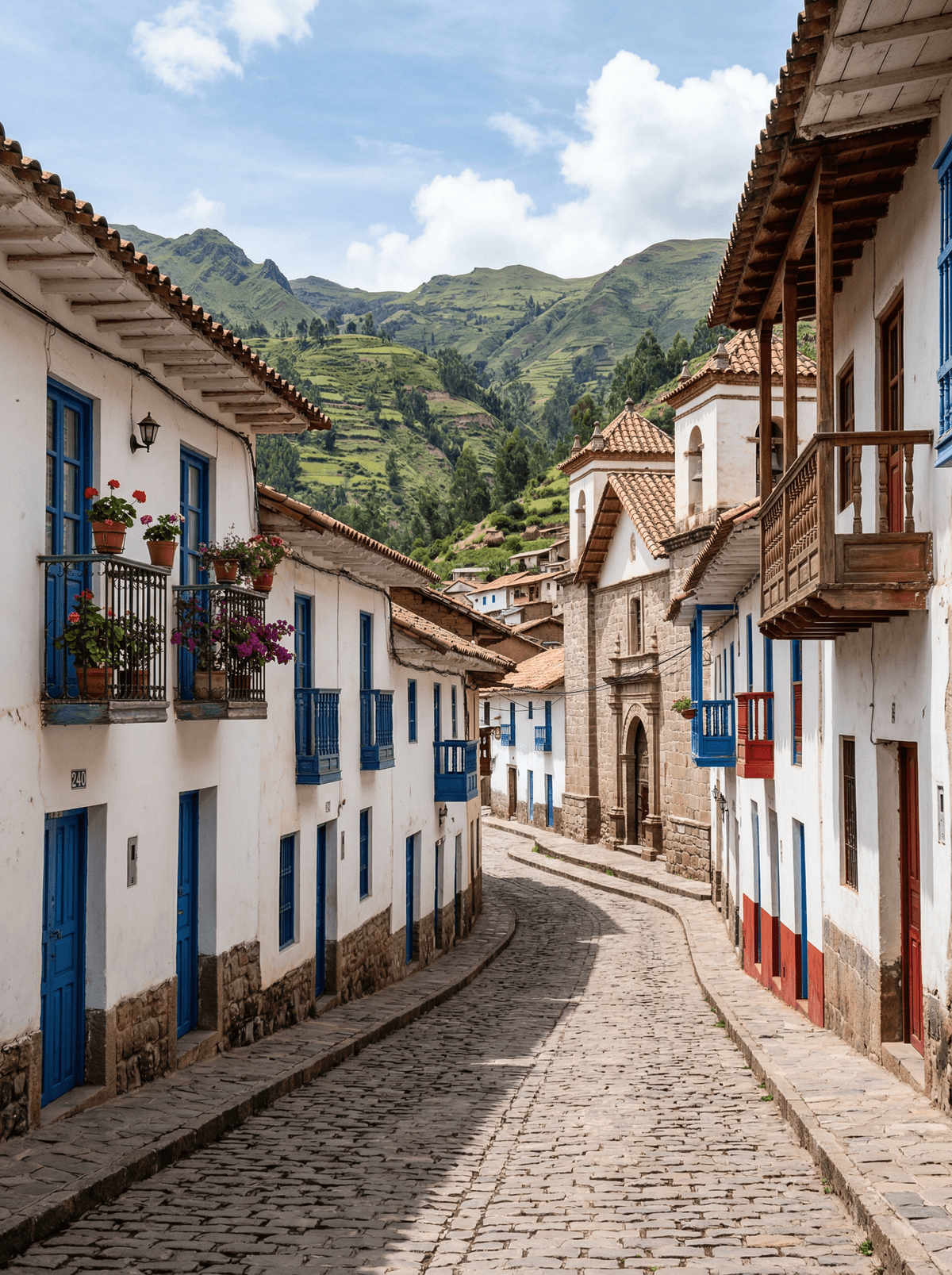
Paucartambo
Masked dancers own the streets when July's festival swallows this Andean town whole.
The masks appear at midnight — carved, painted, extraordinary — as dance troupes move through cobbled streets lit by candles and the glow of a thousand phone screens. The music does not stop. In the days around 16 July, tradition gives Paucartambo entirely to the Virgen del Carmen.
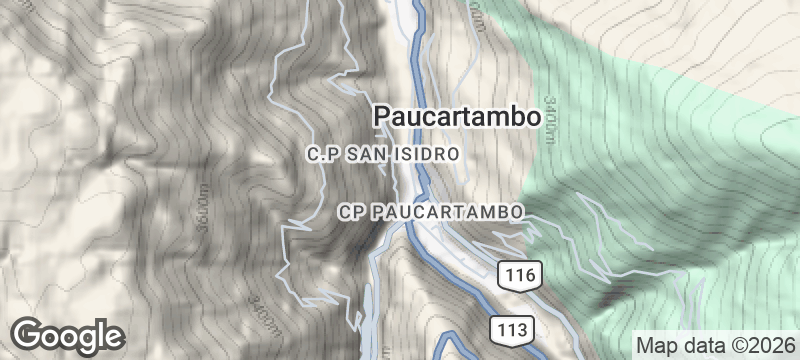
Paucartambo, a colonial town at 3,000 metres above its river gorge, hosts one of Peru's most intense and least commercialised festivals: the Fiesta de la Virgen del Carmen, centred on 16 July, when named dance troupes — each mask and character carrying its own history, from colonial satire to older mythologies — perform in devotional rotation through streets, plaza and church. This is devotion before it is spectacle: processional space is respected, photographs are asked for, and the troupes' meanings deserve local interpretation rather than a flattened word like 'devils'. The celebration remains devotion before spectacle — one of the Andes' great living traditions, still overwhelmingly Peruvian in its audience. Outside July, the town is the quiet threshold to Tres Cruces and the Manú road.
Solo
The festival absorbs a solo visitor completely — drifting between troupes at your own pace, no negotiation needed, respect as your ticket.
Friends
Masked dance, dawn chicha and lechón in the plaza turn a journey into a story — with one agreed meeting point for when the phones die.
- The Virgen del Carmen tradition converges on 16 July in devotional intensity.
- Paucartambo's named troupes carry distinct histories in their masks — satire, myth and memory.
- Paucartambo's celebration remains overwhelmingly Peruvian, barely commercialised.
- Off-season, the town is the quiet gateway to Tres Cruces and the Manú road.
Festival chicha in clay bowls at dawn, warming the wait for the masks' return.
Lechón carved in the plaza while the dancers rest between acts.
Lopburi
Thailand
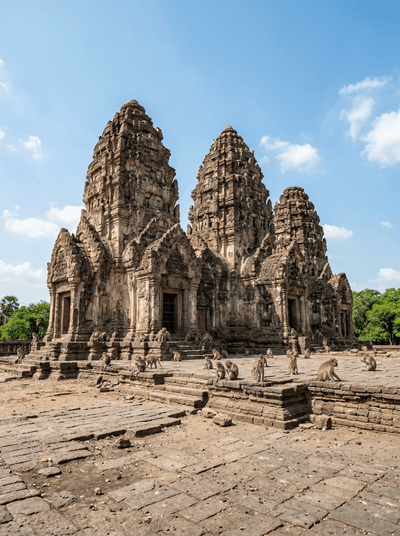
Macaques rule the Khmer ruins, snatching sunglasses from anyone who climbs the temple steps.
Montalegre
Portugal
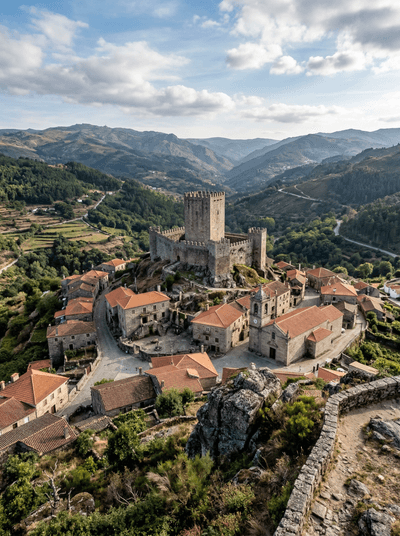
A castle town above the Barroso commons, where witches' fairs stay living folk practice.
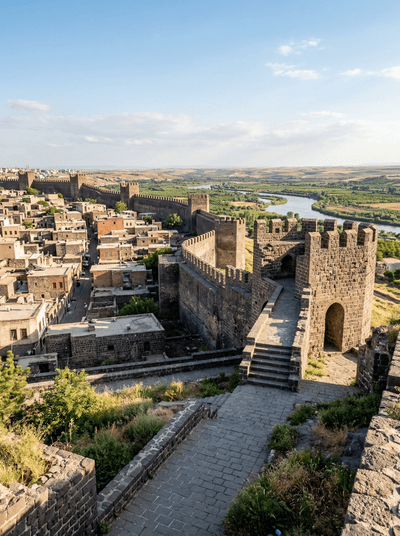
Diyarbakır
Turkey
5.8 kilometres of black basalt walls encircle a city on the Tigris, contested for five millennia.
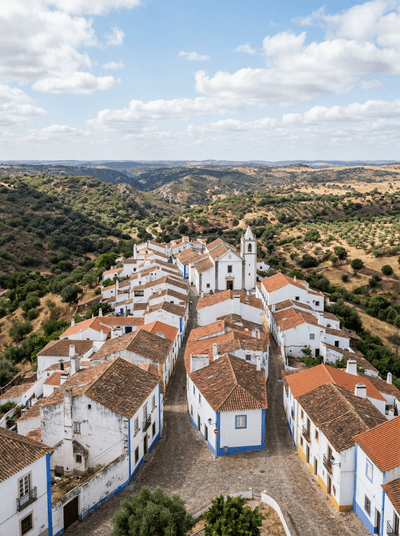
Barrancos
Portugal
So remote it bred its own tongue — half Portuguese, half Spanish, spoken nowhere else.
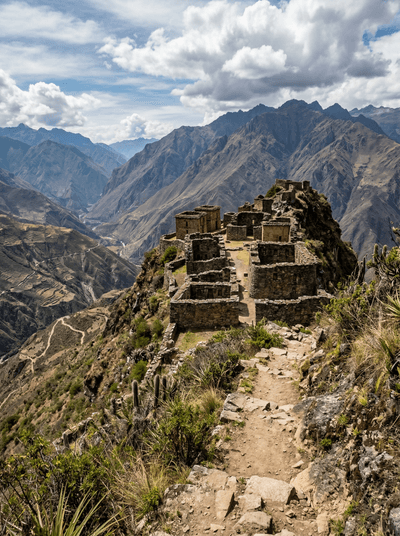
Rupac
Peru
Pre-Inca towers above a sea of clouds, earned by a climb that starts in the dark.
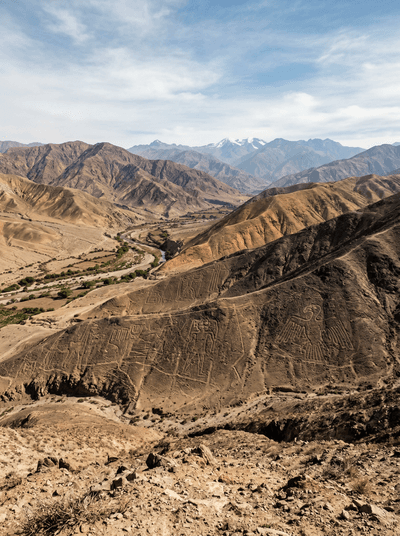
Palpa
Peru
Hillside geoglyphs with human faces, in a valley the tour planes ignore.
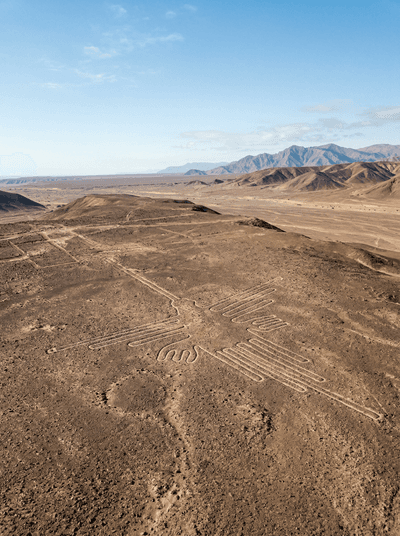
Nazca
Peru
Ancient figures etched so large across the desert they resolve only from above.
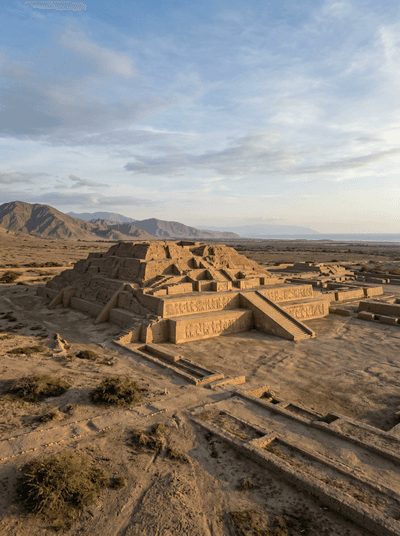
El Brujo
Peru
The pyramid of the tattooed Lady of Cao — a Moche ruler found intact.