Peru
El Brujo
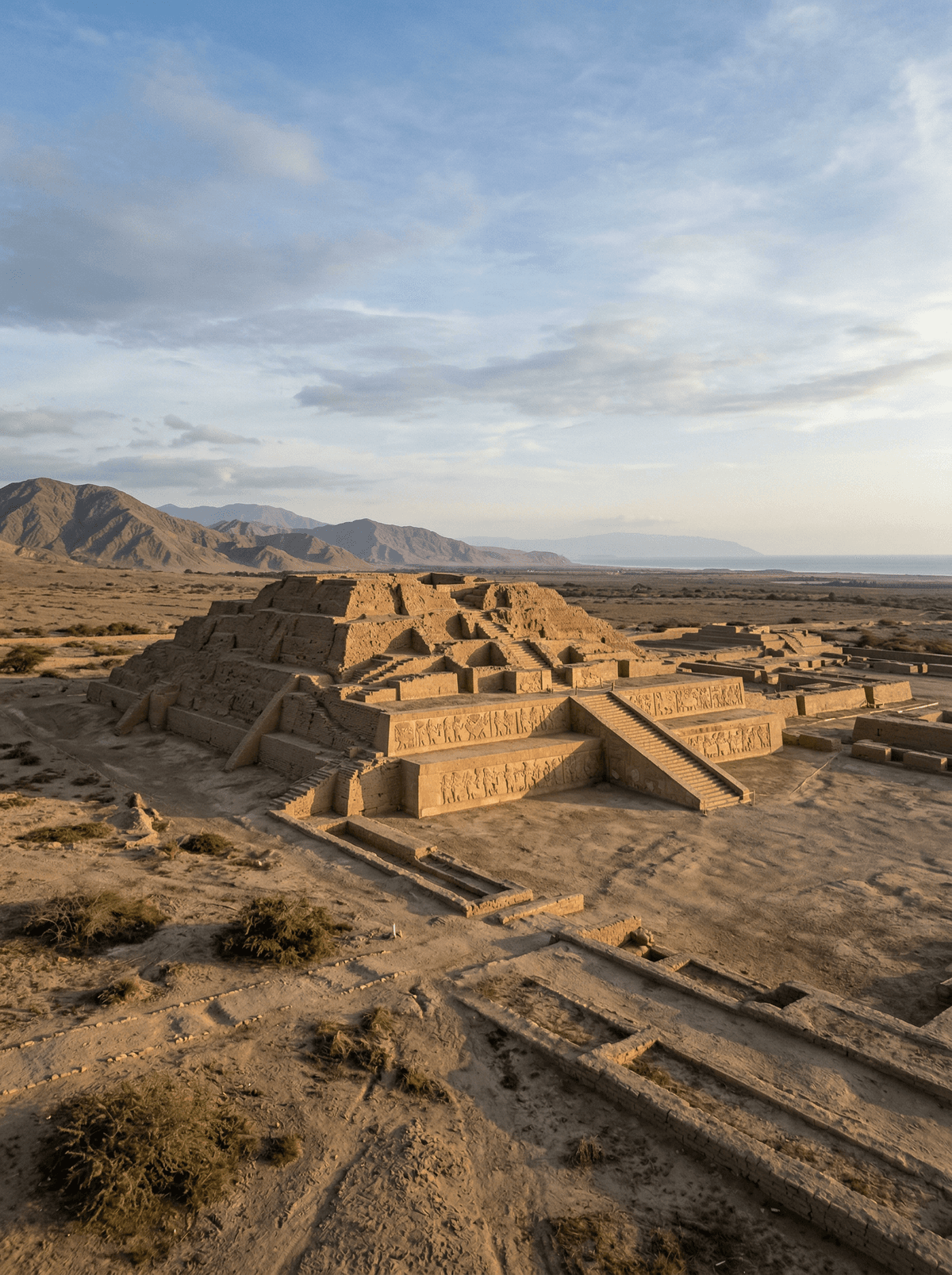
The pyramid of the tattooed Lady of Cao — a Moche ruler found intact.
Her tattooed forearms are still legible — serpents and spiders inked into skin more than fifteen centuries old. The Lady of Cao rests in a darkened, climate-controlled chamber of the museum built beside the pyramid she once ruled from, and the red-and-white murals on that pyramid's terraces show the ceremonial world she commanded.
El Brujo, on the coast of the Chicama valley, is where the Moche stop being abstract. In 2005 archaeologists opened an intact tomb in the Huaca Cao Viejo pyramid and found a young female ruler — the Lady of Cao — buried around 450 CE with weapons, gold and regalia that overturned decades of assumption about who held Moche power. Her preserved remains, displayed with deliberate dignity in the purpose-built museum, carry the tattooed serpents and spiders that have become an icon of ancient Peru. The pyramid itself keeps some of the Americas' most vivid pre-Columbian wall art — combat and ceremony painted in red, black and white across its terraces — and the site's Pacific-edge remoteness keeps the study quiet.
Solo
Standing before a fifteen-hundred-year-old ruler whose tattoos are still visible lands hardest with space to absorb it — the museum is intimate, built for exactly this encounter.
Couple
Most travellers arrive knowing Machu Picchu and not the Lady of Cao — discovering her together, above her own pyramid, is a shared revelation.
Family
A warrior queen with tattooed arms holds children as no bare ruin can, and the murals repaint the ancient world in front of them.
- The Lady of Cao's intact tomb, opened in 2005, rewrote who held Moche power.
- Serpent and spider tattoos remain legible on her fifteen-century-old skin.
- Huaca Cao Viejo's terraces keep vivid red-black-and-white Moche murals.
- The purpose-built museum displays her regalia beside the pyramid itself.
Chinguirito — dried ray ceviche sharp with lime — a recipe as old as the valley's fishing.
North-coast rice and duck at Chicama valley tables on the drive back.
Agrigento
Italy
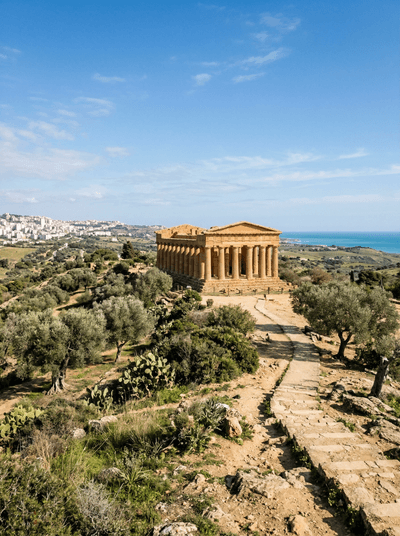
Greek temples lit gold at night along a ridge, almond blossoms carpeting the valley below.
Paestum
Italy
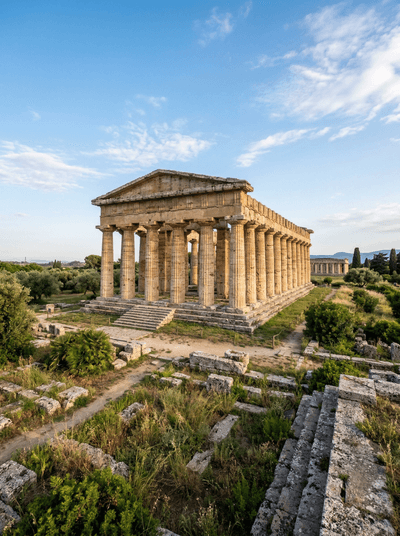
Three Greek temples older than the Parthenon, still standing in an open Cilento field.
Ephesus
Turkey
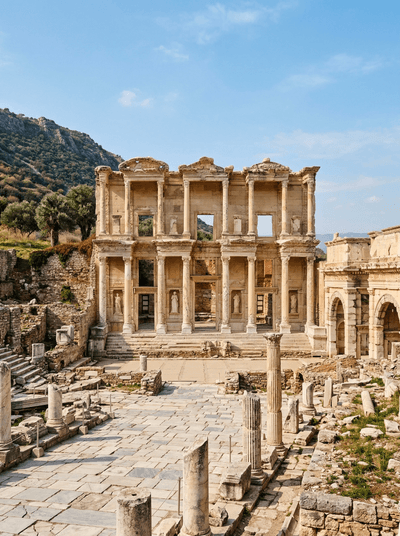
Marble streets still grooved by Roman chariot wheels lead to a library that held 12,000 scrolls.
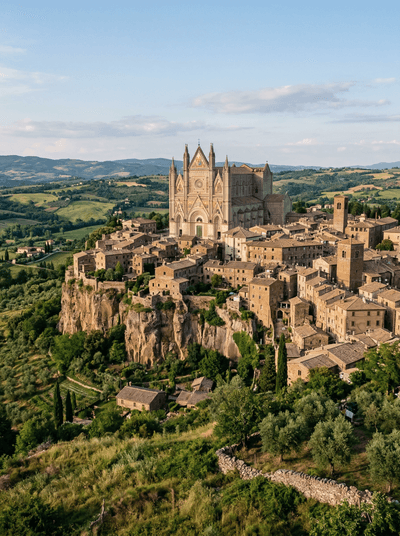
Orvieto
Italy
A city balanced on volcanic tufa, its underground carved into Etruscan tombs and medieval wells.
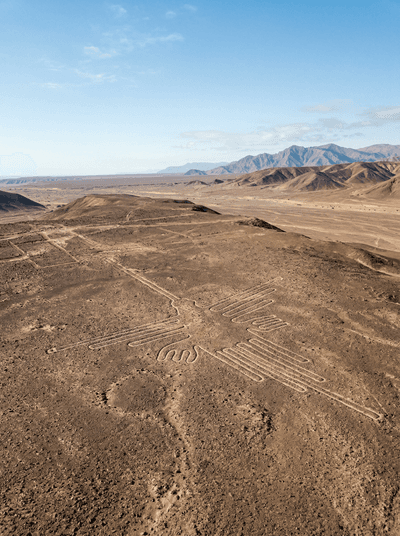
Nazca
Peru
Ancient figures etched so large across the desert they resolve only from above.
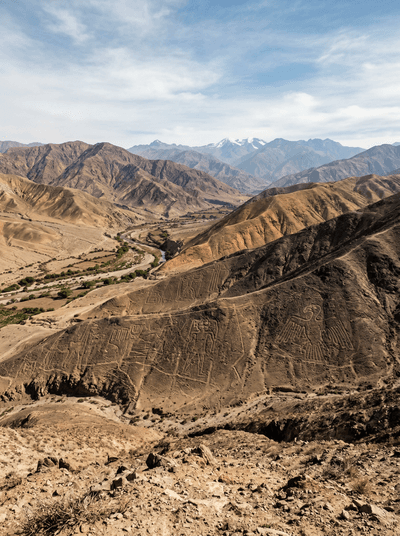
Palpa
Peru
Hillside geoglyphs with human faces, in a valley the tour planes ignore.
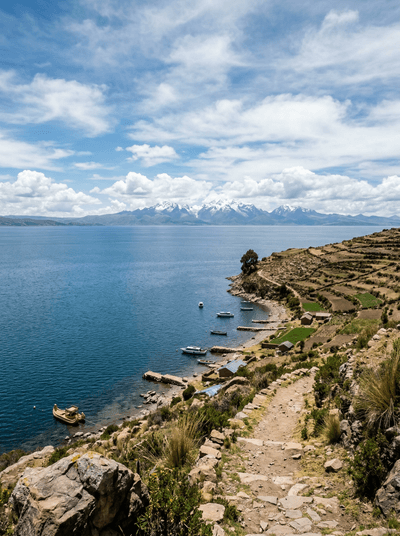
Lake Titicaca
Peru
So high the air stings, so still the sky sinks into the water.
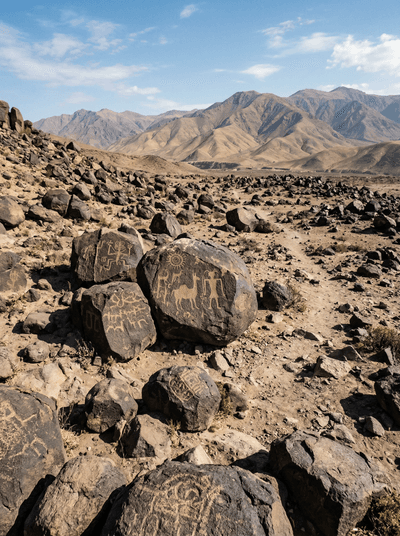
Toro Muerto
Peru
A desert of engraved boulders — thousands of petroglyphs, barely a visitor.