Turkey
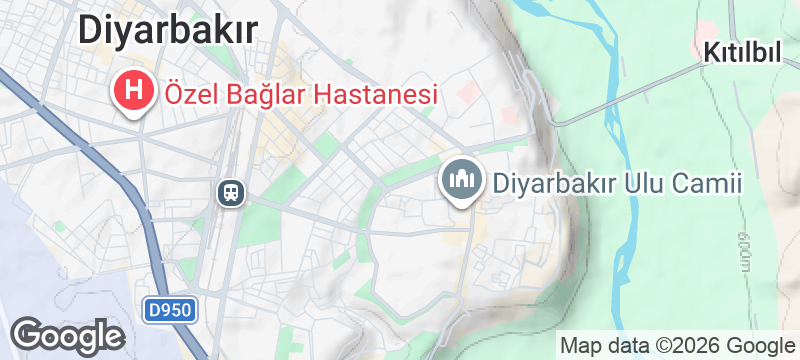
Diyarbakır
5.8 kilometres of black basalt walls encircle a city on the Tigris, contested for five millennia.
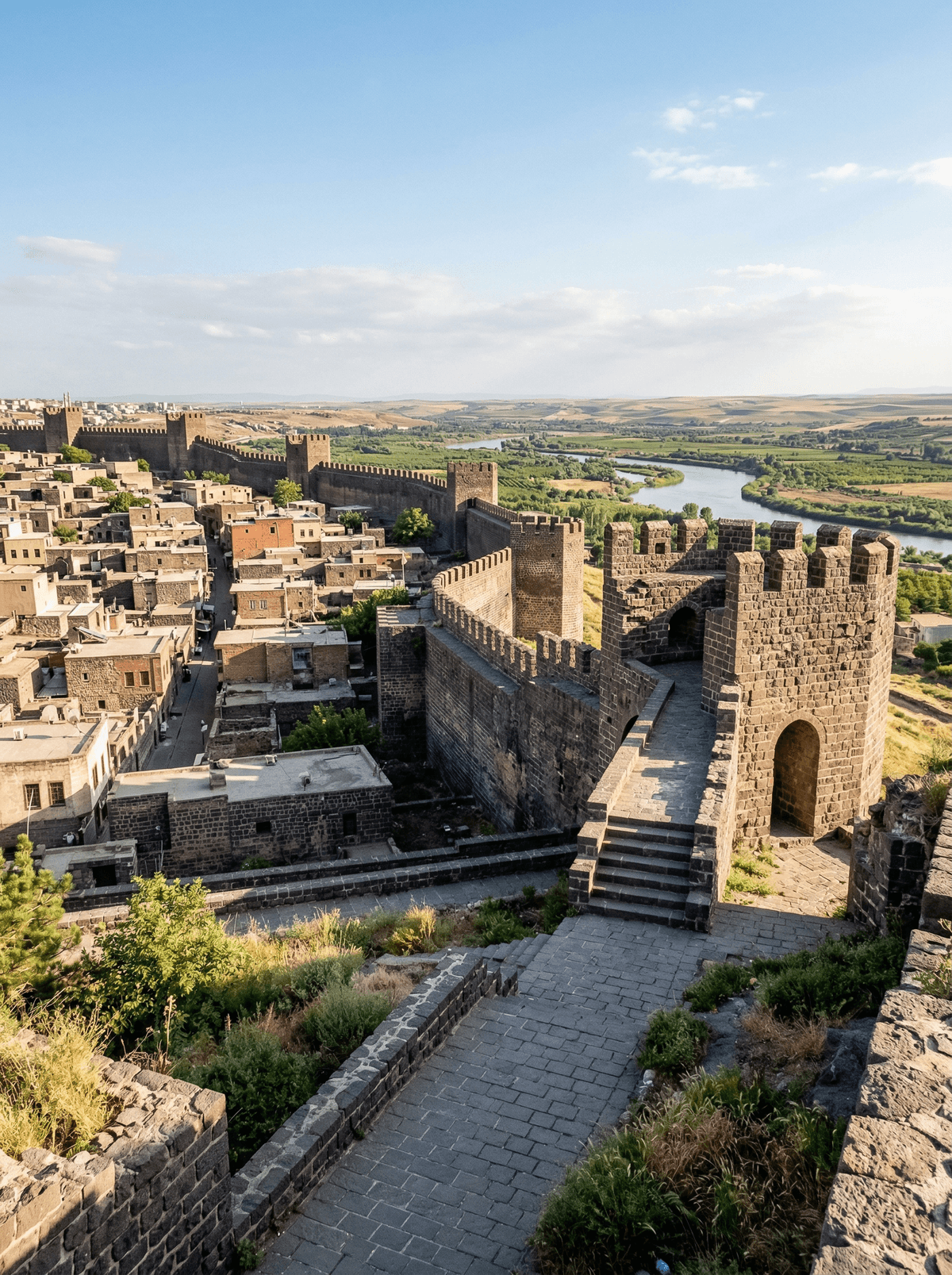
The black basalt absorbs the sun. Walk the ramparts of Diyarbakır and the Tigris glints far below, green orchards filling the slope between fortress and water. Five kilometres of volcanic stone surround a city fought over, rebuilt and lived in since the Bronze Age, still humming with coppersmith hammers and the smoke of liver kebabs in the old quarter.
Diyarbakır is one of Turkey's oldest continuously inhabited cities, its walls among the longest surviving Roman-era fortifications in the world. Raised in local black basalt in the 4th century, then reinforced by Byzantines, Artuqids and Ottomans, the ramparts run 5.8 kilometres with 82 towers still standing. Below them, the UNESCO-listed Hevsel Gardens have been irrigated from the Tigris for some 8,000 years, 700 hectares of orchards feeding the city above. Inside the walls, the Ulu Mosque was founded after the 639 conquest, one of Anatolia's oldest, and the old-city kitchens anchor southeastern Turkish cooking.
Solo
A city layered with five millennia of history, best taken at your own pace: climbing open wall sections, ducking into caravanserais, and eating through the bazaar without a schedule.
Friends
The food alone justifies the trip. Split platters of kaburga and ciğer kebab, and watermelon the size of your torso, at old-city restaurants where the bill barely registers.
- The walls run 5.8 kilometres in local black basalt, among the longest surviving Roman fortifications in the world.
- The Hevsel Gardens between the walls and the Tigris are 700 hectares of orchards farmed for some 8,000 years.
- The ramparts date to the 4th century AD, reinforced in turn by Byzantines, Artuqids and Ottomans, each layer visible.
- The city's kaburga dolması, lamb ribs stuffed with spiced rice, takes a full day to prepare properly.
Kaburga dolması, lamb ribs stuffed with almond pilaf, steamed three hours then browned.
Lebeni, sheep's yoghurt thinned over cracked wheat with wild yarpuz and kenger, eaten cold.
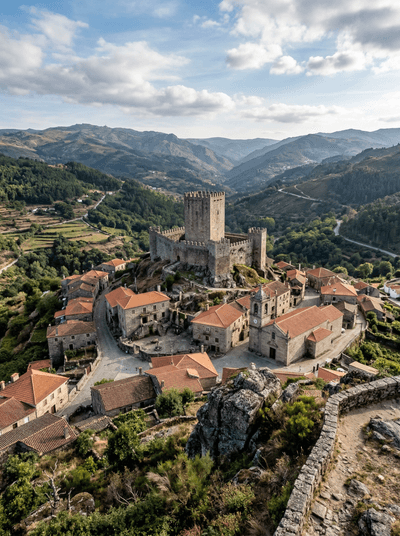
Montalegre
Portugal
A castle town above the Barroso commons, where witches' fairs stay living folk practice.
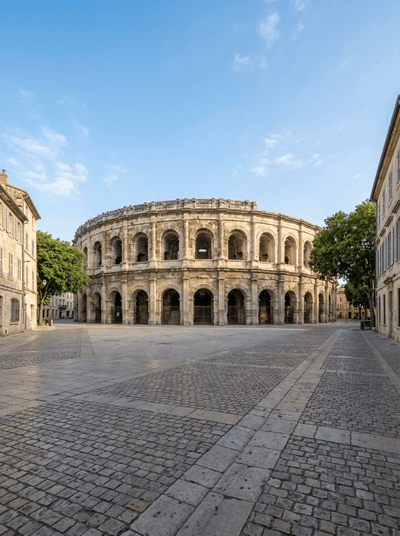
Nîmes
France
A Roman arena so intact they still fill it with sand for bullfights and rock concerts.
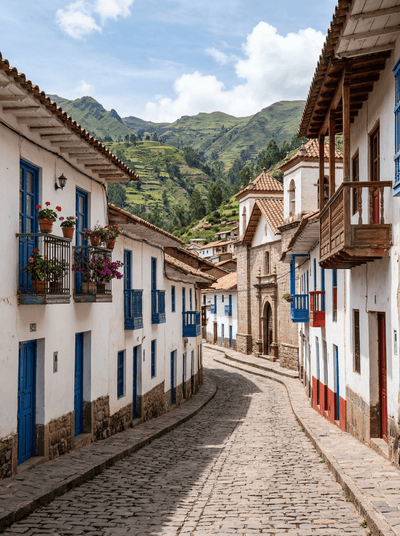
Paucartambo
Peru
Masked dancers own the streets when July's festival swallows this Andean town whole.
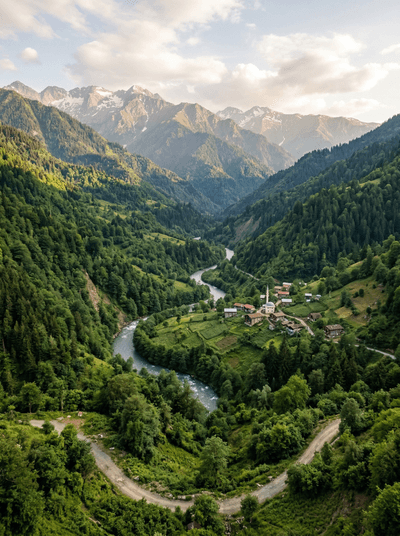
Camili Valley
Turkey
Turkey's only UNESCO biosphere reserve, a Caucasian rainforest valley reached by one unpaved pass.
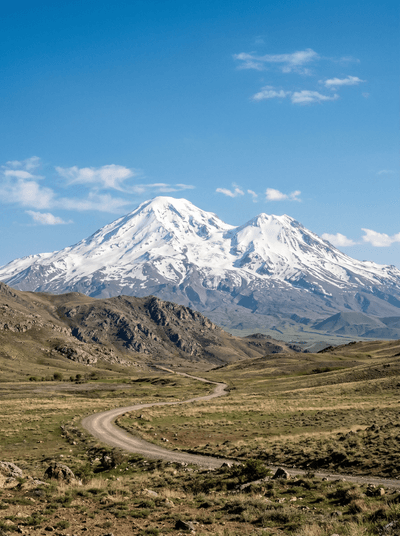
Mount Ararat
Turkey
Turkey's highest peak rises alone from the plain, perpetually snow-capped and steeped in flood mythology.
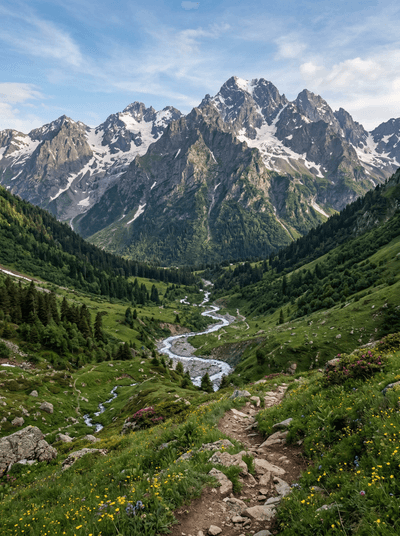
Kaçkar Mountains
Turkey
Glacial lakes above the clouds where herders still drive cattle to alpine meadows each summer.