Portugal
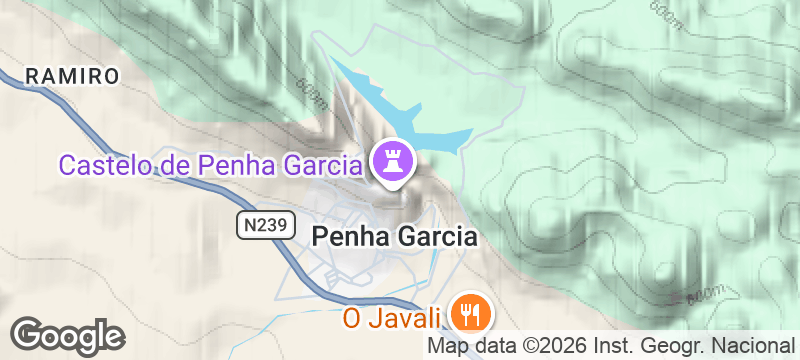
Penha Garcia
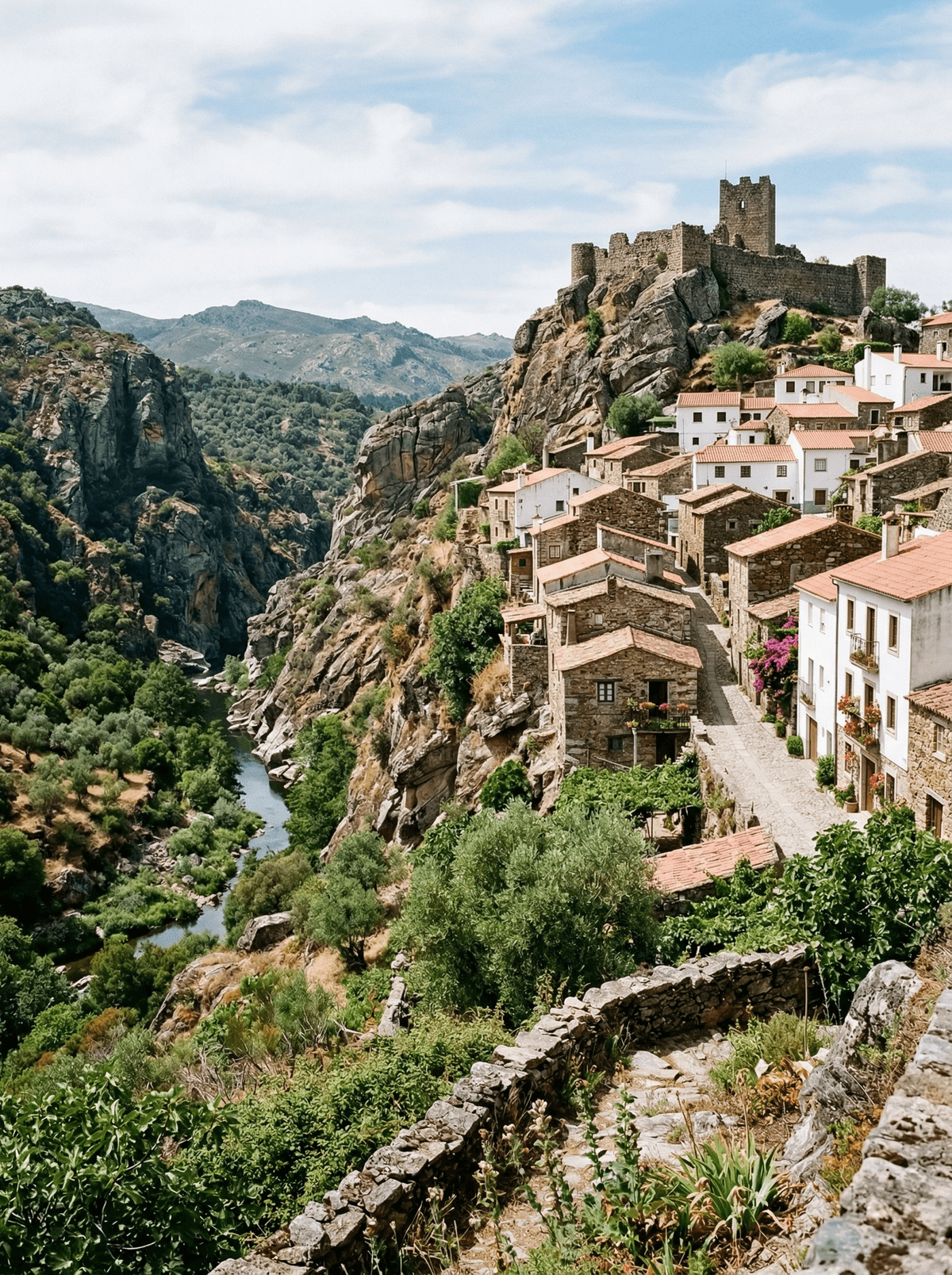
Trilobite tracks from an ancient sea floor emerge from gorge walls beneath a Templar castle.
The gorge walls are a textbook split open — Ordovician quartzite tilted near-vertical, its surfaces rippled with the fossilised tracks of trilobites that crawled here when this rock was a shallow sea floor, roughly 480 million years ago. Above, the ruined castle catches the wind. Below, the Ponsul river cuts a green line through grey stone. The scale of time visible in these cliffs makes human history feel like a footnote.
Penha Garcia is a small Beira Baixa village perched above one of Europe's most accessible ichnofossil sites, protected within the UNESCO-listed Naturtejo Global Geopark. The signed trail descends past exposed quartzite bearing Cruziana and Rusophycus traces — the feeding and resting marks of trilobites — then follows the river past old watermills before climbing back through stone lanes. It is a genuinely physical route on uneven cliff-path ground, with river stepping stones and loose slopes to respect, so early starts matter in the heat and every fossil remains exactly where it lies. The castle above — Templar frontier work of the twelfth century — is open to the sky, and the drop from its walls to the river runs about a hundred metres. Deep geological time, medieval ruins and hands-on terrain layered in one small village — there is nothing else quite like it in Portugal.
Solo
Walking a gorge lined with 480-million-year-old trilobite tracks, a Templar castle waiting at the top, is layered solo adventure that rewards curiosity at every turn — and the village is tiny and quiet enough that the trail is largely yours outside summer weekends.
Couple
The gorge trail is physical enough to feel like a shared adventure and extraordinary enough to retell for years. A slow lunch in a stone-walled tasca afterwards, castle above and gorge below, closes the loop.
Friends
The signed route — watermills, exposed fossils, castle ruins — made for a group after something genuinely different: one of Portugal's most underrated short walks, taken at the gorge's own pace.
- The gorge's quartzite walls carry Cruziana trilobite traces from an Ordovician sea floor.
- A signed Naturtejo Geopark trail runs directly through the fossil-bearing rock past old watermills.
- The twelfth-century castle above dates from the Knights Templar's frontier decades.
- Fossils remain in place by rule, and the uneven cliff paths keep the walk honest.
Mature Beira Baixa sheep's cheese, soft and tangy, scooped onto dense cornbread.
Roast kid and wild mushroom stews, stone-village winter cooking.
Maralal
Kenya
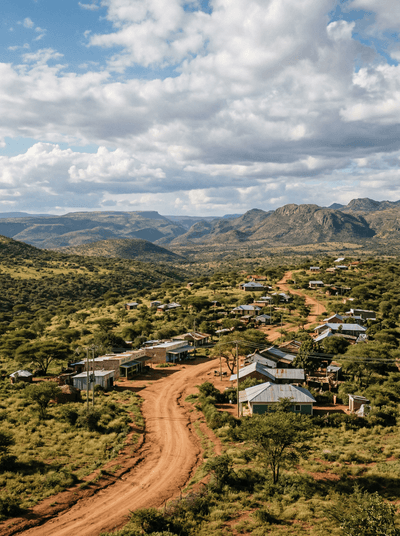
A highland frontier town of camels and beaded warriors, where Kenya's wild north begins.

Seoul
South Korea
Sesame smoke and midnight neon run right up to the walls of Joseon palaces.

Auroville
India
A gold-plated meditation sphere anchoring an experimental forest city that tries to live without cash.
Ek Balam
Mexico
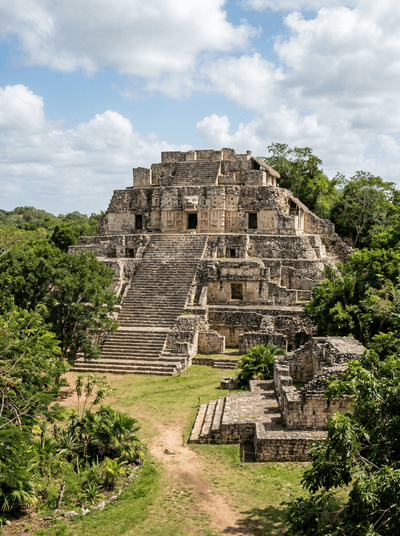
A royal stucco façade survives within the towering Acropolis of Ek Balam.
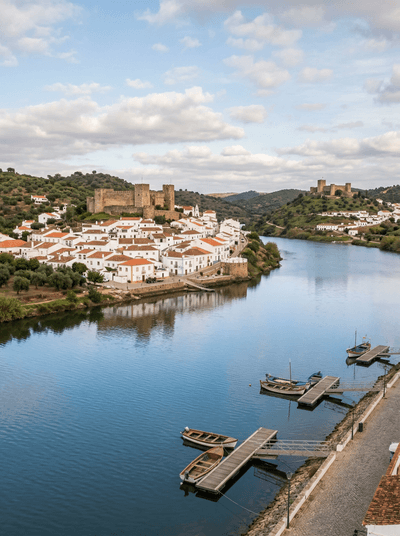
Alcoutim
Portugal
Two castle towns face across the Guadiana — Portugal one bank, Spain the other.
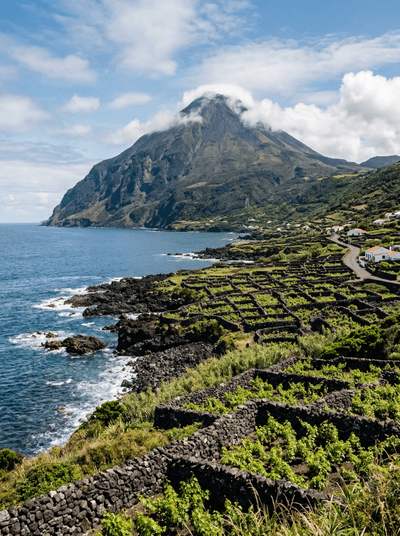
Pico
Portugal
Portugal's highest peak rises from the Atlantic above vineyards in black lava corrals.
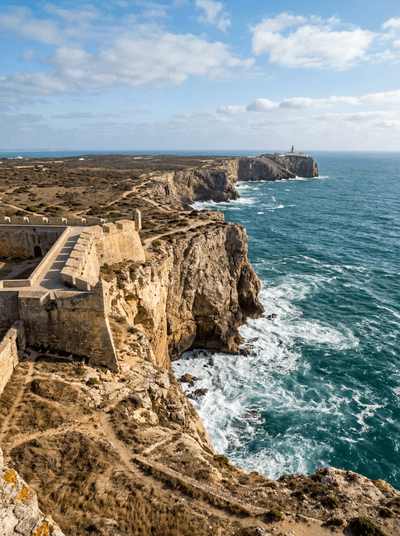
Sagres
Portugal
Wind strips the promontory raw — beyond this cliff, cartographers once drew sea monsters.
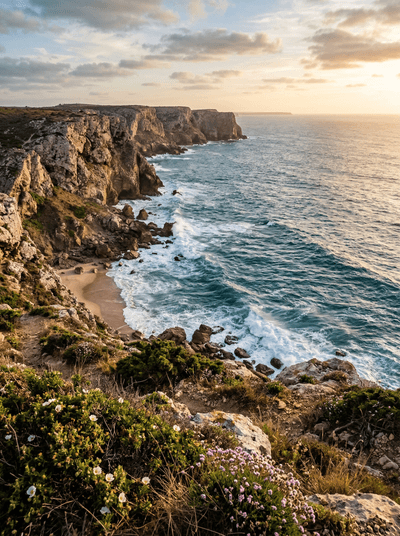
Costa Vicentina
Portugal
Among Europe's last wild coasts — empty surf detonating beneath clay-red cliffs for miles.