Portugal
Porto
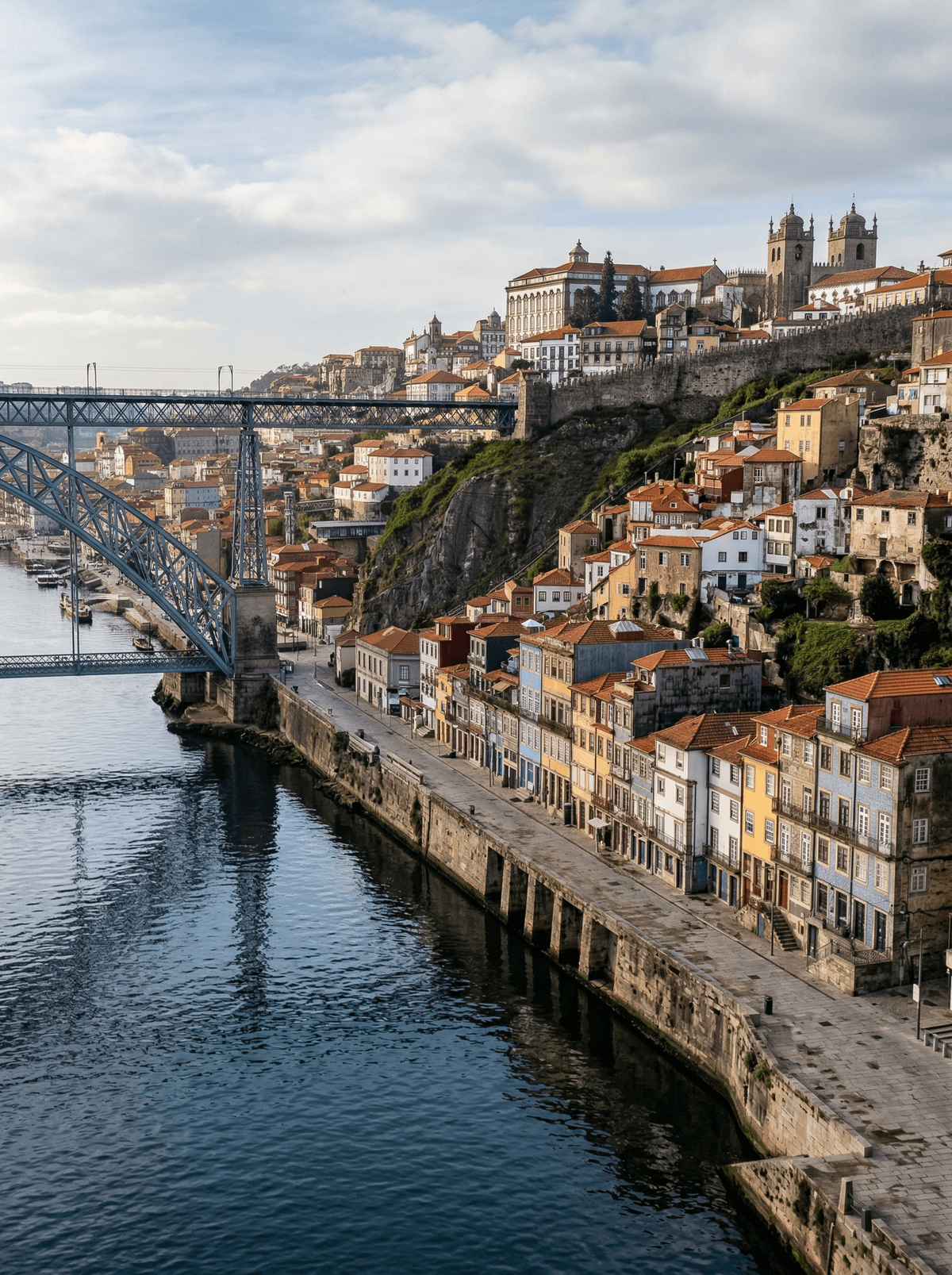
Port cellars carved into one bank while azulejo tiles turn the other blue.
Azulejos blaze blue across church façades as the streets pitch at angles that test your ankles. The smell of grilled sardines and roasting chestnuts drifts up from the Ribeira, where the Douro slides beneath the iron arc of Ponte Luís I. Porto hits you at volume — colour, noise, flavour, gradient — and never once apologises.
Porto is Portugal's second city, a UNESCO-listed pile of granite above the Douro. The Ribeira quays, the São Bento station's twenty thousand hand-painted tiles telling Portuguese history, and the theatrical double staircase of the 1906 Livraria Lello headline a city whose identity runs deeper than landmarks: this riverbank's Roman name, Portucale, became the country's. Across the water in Gaia, port lodges dating to the seventeenth century age their barrels floor to ceiling, and six bridges arc over the gorge between the two banks. The food is unapologetically hearty — the francesinha is a civic institution, and the tripeiros nickname honours the citizens who gave their meat to the naval expeditions and kept only tripe.
Solo
Porto rewards the wanderer with no itinerary — lost lanes behind the cathedral, a francesinha at a counter seat, a stumbled-into tasca lunch. The city unfolds best unplanned.
Couple
Sunset from the upper deck of Ponte Luís I, a glass of tawny across the river in Gaia, late fado in a Ribeira backstreet — Porto's romance is lived standing up, walking and tasting.
Family
The riverside trams, the Lello staircase and the six bridges over the Douro keep younger visitors engaged — and the city's portions and warmth feed families well.
Friends
Francesinhas compared across rival kitchens, tawny argued over in Gaia, late nights in the bar district — built for the trip where every meal becomes an argument about which was best.
- Gaia's port lodges have aged their barrels above the river since the seventeenth century.
- São Bento station wears twenty thousand tiles of Portuguese history, eleven years in the fitting.
- The 1906 Livraria Lello's double-spiral staircase made a bookshop a monument.
- Portucale, the Roman settlement on this bank, gave the whole country its name.
Francesinha — the meat-stuffed signature drowned in spicy cheese-beer sauce.
Tripas à moda do Porto — the tripe-and-bean stew that named the citizens.
Cusco
Peru
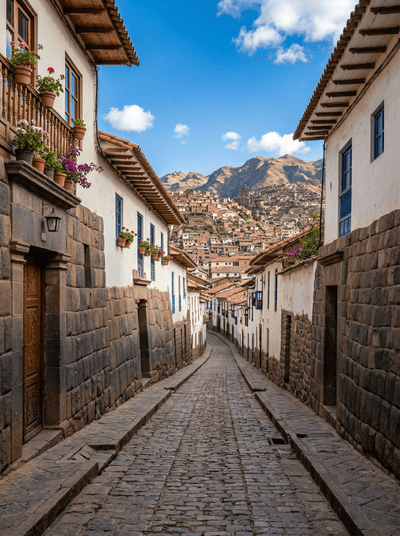
Inca walls fitted so tightly a knife blade won't slide between the stones.
Buenos Aires
Argentina
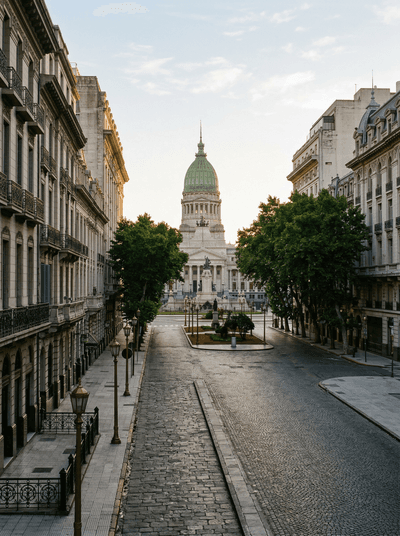
Tango echoes through faded ballrooms where strangers dance until the city wakes.
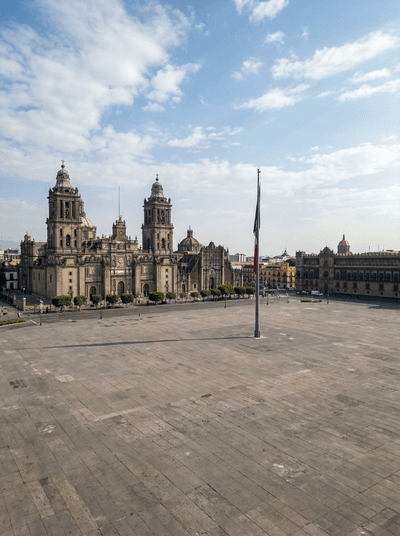
Mexico City (Centro Histórico)
Mexico
Temples, cathedral stones and Art Deco halls occupy the same sinking city core.
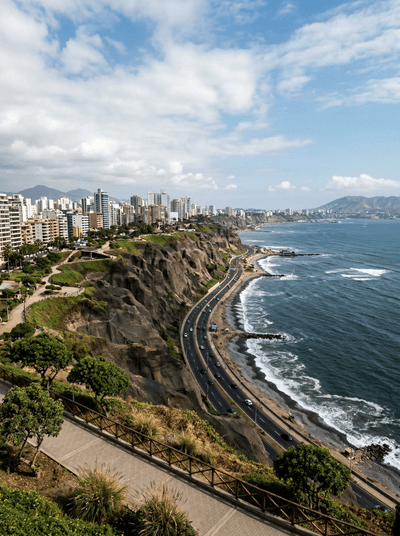
Lima
Peru
Pacific spray on clifftop terraces where ceviche began and the food never stopped evolving.
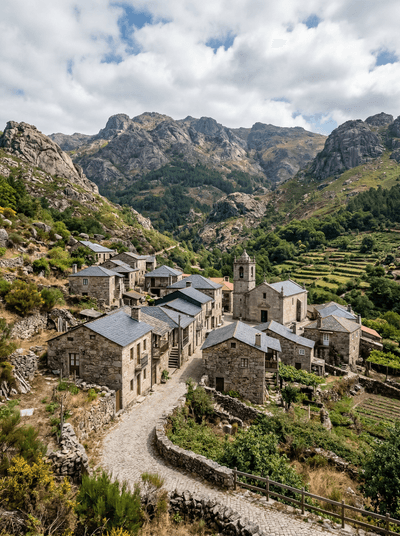
Pitões das Júnias
Portugal
A monastery abandoned to wolves and rain crumbles beside a waterfall at the road's end.
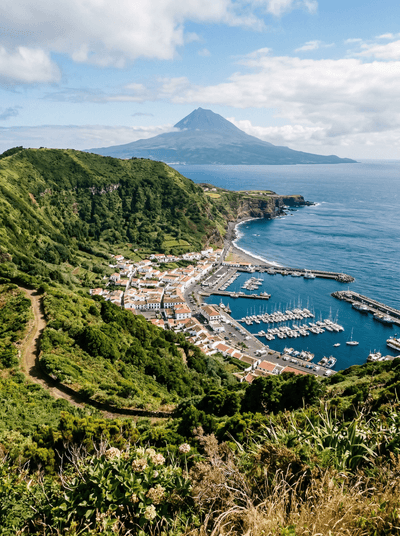
Faial
Portugal
Transatlantic sailors paint crew crests on the harbour walls — decades of voyages in pigment.
Buçaco Forest
Portugal
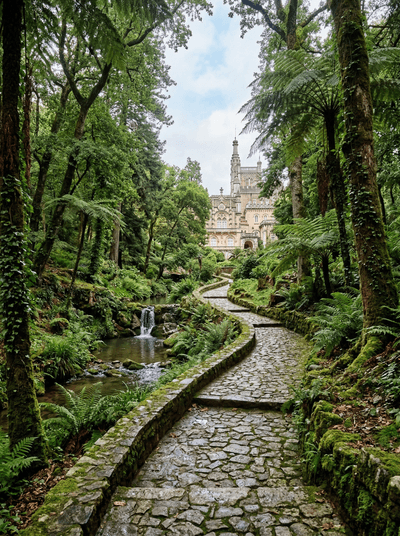
A walled forest of seven hundred species, its cedar Via Crucis climbing cathedral canopy.
Arouca
Portugal
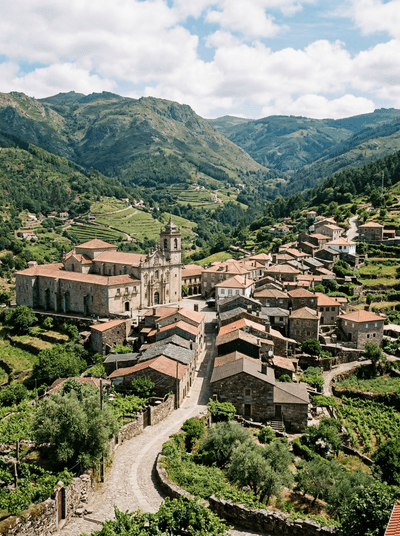
A 516-metre suspension bridge sways 175 metres above a gorge — Portugal's vertigo capital.