France
Provins
Underground galleries and a rose harvest in a medieval fair town that once rivalled Paris.
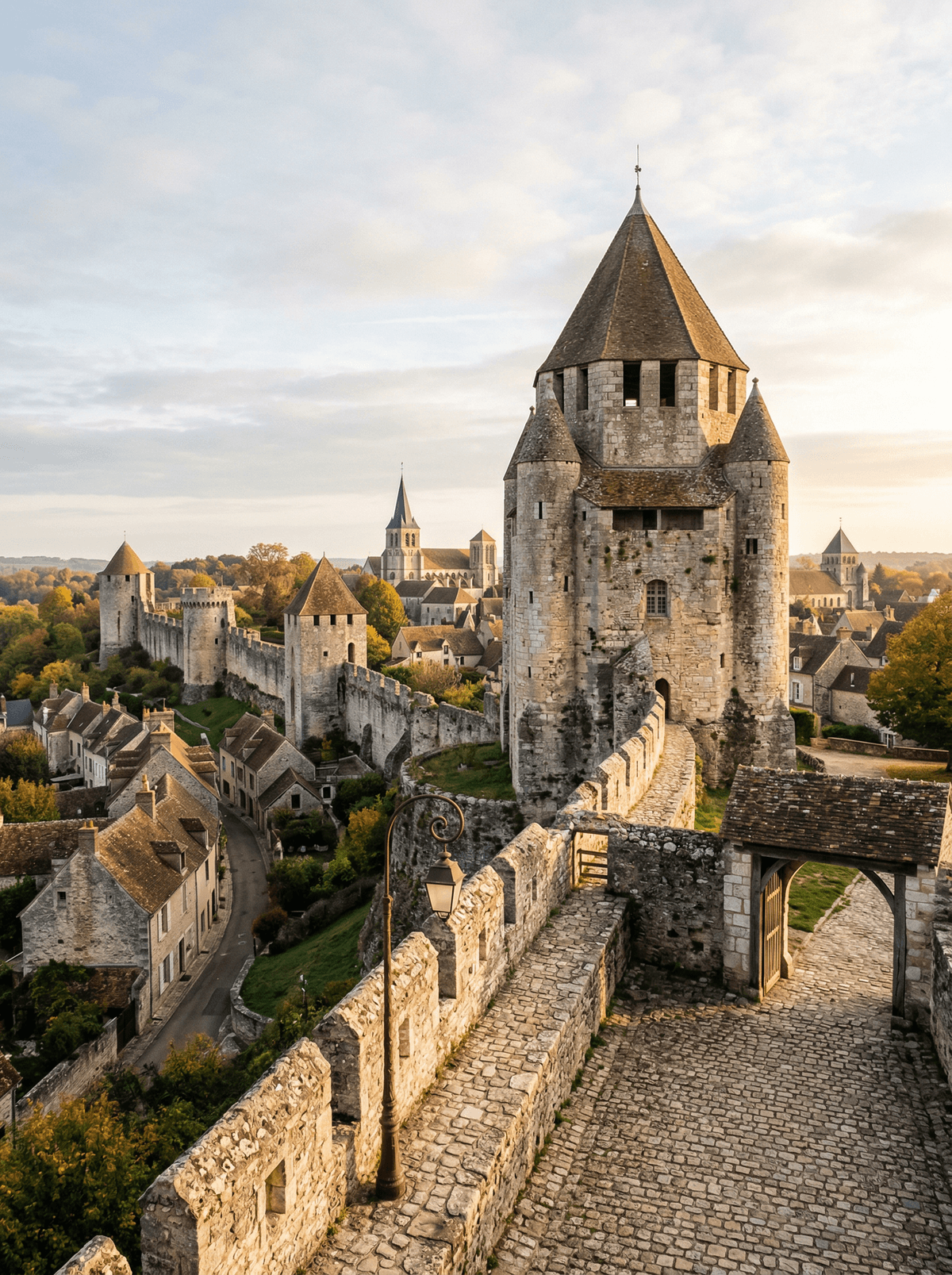
The galleries begin beneath the medieval square and do not stop — merchants' cellars, vaults and passages cut into the rock under the whole upper town. Provins, in northern France, was one of the principal fair towns of Champagne, a place where the wealth of medieval trade built walls, towers and a rose industry that still scents the town every June, an hour from Paris and centuries away.
In the 1100s and 1200s the Champagne fairs were the trading floor of Europe, and Provins was one of their principal towns, under the protection of the Counts of Champagne; the walls and gates, the market squares and the Tour César — the twelfth-century keep on its mound above the town — all date from that prosperity, and UNESCO listed the whole medieval town in 2001. Beneath it the underground galleries, once storage for the merchants, are opened on guided tours. The roses came back from the Crusades — the red Rosa gallica the Count of Champagne brought back — and Provins has grown them ever since, turning them into jam, honey, sweets and scent; the June rose festival fills the town with them. In summer the medieval shows bring jousting and falconry into the ramparts, and hypocras, the spiced wine of the fairs, is still poured.
Couple
The galleries below and the rose gardens above make a town experienced on two levels — medieval commerce underground, flowers in the sun. The June rose festival adds colour and scent to an already layered day.
Family
The galleries fascinate children on the guided tour, the Tour César gives them a keep to climb, and the summer medieval shows add jousting and falconry. Provins makes the Middle Ages tangible without simplifying them.
- Underground galleries connect the medieval merchants' cellars beneath the upper town — the guided tours go deep.
- The Tour César is a twelfth-century keep on a mound — the view from the top maps the old fair town below.
- Provins was one of the principal Champagne fair towns — the wealth of medieval trade built walls that still stand, and UNESCO lists the whole town.
- The rose harvest every June scents the town — Provins roses go into jam, sweets, honey and perfume.
Rose jam, rose honey and rose sweets — Provins has built a whole larder around its red roses.
Hypocras — the spiced wine of the medieval fairs — poured warm in a vaulted cellar.
Louisbourg
Canada
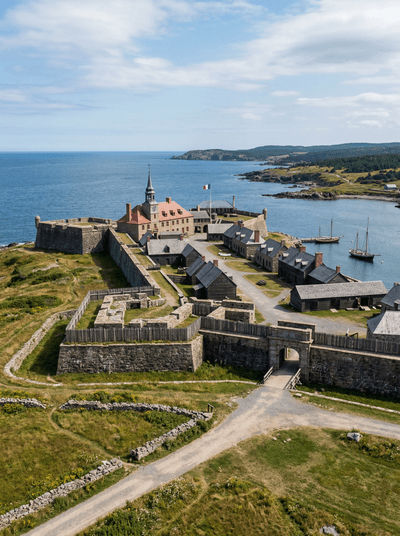
An 18th-century French fortress town rises again in fog, musket smoke and fresh-baked soldiers' bread.
Barkerville
Canada
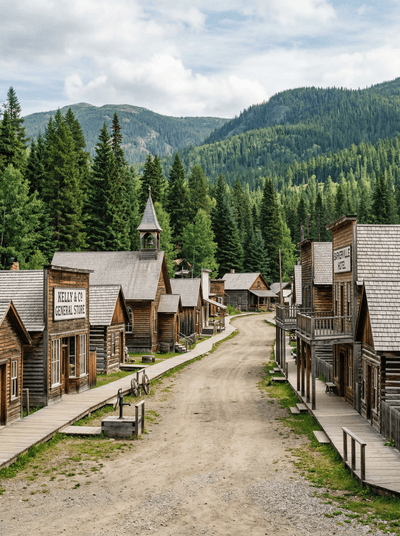
A Cariboo gold-rush town runs whole, bakery to Chinatown to theatre, deep in working preservation.
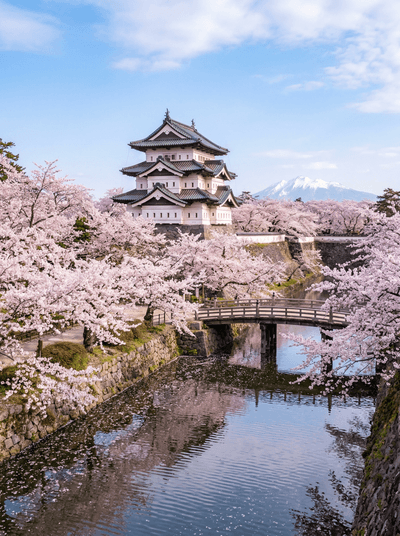
Hirosaki
Japan
Apple orchards around a castle moat where fallen cherry petals form a pink floating carpet.
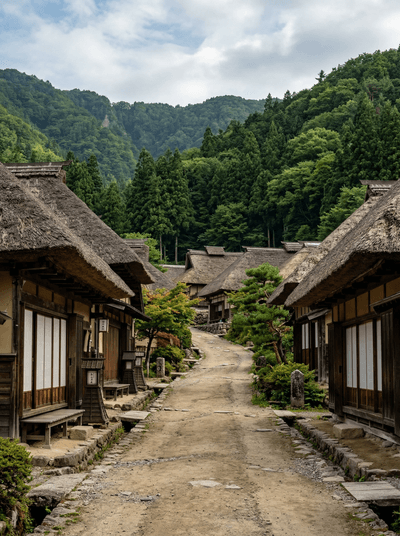
Ouchi-juku
Japan
Thatched-roof inns lining a mountain highway frozen since the samurai stopped passing through.
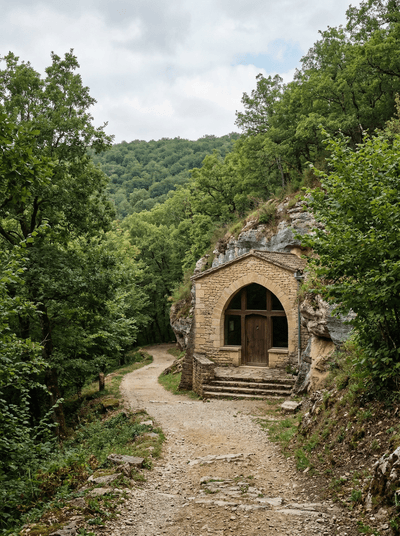
Lascaux
France
Ice-age bison replicated so precisely your brain forgets it is standing in a copy.
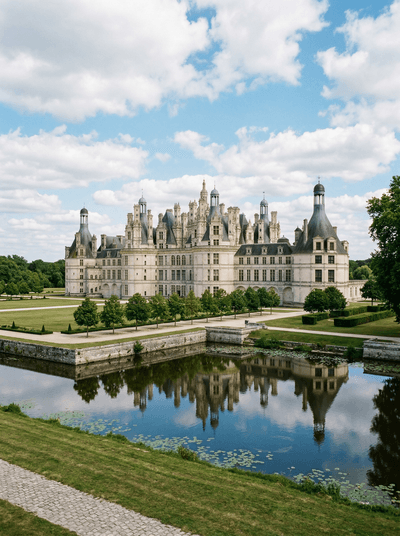
Château de Chambord
France
A double-spiral staircase inside a Renaissance hunting palace built for a king who barely stayed.
Chenonceau
France
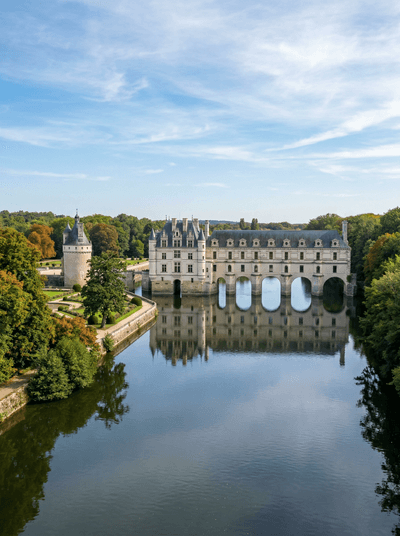
A château arched across a river, built by a king's mistress and finished by his widow.
Beynac-et-Cazenac
France
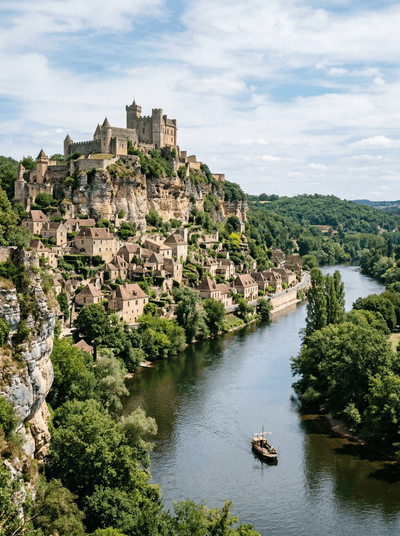
A fortress village gripping a cliff high above the Dordogne's green coil.