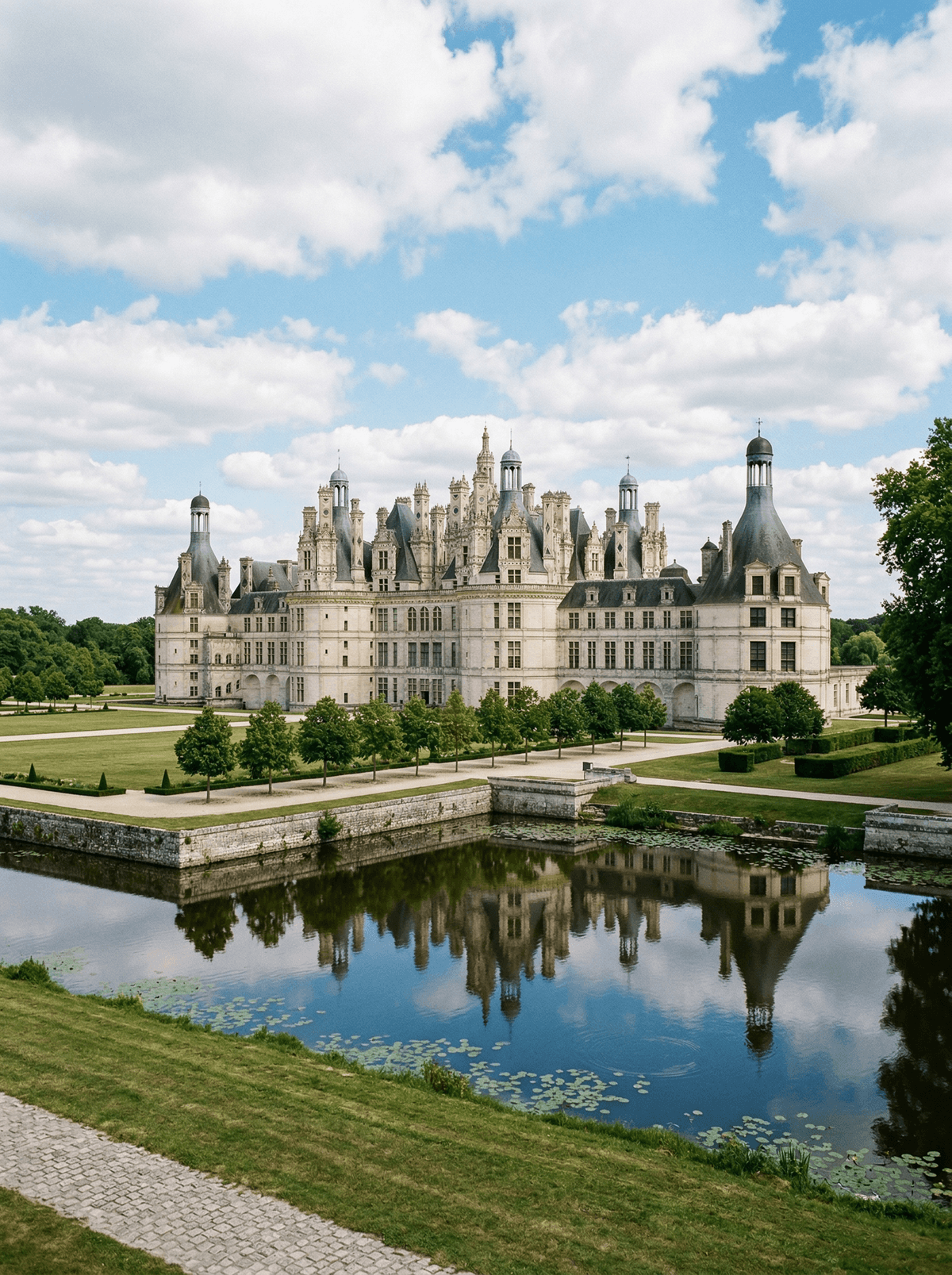
France
Château de Chambord
A double-spiral staircase inside a Renaissance hunting palace built for a king who barely stayed.
The château appears across the marshland like a hallucination — too large, too ornate, too improbable to be a hunting lodge, which is what it was called. Chambord is the excess of the French Renaissance made solid: hundreds of rooms, a forest of chimneys and lanterns on the roof, and a double-spiral staircase at its heart that may have come from Leonardo da Vinci's sketchbook. François I built it to astonish, and then hardly lived in it.
François I began Chambord in 1519, and the whole plan is organised around one idea: the double-revolution staircase in the centre of the keep, two spirals wound around each other so that two people can climb and descend at the same time without meeting, inspired by Leonardo da Vinci, who was then living at Amboise. Around it the château unfolds in the hundreds — rooms, staircases, chimneys — to a rooftop terrace of towers, lanterns and carved stone that reads like a small town on top of a larger one, with the estate spread out below. That estate is walled: the largest enclosed park in Europe, forest and marsh where wild boar and red deer are watched from hides, and cycle paths run through it. Chambord was on the first list of French historic monuments in 1840 and has been a World Heritage site since 1981, and it calls itself neither palace nor hunting lodge but a utopia that has not given up all its secrets.
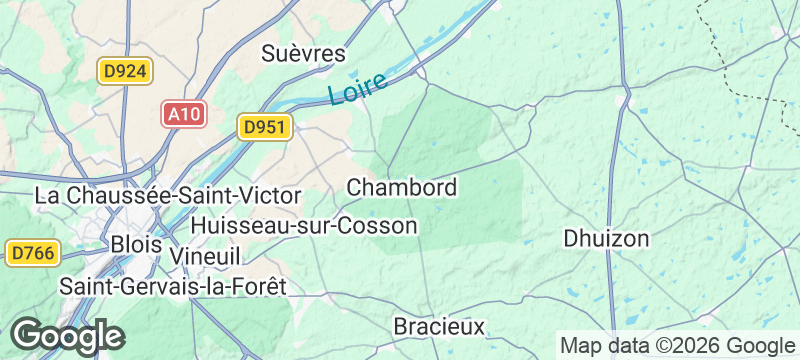
Couple
The double staircase is designed for two people moving in parallel — climb on separate spirals and watch each other appear and disappear through the central openings. The rooftop at sunset turns the Sologne forest gold.
Family
Children count chimneys, race the staircase and spot deer from the rooftop. The estate is big enough for cycling, and the sheer size of a 'hunting lodge' with hundreds of rooms makes royal excess tangible to young minds.
- The double-spiral staircase lets two people climb and descend without meeting — inspired by Leonardo da Vinci.
- A forest of chimneys, towers and lanterns crowns the roofline — a stone town on top of the château, with the estate spread below.
- The walled estate is the largest enclosed park in Europe — deer and boar roam the forest, watched from hides.
- François I built it to astonish and barely stayed — the excess is the point.
Game terrine from the Sologne forests — venison, boar and pheasant — at the estate's own tables.
Tarte Tatin served warm with crème fraîche — the Loire country's upside-down apple classic.
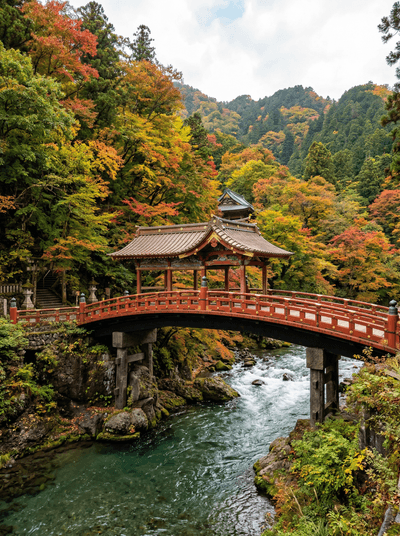
Nikko
Japan
Gold-encrusted shrines hidden in cedar forest where a sleeping cat guards the gate.
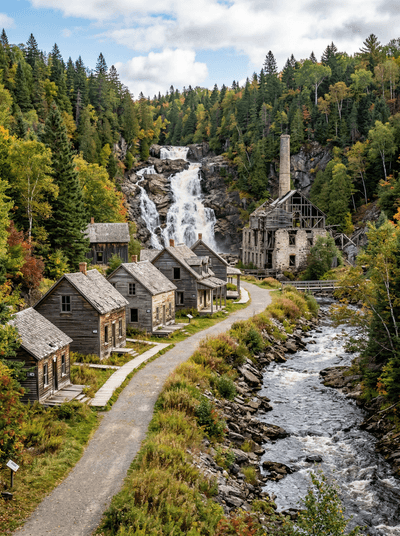
Val-Jalbert Ghost Town
Canada
A seventy-metre waterfall thunders over a mill village stopped in 1927 and carefully woken again.
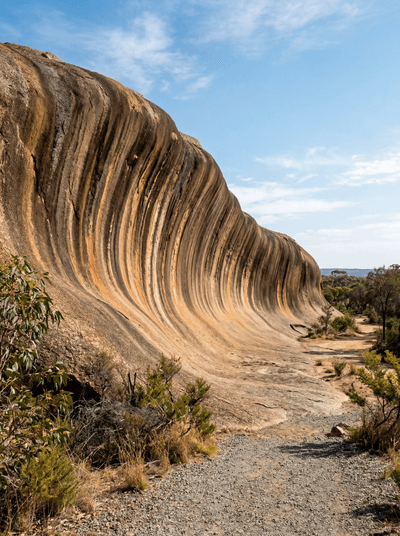
Wave Rock
Australia
A 15-metre granite wave frozen mid-break, striped with mineral stains in the middle of wheat country.
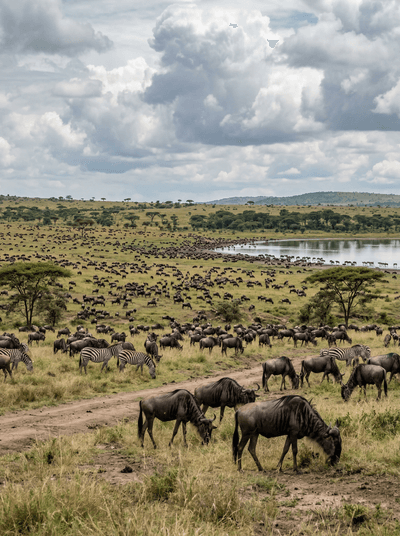
Ndutu
Tanzania
Half a million wildebeest are born onto open grass in a few short weeks.
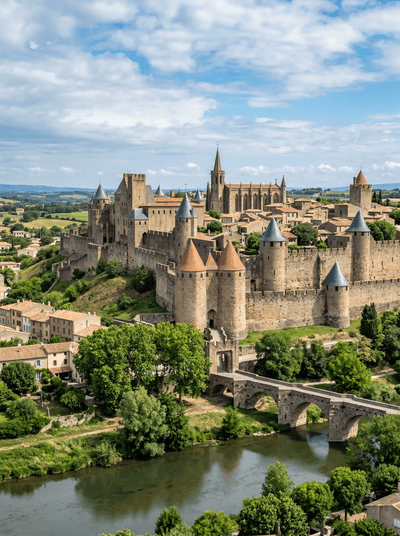
Carcassonne
France
Double ramparts and a crown of towers silhouetted at dusk like a medieval fever dream.
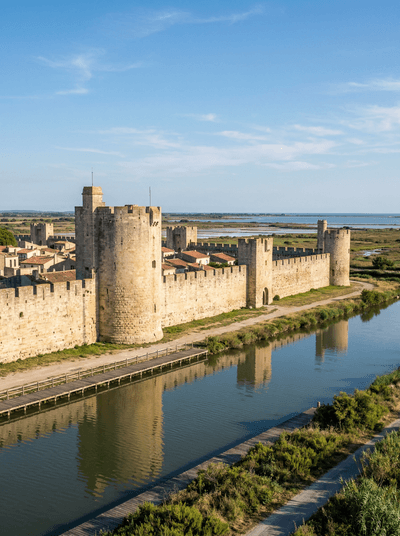
Aigues-Mortes
France
Crusader ramparts stranded on salt flats where the sea withdrew and left a walled port behind.

Mont-Saint-Michel
France
A granite abbey rising from a bay where the sea withdraws fifteen kilometres and races back.
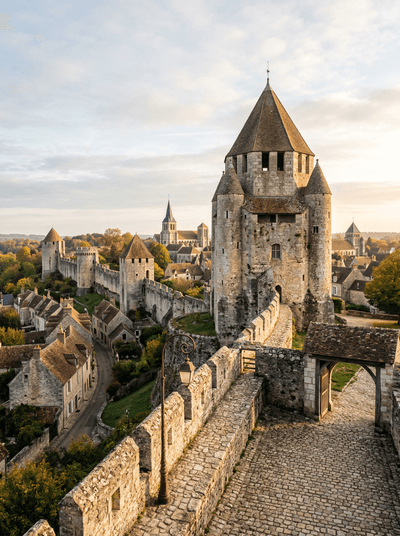
Provins
France
Underground galleries and a rose harvest in a medieval fair town that once rivalled Paris.