Egypt
Qaret el-Muzawwaqa
Painted Roman tombs in golden cliffs where zodiac ceilings survive in desert-sealed air.
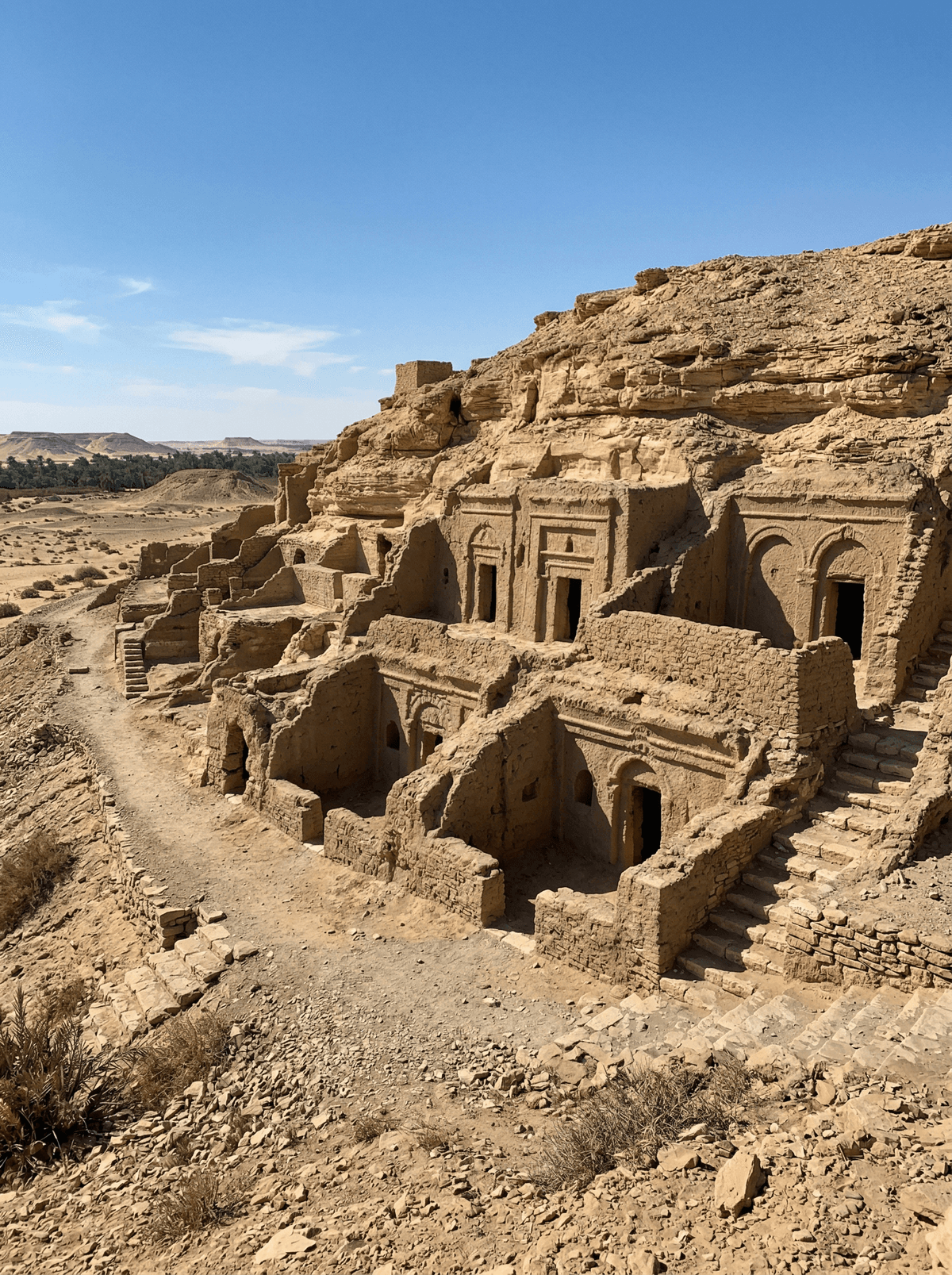
Golden sandstone cliffs catch the late afternoon light as you duck into a tomb entrance and look up. A zodiac wheel painted in Roman-Egyptian style covers the ceiling — Libra, Scorpio, Sagittarius rendered in pigments that have barely faded in two thousand years of sealed desert air. The colours are so vivid they look wet.
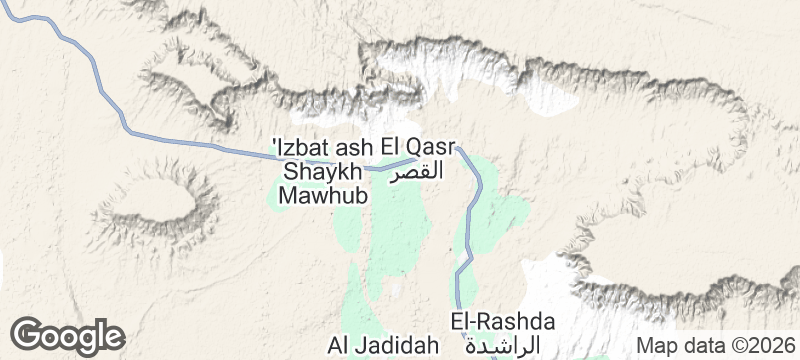
Qaret el-Muzawwaqa is a small painted necropolis in the desert escarpment near Dakhla Oasis in Egypt's Western Desert. The site contains two principal Roman-period tombs — the Tomb of Petosiris and the Tomb of Petubastis — dating to the first and second centuries CE. Their painted ceilings blend Egyptian funerary iconography with Greco-Roman astronomical imagery, creating a visual synthesis of cultures unique to the oasis communities of the late ancient world. The zodiac ceiling in the Tomb of Petosiris is considered one of the finest examples of Romano-Egyptian astronomical art in Egypt. Qaret el-Muzawwaqa sits isolated in the desert west of the oasis, accessible by a short desert track from the main road.
Solo
Standing alone beneath a two-thousand-year-old zodiac ceiling in the deep desert is an experience of almost overwhelming intimacy. The site's isolation means you will likely have both tombs to yourself.
Couple
The painted tombs are small enough to feel private, and the desert setting at golden hour is quietly spectacular. Combine with Dakhla's mud-brick old town of Al-Qasr for a day of deep-desert discovery.
- The zodiac ceiling is one of only four complete Egyptian zodiac maps known to survive, showing the twelve signs alongside Egyptian astronomical deities.
- The preservation results from desert sealing — Saharan dry air inside the closed tombs maintained humidity below 10% for 2,000 years.
- The tombs were carved for two private citizens — Petosiris and Petubastis — whose names are still legible on the entrance lintels.
- Ain Birbiyeh, a Roman temple with comparable preservation, lies 4km away — both are typically visited in the same afternoon from Dakhla.
Rice stuffed into vine leaves handpicked from Dakhla's irrigation gardens, slow-cooked in clay pots.
Hot mint tea with crushed peanuts shared on carpets outside mud-brick village homes.
Trollskogen (Öland)
Sweden
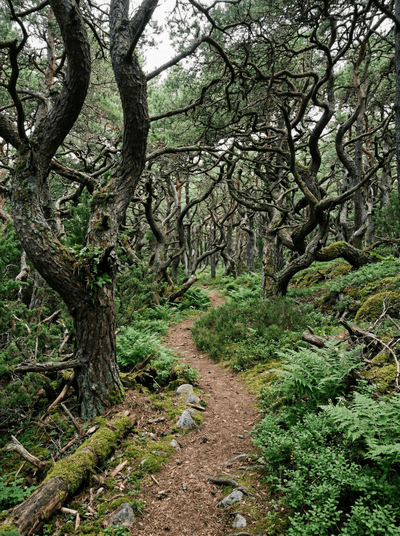
A forest of wind-warped oaks so twisted they look like a witch's spell gone wrong.
Millennium Cave
Vanuatu
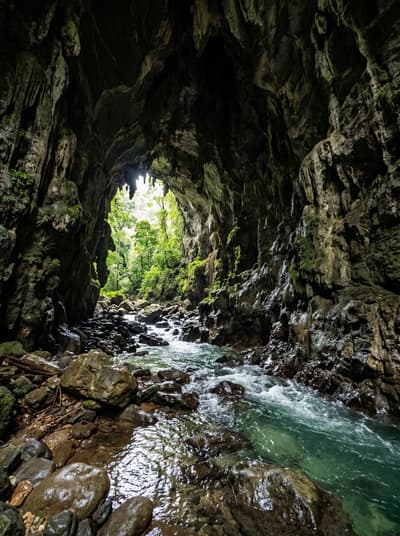
Scramble through jungle and wade chest-deep rivers to a cave you enter walking and exit floating.

Maryang-ri
South Korea
A five-hundred-year-old forest of camellia trees bleeding red flowers against the grey winter sea.
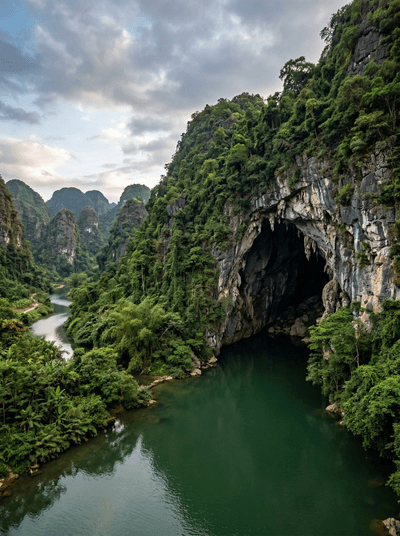
Phong Nha
Vietnam
Hidden jungle portals opening into subterranean river systems and limestone caverns.
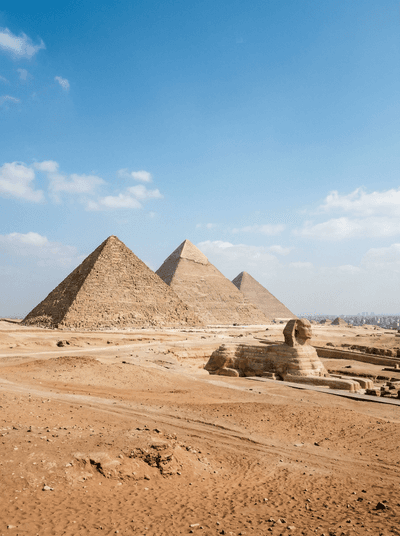
Giza
Egypt
Camel shadows stretch across sand where the last ancient wonder meets the Sahara's edge.
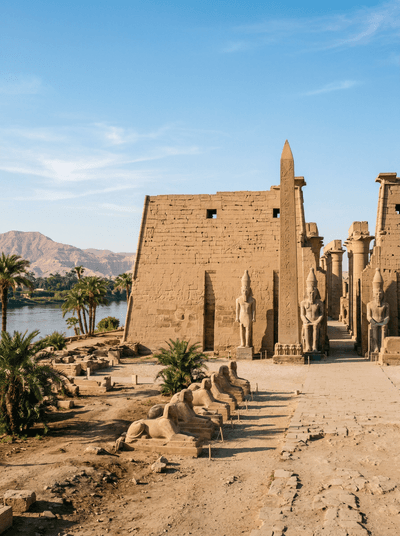
Luxor
Egypt
Dawn light flooding Karnak's hypostyle hall through columns carved before Rome existed.
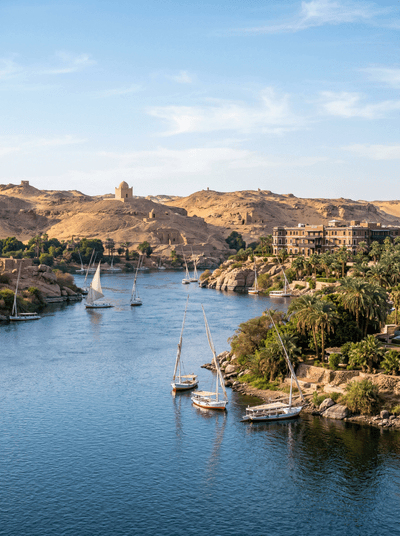
Aswan
Egypt
Feluccas gliding past granite islands where the Nile runs quietest and Nubian colour blazes.
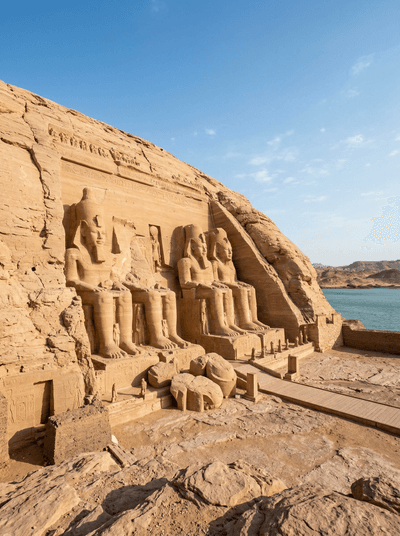
Abu Simbel
Egypt
Twice a year, dawn crawls sixty metres through solid rock to light a pharaoh's face.