Egypt
Ras Abu Galum
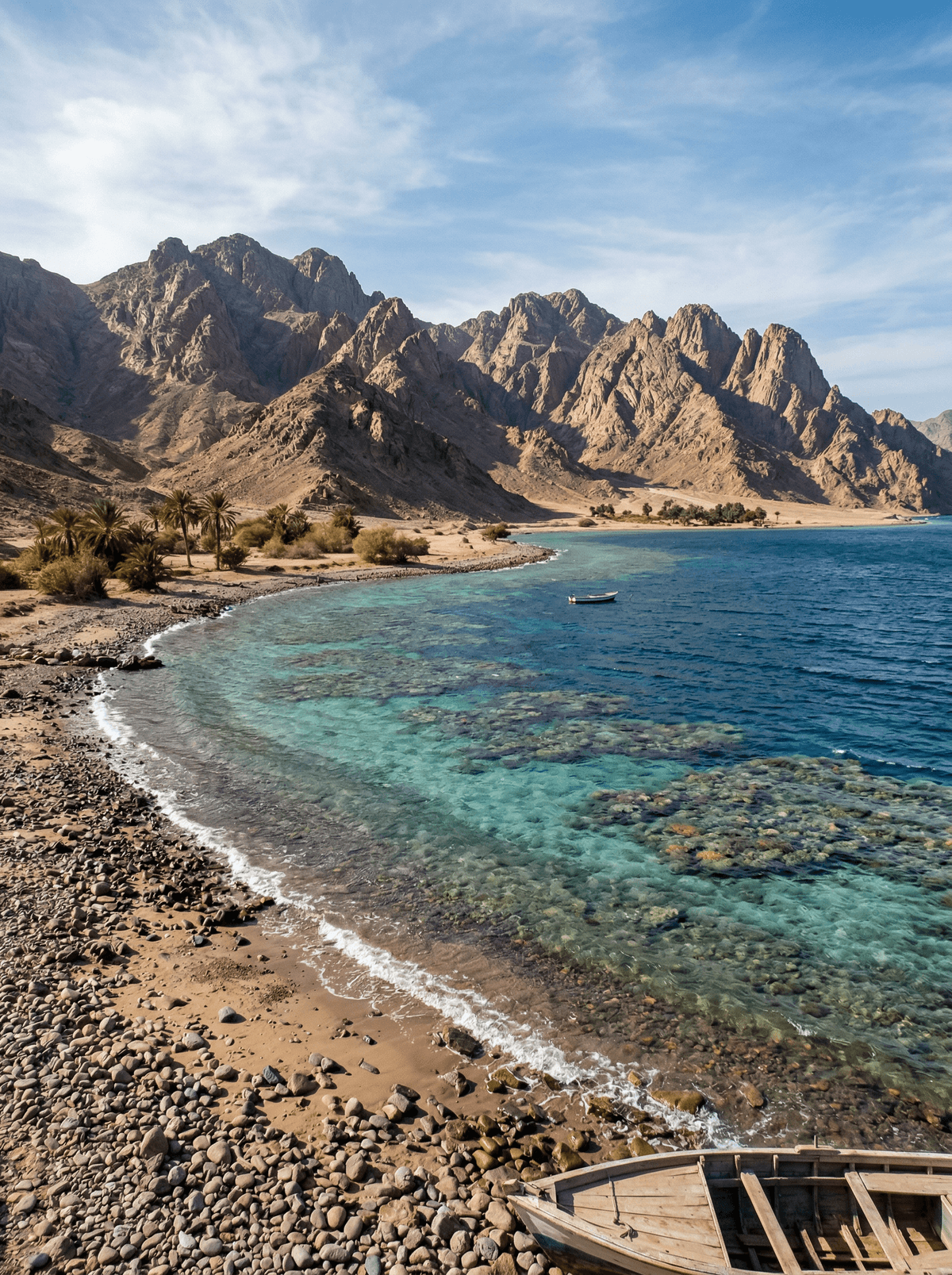
Camel trail ending at a Bedouin beach where the reef starts a metre from your mat.
The camel picks its way along the coastal trail, granite mountains one side and the Red Sea the other, until the path drops to a Bedouin settlement where reed huts line the beach and the reef begins less than a metre from shore. Step off, wade in, and the coral world opens immediately.
Ras Abu Galum is a protected area on the South Sinai coast between Dahab and Nuweiba, reached only on foot, by camel or by boat — the walk in from the Blue Hole takes about an hour along the cliff path. The protectorate covers both the fringing reef, among the healthiest in the Gulf of Aqaba, and the bare mountains behind it. A small Bedouin community still lives and fishes here, running reed-hut camps on the beach with campfire cooking and snorkel gear.
Couple
Walk in from the Blue Hole, take a reed hut for the night, and let the sheikh's tea set the pace.
- No road reaches the beach — you walk the coastal trail from the Blue Hole or ride a camel in about an hour.
- The reef starts at half a metre of depth straight off the sand — coral heads visible without getting in.
- The camps' fish is caught in the bay the same morning it is cooked.
- With no light in any direction, the Sinai sky here is one of the region's most reliable star fields.
The camps cook what the bay gives — on a good day, grouper landed an hour before it hits the pan.
Tea brews in a blackened kettle on the beach — cardamom, and sage gathered from the wadi.
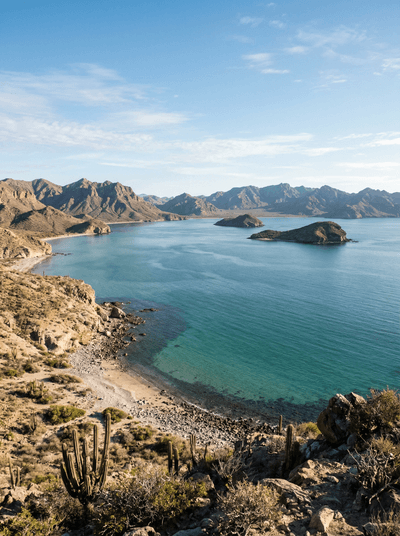
Bahía de los Ángeles
Mexico
Desert ridges frame a protected bay of islands and immensely productive water.
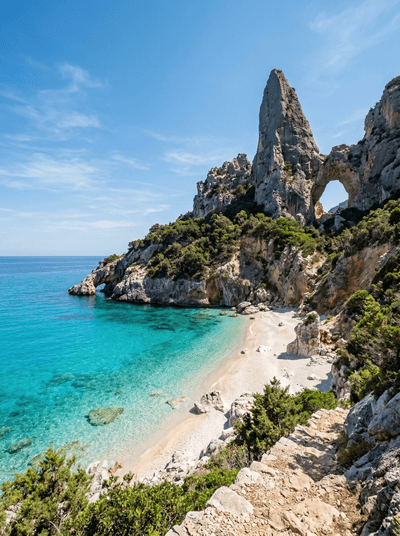
Cala Goloritzé
Italy
A limestone needle rising from emerald water, the cove reachable only by a cliff-edge trail.
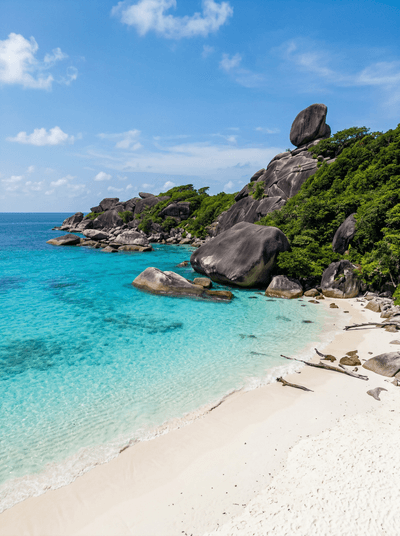
Similan Islands
Thailand
Giant granite boulders stacked like dropped marbles above water clear enough to induce vertigo.
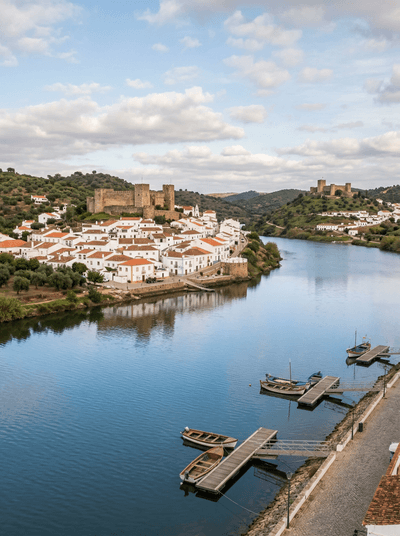
Alcoutim
Portugal
Two castle towns face across the Guadiana — Portugal one bank, Spain the other.
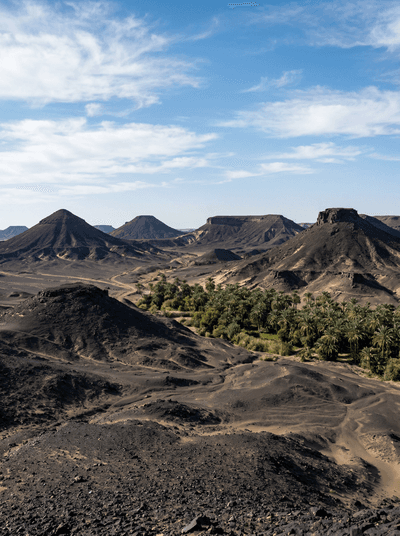
Bahariya Oasis
Egypt
Hot springs steaming in palm groves where golden mummies were unearthed beneath a donkey path.
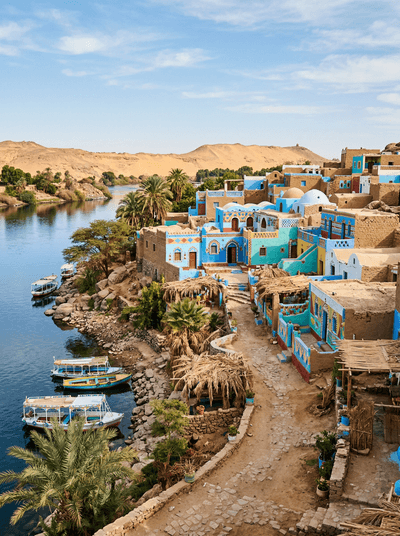
Nubian Villages
Egypt
Houses painted impossible blue and yellow, a language older than Arabic spoken on every corner.
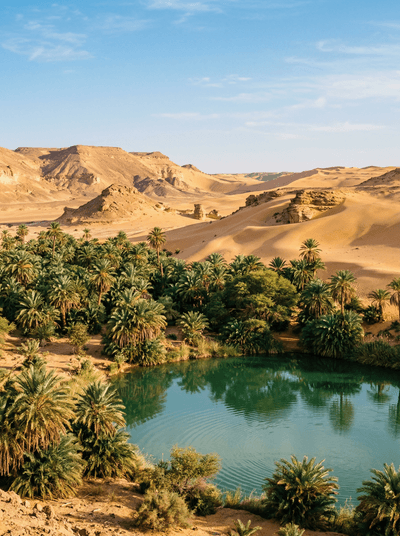
Dakhla Oasis
Egypt
Medieval mud-brick lanes and carved lintels marooned in the deep desert for eight centuries.